
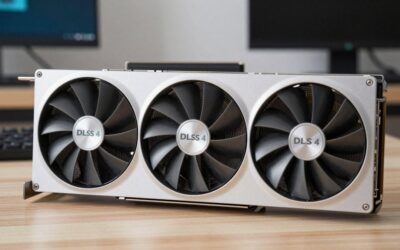
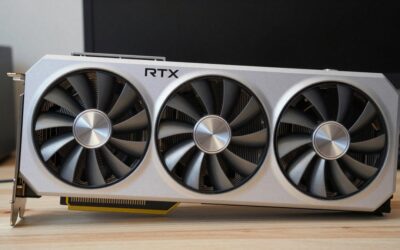
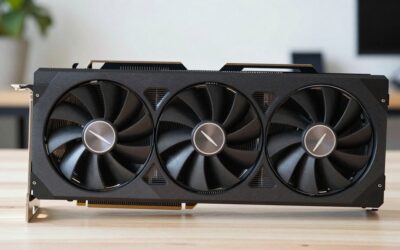
- Top Pick: GIGABYTE GeForce RTX 5080 Gaming OC 16G Graphics Card, WINDFORCE Cooling System, 16GB 256-bit GDDR7, GV-N5080GAMING OC-16GD Video Card
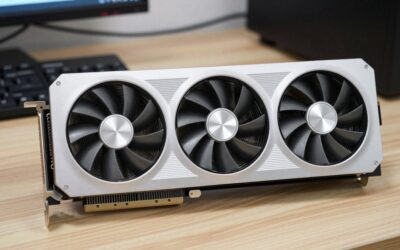
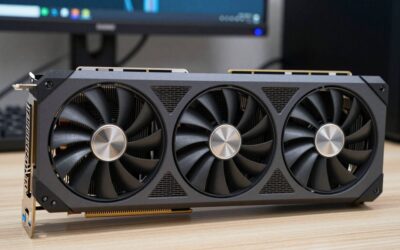
- Best Value: ASUS TUF Gaming GeForce RTX™ 5080 16GB GDDR7 OC Edition Graphics Card
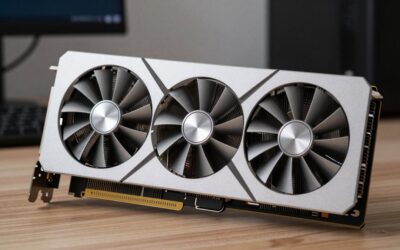
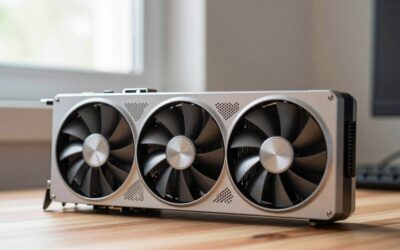
- Premium Choice: GIGABYTE Radeon™ RX 9070 XT Gaming OC ICE 16G Graphics Card (16GB GDDR6, 256-bit, PCIe 5.0, HDMI/DP 2.1, 2.7 Slot, Hawk Fan, Server-Grade Thermal Gel, Reinforced Structure)
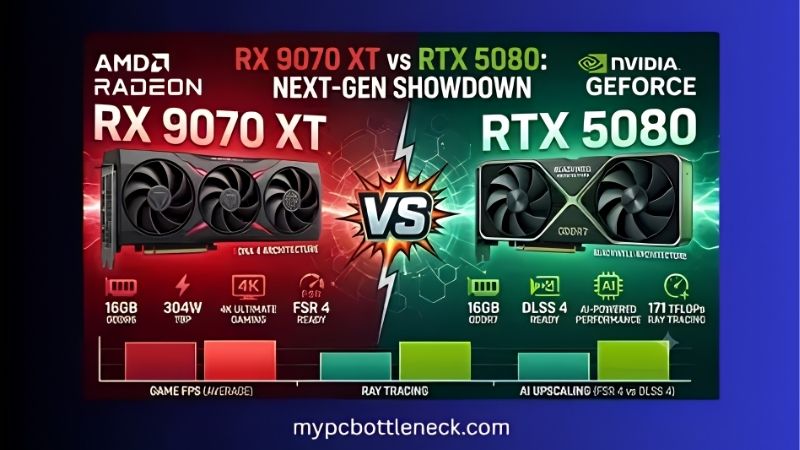
RTX 5080 vs 9070 XT is the high-end matchup that forces buyers to answer a simple but hard question: do you pay a premium for the fastest, most feature-rich card, or do you take the value option that gets surprisingly close for far less money? NVIDIA’s RTX 5080 leads on outright 4K performance, ray tracing and DLSS 4, while AMD’s RX 9070 XT counters with strong raster, a much-improved feature set and a dramatically lower price. This comparison breaks both cards down by measured performance, ray tracing, upscaling, memory, power and price, then tells you exactly which one deserves your money.
RTX 5080 vs 9070 XT: The Quick Verdict
The short answer is that these two cards target different buyers despite the direct comparison. The RTX 5080 is the faster, more complete card and the right pick if you want the best 4K experience and cutting-edge features, while the RX 9070 XT is the value champion that delivers most of a high-end experience for a much lower price. Neither is objectively wrong; the winner depends entirely on your budget and priorities, as the table below makes clear.
As an Amazon Associate we earn from qualifying purchases at no extra cost to you.


| Spec | RTX 5080 | RX 9070 XT |
|---|---|---|
| Architecture | Blackwell (RTX 50) | RDNA 4 |
| VRAM | 16GB GDDR7 | 16GB GDDR6 |
| Memory bus | 256-bit | 256-bit |
| Ray tracing | Class-leading | Much improved (RDNA 4) |
| Upscaling | DLSS 4 + Multi Frame Gen | FSR 4 |
| Board power | ~360W | ~304W |
| Positioning | Premium 4K | Value high-end |
Who Wins on Raw Performance
On outright performance, the RTX 5080 is the clear leader. It delivers higher frame rates at 4K, holds up better in the most demanding titles, and pulls further ahead once ray tracing and DLSS 4 enter the picture. If your goal is the best possible 4K experience, the 5080 is the faster card without argument.
That said, the gap in pure rasterized performance is smaller than the price difference suggests. The RX 9070 XT is a strong raster performer in its own right, landing close enough in many games that the 5080’s lead, while real, is not the chasm the price gap might imply.
The performance crown belongs to NVIDIA here, but value-minded buyers should note how much of the experience the cheaper card retains.
Who Wins on Value
Value is where the RX 9070 XT strikes back hard. It typically costs far less than the RTX 5080 while offering the same 16GB of VRAM and a large share of the performance, which makes it one of the best value propositions in the high-end space.
For buyers who care most about frames per dollar, the 9070 XT is compelling. You give up the outright performance lead and some feature polish, but you keep enough capability for excellent high-refresh 1440p and very good 4K, all at a meaningfully lower cost.
If your budget is the deciding factor rather than absolute performance, the AMD card is the smarter spend.
Quick Verdict by Use Case
Buy the RTX 5080 if you want the best 4K performance, class-leading ray tracing and the full DLSS 4 stack, and you are willing to pay a premium for it. It is the enthusiast’s choice for a no-compromise experience.
It is also the safer pick if you want a single card to last through several years of increasingly demanding titles at 4K, since its performance headroom and DLSS 4 features give it more room to age gracefully.
Buy the RX 9070 XT if you want a genuinely high-end card at a much friendlier price, you play mostly at 1440p or entry 4K, and you value raw performance per dollar over having the absolute best features. For many buyers, that trade lands firmly in AMD’s favor.
A useful way to frame it: the RTX 5080 is the card you buy when performance is the goal and budget is secondary, while the RX 9070 XT is the card you buy when you want a high-end experience without a high-end price. Very few buyers sit exactly between those two mindsets, which is why the decision is usually clearer than the spec sheet suggests.
RTX 5080 vs 9070 XT Deep Dive: Specs and Performance
The verdict holds, but the details reveal why. This deep dive compares raw output across resolutions, the ray tracing and upscaling technologies that increasingly define high-end value, and the memory, power and efficiency figures that shape the ownership experience.
Raw Performance at 4K and 1440p
At 4K, the RTX 5080 leads, holding higher averages in demanding titles and staying smoother in the heaviest scenes. It is the card better suited to driving a high-refresh 4K display natively before upscaling even enters the equation.
At 1440p, both cards are excellent, and the practical difference shrinks considerably. The RX 9070 XT posts high frame rates that satisfy any high-refresh 1440p setup, and in raster-focused games the two trade blows more closely than their price gap suggests. The honest read is that the 5080 is the stronger 4K card, while at 1440p the value equation tilts toward AMD.
It also matters how you play. If you run a 4K 144Hz display and chase maxed settings with ray tracing, the 5080’s extra headroom is something you will feel every session. If you game at 1440p high-refresh or accept entry-level 4K, the 9070 XT covers that ground while leaving a large chunk of cash in your pocket for the rest of the build.
Ray Tracing, DLSS 4 vs FSR 4
Ray tracing and upscaling are where the experimental, feature-driven argument lands. The RTX 5080 offers class-leading ray tracing and DLSS 4 with Multi Frame Generation, which can multiply frame rates in supported games while keeping image quality clean, a combination the 9070 XT cannot fully match.
That said, RDNA 4 has narrowed the gap more than any AMD generation before it. The RX 9070 XT’s ray tracing is much improved, and FSR 4 is a large step up in upscaling quality, closing much of the distance to DLSS. NVIDIA still leads on features, but the 9070 XT is far more competitive here than AMD cards used to be, which strengthens its value case considerably.
The practical impact for buyers is that the feature gap is no longer a dealbreaker for value shoppers the way it once was. In previous generations, choosing AMD meant a real sacrifice in ray tracing and upscaling; with RDNA 4, that sacrifice is much smaller, so the money you save on the 9070 XT costs you less in capability than it would have a generation ago.
VRAM, Power, and Efficiency
On memory, the two are evenly matched at 16GB, which is a comfortable amount for 4K today, so neither card holds a VRAM advantage in this matchup. Both use a 256-bit bus, though the 5080’s faster GDDR7 gives it more bandwidth.
Power tells a small story in AMD’s favor, with the 9070 XT drawing around 304W against the 5080’s roughly 360W. Neither is light, so both want a quality power supply with the correct connectors and a case with good airflow. On the practical side, factor the whole system, PSU headroom and cooling, into your decision, since both cards run warm under sustained 4K load.
Efficiency also compounds over years of ownership. The 9070 XT’s lower draw means slightly less heat dumped into your room, a marginally smaller power bill and often a quieter card under load, small factors individually but real ones for a card you will use daily for years.
Price, Value, and the Smart Alternative in 2026
Price ties this matchup together, and 2026’s market shapes the decision. Before you choose, it helps to know where GPU prices sit, weigh the honest pros and cons of each card, and consider the alternative that splits the difference between them.
GPU Prices in 2026: Should You Buy Now?
The steep price climb of late 2025 has cooled, and high-end cards are no longer spiking week to week. Some hardware makers, Framework among them, have reported a stretch of relative stability, while cautioning that conditions can still swing. For a buyer weighing a premium purchase, that means the market has calmed, but a real discount is not around the corner.
The relief that would push prices down further is still out on the horizon. New memory supply is opening up, with OEMs able to source DDR5 from Chinese suppliers such as CXMT, and Micron building two new fabs in Idaho, but those plants are not expected to run until 2027 to 2028. Prices have flattened rather than fallen, so meaningful relief remains a year or two away.
For this high-end matchup, that reinforces the value argument. With prices elevated and unlikely to drop soon, the RX 9070 XT’s lower cost is especially attractive, while the RTX 5080 asks you to pay a firm premium for its performance lead. Whichever you lean toward, check the live price first, since a sale on either card can shift the calculation immediately.
Pros and Cons of Each Card
The RTX 5080’s pros are class-leading 4K performance, the best ray tracing, DLSS 4 with Multi Frame Generation, and fast GDDR7 memory. Its cons are the high price and heavier power draw, which make it a premium purchase in every sense.
The RX 9070 XT’s pros are outstanding value, strong raster performance, 16GB of VRAM, much-improved ray tracing and FSR 4, and lower power draw. Its cons are that it trails the 5080 in outright performance and top-end feature polish, and that its upscaling, while greatly improved, still sits a step behind DLSS 4.
Weighed together, the 5080 wins on capability and the 9070 XT wins on value, which is exactly why the right pick depends on whether performance or price leads your priorities.
The Best Alternative if Your Budget Flexes
If the RTX 5080 is too expensive but you want NVIDIA features, the RTX 5070 Ti is the natural middle ground, offering 16GB, DLSS 4 and strong 1440p-to-4K performance for less than the 5080. It bridges the gap between this pair neatly.
If you can stretch to the very top instead, the RTX 5090 is the no-compromise flagship for those who want maximum 4K performance and creator capability. Compare current prices on the 5080, the 9070 XT and the 5070 Ti through the links here before deciding, since at this tier a good deal on any of them can settle the choice.
It is also worth watching for the specific scenario where a discounted RTX 5080 approaches the price of a full-price 9070 XT, or vice versa. At this tier, pricing moves enough that the value winner can flip on a given week, so the live price is genuinely part of the comparison rather than a footnote to it.
See More:
Final Verdict: Which High-End GPU Should You Buy?
Lining up RTX 5080 vs 9070 XT, there is a clear split rather than a single winner. The RTX 5080 is the faster, more feature-complete card and the right choice for enthusiasts who want the best 4K experience with class-leading ray tracing and DLSS 4. The RX 9070 XT is the value champion, delivering most of a high-end experience, strong raster and a much-improved feature set, for a substantially lower price.
Buy the RTX 5080 if outright performance and features lead your list and the premium is acceptable, and buy the RX 9070 XT if value and frames per dollar matter more. With prices flattened but not falling until 2027 or later, there is little reason to wait if you are ready to upgrade. Check the latest prices through the links above and pick the high-end card that fits your priorities and budget before pricing shifts again.
Frequently Asked Questions
Are these two cards actually in the same class?
Not quite. The RTX 5080 sits a clear tier above the RX 9070 XT in raw performance and price, roughly a thousand dollars against six hundred. The comparison is really flagship-adjacent performance versus best value at the upper mid range.
How do they compare in ray tracing?
The 5080 wins decisively. RDNA 4 substantially improved AMD’s ray tracing throughput over the previous generation, but Blackwell’s fourth-generation RT cores remain ahead, and the gap widens sharply in path-traced titles where NVIDIA’s ray reconstruction also cleans up the denoising.
Do both have 16GB of VRAM?
Yes, but of different types. The 5080 uses 16GB of GDDR7 on a 256-bit bus for considerably higher bandwidth, while the 9070 XT pairs 16GB of GDDR6 with the same bus width. Capacity is equal, so the difference shows in bandwidth-heavy 4K scenarios.
What are the power and cooling demands?
The 5080 is a 360W card needing an 850W supply and a 12V-2×6 connector, typically in a triple-slot cooler over 320mm long. The 9070 XT is around 304W with conventional 8-pin inputs and a 750W recommendation, making it slightly easier to fit into an existing build.
Which is the better 4K gaming card?
The 5080 is the stronger 4K performer outright and pairs better with DLSS 4 multi frame generation for high refresh 4K panels. The 9070 XT delivers very playable 4K in rasterized titles for substantially less money, so the decision hinges on your budget and ray tracing priorities.
Ready to decide? Our #1 pick for 2026 is the Architecture.
Live price & availability on Amazon.

Write Your Review
No reviews yet. Be the first to share your experience!