
The rx 7700 xt vs rtx 5060 question is the classic 2026 mid-range dilemma: more raw memory and rasterization on one side, newer architecture and sharper AI features on the other. Both land near the same price bracket, both target 1080p and entry 1440p gaming, and picking wrong means either paying for headroom you cannot use or missing features you will want in two years. This comparison cuts through it with a quick verdict for the impatient, a full spec table, a criteria-by-criteria face-off, a cheaper alternative if both feel like too much, and a clear recommendation on exactly who should buy which card.
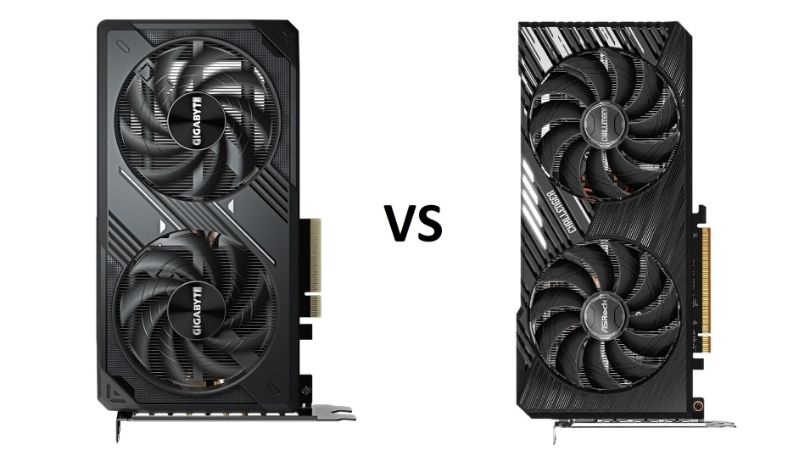
The Quick Verdict: RX 7700 XT vs RTX 5060 at a Glance
If you only read one paragraph, here it is. The RX 7700 XT wins on raw rasterization and memory, making it the better pick for pure high-frame-rate gaming at 1080p and 1440p where its 12GB buffer and wider memory bus stretch its legs. The RTX 5060 wins on efficiency and features, delivering superior upscaling, frame generation, and ray tracing while sipping far less power. The table below shows why the two cards feel so different despite sharing a price neighborhood, and the sections after it explain which advantage actually matters for your games.
As an Amazon Associate we earn from qualifying purchases at no extra cost to you.





| Spec | RX 7700 XT | RTX 5060 |
|---|---|---|
| Architecture | RDNA 3 | Blackwell |
| Memory | 12GB GDDR6 | 8GB GDDR7 |
| Memory Bus | 192-bit | 128-bit |
| Typical Board Power | ~245W | ~145W |
| Upscaling | FSR | DLSS 4 + Frame Generation |
| Ray Tracing | Capable, second tier | Stronger per tier |
| Best Target | 1080p/1440p raster | 1080p high-feature |
| Approx. Street Price | ~$380-420 | ~$300-330 |
Best for Raw Rasterization Value
In games without heavy ray tracing, the RX 7700 XT generally posts higher native frame rates. Its wider bus and larger memory pool let it push more raw pixels, so competitive shooters and open-world titles at high settings tend to favor it when upscaling is off.
That raw advantage is the RX 7700 XT’s entire pitch. If your library leans on esports and traditional AAA games where native performance rules, the extra rasterization headroom is a tangible, measurable edge you feel every session. It is also the safer bet for players who dislike the soft look upscaling can introduce and prefer to run games at native resolution wherever possible.
Best for Features and Longevity
The RTX 5060 answers with a newer feature stack. Its upscaling is widely regarded as the cleaner image at equivalent settings, and frame generation can multiply perceived smoothness in supported titles, closing or reversing the raw-performance gap.
Features age better than raw numbers, which is the strategic case for the 5060. As more games adopt the latest upscaling and as frame generation matures through driver updates, a card built around those technologies keeps gaining usable performance, a form of future-proofing the older architecture cannot match.
Best for Efficiency and Small Builds
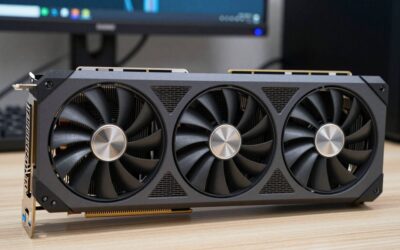
Power draw is not a footnote here, it is a defining split. At roughly 145W, the RTX 5060 runs cooler, quieter, and happily on a modest power supply, while the RX 7700 XT’s ~245W appetite demands more cooling and a beefier PSU.
For anyone building in a compact case or reusing an older power supply, the efficiency gap tips the scale toward the 5060 before a single frame is rendered. Lower heat and noise also translate to a more pleasant machine to sit next to, which owners consistently rank higher than they expect.
Deep Dive Face-Off: Performance, Features, and Fit
Averages hide the story, so the fair way to settle rx 7700 xt vs rtx 5060 is to test each card against the criteria buyers actually shop by. Rasterization, feature-assisted performance, and real-world compatibility each produce a different winner, and your personal priority among those three is what should decide the purchase. The breakdown below weighs each dimension on its own terms rather than collapsing everything into a single misleading number.
Rasterization and Native Gaming Performance
Head to head in native, non-upscaled gaming, the RX 7700 XT usually leads, often by a meaningful margin at 1440p where its memory bandwidth matters most. The 12GB buffer also guards against the texture-streaming stutters that an 8GB card can hit in the most demanding modern titles at high settings.
To put rough numbers on it, in a demanding open-world title at 1440p high settings the 7700 XT can hold a comfortable lead in average frames, and its one percent lows stay steadier because it is not starved for memory. That steadier frame delivery is what players feel as smoothness even when the average looks similar on paper.
The nuance is that this lead shrinks the moment upscaling enters the picture. Turn on the respective upscalers and the 5060’s superior implementation narrows the gap, so the raster crown is most valuable to players who prefer native rendering or play titles that lack modern upscaling support. For competitive gamers chasing the highest possible native frame rate at 1080p, though, the extra rasterization muscle is exactly what buys those crucial additional frames.
Ray Tracing, Upscaling, and AI Features
This is the RTX 5060’s home turf. Its ray tracing runs faster within its class, and its upscaling and frame-generation suite is the most mature on the market, producing sharper reconstructed images and higher effective frame rates in supported games.
The experimental edge here is real and worth naming. Frame generation and AI-driven reconstruction are exactly the technologies improving fastest through software, so the 5060 is likely to widen this lead over time rather than hold steady. If ray tracing and cutting-edge image quality excite you, this dimension alone can justify the pick. It is worth being honest about the ceiling, though: neither card is a heavy ray-tracing machine, and both rely on upscaling to make ray-traced games playable at good frame rates. The 5060 simply does it better and with less visible artifacting, so within the realistic expectations of this price class it is the card that lets you actually enable those effects rather than admiring them in screenshots.
Memory, Efficiency, and Real-World Compatibility
On paper the 12GB versus 8GB gap looks decisive, and for high-resolution texture packs and future titles it genuinely favors the RX 7700 XT. More memory is cheap insurance against the day a game demands more than 8GB at your settings.
Efficiency and fit pull the other way. The 5060’s low power draw makes it the effortless drop-in for small or older systems, while the 7700 XT’s higher draw and larger physical designs require checking case clearance and PSU wattage before you buy. Match the card to your actual chassis and power supply, not just the benchmark chart.
The practical scenario that decides this for many buyers is the upgrade path. If you are dropping a card into an existing prebuilt with a 450W or 500W supply, the 5060 slots in without a new PSU, whereas the 7700 XT may push you into buying a bigger unit that erases its price advantage. Always budget the whole upgrade, not just the sticker on the card, because a hidden power-supply purchase can quietly flip which option is cheaper overall.
Pricing, 2026 News, and a Value Alternative
Specs decide which card is better, but market conditions decide whether now is the right moment and which price makes the win real. Two forces shape the rx 7700 xt vs rtx 5060 decision in 2026: the current direction of component prices and the honest timeline for any relief. Factor these in before you check out, because the smarter card at the wrong price is not the smarter buy.
How 2026 Component Prices Change This Decision
Component and laptop prices have been trending upward, driven largely by memory costs, and that pressure lands directly on graphics cards. If you have been holding out for a steep discount on either of these cards, the current data does not reward the wait, because the market is not moving in the buyer’s favor right now.
There is modest good news that is real but limited. Prices have stopped climbing as sharply as they did at the end of 2025, and some manufacturers report a stretch of relative stability, though they still warn that volatility has not ended. In practice that means the price you see today is a reasonable basis for a decision rather than a peak you should expect to fall soon.
Genuine relief is further out than most buyers hope. New memory supply is opening up and additional fabrication plants are being built, but those facilities are not expected to run until 2027 or 2028. The takeaway is straightforward: prices have plateaued, not dropped, so if you need a card now, buying at today’s rate is defensible, and any future discount is a bonus rather than something to plan your life around.
The Pros and Cons Buyers Weigh
The RX 7700 XT’s pros are its raw power, generous 12GB memory, and lower typical price after discounts, while its cons are high power draw, weaker upscaling, and an older architecture that will not gain new AI features. It is the value raster champion with a shorter feature runway.
The RTX 5060’s pros are outstanding efficiency, the best upscaling and frame generation in the class, and stronger ray tracing, with cons being only 8GB of memory and a narrower bus that can bottleneck in the most memory-hungry scenarios. It is the feature-and-efficiency pick that trades raw headroom for polish and longevity.
A Third Option If Both Miss the Mark
If the 7700 XT feels power-hungry and the 5060’s 8GB gives you pause, a sensible alternative is to step up to the next Nvidia tier that pairs the newer feature set with more memory, or to hunt a previous-generation card with a larger buffer on discount. Either route resolves the core tension of this matchup, giving you both the memory buffer to survive future titles and the modern upscaling that keeps a card feeling fast for years. For buyers who plan to keep a GPU for four or five years rather than upgrading often, closing that compromise now can be cheaper than replacing an 8GB card early.
Stepping up costs more, but for buyers who want both generous memory and modern features without compromise, it removes the single biggest regret each card can produce. If your budget can stretch, it is worth pricing that option alongside the two contenders before deciding, and you can compare live prices for all three through the link in this guide.
See More:
Final Verdict and Recommendation
The rx 7700 xt vs rtx 5060 verdict comes down to what you value. Buy the RX 7700 XT if you prioritize raw native frame rates and want the security of 12GB of memory, especially for 1440p rasterized gaming, and you have the power supply and case space to feed it. Buy the RTX 5060 if you want the coolest, quietest, most feature-rich experience, care about the best upscaling and ray tracing, and expect those AI features to keep improving. For the majority of mainstream 1080p players who value low noise, easy compatibility, and the best-looking upscaled image, the 5060 is the easier card to recommend, while dedicated 1440p raster enthusiasts with a capable power supply will be happier with the 7700 XT. With component prices plateaued rather than falling and real relief years away, waiting is unlikely to save meaningful money, so decide by your priority, confirm the card fits your build, and use the link here to check current pricing before stock and prices shift again.
Frequently Asked Questions
Which card is actually faster at 1440p?
In pure rasterized games the RX 7700 XT usually leads the RTX 5060 by roughly 20 to 30 percent at 1440p, helped by its 192-bit bus and 54 compute units. The RTX 5060 fights back with DLSS 4 and multi frame generation, so in supported titles the on-screen frame rate can look much closer.
What power supply and connectors do I need?
The RX 7700 XT draws about 245W and uses two 8-pin PCIe connectors, so a quality 650W to 700W unit is the sensible target. The RTX 5060 sips roughly 145W from a single 8-pin, and a decent 500W to 550W supply handles it comfortably even with a mid-range CPU alongside it.
Is 8GB of VRAM enough on the RTX 5060?
Eight gigabytes is workable at 1080p with high settings, but several 2024 and 2025 releases already push past it at 1440p with ray tracing or ultra textures, causing stutter and texture pop-in. The RX 7700 XT ships with 12GB, which gives noticeably more headroom for modded games and future titles.
How do ray tracing and upscaling compare?
NVIDIA still holds the ray tracing lead, and DLSS 4 transformer upscaling generally looks cleaner than FSR at the same internal resolution. AMD closed much of the image quality gap with FSR 4, but that runs best on RDNA 4 cards, so the 7700 XT is limited to earlier FSR versions in most games.
Which one is the better value buy?
If you play mostly raster titles at 1440p and want VRAM headroom, the RX 7700 XT is the stronger price-to-performance pick. If you game at 1080p, care about ray tracing, streaming with NVENC, CUDA apps, or a low-wattage small build, the RTX 5060 justifies its price more easily.
Ready to decide? Our #1 pick for 2026 is the Architecture.
Live price & availability on Amazon.

Write Your Review
No reviews yet. Be the first to share your experience!