
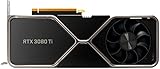
- Top Pick: Geforce RTX 3080 Ti 12GB GDDR6X PCI Express 4.0 Graphics Card Titanium and Black (Renewed)
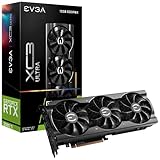
- Best Value: EVGA GeForce RTX 3080 Ti FTW3 Ultra Gaming, 12G-P5-3967-KR, 12GB GDDR6X, iCX3 Technology, ARGB LED, Metal Backplate (Renewed)
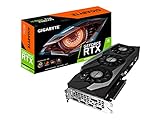
- Premium Choice: MSI Gaming GeForce RTX 3080 Ti Gaming X Trio 12G Computer Gaming Graphics Card 12GB GDRR6X 320-Bit HDMI/DP Nvlink Torx Fan 3 Ampere Architecture OC, NVIDIA GPU Video Cards for Gaming PC (Renewed)
Top Rtx 3080 4090 Flagship Worth Picks for 2026
Here are our current top rtx 3080 4090 flagship worth picks, compared on real Amazon owner reviews, price, and features. Live prices update below.

Dropped $750.00

Editor's Pick
ASUS ROG Strix GeForce RTX™ 4090 BTF OC Edition Gaming Graphics Card (PCIe 4.0, 24GB GDDR6X, Exclusive to BTF ATX Motherboards


Dropped $159.05

Lowest in 30 days
3080 Ti vs 4090 pits a former Ampere high-end card against the Ada Lovelace flagship that redefined what a consumer GPU could do. The RTX 3080 Ti was a 2021 powerhouse with 12GB of VRAM, while the RTX 4090 arrived with 24GB, a massive core count, and a commanding performance lead that still impresses today. Both are now largely used-market purchases, which turns this into a question of how much extra you should pay for the legendary flagship. This comparison breaks down the specs, real-world performance, power demands, and value so you can decide whether the 4090’s premium is justified for your needs.
As an Amazon Associate we earn from qualifying purchases at no extra cost to you. Product prices and availability are accurate as of the date shown and are subject to change.



Quick Verdict and Specifications
Here is the high-level take on this high-end matchup, followed by the spec sheet that shows just how far the 4090 sits above its predecessor.
The Bottom Line Up Front
The RTX 4090 is dramatically faster than the RTX 3080 Ti, with far more cores, double the VRAM, and DLSS 3 Frame Generation that the Ampere-based 3080 Ti cannot match. It is the clear winner in every performance category.
The 3080 Ti remains a capable high-end card for 1440p and entry 4K, so the real question is value: how much more you should pay for the 4090’s substantial lead, especially on the used market where both now mostly live.
For uncompromising 4K, heavy ray tracing, or creative work, the 4090 justifies its premium. For gamers content at 1440p, a cheaper 3080 Ti can still deliver a strong experience.
Specifications Side by Side
The spec sheet illustrates a clear generational leap, with the 4090 leading decisively on the metrics that matter for high-end gaming.
| Spec | RTX 3080 Ti | RTX 4090 |
|---|---|---|
| Architecture | Ampere | Ada Lovelace |
| CUDA cores | 10240 | 16384 |
| VRAM | 12GB GDDR6X | 24GB GDDR6X |
| Memory bus | 384-bit | 384-bit |
| Total graphics power | 350W | 450W |
| Launch MSRP | $1199 | $1599 |
| DLSS support | DLSS upscaling (no Frame Gen) | DLSS 3 Frame Gen |
Both share a 384-bit bus, but the 4090’s far larger core count, double the VRAM, and DLSS 3 Frame Generation give it a commanding overall advantage.
Reading the Spec Gap
The 4090’s 16384 cores against the 3080 Ti’s 10240 represent a major increase in raw compute, and combined with Ada Lovelace’s efficiency gains, the real-world gap is even larger than the core counts alone suggest.
The 24GB buffer is transformative for memory-heavy workloads, doubling the 3080 Ti’s 12GB and removing VRAM as a limitation in nearly any game or creative task. The shared 384-bit bus keeps both well-fed, but the 4090’s capacity is in another league.
The feature gap matters too. As an Ampere card the 3080 Ti supports DLSS upscaling but not Frame Generation, while the 4090 adds DLSS 3 Frame Generation, boosting its effective performance in supported titles on top of its hardware lead.
Performance Face-Off
The specifications promise a one-sided result, and real-world behavior across resolutions and features confirms how decisive the 4090’s advantage is.
4K Gaming Performance
At 4K the 4090 is in a class of its own, sustaining very high frame rates in demanding titles at maximum settings where the 3080 Ti must rely on upscaling and reduced settings to stay smooth.
The 3080 Ti remains a usable 4K card in many games, but it is increasingly working at its limit in the newest releases, while the 4090 has enormous headroom. For dedicated 4K gamers, that difference is the flagship’s strongest argument.
For high-refresh 4K specifically, the 4090 can chase the high frame rates those monitors demand, while the 3080 Ti is generally limited to a smoother 60-class experience in heavy titles.
Ray Tracing and DLSS
In ray tracing the 4090 holds a large advantage, combining far stronger ray-tracing hardware with DLSS 3 Frame Generation to keep demanding ray-traced titles smooth, where the 3080 Ti struggles under the same loads.
The DLSS divide widens the gap. The 3080 Ti can use upscaling to recover frames but cannot generate them, while the 4090’s Frame Generation boosts on-screen smoothness in supported games, extending its lead beyond the raw hardware difference.
Note that the newest Multi Frame Generation is reserved for the latest Blackwell cards, so neither of these accesses it, but the 4090’s DLSS 3 Frame Generation still gives it a clear feature edge over the 3080 Ti.
Power, Heat, and Practicality
The 4090’s 450W draw is substantial, demanding a strong power supply, serious cooling, and a roomy case, since most 4090 models are physically large cards that reshape the build around them.
The 3080 Ti’s 350W is also high but more manageable, fitting more readily into standard high-end systems. For builders who value a simpler, quieter setup, the 3080 Ti’s more modest demands are a genuine practical advantage.
This practicality gap matters when buying used, since a 4090 may require power-supply and cooling upgrades that add hidden cost beyond the GPU price itself.
Value, Alternatives, and Market Forces
Raw performance overwhelmingly favors the 4090, but value and current market conditions reshape the decision, especially since both are now used-market cards.
Price and Value
With launch prices of $1199 for the 3080 Ti and $1599 for the 4090, the flagship always carried a premium, and on the used market the 4090 continues to command significantly more due to its enduring performance.
If a used 3080 Ti is cheap, it offers strong high-end performance per dollar for 1440p and entry 4K. A 4090 costs much more but delivers a transformative leap, so the value depends entirely on your resolution and budget.
A sensible alternative for either buyer is a current-generation high-end card, which can offer 4090-class performance with newer features and a warranty, potentially better value than an aging used flagship.
Rising Prices and Buying Urgency
Laptop and PC-component prices are trending upward and are expected to keep climbing, and at the high end this keeps used flagship prices firm rather than falling.
For this matchup, rising prices mean a genuinely cheap used 3080 Ti is worth grabbing quickly, while a fairly priced 4090 may not get cheaper and could drift higher as demand for high-end cards persists.
The reliable approach is to set a firm price target for the card you want and buy when it appears, rather than waiting for declines that are unlikely in the current market.
Nvidia’s AI Focus and Supply
The U.S. recently cleared Nvidia to sell its H200 AI chips to China. The H200 is a data-center accelerator, not a GeForce card, so it has no direct effect on how either of these gaming cards performs.
The indirect effect is significant at the top end: strong demand for Nvidia’s AI silicon keeps capacity and attention focused on accelerators, which can keep high-end GPU supply tight and used prices firm.
This is part of why the 4090 in particular has retained so much value, since its powerful hardware is coveted for AI and creative work as well as gaming, sustaining demand on the secondhand market.
Final Verdict: Which Should You Buy?
The performance winner is never in doubt, so the verdict is about whether the 4090’s lead justifies its much higher used price for you.
Buy the RTX 4090 if…
Choose the 4090 if you want uncompromising 4K and ray-traced gaming, need 24GB of VRAM for creative or AI workloads, and can support its 450W draw and large size. It remains a phenomenal flagship with enduring power.
It also suits professionals whose work benefits from its compute and memory, where faster renders and AI tasks repay the premium that would be harder to justify for gaming alone.
Buy the RTX 3080 Ti if…
Choose a used 3080 Ti if you want strong high-end performance for 1440p and entry 4K at a much lower price, and find one in good condition from a trustworthy seller.
It suits gamers who do not need the 4090’s extreme power and prefer a more manageable card, accepting its 12GB buffer and lack of Frame Generation as reasonable trade-offs for the savings.
Pros and Cons Recap
Here is the concise trade-off summary for both cards.
RTX 4090 pros: outstanding performance, 24GB VRAM, DLSS 3 Frame Generation, creator-grade power. Cons: very high used price, 450W draw, large and demanding to cool. RTX 3080 Ti pros: capable at 1440p and entry 4K, cheaper used, shared 384-bit bus. Cons: only 12GB VRAM, no Frame Generation, far behind the 4090 at 4K.
Frequently Asked Questions
Quick answers to the questions buyers most often ask when comparing the RTX 3080 Ti with the RTX 4090.
How much faster is the RTX 4090 than the 3080 Ti?
The gap is large, often substantial at 4K, thanks to far more cores, double the VRAM, and DLSS 3 Frame Generation.
In ray-traced titles the difference grows further, since the 4090 pairs stronger hardware with frame generation the 3080 Ti lacks.
In day-to-day play the practical takeaway is that the 4090 turns demanding 4K into an easy experience, while the 3080 Ti has to manage settings to keep up.
Is the RTX 3080 Ti still good for gaming?
Yes. It remains a capable high-end card for 1440p and entry 4K with sensible settings in most modern titles.
It simply falls behind the 4090 in the most demanding 4K and ray-traced scenarios.
For 1440p gamers especially, a well-priced used 3080 Ti can still deliver years of strong performance without stretching the budget.
Does the RTX 3080 Ti support DLSS Frame Generation?
No. As an Ampere card, it supports DLSS upscaling but not Frame Generation of any kind.
The 4090 adds DLSS 3 Frame Generation, a meaningful part of its advantage in supported games.
That feature gap is one reason the 4090 has aged so well, since frame generation extends its lead in newer titles.
Conclusion
In the 3080 Ti vs 4090 comparison, the 4090 is the decisive performance winner, offering a transformative leap in raw power, double the VRAM, and DLSS 3 Frame Generation, while the 3080 Ti remains a capable high-end card best suited to 1440p and entry 4K at a lower used price. The flagship’s premium is justified only for those who need uncompromising 4K, heavy ray tracing, or creative power. With component prices trending upward and used flagship values staying firm, the practical move is to set a price target and buy decisively, choosing the 4090 if its strengths match your needs and a cheap 3080 Ti if value is the priority.










Write Your Review
No reviews yet. Be the first to share your experience!