
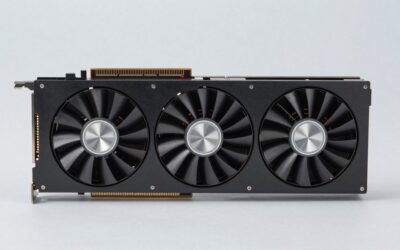
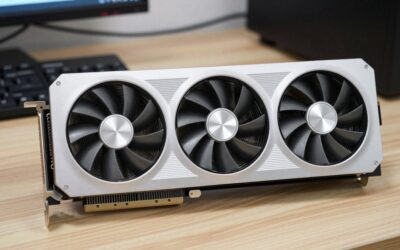
- Top Pick: 51RISC GeForce GTX 1660 Ti Graphics Card, 6GB GDDR6 192bit Video Card for Gaming GPU PCIe 3.0 x16 DP HDMI DVI 1080P 2K Game PC Card 1660ti 4K 8K Display (GTX 1660 Ti – Red)
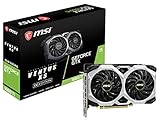
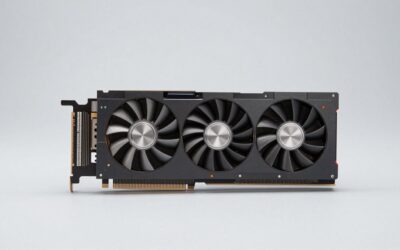
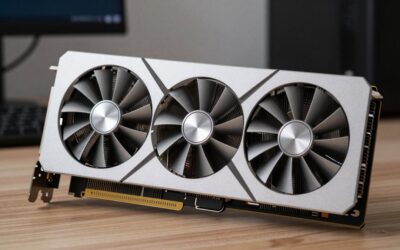
- Best Value: MSI Gaming GeForce GTX 1660 Ti 6GB GDRR6 – 192-bit HDMI/DP, Dual Fan, VR Ready, OC Graphics Card for Gaming PC, NVIDIA Video Card GPU (GTX 1660 TI Ventus XS 6G OC) Computer Graphics Cards (Renewed)
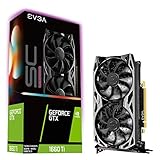
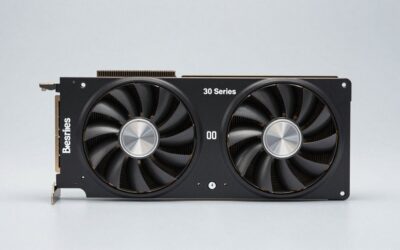
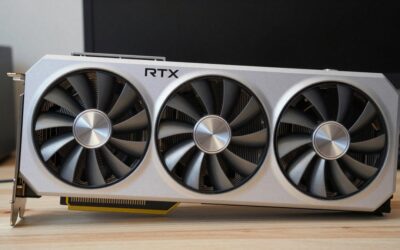
- Premium Choice: EVGA 06G-P4-1667-KR GeForce GTX 1660 Ti SC Ultra Gaming, 6GB GDDR6, Dual Fan (Renewed)


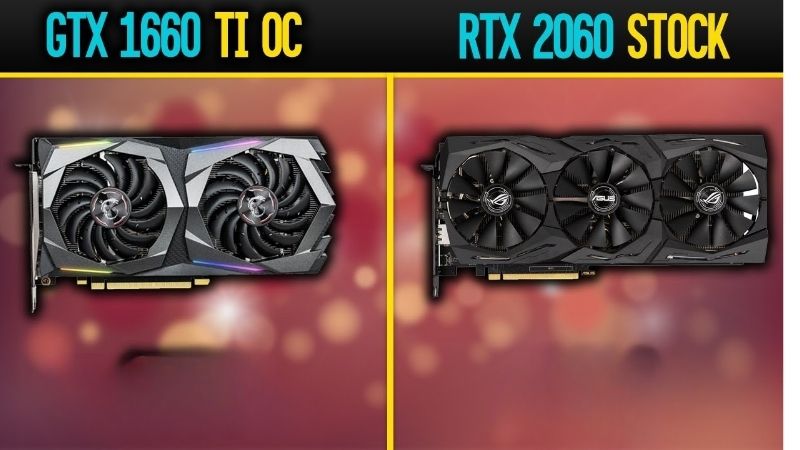
RTX 2060 vs GTX 1660 Ti is still one of the most searched budget GPU matchups in 2026, because both cards remain cheap, capable 1080p options on the used market. If you are hunting for the most frames per dollar without overspending, this comparison gives you a clear answer. We will break down the specs side by side, settle the ray tracing question, look at real used prices, and tell you exactly which card fits which type of budget gamer this year.
As an Amazon Associate we earn from qualifying purchases at no extra cost to you.




The Quick Verdict: RTX 2060 vs GTX 1660 Ti
For readers who want the bottom line first, the RTX 2060 is the faster, more feature-rich card, while the GTX 1660 Ti is the cheaper, more efficient one. You are choosing between a bit more power and features or a bit more value, and both are sensible picks depending on your budget and priorities.
If You Want More Power and Features
The RTX 2060 is the stronger card overall. It delivers higher frame rates in most games and adds ray tracing and DLSS support that the 1660 Ti simply does not have.
If you want a little extra headroom for demanding titles, or you are curious about entry-level ray tracing and the free performance DLSS can provide, the 2060 is the clear choice between these two.
It is also the more comfortable choice if you plan to keep the card for a few years, since its features help it stay relevant as more games adopt ray tracing and lean on upscaling to hit smooth frame rates.
If You Want the Best Value
The GTX 1660 Ti flips the argument on price. It typically costs less on the used market while still delivering excellent 1080p performance in the vast majority of games.
For a pure value build where every dollar counts and ray tracing is not a priority, the 1660 Ti gives you most of the gaming experience for less money, which is exactly what many budget buyers are after.
The efficiency bonus sweetens the deal too, since the 1660 Ti pairs happily with a smaller power supply and a compact case, keeping the overall build cost down beyond just the price of the card itself.
The Short Answer for Budget Buyers
Most budget gamers should decide based on two questions: do you care about ray tracing and DLSS, and how tight is your budget? If either answer leans toward features, take the 2060.
If you simply want the cheapest solid 1080p card and features do not move you, the 1660 Ti is the smart, economical pick. Everything below explains the reasoning so you can buy with confidence.
Neither is a wrong choice; they simply serve slightly different buyers. The 2060 is the enthusiast-leaning budget pick, and the 1660 Ti is the value-first one, so knowing your own priorities is most of the decision.
RTX 2060 vs GTX 1660 Ti Spec Comparison
Specs frame the whole debate, so here are the core numbers side by side. Both cards share the same Turing generation and 6 GB of memory, which means the real differences come down to core count, features, and efficiency rather than raw memory capacity.
| Specification | RTX 2060 | GTX 1660 Ti |
|---|---|---|
| Architecture | Turing | Turing |
| VRAM | 6 GB GDDR6 | 6 GB GDDR6 |
| Memory bus | 192-bit | 192-bit |
| Ray tracing | Yes (RT cores) | No |
| DLSS support | Yes (Tensor cores) | No |
| Typical board power | ~160 W | ~120 W |
| Relative raster speed | Faster | ~15-20% slower |
| Best target | 1080p high, entry RT | 1080p high value |
Reading the Spec Table
The headline difference is not memory, since both carry 6 GB, but features. The RTX 2060 includes dedicated RT and Tensor cores that unlock ray tracing and DLSS, while the 1660 Ti omits them entirely to hit a lower price.
The second key difference is raw power. The 2060 has more shader cores and higher memory bandwidth, translating into a consistent frame-rate lead across most titles.
Put together, the picture is straightforward: the 2060 trades higher power draw and a higher price for more performance and modern features, while the 1660 Ti strips those extras away to reach a lower cost.
Memory and Bandwidth
Both cards use 6 GB of GDDR6 on a 192-bit bus, so neither has a capacity advantage. That shared 6 GB is increasingly the pinch point in the newest games with heavy texture packs, affecting both cards similarly.
The 2060 does enjoy slightly higher effective bandwidth, which contributes to its performance edge at higher settings. In practice, though, the memory story is more about the shared 6 GB ceiling than any gap between the two.
For buyers planning to keep a card several years, that shared limit is worth taking seriously, because it is the factor most likely to force lowered texture settings in future releases regardless of which of the two you pick.
Power and Efficiency
The GTX 1660 Ti is the more efficient card, drawing roughly 120 W against the 2060’s 160 W. For a small or budget build with a modest power supply, that lower draw is a genuine practical advantage.
It also means the 1660 Ti runs cooler and quieter under the same conditions, which matters in compact cases with limited airflow. The 2060 asks a little more from your PSU and cooling in exchange for its extra performance.
Neither draw is demanding by modern standards, so most existing power supplies handle either card easily. The efficiency gap matters most in tiny builds or where you want the quietest, coolest possible system.
Deep Dive Face-Off: Performance and Features
Beyond the spec sheet, what matters is how these cards feel in real games and whether the 2060’s features justify its higher price. Comparing them on performance and capabilities, rather than numbers alone, is what reveals the better buy for your situation.
1080p Gaming Performance
Both cards are built for 1080p, and both handle it well in most titles. The RTX 2060 holds a consistent lead of roughly 15 to 20 percent, which can be the difference between comfortably high frame rates and merely acceptable ones in demanding games.
The GTX 1660 Ti is no slouch, though. In esports and less demanding titles, both cards push high frame rates, and the gap narrows to something many players would not notice in fast-paced action.
For competitive gaming at 1080p, either card delivers a smooth experience, so the 2060’s lead matters most in graphically heavy single-player games where every frame counts.
Ray Tracing and DLSS: The RTX Advantage
This is where the RTX 2060 pulls decisively ahead. It supports ray tracing, giving you a taste of the lighting effects that define modern games, even if performance at those settings is entry-level.
More importantly, it supports DLSS, NVIDIA’s AI upscaling that boosts frame rates by rendering at a lower resolution and reconstructing detail. In supported games, this can meaningfully extend the card’s useful life and offset its higher power draw with free performance.
The GTX 1660 Ti has neither feature, which is the single biggest reason to pay more for the 2060 if these capabilities appeal to you. For future-proofing on a budget, the RTX features carry real weight.
Pros and Cons of Each Card
The RTX 2060’s strengths are clear: higher raw performance, ray tracing, DLSS support, and better longevity in newer titles. Its trade-offs are a higher price, more power draw, and a slightly larger cooling requirement.
The GTX 1660 Ti counters with lower price, excellent efficiency, cooler and quieter operation, and strong 1080p value. Its cons are the missing RT and DLSS features and lower raw performance, which the shared 6 GB ceiling does nothing to offset in the newest games. Which set of trade-offs wins comes down to your budget and how much features matter to you.
A helpful way to frame it is to ask whether you would actually use ray tracing and DLSS. If yes, the 2060’s premium buys something real; if not, you are largely paying for features you will leave switched off.
Value, Alternatives, and Buying in 2026
Both of these are older cards, so buying smart in 2026 means understanding the used market and knowing when a newer card is the better call. The wider GPU pricing picture shapes that decision, so it is worth a quick look before you commit.
Used Market Prices Today
Since both cards are discontinued, you will mostly find them used, where the GTX 1660 Ti typically sells for a bit less than the RTX 2060. The exact gap varies, so it pays to compare current listings rather than assume.
When buying used, prioritize a card from a reputable seller with clear photos and, ideally, some return protection. A well-kept 1660 Ti or 2060 can serve reliably for years, but a cheap card from a poor listing is a false economy.
It also helps to check that the card has not been run hard for years or used heavily for mining, since worn fans and dried thermal paste can shorten a bargain’s life. A quick look at seller history and reviews goes a long way at this price point.
The Alternative: A Modern Budget Card
Before committing to either older card, it is worth weighing a newer budget GPU. A current-generation entry card brings more VRAM, better efficiency, and modern features, which matters as games grow more demanding.
The wider market makes this worth considering. GPU prices have stabilized after the steep climb of late 2025, but they have paused rather than fallen, and real supply relief from new fabs is not expected until roughly 2027 to 2028. That means a newer budget card holds its value well and may be the smarter long-term buy, so compare the recommended modern budget GPUs linked here against used prices before deciding.
The gap in raw price is often smaller than people expect once you account for a used card’s age and remaining lifespan, which is why a fresh budget GPU deserves a genuine look rather than an automatic dismissal.
Which Should You Buy?
If your budget is rock-bottom and you only need solid 1080p gaming today, a well-priced GTX 1660 Ti is hard to beat on value. If you can stretch a little and want ray tracing, DLSS, and more headroom, the RTX 2060 is the better long-term pick between the two.
That said, if a modern budget card sits close in price, its extra VRAM and features often make it the wiser choice for years of use. Compare all three options through the links in this guide to see which lands best in your budget right now.
Whatever you choose, buy from a source you trust and check the card’s condition if it is used. A careful purchase at this budget level is what turns a small spend into years of reliable 1080p gaming.
See More:
Final Verdict: RTX 2060 vs GTX 1660 Ti
The RTX 2060 vs GTX 1660 Ti decision comes down to features versus pure value. Buy the RTX 2060 if you want ray tracing, DLSS, and more performance for a little more money, and buy the GTX 1660 Ti if you want the cheapest dependable 1080p card and features do not sway you.
Just keep the bigger picture in mind: both share a 6 GB ceiling that the newest games are starting to test, and with prices stable rather than falling, a modern budget card can be the smarter long-term investment. Compare the RTX 2060, the GTX 1660 Ti, and a current budget alternative through the links in this comparison to lock in the best value for your needs.
Frequently Asked Questions
Which card is faster?
The RTX 2060 is meaningfully quicker, with 1920 CUDA cores against 1536 on the GTX 1660 Ti and a 192-bit memory bus versus 192-bit at lower speeds. Expect roughly 15 to 20 percent more performance at 1080p, and a larger advantage in modern shader-heavy titles.
Does the RTX 2060 support DLSS?
Yes, and this is the decisive difference. The RTX 2060 has RT cores and Tensor cores, so it runs hardware ray tracing and DLSS upscaling, including the newer transformer models. The GTX 1660 Ti has neither and must rely on FSR or XeSS compatibility modes instead.
Is 6GB of VRAM a problem on both?
Both ship with 6GB, and yes it is now the main limitation. Several current titles exceed it at 1080p ultra, causing texture streaming stutter. Dropping texture quality one step usually fixes it, and DLSS on the 2060 further reduces memory pressure by rendering at a lower internal resolution.
What power supply do they need?
The RTX 2060 draws around 160W and the 1660 Ti around 120W, both through a single 8-pin connector. A quality 500W supply covers either card in a typical build; older prebuilts with weak 300W units will need a replacement supply before either upgrade.
Which should I buy used in 2026?
The RTX 2060 if the price difference is modest, since ray tracing support, DLSS and higher raw performance extend its useful life considerably. Only choose the 1660 Ti if it is substantially cheaper or your power supply cannot handle the extra draw.
Ready to decide? Our #1 pick for 2026 is the Architecture.
Live price & availability on Amazon.

Write Your Review
No reviews yet. Be the first to share your experience!