
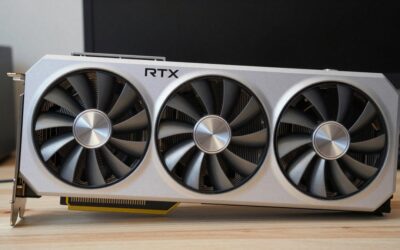
- Top Pick: ZOTAC Gaming GeForce RTX 4070 Ti Super Solid OC DLSS 3 16GB GDDR6X 256-bit 21 Gbps PCIE 4.0 Gaming Graphics Card, IceStorm 2.0 Advanced Cooling, ZT-D40730RC-10P
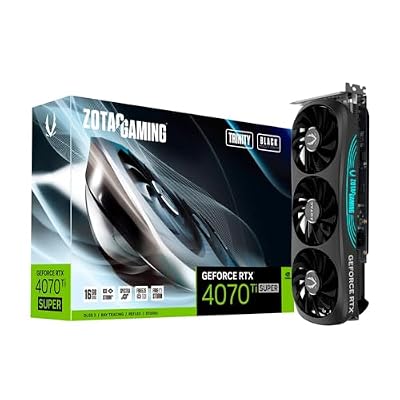
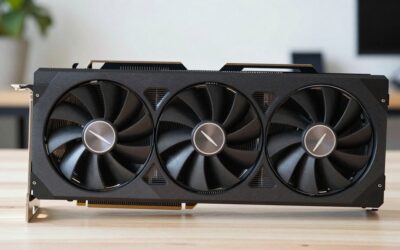
- Best Value: ZOTAC GAMING GeForce RTX 4070 Ti SUPER Trinity Black Edition 16GB GDDR6X
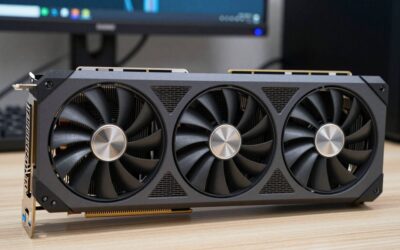
- Premium Choice: GIGABYTE GeForce RTX 4070 Ti Super Gaming OC 16G Graphics Card, 3X WINDFORCE Fans, 16GB 256-bit GDDR6X, GV-N407TSGAMING OC-16GD Video Card


The 4080 Super vs 5060 Ti matchup is one of the most searched GPU questions of 2026, and it hides a trap: these two cards are not really in the same league. The RTX 4080 Super is a former flagship built for 4K, while the RTX 5060 Ti is a mainstream 1080p-to-1440p card from a newer generation. That gap changes everything about which one is right for you and how much you should pay. In this comparison we break down the raw specifications, real gaming performance, ray tracing and DLSS behavior, power and compatibility, and honest price-to-value math. We also cover a smarter alternative and explain what today’s rising GPU prices mean for buying now. Read the quick verdict first if you are in a hurry.
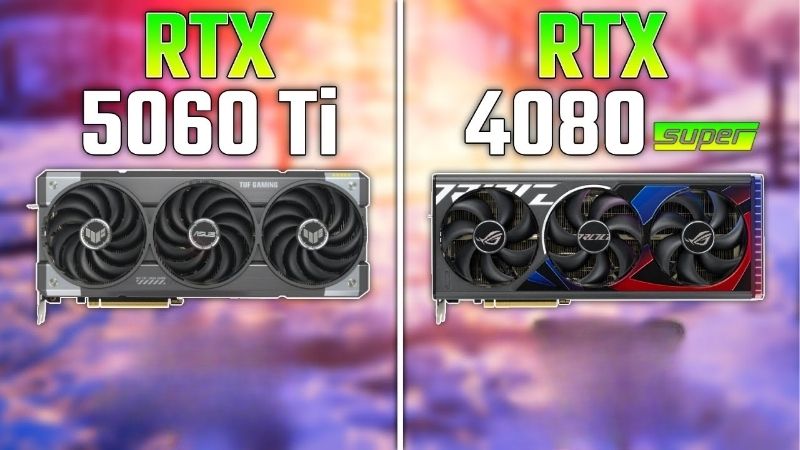
RTX 4080 Super vs 5060 Ti: The Quick Verdict
If you only read one section, read this one. These cards target different buyers, and the “winner” depends entirely on your resolution, budget, and whether you can find the 4080 Super at a fair price. Below is the fast answer, then who each card is actually for.
As an Amazon Associate we earn from qualifying purchases at no extra cost to you.


The One-Line Answer for Busy Buyers
The RTX 4080 Super is far more powerful and wins almost every raw performance test. The RTX 5060 Ti is far cheaper, far more efficient, and newer.
So the 4080 Super wins on framerate, and the 5060 Ti wins on value and price. If money is no object and you game at 4K, the 4080 Super is the obvious pick. For most buyers, the real fight is value, not just speed.
Who Should Pick the RTX 4080 Super
Choose the 4080 Super if you play at 4K, run demanding ray-traced titles, or also do heavy creative and AI work that benefits from its larger 16 GB memory and much higher core count.
It is also the right call if you keep GPUs for many years and want maximum headroom. Just be aware you are buying a previous-generation flagship, so pricing and availability can be inconsistent.
Who Should Pick the RTX 5060 Ti
Choose the 5060 Ti if you game mainly at 1080p or 1440p, want a quiet and efficient build, and care about paying a sensible price for strong modern features.
The 16 GB version is especially appealing because it removes the memory bottleneck that limits many mainstream cards in newer games and AI tasks. For the majority of gamers, it is simply the more logical purchase.
Specifications and Performance Face-Off
Numbers cut through the marketing, so let us line these cards up directly. The specifications explain why the 4080 Super pulls ahead in raw output and why the 5060 Ti still feels modern thanks to its newer architecture and generous memory on the 16 GB model.
Core Specs Side by Side
Here are the key specs that shape real performance:
| Spec | RTX 4080 Super | RTX 5060 Ti |
|---|---|---|
| Tier | High-end (former flagship) | Mainstream |
| Generation | Ada Lovelace (40 series) | Blackwell (50 series) |
| CUDA cores | ~10,240 | ~4,608 |
| Memory | 16 GB GDDR6X | 8 GB or 16 GB GDDR7 |
| Typical power draw | ~320 W | ~180 W |
| Best resolution | 4K | 1080p / 1440p |
The core-count gap alone tells the story: the 4080 Super has roughly twice the shading power, which is why it dominates at high resolutions.
Gaming Performance at 1080p, 1440p, and 4K
At 1080p, both cards run modern games well, and the difference shrinks because the CPU often becomes the limit. At 1440p, the 4080 Super pulls clearly ahead, delivering high framerates in demanding titles where the 5060 Ti settles for smooth but more modest numbers.
At 4K, the gap becomes a chasm. The 4080 Super is built for that resolution, while the 5060 Ti was not, and asking it to drive 4K in heavy games leads to compromises on settings. If your monitor is 1080p or 1440p, though, much of the 4080 Super’s extra power simply goes unused.
Match the card to your display. A 1080p 144 Hz or 1440p high-refresh gamer will keep the 5060 Ti busy and rarely feel starved in most titles. A 4K 120 Hz or 144 Hz panel, on the other hand, is exactly where the 4080 Super earns its price, holding smooth framerates in demanding games where the mainstream card would need heavy upscaling or lower settings to keep up. Buying a flagship to feed a 1080p screen is money left on the table.
Ray Tracing, DLSS, and NVIDIA’s AI Features
Both cards support ray tracing and NVIDIA’s DLSS upscaling, but the newer 5060 Ti belongs to the Blackwell generation, which brings the latest DLSS features and multi-frame generation designed to boost smoothness with AI.
This is where NVIDIA’s forward-looking technology gets interesting. The 5060 Ti can lean on newer AI-driven frame generation to close part of the performance gap in supported titles, punching above its raw specs. The 4080 Super still delivers superb ray tracing through brute force, but the 5060 Ti hints at where NVIDIA is steering future optimization: smarter software squeezing more from efficient hardware.
There is a catch worth knowing. Frame generation adds a little input latency and needs a decent base framerate to feel good, so it is best treated as a smoothness boost rather than a fix for a card that is truly overwhelmed. In practice, the newer generation of the 5060 Ti means it should keep gaining from future DLSS updates, while the 4080 Super leans more on the raw horsepower it already has. For buyers who value longevity through software, that generational edge is a real, if subtle, point in the 5060 Ti’s favor.
Value, Power, and Real-World Fit
Raw speed is only half the decision. What you pay, what your power supply can handle, and whether the card fits your case all decide real-world satisfaction. This is also where the pros and cons of each choice become clear.
Price-to-Performance: What You Really Pay For
The 4080 Super carries a high-end price because it is a former flagship, often landing well above $900 when available. The 5060 Ti sits in mainstream territory, typically a few hundred dollars, with the 16 GB model commanding a modest premium over the 8 GB version.
Measured in frames per dollar, the 5060 Ti is the stronger value for most buyers. You are not paying for 4K muscle you may never use. The 4080 Super only justifies its price if you genuinely push it at 4K or in professional workloads.
Put it in plain terms. If the 4080 Super costs roughly three times as much as a 5060 Ti but delivers closer to double the frames at the resolutions where it stretches its legs, the mainstream card wins the efficiency math for anyone on a budget. The flagship flips that logic only when the extra memory and cores translate into paid work or a no-compromise 4K experience. Decide which camp you are in before you spend, because the wrong side of that line is an expensive mistake.
Power Draw, PSU, and Case Compatibility
Practical fit matters. The 4080 Super draws around 320 W and typically wants a 750 W power supply plus a roomy case, because these cards are physically large. Check your case clearance before buying.
The 5060 Ti sips roughly 180 W, runs cooler and quieter, and slots into far more builds, including small-form-factor cases and systems with modest 550 W to 650 W supplies. For anyone upgrading an existing prebuilt, the 5060 Ti is much less likely to force a power-supply or case swap.
Connectors matter too. Larger cards in the 4080 Super class often use the 12VHPWR power connector, so make sure your power supply includes the right cable or adapter and that it is seated fully, since a loose connection is a known cause of trouble on high-wattage cards. The efficient 5060 Ti sidesteps most of this drama with lower draw and simpler power needs. Planning these practical details up front saves you from a build that boots but throttles or refuses to post.
Pros and Cons of Each Card
Here is the honest balance sheet for this 4080 Super vs 5060 Ti decision:
| RTX 4080 Super | RTX 5060 Ti | |
|---|---|---|
| Pros | Dominant 4K performance; 16 GB; great for creators | Excellent value; efficient; newest DLSS; easy fit |
| Cons | Expensive; power hungry; large; last-gen | Weaker at 4K; 8 GB model is limiting; mainstream ceiling |
Notice the 8 GB warning. If you consider the 5060 Ti, the 16 GB version is the one worth your money for longevity.
The Smart Alternative and What Today’s Prices Mean
Sometimes the best answer is neither card on the page. If the 4080 Super is too pricey and the 5060 Ti feels a touch light for your goals, a middle option may fit better. Timing matters too, because the current market is unusual.
A Third Option Worth Considering
A current-generation xx70-class card, such as an RTX 5070 or 5070 Ti, often sits neatly between these two. It offers a large step up from the 5060 Ti for 1440p and light 4K, without the flagship price or power demands of the 4080 Super.
This alternative is worth pricing out before you decide, because it can deliver most of the experience buyers actually want from the 4080 Super at a friendlier cost. If it interests you, compare current 5070-class prices on Amazon alongside both cards here.
One more note on the 4080 Super specifically: because it is a previous-generation flagship, new stock can be scarce and prices uneven. If you go hunting for one, buy from sellers with clear return policies rather than gambling on a suspiciously cheap listing. A current-generation alternative at a stable price is often the calmer purchase, especially for a buyer who does not want to chase discontinued inventory.
Should You Buy Now or Wait?
Timing is a fair question in 2026 because component prices have trended upward and the memory shortage behind that rise has not fully cleared. The cautious good news is that prices have stopped climbing as steeply as they did in late 2025, and some hardware makers have reported a stretch of relative stability, while still warning that volatility remains.
New supply is on the way. Chinese memory makers and new Micron fabs in Idaho are expected to add capacity, but those plants are not projected to run until 2027 or 2028. In plain terms, prices have leveled off rather than dropped, and meaningful relief is still years out. If you need a card now, waiting is unlikely to reward you in the short term.
Final Recommendation
Buy the RTX 4080 Super if you game at 4K, chase maximum ray-traced framerates, or do serious creative and AI work, and you can find it at a fair price. Buy the RTX 5060 Ti – specifically the 16 GB model – if you play at 1080p or 1440p and want the best blend of value, efficiency, and modern features.
For the largest group of buyers, the 5060 Ti 16 GB is the more sensible purchase, while the 4080 Super remains the enthusiast’s choice when budget allows.
See More:
Conclusion
The 4080 Super vs 5060 Ti debate is really a choice between a 4K powerhouse and a smart mainstream value card, and the right pick depends on your monitor, budget, and workload rather than raw benchmarks alone. The 4080 Super wins on outright performance; the 5060 Ti 16 GB wins on price, efficiency, and future-facing features, while a 5070-class card bridges the two. With prices only stabilizing rather than falling, there is little reason to wait if you are ready to build. Weigh your resolution against your budget, then check today’s prices to lock in the card that fits you best.
Frequently Asked Questions
How much faster is the RTX 4080 Super than the RTX 5060 Ti?
Dramatically, roughly double or more in demanding scenarios. The 4080 Super has vastly more shader cores and a 256-bit GDDR6X interface versus a 128-bit bus on the 5060 Ti. These are different product classes entirely, one a 4K flagship and the other a 1080p to 1440p mainstream card.
Both have 16GB of VRAM, so does capacity even matter here?
Capacity is equal but bandwidth is not, and bandwidth is what separates them at high resolution. The 5060 Ti sixteen gigabytes prevents texture stutter at 1440p, which is its real purpose. It does not let the card approach 4080 Super frame rates, because the memory system feeds far fewer shaders.
Does DLSS 4 multi frame generation let the 5060 Ti close the gap?
It raises displayed frame rate substantially, but it does not create the underlying responsiveness of real rendered frames and needs a decent base frame rate to look clean. The 4080 Super also supports frame generation, so enabling it on both preserves rather than eliminates the performance difference.
Which makes more sense to buy now?
For 1080p and 1440p gaming on a budget, the 5060 Ti 16GB is the sensible purchase with far lower power draw and cost. For 4K, heavy ray tracing or GPU rendering, a discounted 4080 Super remains excellent value against current flagship pricing, provided your power supply and case can take it.
What are the power and clearance differences?
The 4080 Super draws around 320 watts through a 12V-2×6 connector, needs an 850 watt class supply, and is a large triple-slot card in most designs. The 5060 Ti sits near 180 watts on a single eight-pin, runs on 550 watts, and fits comfortably in compact builds.

Write Your Review
No reviews yet. Be the first to share your experience!