
- Top Pick: ZER-LON GeForce GTX 1660 Super 6GB Graphics Cards, GDRR6 192Bit PCIE 3.0X16 Computer Gaming Gpu, Dual Freeze Fans Video Card with HDMI/DP/DVI Ports Support 4K and 8K HD
- Best Value: MSI Gaming GeForce GTX 1660 Super 192-bit HDMI/DP 6GB GDRR6 HDCP Support DirectX 12 Dual Fan VR Ready OC Graphics Card (GTX 1660 Super VENTUS XS OC) (Renewed)
- Premium Choice: MSI Gaming GeForce GTX 1660 Super 192-bit HDMI/DP 6GB GDRR6 HDCP Support DirectX 12 Dual Fan VR Ready OC Graphics Card (GTX 1660 Super Gaming X) (Renewed)


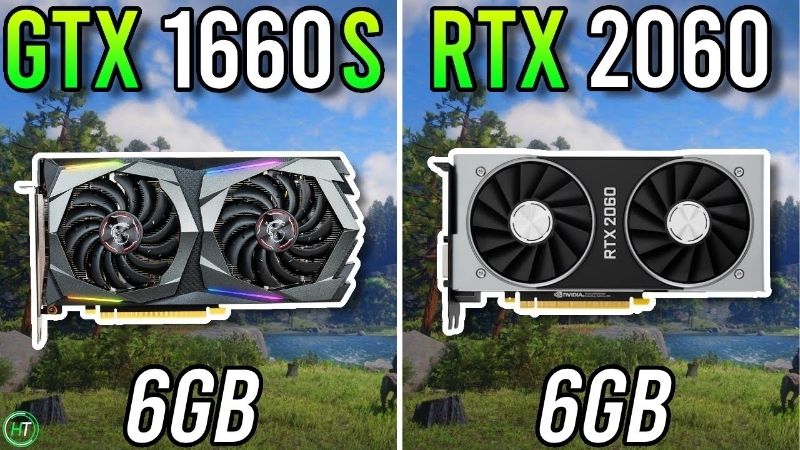
The 1660 Super vs 2060 question is still one of the most practical budget GPU comparisons in 2026, especially for anyone shopping the used market or building a cheap 1080p rig. These two Turing cards are close in raw performance, but the RTX 2060 adds ray tracing and DLSS that the GTX 1660 Super lacks, while the 1660 Super often wins on price. Choosing wrong means either overpaying for features you will not use or missing ones you would have loved. This comparison breaks down the raw specifications, real 1080p gaming, ray tracing and DLSS, power and compatibility, and honest value math, with clear guidance on buying either card used. Start with the quick verdict if you are in a hurry.
GTX 1660 Super vs 2060: The Quick Verdict
These cards sit right next to each other on the budget ladder, which is what makes the choice interesting. The RTX 2060 is a bit faster and adds ray tracing and DLSS, while the GTX 1660 Super typically costs less and delivers excellent 1080p value. Your budget and whether you care about DLSS decide it. Here is the fast answer, then who each card suits.
As an Amazon Associate we earn from qualifying purchases at no extra cost to you.


The One-Line Answer for Busy Buyers
The RTX 2060 wins on performance and features, adding ray tracing and DLSS. The GTX 1660 Super wins on value, usually costing less for similar rasterized 1080p performance.
So if you want the extra speed and NVIDIA’s DLSS upscaling, the 2060 is the pick. If you just want the best cheap 1080p card and do not care about ray tracing, the 1660 Super is the value champion. In pure rasterized games the two are closer than their names imply.
Who Should Pick the GTX 1660 Super
Choose the GTX 1660 Super if your budget is tight and you want strong, reliable 1080p gaming for the lowest price. It handles esports and most modern games at sensible settings with ease.
It is also the smart pick if you do not care about ray tracing or DLSS, which are limited on entry cards anyway. For a no-frills 1080p build or a first gaming PC, the 1660 Super stretches a small budget further than almost anything else.
Who Should Pick the RTX 2060
Choose the RTX 2060 if you want a bit more performance and access to DLSS, which can meaningfully improve framerates in supported games. That extra speed helps in more demanding titles at 1080p.
It is the better pick if you want to dabble in ray tracing, though keep expectations modest, as entry-level RT performance is limited. For a small step up in capability and features, the 2060 is worth a modest premium if the price is right.
Specifications and Performance Face-Off
The specs show why these cards trade blows, with the 2060 holding a modest raw advantage and exclusive access to DLSS. Both share the same Turing generation and a 6 GB frame buffer, which keeps them closely matched in many games. The numbers set up the real 1080p results.
Core Specs Side by Side
Here are the key specifications that shape performance:
| Spec | GTX 1660 Super | RTX 2060 |
|---|---|---|
| Architecture | Turing | Turing |
| Memory | 6 GB GDDR6 | 6 GB GDDR6 |
| Ray tracing / DLSS | No | Yes (entry-level) |
| Typical power draw | ~125 W | ~160 W |
| Best resolution | 1080p | 1080p |
| Value angle | Cheapest | Faster + features |
The shared 6 GB memory keeps them close in many titles, while the 2060’s extra cores and DLSS give it the edge in performance and features, at the cost of a little more power.
Gaming Performance at 1080p
At 1080p, both cards deliver smooth gameplay in most modern titles at medium to high settings, and in esports games they run well beyond what most monitors can display. The 1660 Super is genuinely capable here.
The RTX 2060 pulls ahead in more demanding games, offering a useful buffer of extra frames, and DLSS widens that gap further where it is supported. If you play newer, heavier titles and want them to feel smoother, the 2060’s combination of raw speed and upscaling is the more comfortable choice for the years ahead.
Memory is the shared limitation to keep in mind. Both cards carry 6 GB, which is enough for 1080p today but can feel tight in the newest, most texture-heavy titles at higher settings. Neither card is built for 1440p, so if that is your target you should look at the alternative discussed later rather than pushing either of these beyond their comfort zone.
Ray Tracing, DLSS, and NVIDIA’s Features
Ray tracing is technically available on the 2060, but be realistic: entry-level RT performance is limited, and enabling heavy effects can drop framerates sharply. Treat it as an occasional bonus rather than a core reason to buy.
DLSS is the more valuable feature of the two. In supported games, NVIDIA’s AI upscaling can boost framerates noticeably, effectively extending the life of the 2060. The 1660 Super lacks this entirely, so where DLSS is supported, the 2060 can feel meaningfully quicker. For budget buyers, DLSS support is the strongest single argument in the 2060’s favor.
It is worth setting expectations honestly, though. DLSS on the 2060 uses an earlier version than today’s newest cards, so while it clearly helps, it is not the dramatic multi-frame technology found on current NVIDIA GPUs. Still, in supported games it remains a real, free performance boost that the 1660 Super simply cannot access, and that gap grows as more games add DLSS.
Value, Power, and Real-World Fit
For cards at this price, value and practicality matter most. What you pay, how much power the card needs, and how it fits your system decide the smart buy. This section makes those trade-offs concrete and weighs the honest pros and cons.
Price-to-Performance: What You Really Pay For
The GTX 1660 Super’s strength is price. It typically costs less than the 2060, and for pure 1080p rasterized gaming it delivers most of the experience for less money, making its frames-per-dollar figure hard to beat.
The RTX 2060 asks a small premium for more speed and DLSS. Whether that premium is worth it depends on the games you play and the price you find. If DLSS support matters to your library, the 2060 justifies the extra cost; if you just want cheap, solid 1080p, the 1660 Super wins on value.
Because both are older cards, the deciding factor is often the exact price you find on a given day. A 2060 at nearly the same price as a 1660 Super is an easy recommendation, while a large gap swings the value back toward the cheaper card. Check several listings before you buy, since used pricing for both fluctuates and the better deal is not always the same card.
Power Draw, PSU, and Compatibility
Both cards are easy to house. The 1660 Super draws around 125 W and is happy on a modest power supply, making it an easy drop-in for older or budget systems without a power upgrade.
The 2060’s roughly 160 W is still very manageable, but it wants a touch more headroom. For older prebuilt machines with small power supplies, the 1660 Super is the safer fit. As always, confirm your wattage and case clearance before buying, particularly with compact desktops.
These cards also make excellent upgrades for older prebuilt systems, since neither demands a modern high-wattage power supply. If you are breathing new life into an aging office PC for gaming, either card can transform it, but pair the upgrade with a quick check that your case has room and at least one spare power connector for the card.
Pros and Cons of Each Card
Here is the honest balance sheet for this 1660 Super vs 2060 decision:
| GTX 1660 Super | RTX 2060 | |
|---|---|---|
| Pros | Lowest price; efficient; great 1080p value; easy fit | Faster; DLSS support; entry ray tracing; more headroom |
| Cons | No DLSS or ray tracing; less future headroom | Costs more; higher power; weak heavy ray tracing |
The takeaway is simple. Save money with the 1660 Super for pure 1080p, or pay a little more for the 2060’s extra speed and DLSS, which ages a bit better.
The Smart Alternative and Buying Either Card Used
Both of these are older cards, so most buyers will find them on the used market. That makes smart shopping and a sensible alternative just as important as the spec comparison itself. Here is how to buy well and what else to consider.
A Third Option Worth Considering
If you can spend a little more, a used RTX 3060 12 GB is a strong step up, offering more memory and performance while keeping DLSS, and it holds up better in newer games. It is often the smarter long-term budget buy than either Turing card.
This alternative is worth pricing before you commit, because a modest increase now can add years of comfortable gaming. If it interests you, compare current prices on Amazon alongside the two cards in this matchup.
Buying new, where stock still exists, removes the guesswork entirely and comes with a full warranty, which for a first-time builder can be worth a small premium over a used gamble. Weigh the peace of mind against the savings, and remember that the cheapest listing is not a bargain if the card fails a month later.
How to Buy a Used GTX 1660 Super or RTX 2060 Safely
Because these cards are mostly sold second-hand, buy carefully. Prefer sellers with clear return policies and good ratings, ask about the card’s history, and be cautious of prices that look too good to be true, which can signal a heavily used or faulty unit.
When the card arrives, test it with a demanding game or a stress tool and watch temperatures, which reveals worn thermal paste or a tired fan. A little diligence protects a budget purchase, and a clean, well-kept used card can serve reliably for years of 1080p gaming.
Original-owner cards with a receipt are ideal, as some warranties transfer, and a card that ran cool in a well-ventilated case tends to have plenty of life left. Avoid units advertised as heavily overclocked or pulled from mining rigs unless the price is very low and you can test before paying, since sustained heavy use can shorten a fan’s lifespan even when the core is fine.
Final Recommendation
Buy the GTX 1660 Super if you want the cheapest solid 1080p card and do not care about DLSS or ray tracing. Buy the RTX 2060 if you want a bit more performance and DLSS support, and the price difference is small.
For the tightest budgets, the 1660 Super is the value pick, while the 2060 is the smarter choice for buyers who want DLSS and a little more longevity, provided the used price is fair.
See More:
- Radeon drivers
- What is NVIDIA CUDA Toolkit
- 4080 Super vs 5060 Ti
- NVIDIA PhysX
- NVIDIA Game Ready Driver
Conclusion
The 1660 Super vs 2060 decision is really about whether DLSS and a bit more speed are worth a small premium over the cheapest strong 1080p card, and the answer depends on your games, your budget, and the used prices you find. The 2060 leads on performance and features; the 1660 Super wins on pure value, with a used RTX 3060 as a compelling step up. Whichever you choose, shop the used market carefully and test the card on arrival. Weigh features against price, then check today’s listings to secure the budget GPU that fits you best.
Frequently Asked Questions
How much faster is the RTX 2060 than the GTX 1660 Super?
In raster gaming the 2060 leads by roughly ten to twenty percent depending on the title and resolution, thanks to more shader cores and a wider 192-bit bus. The gap widens at 1440p where the 1660 Super runs out of bandwidth first, and narrows at 1080p in CPU-limited games.
Does the missing DLSS support on the 1660 Super matter?
Increasingly, yes. The 1660 Super lacks tensor cores, so it cannot run DLSS at all and must rely on FSR or XeSS instead. The 2060 supports DLSS upscaling, which in supported games is worth more than the raw performance difference between the two cards combined.
Is 6GB of VRAM still enough for 1080p gaming?
Both cards have 6GB, and that is now the binding constraint rather than shader power. At 1080p with medium to high textures it holds up, but ultra texture presets, ray tracing and heavily modded games will exceed it and cause stuttering that no settings tweak fully removes.
Can the RTX 2060 realistically do ray tracing?
Only in light implementations at 1080p with DLSS enabled, such as reflections in older titles. Modern path traced games are far beyond it. Treat ray tracing as a bonus that occasionally works rather than a reason to choose the card over a cheaper 1660 Super.
What power supply does each card need?
The 1660 Super draws about 125 watts and runs on a decent 450 watt unit with one eight-pin connector. The 2060 draws around 160 watts and wants 500 watts with an eight-pin. Both fit compact cases easily, and neither requires the newer 12V-2×6 connector or an ATX 3.x supply.

Write Your Review
No reviews yet. Be the first to share your experience!