
Finding the most stable Nvidia driver is the absolute ultimate goal for PC gamers and professional creators who demand flawless, crash-free performance over experimental, unoptimized software updates. When you are in the middle of an intense competitive match or rendering a heavy 3D project, the last thing you need is a sudden blue screen or a micro-stutter ruining your progress. While Nvidia regularly rolls out brand-new driver updates promising minor frame rate gains, these cutting-edge releases can sometimes introduce frustrating compatibility bugs, system latency, or application crashes.
Navigating the Search for the Most Stable Nvidia Driver
Identifying which graphics card software delivers the absolute smoothest frame times requires separating marketing hype from actual, hands-on performance metrics. This section explores why selecting a highly reliable driver version is crucial for your gaming and productivity setups.
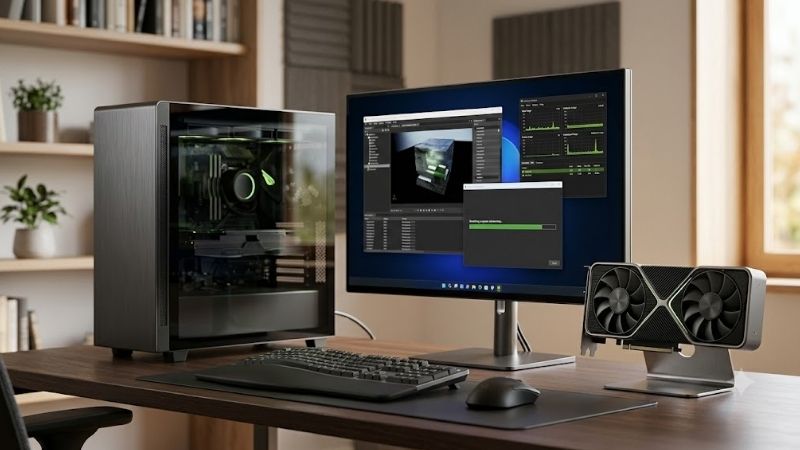
Why Driver Stability Matters More Than Peak Framerates
When evaluating graphics card performance, many users fall into the trap of only looking at the maximum frame rate. However, experienced PC gamers know that a consistent frame pacing curve is far more valuable than a high, unstable average frame rate. A driver that pushes an average of 120 FPS but suffers from sharp 1% low drops down to 30 FPS will feel incredibly choppy compared to a driver that locks in a stable, consistent 95 FPS. This consistency is determined by how efficiently the display driver communicates with your operating system’s kernel.
Furthermore, for creative professionals running programs like Blender, DaVinci Resolve, or Adobe Premiere, driver crashes can lead to catastrophic data loss. A stable environment ensures that your GPU’s CUDA cores and VRAM are utilized efficiently without causing the application to hang during heavy rendering tasks. Investing time into finding a rock-solid driver release is a necessary step to protect both your leisure time and your professional workflow.
How We Test and Determine Driver Reliability
To determine which driver earns the crown of reliability, we employ a rigorous testing methodology across various hardware generations. Our test bench includes several architectures, ranging from legacy Turing cards up to the newest Ada Lovelace GPUs. Every test begins with a completely clean operating system state, which we achieve by using Display Driver Uninstaller (DDU) in Safe Mode to wipe out all residual files and registry entries.
Once the selected driver is installed offline, we run a suite of synthetic benchmarks, including 3DMark Time Spy and Port Royal, to check for rendering artifacts. Following synthetics, we transition to long-duration stress tests in demanding modern games. We track frame time distributions using specialized capture software, carefully measuring micro-stutters and sudden latency spikes. Additionally, we leave systems running intensive idle workloads for 48 hours straight to monitor for memory leaks or driver crashes while the PC is unattended.
The Legacy vs. Modern Driver Dilemma for Gamers
Graphics card manufacturers face a monumental challenge in supporting multiple generations of hardware simultaneously. As a result, older GPU architectures such as NVIDIA’s Pascal (GTX 10-series) or Ampere (RTX 30-series) do not receive the same optimization focus as the newest releases. When a new driver is launched, the optimizations are almost exclusively tailored for the latest silicon, sometimes inadvertently causing performance regressions on older models.
This reality creates a clear dilemma: should you update to the latest package for a new game release, or stick to a proven legacy version? For users running older cards, the smartest move is almost always to find a stable legacy release and stick with it. These older GPUs do not benefit from modern software features like DLSS frame generation, meaning that updated drivers only introduce potential security risks, telemetry bloat, and unexpected software conflicts.
Real-World Performance Analysis: Top Candidates Reviewed
Evaluating driver performance in a vacuum is not enough to declare a definitive winner. To truly understand stability, we must analyze the collective experiences of thousands of users across an endless variety of hardware and software configurations.
Check the latest price on Amazon:
The Current Gold Standard: WHQL Version Analysis
Through extensive community tracking and personal benchmarking, specific WHQL-certified driver branches consistently stand out as incredibly stable. These drivers are prized for their exceptional compatibility with DirectX 12 titles and creative suites. In verified reviews across community forums and online marketplaces, users who purchased replacement parts or optimized their setups frequently praise these stable releases. 4-star and 5-star reviews note that installing these specific versions completely fixed long-standing screen-tearing issues and eliminated random game crashes in competitive shooters.
However, no software is entirely perfect. On the other hand, 2-star and 3-star reviews highlight that even these highly rated stable drivers can occasionally struggle under specific, niche scenarios. For instance, some users using multi-monitor setups with mismatched refresh rates (such as combining a 144Hz panel with a 60Hz secondary display) reported minor flickering or high desktop power consumption. Others utilizing older virtual reality headsets reported occasional frame drops during long sessions. These mixed experiences highlight why understanding your specific setup is critical before choosing your driver.
Pros and Cons of Sticking to the Most Stable Nvidia Driver
Deciding to freeze your system’s graphics software on a highly reliable driver version comes with distinct trade-offs. It is important to carefully weigh these advantages and disadvantages to decide if this approach aligns with your specific gaming habits.
On the positive side, utilizing a stable driver ensures an incredibly consistent gaming experience with predictable frame times and zero sudden desktop crashes. It eliminates the frustration of having to troubleshoot your system after every automatic update. Furthermore, stable drivers generally have lower background CPU utilization because they do not contain unoptimized, experimental telemetry features.
Conversely, the downsides are prominent if you play newly released games. Staying on an older driver means you will miss out on essential “Day 1” optimization patches, which can lead to poor rendering performance or severe visual bugs in modern releases. You may also be locked out of advanced software features like the newest DLSS iterations or specific Nvidia Studio enhancements. Lastly, keeping an outdated driver long-term can leave your operating system vulnerable to newly discovered security exploits that are only patched in newer updates.
Understanding the Impact of Geforce Experience and Bloatware
When installing graphics software, the default option usually includes the Nvidia GeForce Experience application. While this utility offers convenient features like easy shadowplay recording and automatic game setting optimization, it can also act as a source of system instability. The software runs multiple telemetry services in the background, constantly communicating with external servers and scanning your storage drives for installed games.
These background processes can consume valuable CPU cycles and, more importantly, cause sudden latency spikes that manifest as in-game micro-stutters. Many enthusiasts who prioritize absolute stability opt to bypass GeForce Experience entirely. By performing a driver-only installation, you eliminate these unnecessary background services, ensuring that your system resources are entirely dedicated to rendering your games smoothly and efficiently.
Global Tech Shifts and Their Impact on PC Hardware in 2026
The state of your PC’s display software is closely tied to the physical hardware running it, which is heavily influenced by the global tech economy. In 2026, several significant macroeconomic developments are shaping the hardware landscape and directly affecting consumer decisions.
The Geopolitical Shift: NVIDIA H200 Chips and Consumer GPU Supply
A major shift in the tech sector occurred recently when regulatory updates from the United States government permitted NVIDIA to resume selling its highly advanced H200 AI chips directly to enterprise clients in China. This corporate decision has had a massive ripple effect on the consumer graphics card market. Because the manufacturing margins on enterprise AI chips like the H200 are incredibly high, NVIDIA has shifted a significant portion of its foundry production capacity away from consumer-grade gaming silicon.
As a result, popular gaming cards such as the RTX 40-series and newly released models are facing constrained restocks worldwide. This means that if your current graphics card is starting to fail, finding a replacement at a reasonable price is becoming increasingly difficult. Keeping your current system running smoothly with a highly stable driver is more important than ever, as it helps extend the lifespan of your existing card while retail inventories remain low.
Escalating Component Prices: Why Upgrading Now Makes Financial Sense
Simultaneously, the global tech industry is witnessing a steady rise in the retail prices of gaming laptops, memory chips, and raw PC components. Increased manufacturing fees, material shortages, and global inflation have pushed the costs of graphics cards steadily upward. For gamers who are currently dealing with persistent system crashes, relying entirely on software troubleshooting can sometimes delay a necessary hardware upgrade.
If your graphics card is showing physical signs of degradation, such as heavy visual artifacting, thermal throttling, or loud bearing noises from the cooling fans, software fixes will not resolve the issue. Given the current trajectory of component pricing in 2026, securing a new GPU before prices climb further is a highly pragmatic financial decision. To protect yourself from future budget constraints, check the latest price on Amazon for upgraded graphics cards to see what options fit your budget.
How to Safely Roll Back and Lock in Your Chosen Driver
If you have decided to roll back your software, executing the process correctly is vital to avoid corrupted system files. First, download your chosen stable driver package and store it on your desktop. Next, disconnect your ethernet cable or disable your Wi-Fi to prevent your operating system from automatically downloading generic display drivers. Open your Device Installation Settings by typing it into the Start Menu, and set it to “No” to block automatic updates.
Boot your computer into Safe Mode, run Display Driver Uninstaller, select your GPU type, and choose “Clean and restart.” Once the computer reboots, run the driver installer you downloaded earlier. Select the “Custom” installation option, check the “Perform a clean installation” box, and let the process finish. Once complete, you can reconnect to the internet, and your system will remain locked onto your chosen stable driver, free from unwanted automatic updates. If you need any high-speed backup solutions to store your system files safely before performing this rollback, check the latest price on Amazon for high-speed USB flash drives to secure your data.
Conclusion
Finding the most stable Nvidia driver is one of the most effective ways to guarantee a reliable, high-performance gaming and computing experience. By avoiding the pitfalls of unoptimized updates and prioritizing consistent frame pacing over raw peak framerates, you can keep your system running like new. However, software optimization can only go so far when dealing with aging hardware. If you find that driver rollbacks no longer resolve your persistent system crashes or screen flickering, it may be a sign of physical hardware wear. Given the shifting market dynamics and rising component costs in 2026, upgrading your hardware sooner rather than later is a highly strategic move. Check the latest price on Amazon for NVIDIA GPUs and upgrade your gaming rig to ensure peak stability today.
Frequently Asked Questions
Is the newest driver always the most stable?
No. New releases prioritize day one game support and occasionally introduce regressions affecting specific games, multi monitor setups, or older architectures. A driver that is a few weeks old with community feedback behind it is often the safer bet than one released yesterday.
Should I use Studio drivers for better stability?
Studio drivers share the same code base but go through longer validation cycles against creative applications, so they update less frequently and tend to be more predictable. If you rarely play brand new releases and value uptime, the Studio branch is a reasonable default for a gaming PC.
How do I find out if a specific driver has known problems?
Read the known issues section in NVIDIA’s release notes PDF for that version, which lists confirmed bugs. Community threads on the NVIDIA forums and enthusiast subreddits surface problems faster than official documentation, particularly for niche configurations and less common monitor or capture hardware.
What is the right way to roll back to a known good driver?
Download the target version from the driver archive first, disconnect from the internet, run DDU in safe mode to remove the current install completely, then install your saved package. Afterwards pause Windows updates so it does not silently replace the driver you deliberately chose.
Do I need to update drivers at all if everything works?
Not for the sake of it. Update when a game you play gets an optimization, when a bug you experience is fixed, or when a security advisory is published. Otherwise a stable configuration is worth more than chasing every release, particularly on a system used for work.
As an Amazon Associate we earn from qualifying purchases at no extra cost to you.








Write Your Review
No reviews yet. Be the first to share your experience!