
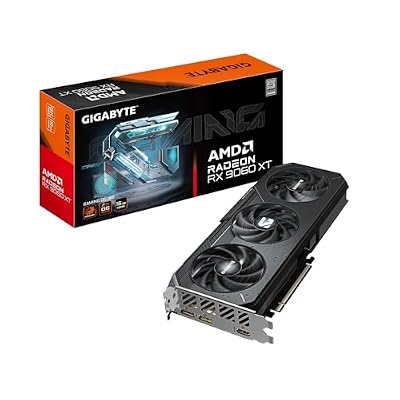
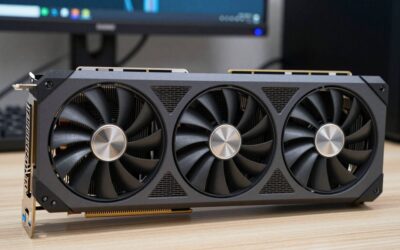
- Top Pick: GIGABYTE Radeon RX 9060 XT Gaming OC 8G Graphics Card, PCIe 5.0, 8GB GDDR6, GV-R9060XTGAMING OC-8GD Video Card
- Best Value: ASRock Radeon RX 9060 XT Challenger 16GB OC, RDNA 4, 3290MHz Boost, 16GB GDDR6 128-bit, PCIe 5.0, Dual Fans, 0dB Silent, LED Indicator, DisplayPort 2.1a, HDMI 2.1b
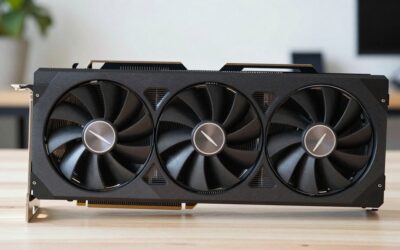
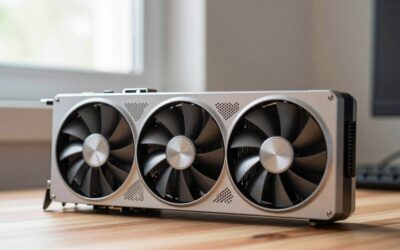
- Premium Choice: ASUS Dual Radeon RX 9060 XT 16GB GDDR6 Gaming Graphics Card
Radeon RX 9060 XT vs RTX 5060 pits AMD’s value-focused mid-ranger against Nvidia’s popular budget favourite, and the gap between them is bigger than the similar names suggest. The Radeon RX 9060 XT sits a clear step above the RTX 5060 in raw power and offers a 16GB memory option, while the RTX 5060 counters with lower pricing, strong efficiency, and the full DLSS 4 feature set. Choosing between them means weighing raw frames and VRAM against price and Nvidia’s software advantage. This comparison lays out the numbers and gives you a clear recommendation for 2026, so you can choose with confidence rather than guesswork.

Prime
Editor's Pick
ASUS Dual Radeon RX 9060 XT 16GB GDDR6 Graphics Card, AMD, for Desktop (PCIe 5.0, HDMI 2.1b, DisplayPort 2.1a, 2.5-Slot, Axial-tech Fan, 0dB Technology, and More)

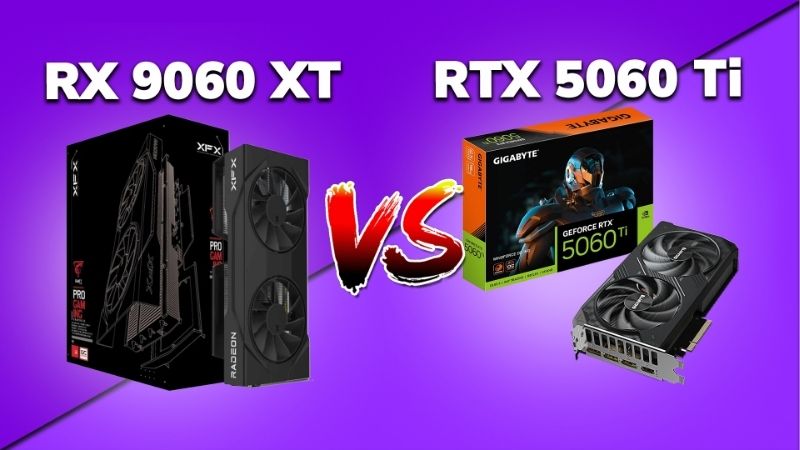
The Quick Verdict: Radeon RX 9060 XT vs RTX 5060
Because these cards sit close in price but a little apart in performance, the quick verdict comes down to whether you prioritise raw power and VRAM or lower cost and Nvidia’s features. Here is the compressed answer before the detailed breakdown below. In short, the RX 9060 XT is the stronger performer and the better future-proof pick, while the RTX 5060 is the cheaper, more efficient option with a more mature software stack. Which of those descriptions sounds more like you will ultimately decide the winner here.
As an Amazon Associate we earn from qualifying purchases at no extra cost to you.






Quick Verdict For Performance And Future-Proofing
If you want the most raw performance and the reassurance of extra VRAM, the Radeon RX 9060 XT is the stronger choice. It generally leads the RTX 5060 in rasterization and, in its 16GB configuration, offers double the memory for demanding modern textures.
That extra VRAM is the standout advantage for anyone thinking long term. The RTX 5060’s 8GB can become a limitation at higher settings in the newest games, whereas the 16GB 9060 XT has the headroom to stay smooth as titles grow hungrier over the years.
Choose the 9060 XT if you want your card to age well and you value raw frames and memory over Nvidia’s software ecosystem. For longevity-minded 1080p and light-1440p gamers, it is the safer bet of the two.
Quick Verdict For Budget And Efficiency
If your priority is the lowest price and the best efficiency, the RTX 5060 makes a strong case. It typically costs less, draws modest power, and fits effortlessly into compact and quiet builds without demanding a bigger power supply.
Its trump card is DLSS 4 Multi Frame Generation, exclusive to the RTX 50-series, which can lift frame rates substantially in supported games and help close the raw-performance gap with the AMD card in those titles.
Pick the RTX 5060 if you want to spend less, value low power draw, and lean on DLSS 4 and Nvidia’s broad software support. For budget-focused buyers who play plenty of DLSS-supported games, it is a compelling and sensible choice.
Radeon RX 9060 XT vs RTX 5060 Specs And Price Snapshot
The clearest way to see how these two cards line up is to place their core specifications and prices side by side in one view. Skim this table, then read the analysis underneath for what these numbers really mean once you start gaming rather than simply comparing rows.
| Specification | RX 9060 XT (16GB) | RTX 5060 |
|---|---|---|
| Architecture | RDNA 4 | Blackwell |
| VRAM | 16GB GDDR6 | 8GB GDDR7 |
| Upscaling | FSR 4 | DLSS 4 Multi Frame Gen |
| Ray tracing | Improved, competitive | Stronger, more mature |
| Approx. TDP | ~150–180W | ~145W |
| Typical MSRP | Around $349 | $299 |
The table makes the trade-off clear: the RX 9060 XT offers more raw power and, in the 16GB version, double the VRAM, while the RTX 5060 counters with a lower price, faster GDDR7, and stronger ray tracing plus DLSS 4. It is more performance and memory versus lower cost and better features, and which wins depends on your priorities.
The VRAM row deserves particular attention, because it is the difference most likely to matter over time. An 8GB card can run into trouble at higher settings in the newest games, forcing you to dial back textures, whereas a 16GB card sails past that limit. For a buyer choosing a card to keep for several years rather than months, that single row can outweigh a modest difference in price or a small lead in average frame rate.
Deep Dive Face-Off By Criteria
With the quick answer covered, here is the detailed head-to-head across the three areas that actually decide this purchase: raw gaming performance and VRAM, the competing upscaling and ray-tracing technologies, and the honest strengths and weaknesses each card brings for a real buyer weighing them carefully at checkout. Take the section that speaks to your priorities first, then read the others to be sure nothing there changes your mind before you spend your money.
Raw Gaming Performance And VRAM
In native rasterization the RX 9060 XT generally holds an advantage over the RTX 5060, delivering higher frame rates in many demanding titles thanks to its more powerful core. It is the faster card of the two in most non-upscaled scenarios.
The VRAM difference compounds that lead over time. The RTX 5060’s 8GB is enough for most games today, but it can become a bottleneck at higher settings in the newest releases, where the 16GB 9060 XT keeps textures loaded and performance steady.
For buyers who plan to keep their card for several years, this combination of more raw power and more memory is the strongest argument in the AMD card’s favour. It is built to stay comfortable longer than the 8GB Nvidia option.
The catch to keep in mind is that raw-performance leads shrink once DLSS 4 enters the picture, so this advantage is clearest in native, non-upscaled play. If you mostly play older or competitive titles at native resolution, the 9060 XT’s extra muscle shows up directly; if your favourite games all support DLSS 4, the RTX 5060 can claw back much of the gap in exactly those titles, which is worth weighing honestly against the raw numbers.
DLSS 4, FSR 4, And Ray Tracing
Features are where the RTX 5060 fights back hardest against the AMD card’s raw advantage. DLSS 4 Multi Frame Generation is mature and widely supported, and it can lift frame rates substantially in supported games, narrowing or even erasing the 9060 XT’s lead in those specific titles.
AMD’s FSR 4 has improved a great deal and is now genuinely competitive on image quality, so the 9060 XT is far from outclassed on upscaling. The remaining gap is mostly in the breadth of supported games rather than in raw upscaled quality.
Ray tracing still favours Nvidia’s more mature hardware, giving the RTX 5060 an edge there despite its lower raw power. If ray tracing matters to the games you play, that capability is a real point in the Nvidia card’s favour.
Pros And Cons Of Each Card
Setting the trade-offs side by side makes this performance-versus-value decision much clearer for your own particular situation.
Radeon RX 9060 XT — pros: stronger raw performance, an available 16GB of VRAM for future-proofing, competitive value, and much-improved FSR 4. Cons: ray tracing and upscaling breadth still trail Nvidia slightly, and it can cost a little more than the RTX 5060.
RTX 5060 — pros: a lower price, excellent efficiency, faster GDDR7, mature DLSS 4, and stronger ray tracing. Cons: only 8GB of VRAM and less raw horsepower than the AMD card, limiting its headroom over time.
Read together, these lists describe two different buyers rather than a single winner. The 9060 XT is the pick for the buyer who wants raw performance and memory that lasts, while the 5060 is the pick for the buyer who prioritises price, efficiency, and Nvidia’s feature set. The right choice depends squarely on which of those you value more.
Pricing, Alternatives, And The Final Call
The last factor is real 2026 pricing, where the memory market and a couple of alternatives can shift this decision either way. Treat this as the practical, wallet-focused counterweight to the feature comparison above, because a temporary price swing can easily settle a matchup this close. The card that looks best on paper is not always the one that offers the best deal on the day you actually buy, so a quick price check is time well spent.
How 2026 Memory Prices Affect Both Cards
Memory pricing is central to this comparison, because the 16GB 9060 XT and the 8GB RTX 5060 sit on opposite sides of the VRAM divide. Through late 2025, AI datacenter demand pushed DDR5, SSD, and high-VRAM graphics-card prices up by roughly 20%, and 16GB cards felt that pressure most directly.
There is cautiously positive news: prices have stopped rising as steeply as they did at the end of 2025, and some makers report relative stability while still warning of volatility. New supply is coming from DDR5 sources such as CXMT and two new Micron plants being built in Idaho.
The catch is timing, since those plants will not ramp until 2027–2028. Because the 16GB 9060 XT is the higher-VRAM option, it may carry a little more of this price pressure, so weigh the current real price gap carefully — but its extra memory often still justifies the premium for buyers who keep cards a long time.
The Alternative If Neither Fits
If you can spend a little more, the RTX 5060 Ti 16GB brings Nvidia’s features together with a full 16GB of VRAM, removing the 8GB compromise while keeping DLSS 4 and strong ray tracing on the table.
On the value side, an 8GB version of the 9060 XT costs less but sacrifices the future-proofing that makes the 16GB model attractive. For most buyers, aiming for 16GB of memory on either brand is the smarter long-term move in 2026.
If your budget genuinely cannot stretch past the RTX 5060, that is not a bad outcome either. It remains a capable, efficient 1080p card with excellent features, and pairing it with sensible settings will keep it enjoyable for a good while. The key is simply to buy it knowing its 8GB ceiling, so the decision is deliberate rather than a surprise you discover a year later in a demanding new release.
See More:
- RTX 4060 vs RTX 5060
- M4 GPU benchmark
- RTX 5060 Ti benchmark
- 5060 Ti 16GB vs 9070 XT
- RTX 5050 vs RTX 5060
Final Verdict And Recommendation
Buy the Radeon RX 9060 XT if you want more raw performance, value the future-proofing of 16GB of VRAM, and are happy with a slightly less mature feature set. It is the stronger long-term pick for performance-minded buyers.
Buy the RTX 5060 if you want to spend less, value efficiency and DLSS 4, and mostly play at 1080p or in DLSS-supported titles where 8GB is enough. For budget-focused buyers, it remains a compelling and sensible choice.
If you are still torn, let your time horizon break the tie. Planning to keep this card for four or five years pushes you firmly toward the 16GB Radeon and its extra headroom, while upgrading every couple of years makes the cheaper, efficient RTX 5060 an easy and sensible pick. Match the card to how long you intend to own it, and the decision stops feeling difficult.
To settle the Radeon RX 9060 XT vs RTX 5060 debate: the AMD card wins on raw power and VRAM while the Nvidia card wins on price, efficiency, and features, making your priorities the deciding factor. With high-VRAM cards under continued price pressure through 2026, buying the right card at a fair price sooner beats waiting for relief the supply calendar does not promise. Check today’s prices through the link below and grab the one that fits your needs and budget.
Frequently Asked Questions
Which of these budget cards is faster?
The RX 9060 XT is the stronger performer, typically 10 to 20 percent ahead of the RTX 5060 in rasterised games at 1080p and 1440p. It also offers a 16GB configuration, whereas the RTX 5060 is limited to 8GB, which widens the practical gap in texture-heavy modern titles.
How much does the VRAM difference change things?
Significantly, if you choose the 16GB RX 9060 XT. The RTX 5060’s 8GB is adequate at 1080p with sensible textures but overflows in ultra texture and ray traced scenarios, producing stutter. The 8GB version of the 9060 XT shares that weakness, so make sure you compare the right variants.
What are the power and PSU requirements?
The RTX 5060 draws 145W and is comfortable on a 450W to 550W supply with a single 8-pin connector. The RX 9060 XT sits at roughly 160 to 182W depending on the memory configuration, also using one 8-pin, and recommends 550W. Both are easy fits for prebuilts and small builds.
Does PCIe lane count differ between them?
Yes, and it can matter. The RTX 5060 uses a PCIe 5.0 x8 link, which halves in effective bandwidth on older PCIe 3.0 motherboards and compounds with its 8GB buffer. The RX 9060 XT uses a full x16 connection, making it the better GPU-only upgrade for an ageing platform.
Which is better for streaming or video work?
The RTX 5060 has the advantage despite being slower in games. Its ninth generation NVENC encoder delivers better quality at a given bitrate for streaming and recording, and CUDA support is more broadly implemented across editing and 3D applications. AMD has narrowed the gap but Nvidia still leads here.
Ready to decide? Our #1 pick for 2026 is the Architecture.
Live price & availability on Amazon.



Write Your Review
No reviews yet. Be the first to share your experience!