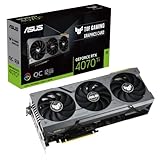
- Top Pick: ZOTAC Gaming GeForce RTX 4070 Ti Super Solid OC DLSS 3 16GB GDDR6X 256-bit 21 Gbps PCIE 4.0 Gaming Graphics Card, IceStorm 2.0 Advanced Cooling, ZT-D40730RC-10P
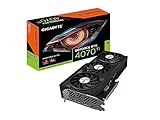
- Best Value: GIGABYTE GeForce RTX 4070 Ti Super Eagle OC 16G Graphics Card, 3X WINDFORCE Fans, 16GB 256-bit GDDR6X, GV-N407TSEAGLE OC-16GD Video Card
- Premium Choice: Gigabyte GeForce RTX 4070 Ti WINDFORCE OC 12G Graphics Card, 3X WINDFORCE Fans, 12GB 192-bit GDDR6X, GV-N407TWF3OC-12GD Video Card
Top Rtx 4080 Rtx 4070 Which Picks for 2026
Here are our current top rtx 4080 rtx 4070 which picks, compared on real Amazon owner reviews, price, and features. Live prices update below.


Dropped $50.00
RTX 4080 vs RTX 4070 Ti remains a hot comparison in 2026, because these two original Ada cards still circulate widely on the second-hand and clearance market even after their Super refreshes arrived. The names are close, but the hardware is not: one carries 16GB of VRAM on a wider bus, the other 12GB on a narrower one, and the price and power gaps follow suit. This breakdown gives you the spec data, the real-world feel, and a clear answer on which is worth your money today.
As an Amazon Associate we earn from qualifying purchases at no extra cost to you. Product prices and availability are accurate as of the date shown and are subject to change.




The Quick Verdict: 4080 vs 4070 Ti at a Glance
If you want the answer fast: the RTX 4080 is the stronger card and the better choice for 4K gaming and longevity, while the RTX 4070 Ti is the cheaper, lower-power option that shines at 1440p but shows its 12GB VRAM limit at higher resolutions. They are a tier apart in both performance and price, so your target resolution and budget settle most of the decision before you even reach the benchmarks.
Who Wins on Raw Performance
The RTX 4080 wins on every raw-performance metric. It packs 9,728 CUDA cores against the 4070 Ti’s 7,680 — roughly 27% more shaders — and pairs them with a wider 256-bit bus versus 192-bit. In practice that yields a 4K lead of about 25–30% and a 1440p lead closer to 18–22%, depending on the title.
The wider memory interface matters as much as the core count. At 4K with ray tracing, the 4080’s extra bandwidth keeps it fed where the 4070 Ti starts to choke, which is why the gap widens at higher resolutions rather than staying flat.
Want the faster card without second-guessing it? The 4080 is the clear pick — and it is worth checking its current price before clearance stock disappears.
Who Wins on Value
At launch the 4070 Ti undercut the 4080 sharply: $799 against $1,199. That $400 gap bought you roughly three-quarters of the performance, which made the 4070 Ti the value play for anyone gaming at 1440p who did not need the bigger card’s 4K headroom.
In 2026 that calculus shifts. Both originals were superseded by Super refreshes — the 4070 Ti Super added a full 16GB of VRAM, and the 4080 Super launched cheaper than the original 4080. So when you weigh value today, you are really weighing leftover stock against those refreshed alternatives, which we address in the recommendation below.
One more value angle often gets overlooked: resale and longevity. The 4080’s 16GB buffer means it is less likely to feel obsolete in two or three years, which protects its value better than the 12GB 4070 Ti. If you tend to upgrade on a regular cycle, the bigger card can claw back part of its premium when you eventually sell it on.
Comparison Table: Core Specs Side by Side
The table puts the core numbers next to each other, making the 4080’s premium and the 4070 Ti’s VRAM limitation easy to see at a glance.
| Spec | RTX 4070 Ti | RTX 4080 |
|---|---|---|
| GPU die | AD104 | AD103 |
| CUDA cores | 7,680 | 9,728 |
| Boost clock | ~2,610 MHz | ~2,505 MHz |
| VRAM | 12GB GDDR6X | 16GB GDDR6X |
| Memory bus | 192-bit | 256-bit |
| Bandwidth | ~504 GB/s | ~717 GB/s |
| Board power (TGP) | 285W | 320W |
| Recommended PSU | 700W | 750W |
| Launch MSRP | $799 | $1,199 |
Deep Dive Face-Off: 4080 vs 4070 Ti
The spec sheet sets the stage, but the real difference shows when you map each card onto a build, a monitor, and a power budget. This section compares them feature by feature so you can judge which trade-offs actually matter for your setup rather than chasing headline numbers.
Design, Cooling, and Power Draw
Power separates them cleanly. The 4080 draws 320W and wants a 750W PSU, while the 4070 Ti sips 285W and is happy on a quality 700W unit. If you are reusing a mid-range supply, the 4070 Ti is the easier drop-in and runs cooler and quieter on equivalent coolers.
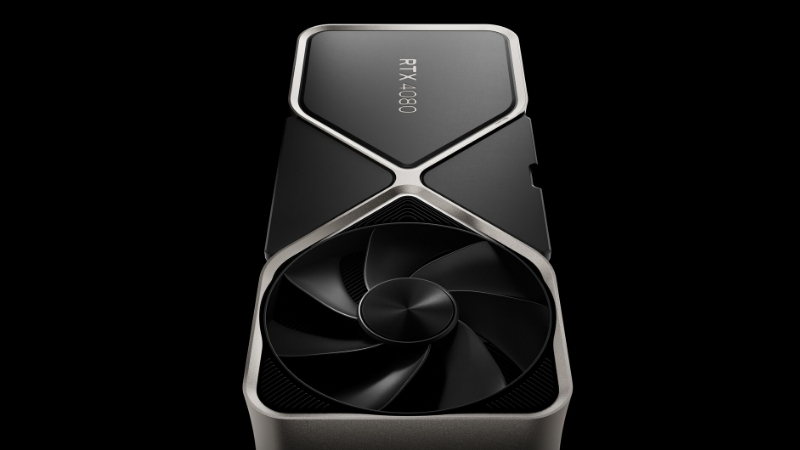
Physically, both come in large triple-fan partner designs because both run on chunky Ada dies. The 4070 Ti has slightly more compact options thanks to its lower power, but neither is a small-form-factor natural — measure your case clearance before buying either.
Under sustained load the 4080’s extra 35W shows up as marginally higher temperatures and fan noise, so case airflow is worth a thought on the bigger card.
1440p and 4K Gaming Performance
At 1440p both cards are excellent. The 4070 Ti maxes out current AAA titles comfortably and runs esports far above any refresh rate you are likely to own. The 4080’s lead here is real but often academic — the difference between two already-smooth experiences.
At 4K the 12GB versus 16GB gap becomes the headline. Texture-heavy and ray-traced titles can brush against the 4070 Ti’s 12GB buffer at native 4K, forcing texture compromises or heavier upscaling, while the 4080’s 16GB holds its composure. This is the single biggest practical reason to pay up for the 4080 if 4K is your goal.
So the resolution you actually game at should anchor this decision. A 1440p high-refresh panel is the 4070 Ti’s natural home; a 4K display is the reason to choose the 4080 and its larger frame buffer.
It is worth being concrete about the 12GB question. At 1440p, 12GB is rarely a problem today, so the 4070 Ti is not handicapped where most owners actually play. The pressure appears specifically at native 4K with ultra textures and ray tracing, and in a handful of recent titles that allocate aggressively. If that describes your library, the 4080’s 16GB is insurance worth paying for; if it does not, the 4070 Ti’s buffer will serve you fine for years.
Ray Tracing, DLSS, and AI Features
Feature-wise the two are equals: same 3rd-gen RT cores, same 4th-gen Tensor cores, and full DLSS 3 with Frame Generation on both. There is no exclusive AI feature on the 4080 — it simply has more cores and more VRAM doing the same work.
That shared software stack is a strong forward-looking point. DLSS and Frame Generation keep improving through driver updates, so each card’s effective performance tends to grow after purchase. The 4080’s 16GB buffer gives it more headroom for future upscaling and frame-generation pipelines that lean on larger frame buffers — a quiet longevity edge over the 12GB 4070 Ti.
For creators who render or run local AI, the 4080’s extra compute and 4GB of additional VRAM scale those tasks meaningfully, which can justify the bigger card even for a 1440p gamer who moonlights as a creator.
The practical lesson is that the feature parity makes this a pure horsepower-and-VRAM decision rather than a feature decision. You are not giving up DLSS, Frame Generation, or any RT capability by choosing the cheaper card — you are only trading peak frame rate and buffer size. For many buyers that reframing makes the 4070 Ti far easier to justify than the raw price gap alone suggests.
Pros, Cons, Pricing, and the Better Buy
With performance and features mapped, the decision narrows to honest trade-offs and 2026 timing. Below are the strengths and weaknesses of each card in the 4080 vs 4070 Ti match-up, the market forces moving their prices, and a clear final recommendation.
Pros and Cons of Each Card
The RTX 4070 Ti’s pros: excellent 1440p performance, lower 285W power draw, easier PSU compatibility, and a significantly lower price. Its cons: only 12GB of VRAM on a 192-bit bus, which limits native-4K headroom and forces texture or upscaling compromises in the heaviest titles.
The RTX 4080’s pros: a clear performance lead, comfortable native 4K, 16GB of VRAM, and stronger creator and AI scaling. Its cons: a much higher price, a heavier 320W draw, and a 1440p advantage that frequently goes unnoticed in real play.
Weighing the pros and cons of the 4080 vs 4070 Ti choice gives a clean rule: buy the 4080 for 4K and longevity, buy the 4070 Ti for high-refresh 1440p on a tighter budget — but read the pricing section first, because the refreshed Super cards complicate both.
How 2026 Price Hikes and the H200 News Change the Math
This comparison plays out in a rising market. Through early 2026, GPU prices have climbed because GDDR7, GDDR6 and high-bandwidth memory are in severe shortage — VRAM now drives more than 80% of the bill of materials on some high-end cards, and trackers have logged current-gen increases of roughly 15–23%. Both the original 4080 and 4070 Ti are end-of-life, so remaining stock is thin and prices have firmed rather than fallen.
Nvidia’s data-center priorities compound the squeeze. In January 2026 the U.S. approved exports of Nvidia’s H200 AI chip to China, with Chinese firms reportedly ordering over two million units at around $27,000 each. Capacity steered toward those high-margin AI orders is capacity not building consumer GeForce cards, which keeps cards in this 12–16GB tier tight and pricey across the board.
The practical takeaway: waiting is unlikely to make either card cheaper soon, and discontinued stock only gets scarcer. If a 4080 or 4070 Ti appears at a genuinely fair price, that is the moment to act rather than gamble on a market trending the wrong way.
The same shortage logic applies to the Super refreshes and current-generation cards, so do not assume waiting for a 50-series price drop will rescue your budget — those cards are caught in the same memory crunch. The most reliable strategy in this market is to buy the right card at a fair price when you see it, rather than holding out for a correction that the supply data does not support.
The Alternative + Final Verdict: Who Should Buy Which
The smartest alternative here is often a Super refresh. The RTX 4070 Ti Super fixes the original’s biggest flaw by bumping VRAM to 16GB, and the RTX 4080 Super launched cheaper than the original 4080 while matching or beating it. Before you buy an original, compare its price against those refreshes and against a current-generation RTX 5070 Ti — sometimes the newer card costs about the same with fresher memory and a longer support runway.
Final verdict: buy the RTX 4080 if you game at 4K, run a 4K 120Hz+ display, or do creator and AI work — its 16GB buffer and extra muscle are the headroom you will use for years. Buy the RTX 4070 Ti if you live at 1440p, want lower power and an easier build, and the price gap to the 4080 is steep where you shop.
Either way, check live stock and pricing through the links on this page before deciding — in a tightening market, the best deal is usually the one available right now.
Conclusion
The RTX 4080 vs RTX 4070 Ti decision comes down to resolution, VRAM, and budget rather than the similar names. The 4080 is the 4K and longevity champion with 16GB of VRAM and a wider bus; the 4070 Ti is the efficient 1440p value pick whose 12GB buffer is its one real limitation. Both share the same DLSS feature stack, so neither feels dated on features. With 2026 memory shortages and Nvidia’s H200-driven supply priorities keeping consumer GPUs scarce, prices are more likely to rise than fall — so once you have settled the RTX 4080 vs RTX 4070 Ti question for your build, and weighed the Super refreshes, securing a fair deal sooner beats waiting. Use the links on this page to check today’s price and buy with confidence.
Frequently Asked Questions
What is the best rtx 4080 rtx 4070 ti in 2026?
The best rtx 4080 rtx 4070 ti depends on your budget and how you plan to use it. The options compared above are our top-rated picks based on real customer ratings, build quality, and overall value — start with the highest-rated model that fits your budget.
How much should I expect to spend on a rtx 4080 rtx 4070 ti?
Prices vary by brand and features. Budget options cover the essentials, while mid-range and premium models add durability, performance, and extra features. Compare the prices in the list above to find the best value for your needs.
What should I look for when buying a rtx 4080 rtx 4070 ti?
Focus on what matters most for your use case — build quality, compatibility, performance, warranty, and verified customer reviews. Every pick above is selected to balance these factors.
Are budget rtx 4080 rtx 4070 ti options worth it?
Yes. For most people a well-reviewed budget or mid-range rtx 4080 rtx 4070 ti delivers excellent value. You only need to spend more if you specifically require premium materials or top-tier performance.
How did we choose these rtx 4080 rtx 4070 ti picks?
We compare current Amazon ratings, review counts, key features, and price to surface the options with the best real-world value. The list is refreshed as ratings and availability change.