
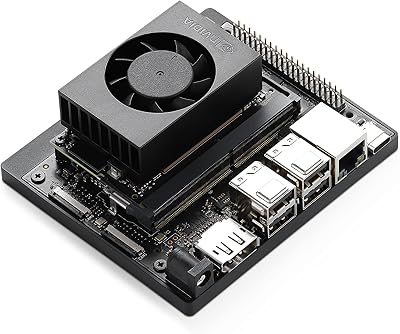
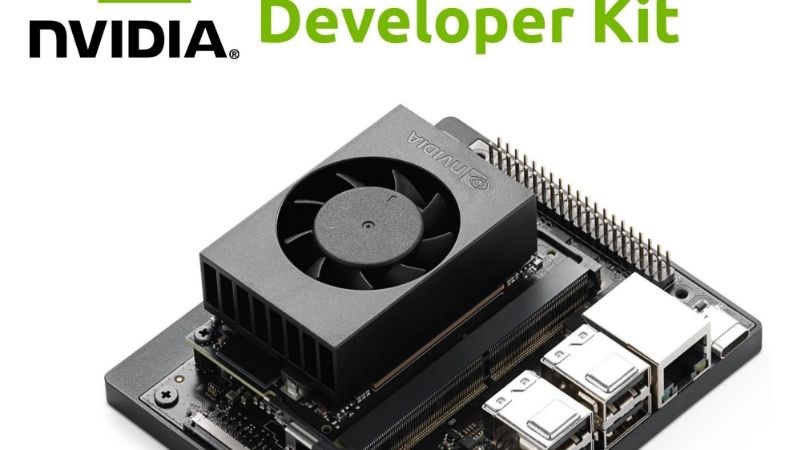
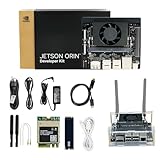
- Top Pick: NVIDIA Jetson Orin Nano Super Developer Kit
- Best Value: NVIDIA Jetson AGX Orin 64GB Developer Kit with Ethernet, USB, Display Port
- Premium Choice: N-VIDIA Jetson Orin Nano 8GB RAM Super Board(Official) 67Tops Development Board Jetson ORIN Nano Developer Kit for Embedded and Edge Systems (8G Official-Basic Kit)
Jetson Nano Nvidia is the little board that has introduced countless makers, students, and hobbyists to real, hands-on artificial intelligence. If you’re weighing whether this pocket-sized computer belongs on your desk, you probably have practical questions: what can it actually do, is it still worth buying, and what else do you need to get started? This review answers all of them. Drawing on the patterns in real user feedback — the enthusiastic 4 and 5-star praise and the honest 2 and 3-star frustrations — it covers what the board is, what you can build, its genuine pros and cons, and exactly how to set yourself up for success.
- What the Jetson Nano From Nvidia Actually Is
- What Makers Say About the Jetson Nano
- Getting Started With Your Jetson Nano Nvidia Kit
- What Stronger Guides Add
- Kit Comparison at a Glance
- Power Modes and What They Change
- Model Speed: What to Expect in Practice
- Storage: microSD Card Versus NVMe Drive
- Jetson Nano Versus a General-Purpose Board
- Setup and Care Checklist
- Who Should Skip the Jetson Nano
- Common Mistakes
- More Picks Worth Considering
- Related Guides
- Frequently Asked Questions
- Related Articles

What the Jetson Nano From Nvidia Actually Is
The Jetson Nano is Nvidia’s entry-level board for edge AI and robotics, a small single-board computer with a CUDA-capable GPU that can run real machine-learning models locally. It exists to make AI development accessible without a data center, and understanding what’s inside it sets the right expectations.
As an Amazon Associate we earn from qualifying purchases at no extra cost to you.



The Board and Its Specs Explained
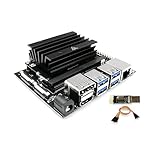
At its core, the Jetson Nano pairs an Nvidia GPU with an ARM processor and onboard memory, all running Linux through Nvidia’s JetPack software. That CUDA-capable GPU is the key ingredient, because it lets the board accelerate AI workloads that would crawl on a typical hobby computer.
The original Nano shipped with 4GB of memory and a modest but capable GPU, which is plenty for learning computer vision, running smaller neural networks, and building robotics projects. It’s designed as a starting point, not a workstation.
Because it runs full Linux and Nvidia’s development stack, the Nano behaves like a real AI computer in miniature. That authenticity is exactly why educators and hobbyists reach for it as a first step into the field. Unlike a simple microcontroller, it can load frameworks, run trained models, and process live camera feeds, which means the projects you build genuinely resemble how AI is deployed in the real world.
What You Can Build With It
The Jetson Nano shines in projects that combine cameras, sensors, and AI. Popular builds include object-detection systems, facial recognition experiments, autonomous robots, smart cameras, and home automation gadgets that make decisions on their own.
Because it processes AI locally rather than in the cloud, it’s ideal for real-time tasks where latency and privacy matter. A robot that needs to react instantly, or a camera that shouldn’t send footage online, both benefit from on-device inference.
For learners, the appeal is that these aren’t toy demos; they’re genuine applications of the same techniques used in industry. The Nano turns abstract AI concepts into something you can build and watch work. Watching a robot navigate a room or a camera identify objects in real time makes ideas like neural networks and inference tangible in a way no textbook can.
Jetson Nano vs Jetson Orin Nano: Which to Get
It’s worth knowing that Nvidia offers a newer, far more powerful option: the Jetson Orin Nano. It delivers a huge leap in AI performance over the original Nano, making it the better choice for demanding modern models and larger projects.
The original Nano still has a place for absolute beginners and simpler builds, especially where budget is tight and the goal is learning the fundamentals. But anyone planning to run bigger, current AI models should seriously consider the Orin generation.
The practical rule: choose the classic Nano to learn cheaply, or step up to the Orin Nano if you want headroom for heavier AI work. Matching the board to your ambition prevents both overspending and frustration. If your goal is to run larger vision models, work with generative AI, or build something you’ll keep developing for months, the extra performance of the Orin generation quickly pays for itself.
What Makers Say About the Jetson Nano
To judge the Jetson Nano Nvidia experience fairly, it helps to balance the glowing reviews against the frustrated ones. The overall sentiment is warmly positive, with the complaints revealing exactly who the board is and isn’t for.
The 4-5 Star Reviews: A Real AI Playground
Enthusiastic owners love that the Nano opens the door to genuine AI development at a low price. They praise the massive community, the abundance of tutorials, and the satisfaction of getting real neural networks running on hardware they can hold in one hand.
The learning value comes up constantly. For students and career-changers, the Nano is a hands-on way to understand AI concepts that feel abstract on paper, and many credit it with sparking a genuine path into the field.
Access to Nvidia’s ecosystem earns particular praise. Because the board uses the same CUDA foundation as professional hardware, the skills learned on a Nano transfer directly to bigger, real-world systems. Many reviewers frame this as the board’s hidden value: the money buys not just a gadget but an on-ramp into a professional toolchain used across the AI industry.
The 2-3 Star Complaints: Performance and Setup
The critical reviews are honest about the board’s limits. The original Nano’s modest memory and GPU mean it struggles with the largest, most demanding modern AI models, which can disappoint buyers expecting workstation-level power.
Setup also draws complaints. Getting started involves flashing a microSD card, installing JetPack, and working through Linux, which can feel intimidating to complete beginners without a guide to follow.
A few owners also mention power and cooling quirks, noting that a proper power supply and sometimes a small fan are needed for stable performance under load. These are solvable, but they catch newcomers off guard.
Pros and Cons of the Jetson Nano
Here’s a balanced summary of what the Jetson Nano Nvidia board offers, weighing its real strengths against its genuine limitations.
| Pros | Cons |
|---|---|
| Affordable entry into real CUDA-based AI | Original Nano is underpowered for big modern models |
| Huge community, tutorials, and project library | Setup involves Linux and can intimidate beginners |
| Runs AI locally for real-time, private tasks | Needs accessories (SD card, power supply, sometimes a fan) |
| Skills transfer to professional Nvidia hardware | Can be supply-constrained at times |
The verdict is clear: for learning and hobby robotics, the Jetson Nano is an outstanding value, provided you go in understanding it’s a starter board rather than a powerhouse. Set your expectations correctly and it delivers enormous educational reward.
Getting Started With Your Jetson Nano Nvidia Kit
A smooth start with the Jetson Nano Nvidia board comes down to buying the right accessories and following a clear setup path. A little preparation turns a potentially fiddly first day into an exciting one.
What You Need to Buy Alongside It
The board itself is only part of the picture, and knowing what to add prevents a frustrating unboxing. At minimum, you’ll want a fast, high-capacity microSD card for the operating system and your projects, plus a reliable power supply that meets the board’s requirements.
Many builders also add a compatible camera module for computer-vision projects and a small case with a cooling fan to keep temperatures in check during heavy workloads. These extras dramatically expand what you can do on day one.
Choosing quality accessories up front saves headaches later, since a cheap SD card or an underpowered supply is a common source of instability. You can find recommended starter kits and accessories through the links on this page to get everything matched correctly. Buying a complete bundle is often the easiest route for beginners, because it guarantees the card, power supply, and storage are all compatible from the moment they arrive.
Setting Up JetPack and Your First Project
Getting started begins with flashing Nvidia’s JetPack image onto your microSD card, which installs Linux along with the AI libraries and tools you’ll need. Nvidia’s official guides walk through this step clearly, and the huge community fills in any gaps.
Once booted, a great first project is a simple object-detection or image-classification demo, which shows the board’s AI capabilities in action within an hour or two. Seeing it recognize objects live is the moment the technology clicks for most people.
From there, the tutorials scale up naturally toward robotics and custom models. Starting small builds confidence before you tackle more ambitious ideas. The learning curve is real, but each project teaches a reusable skill, so the time you invest early pays off across everything you build afterward.
See More:
- AMD graphics driver download
- Is Nvidia American
- Nvidia 1080 Ti drivers
- Radeon graphics driver update
- Nvidia RTX 3060 drivers
Tips to Get the Most From the Board
To keep your Nano stable, use a recommended power supply and monitor temperatures, adding a fan if you plan to run demanding models for long stretches. Thermal and power issues cause many of the crashes beginners blame on the board itself.
Lean on the community, too. The Jetson forums and countless project write-ups mean almost any problem you hit has already been solved by someone else, which makes learning far less lonely. Searching for your exact error message or project idea will usually turn up a guide, a video, or a forum thread that saves you hours of trial and error.
Finally, start with proven projects before inventing your own. Building a few known examples first teaches you the workflow, so your original ideas have a solid foundation to stand on. It’s the fastest way to go from unboxing the board to confidently building something genuinely your own.
Ultimately, the Jetson Nano Nvidia board remains one of the most rewarding ways to get hands-on with real artificial intelligence, offering genuine CUDA-based learning at an accessible price. Go in knowing it’s a starter platform, pair it with the right accessories, and it becomes a launchpad into AI and robotics that few other boards can match. If you’re ready to start building, explore the recommended Jetson kits and accessories linked here to set yourself up for a smooth, exciting first project.
What Stronger Guides Add
The original review covers what the Jetson Nano is, what it can build, and how to set JetPack up. The guides ranking above it answer the questions buyers ask next: which kit to buy, how fast each one actually runs common models, how the power modes change performance, how it compares with a general-purpose board, and whether storage should live on a card or a drive. This add-on fills those gaps so a reader can choose a kit and a setup that match the project, not just the board.
Kit Comparison at a Glance
The Nano family is easy to confuse because the names are similar and the boards look alike. The table below separates the main options by what actually differs in daily use.
| Kit | Memory | Storage | Best for | Main limit |
|---|---|---|---|---|
| Jetson Nano 4GB Developer Kit | 4GB shared | microSD card | Learning, vision demos, small robots | JetPack 4 only; no newer JetPack releases |
| Jetson Nano 2GB Developer Kit | 2GB shared | microSD card | Smallest budget builds | Tight memory for larger models; end of life |
| Jetson Orin Nano Super Developer Kit | 8GB shared | microSD or NVMe | Current AI projects, larger models | Higher draw and more heat than the Nano |
| Jetson AGX Orin 64GB Developer Kit | 64GB shared | NVMe | Heavy multi-model work | Far beyond a first-project budget and size |
The shared-memory point matters more than the raw numbers. System memory and graphics memory draw from the same pool, so a model that needs a large working set leaves less room for the operating system and the camera pipeline. That is why the 2GB kit struggles with models the 4GB kit runs, and why the Orin Nano is the natural step up when a project outgrows the Nano rather than a different kind of device.
Power Modes and What They Change
The Nano runs in two power modes, a 5-watt mode and a 10-watt mode, and the choice changes both speed and heat. The 5-watt mode caps the processor and graphics clocks, which keeps the board cool enough for a small heatsink and a quiet fan, but it slows inference noticeably on larger models. The 10-watt mode lets the board run at full clocks and is the right default for anything with a camera attached, since the camera pipeline and the model share the same power budget.
A common mistake is running the 10-watt mode with the small stock heatsink and no fan. The board will throttle under sustained load, which looks like a slow model but is really a hot board. A fan, a larger heatsink, or a metal case that acts as a heatsink all fix this. If the project lives in a closed box, budget for airflow before blaming the software.
Model Speed: What to Expect in Practice
Published benchmark tables from other guides agree on the shape of the story even when their exact numbers differ: small image classifiers run comfortably on the Nano, object detection runs well at modest resolutions, and large language models are a stretch. A compact classifier can run at interactive rates on the 4GB kit. A detector like a small YOLO-style model runs well at low resolution and slows as the input size grows. Pose estimation and face recognition work when the pipeline is kept lean, with one model at a time rather than several stacked together.
Large language models deserve a clear warning. The Nano can run very small models with heavy quantization, but the 4GB shared memory pool leaves little room for context once the model weights are loaded. Anyone whose main goal is chatting with a local language model will get a better result from the Orin Nano, which has twice the memory and a much faster graphics unit. The Nano is a vision and robotics board first; language work on it is a side experiment, not the main event.
Storage: microSD Card Versus NVMe Drive
The original Nano boots from a microSD card, and that is the weakest part of the stock setup. Cards wear out under constant writes, and a slow card makes the whole system feel sluggish even when the processor is idle. A good-quality endurance-rated card helps, but the real fix on newer carrier boards is an NVMe drive, which is faster and lasts far longer under logging and dataset work.
The practical rule is simple. For learning and short demos, a fast microSD card is fine. For a project that records video, logs sensor data, or runs daily, move the system to an NVMe drive if the carrier board supports one, or keep the card for boot only and put data on an external drive. Whichever route is chosen, keep a spare card with a known-good system image; when a card fails, swapping in the spare beats rebuilding from scratch.
Jetson Nano Versus a General-Purpose Board
The most common comparison is with the Raspberry Pi 5, and the two boards solve different problems. The Pi 5 is a general-purpose computer with a strong processor, good software support, and a large accessory market. It handles web servers, home automation, and light desktop work better than the Nano. The Nano exists for one reason: its graphics unit runs CUDA and TensorRT, which is the software stack that makes on-device AI fast.
That means the choice comes down to the workload. If the project is mostly code, sensors, and a web dashboard, the Pi 5 is the simpler buy. If the project needs a camera feeding a neural network in real time, the Nano does work the Pi 5 cannot do at the same speed, because the Pi has no equivalent AI accelerator built in. Buying the Nano for general computing is the wrong move; buying the Pi for heavy on-device vision is equally wrong.
Setup and Care Checklist
Before the first boot, confirm the power supply can deliver a steady 5 volts at 4 amps through the barrel jack; a weak phone charger is the most common cause of random reboots. Flash the JetPack 4 image to the card with a proper imaging tool, not a plain file copy. On first boot, run the system update, then configure the camera with the jetson-io tool before installing any vision libraries, since the camera overlay decides which device nodes appear. Keep the board on a non-conductive surface during bench work, and shut it down cleanly before pulling power; cutting power mid-write is how cards get corrupted.
For care, blow dust out of the fan and heatsink monthly if the board runs daily, and check that the fan still spins freely. Store spare microSD cards in a case, not loose in a drawer, since a bent card is a dead card. If the board will live outdoors or in a garage, put it in a metal case with filtered airflow rather than an open frame.
Who Should Skip the Jetson Nano
Anyone who needs the newest JetPack releases should skip the Nano, since JetPack 4 is the last generation that supports it and newer releases target later Jetson hardware. Anyone building a battery-powered field device should think twice, because the Nano draws more power than a microcontroller-class board and needs a serious battery for a full day. Anyone who only wants to learn Python or build a media center is better served by a general-purpose board. And anyone who needs guaranteed long-term availability should look at the Orin Nano instead, since the original Nano is an older product with a shrinking supply chain.
Common Mistakes
The most common mistake is buying the cheapest 2GB kit for a project that needs the 4GB board, then spending weeks fighting out-of-memory errors. The second is powering the board from a laptop USB port, which cannot deliver enough current and causes brownouts under load. The third is skipping the camera configuration step and then wondering why the camera node never appears. The fourth is treating the microSD card as permanent storage and losing weeks of work when it fails. The fifth is comparing the Nano with a desktop graphics card; the Nano is a low-power edge device, and judging it by desktop standards misses the point entirely.
More Picks Worth Considering
NVIDIA Jetson Nano Developer Kit 4GB, B01 Version

This is a good fit for a reader who wants the official NVIDIA 4GB developer kit rather than a third-party bundle, with the B01 carrier board, the full-size heatsink, and the standard port layout the tutorials assume. The 4GB shared memory pool handles the common vision demos, and the board matches the setup guides written for the original kit, so there are fewer surprises during first boot. It is not a good fit for anyone who needs the newest JetPack releases, since the Nano stays on the JetPack 4 generation. It is also not the right pick for a project that needs NVMe storage out of the box, since the stock carrier board boots from a microSD card and needs an add-on board for a drive.
Arducam Mini 12.3MP HQ Camera, IMX477 Sensor

This is a good fit for vision projects that need more detail than the usual 8MP camera module delivers, since the 12.3MP sensor captures finer edges for inspection, counting, and close-range detection work. The small board fits tight robot builds, and the M12 lens mount lets the field of view change with a lens swap instead of a camera swap. It is not a good fit for a first camera, because it needs the camera overlay configured before it works and the setup is less forgiving than the standard module. It is also not the right pick for low-light work on its own, since the small sensor needs decent lighting to show its advantage.
Waveshare IMX219-160 Camera Module, 8MP

This is a good fit for wide-angle vision work such as room monitoring, robot navigation, and face detection at close range, because the 160-degree field of view sees far more of the scene than a standard lens. The 8MP sensor is the same family the official camera uses, so driver support is straightforward and most tutorials work without changes. It is not a good fit for detail work at distance, since the wide view spreads those 8 million pixels thin and small objects get lost. It is also not the right pick when a narrow, undistorted view matters, because the wide lens bends straight lines near the edges of the frame.
Geekworm NVIDIA Jetson Nano Metal Case

This is a good fit for a Nano that will live on a desk, in a classroom, or inside a robot, because the metal shell protects the board, adds power and reset switches, and leaves room for a cooling fan. The aluminum body also helps shed heat, which matters when the board runs sustained inference in the 10-watt mode. It is not a good fit for a first build on a tight budget, since the case costs extra and the board works fine on a bench without one. It is also not the right pick for a project that needs the GPIO pins exposed at all times, since the case covers the header and every wiring change means opening the shell.
Frequently Asked Questions
Is the original Jetson Nano still worth buying in 2026?
Rarely. The original Nano uses a 128-core Maxwell GPU with 4GB of LPDDR4 and is stuck on an older JetPack release based on Ubuntu 18.04, which limits modern framework support. It still suits classroom projects and simple vision pipelines, but new projects should start on current hardware.
What should I buy instead?
The Jetson Orin Nano developer kit is the sensible successor, offering an order of magnitude more AI throughput, current JetPack and Ubuntu support, and much better memory bandwidth for the same rough price bracket the original occupied. It runs modern PyTorch and TensorRT builds without workarounds.
Can a Jetson Nano run local language models?
Only very small ones, and slowly. With 4GB of shared memory the practical ceiling is heavily quantised models of a few hundred million to a couple of billion parameters, and throughput is low. For useful local LLM work, an Orin module or a desktop GPU with 12GB or more is a far better fit.
What power supply and storage does it need?
The original Nano runs from 5V over micro USB for light loads or a 5V barrel jack with the jumper fitted for the full 10W mode, and undervoltage is a very common cause of random reboots. Use a quality supply and a fast microSD card, since slow cards cripple boot and inference times.
Does it still receive software updates?
The original Nano is on maintenance status with an older JetPack branch, and Nvidia’s newer releases target Orin hardware. Expect community workarounds rather than official support for current CUDA and TensorRT versions, which is the strongest argument for moving to an Orin-based board for anything long-lived.




Write Your Review
No reviews yet. Be the first to share your experience!