
- Top Pick: PNY NVIDIA RTX A2000 12GB
- Best Value: NVIDIA RTX A2000
- Premium Choice: NVIDIA RTX A2000 6GB 6GDDR6 Graphic Card Full Height PG192 (Renewed)
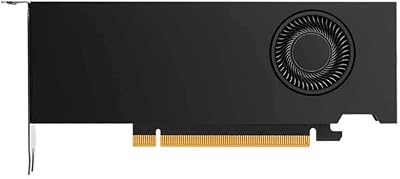

Editor's Pick
NVIDIA RTX PRO 4000 SFF Blackwell 24GB GDDR7 ECC – PCIe 5.0×8, 4X mDP 2.1b, Low-Profile Dual-Slot AI Workstation GPU Retail


Finding the correct Rtx A2000 Driver is the most crucial step to unlocking the true potential of NVIDIA’s most compact professional workstation graphics card. Built on the highly efficient Ampere architecture, this low-profile GPU has become a cult favorite for small form factor (SFF) builders, homelab enthusiasts, and budget-conscious video editors. However, software stability can make or break your professional workflow.
Understanding the RTX A2000 Driver Ecosystem in 2026
Navigating the official NVIDIA software channels can be surprisingly confusing if you are transitioning from a consumer GeForce card to an enterprise workstation component. Because the hardware is engineered for reliability rather than raw, unoptimized frame rates, the software architecture operates on a completely different update cycle. Here is what you need to know about setting up your system today.
As an Amazon Associate we earn from qualifying purchases at no extra cost to you.




Production Branch vs. New Feature Branch Drivers
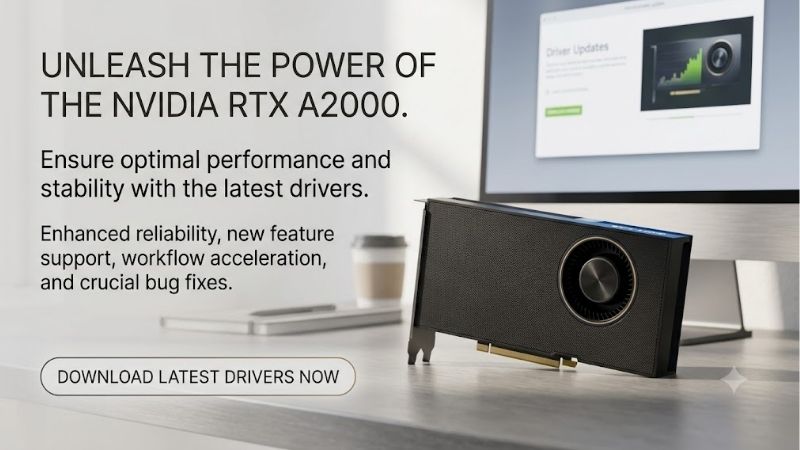
The official Rtx A2000 Driver downloads are split primarily into two distinct categories: the Production Branch and the New Feature Branch. The Production Branch (formerly referred to as the Optimal Driver for Enterprise, or ODE) is designed for users who prioritize absolute system uptime. These releases undergo rigorous Independent Software Vendor (ISV) certifications, ensuring they run without a hitch on CAD, medical imaging, and scientific visualization applications.
Conversely, the New Feature Branch (NFB) provides early access to new SDKs, niche APIs, and bug fixes before they are fully integrated into the mainline enterprise software. While NFB releases allow you to test cutting-edge rendering technologies, they lack the extensive multi-month testing cycles of the Production Branch. For ninety-five percent of professional environments, sticking to the standard Production Branch remains the safest path to preventing system crashes during long rendering queues.
Check the latest price on Amazon:
Solving Common RTX A2000 Driver Installation Issues
One of the most frequent hurdles users face occurs during the initial setup phase, particularly in small form factor pre-built machines like Dell OptiPlex or HP EliteDesk units. Because these systems often run custom OEM motherboard BIOS settings, standard enterprise software installers may occasionally fail to recognize the GPU. This issue can usually be bypassed by ensuring your system BIOS is fully updated before attempting to install the graphics card.
Additionally, if you are upgrading from an older GTX or RTX consumer card, remnants of old software can cause severe performance degradation or display flickers. Using a third-party tool like Display Driver Uninstaller (DDU) in Windows Safe Mode is highly recommended to purge all legacy files. Once clean, installing the clean enterprise software package ensures the system maps the correct power profiles, keeping the card within its designated 70W threshold.
Game Ready Drivers vs. NVIDIA RTX Enterprise Drivers
A common question among budget workstation users is whether they can run GeForce Game Ready Drivers on this professional hardware. The short answer is yes: NVIDIA’s modern software stack allows cross-compatibility, meaning you can install standard gaming-focused software on your workstation card. This is incredibly beneficial for users who intend to use their compact PC for mid-tier gaming on weekends while keeping it as a productivity workstation during the week.
However, selecting the Enterprise branch is generally superior if your income depends on your PC’s stability. The Enterprise package includes application-specific profiles that automatically tune GPU resource allocation when programs like Premiere Pro, Maya, or SolidWorks are launched. These profiles prevent memory leaks and optimize VRAM allocation far better than the gaming-focused counterparts, while still maintaining highly respectable gaming performance.
Performance Analysis and Real-World Hardware Benchmarks
Evaluating the actual output of this GPU requires us to look beyond raw paper specifications and look at real-world benchmarks. Running on a modest 70W power envelope without requiring external PCIe power connectors, the hardware relies heavily on efficient resource allocation. Let’s see how modern software optimization translates to raw workstation and gaming metrics.
Professional Workloads and CAD Rendering Power
In professional environments, the card punches far above its weight class thanks to dedicated RT and Tensor cores built on the Ampere architecture. In Blender rendering benchmarks using the OptiX API, the system finishes tasks nearly twice as fast as older Pascal-based low-profile cards. Whether you are baking lighting maps or rendering architectural walkthroughs, the hardware handles heavy computational loads with remarkable thermal efficiency.
However, it is vital to match your workload to the specific memory variant you purchase. The card is available in both 6GB and 12GB GDDR6 configurations; while the 6GB version is adequate for basic 1080p video editing and simple CAD drafting, the 12GB variant is almost mandatory for complex 3D scenes and 4K timelines. The enterprise software manages memory pools intelligently, but physical hardware limitations will still cause stuttering if you exceed the VRAM limit.
Gaming Performance and Ray Tracing Capabilities
Though designed as a workhorse, this GPU handles modern PC gaming surprisingly well when paired with the right settings. At 1080p resolution, popular esports titles like Valorant, Apex Legends, and Overwatch 2 easily run at over 120 FPS on high settings. Even demanding AAA titles can achieve a locked 60 FPS at medium-to-high settings, provided you make use of NVIDIA’s DLSS (Deep Learning Super Sampling) technology.
Ray tracing is technically supported at the hardware level, but the strict 70W power limitation means you must keep your expectations realistic. Enabling heavy ray tracing features in games like Cyberpunk 2077 or Alan Wake 2 will tank performance to unplayable levels. For the best gaming experience, we recommend setting ray tracing to “Low” or keeping it completely disabled, allowing the card to focus its limited power budget on core rasterization and DLSS upscaling.
Market Impacts of Global AI Chip Policies and Price Surges
The broader graphics card market has experienced massive shifts recently, driven heavily by international trade policies and shifting manufacturing priorities. For instance, the United States government’s decision to allow NVIDIA to sell its powerful H200 AI chips to China has had a cascading effect on lower-tier hardware production. Because manufacturing facilities are heavily prioritized toward high-margin enterprise AI silicon, smaller consumer and workstation cards face tighter supply lines.
At the same time, the global market continues to see a rising trend in laptop and PC component prices. As materials and logistics costs climb, building a budget-friendly workstation is becoming more expensive by the month. This macroeconomic climate makes a highly efficient, 70W low-profile card an incredibly attractive purchase today, as it allows creators to upgrade their existing SFF systems without the costly need to purchase a new, heavy-duty power supply or an entirely new desktop.
Long-term Reliability, Pros, and Cons of the Card
Before committing your hard-earned budget to this hardware, it is critical to weigh how its unique physical design and driver limitations affect daily usability. Because it targets a highly specific niche—compact professional workstations—it excels brilliantly in certain areas while falling short in others.
The Pros of Managing the RTX A2000 Driver Setup
The primary advantage of this hardware lies in its unmatched efficiency and form factor. Requiring absolutely zero external power cables, it draws all its electricity directly from the PCIe slot, making it incredibly easy to install in almost any office PC. When paired with the stable enterprise software stack, users enjoy an incredibly seamless, “set-it-and-forget-it” experience that consumer cards rarely match during long-term rendering tasks.
Additionally, the physical connectivity of this card is an absolute dream for multi-monitor setups. Despite its tiny, low-profile dual-slot size, it boasts four Mini-DisplayPort 1.4a outputs. The official enterprise control panel allows you to configure complex display grids, mosaic modes, and bezel corrections effortlessly, making it a highly reliable solution for day trading desks, digital signage, and multi-stream security setups.
Critical Cons and Driver Limitations on Windows and Linux
Despite its strengths, the hardware does come with some notable drawbacks that potential buyers must consider. First, the blower-style cooling fan on standard models can become quite high-pitched and audibly loud when the GPU is pushed to its absolute thermal limit. Furthermore, because the card relies entirely on Mini-DisplayPort connectors, you will likely need to purchase specialized adapters to connect standard HDMI or full-sized DisplayPort monitors, which are rarely included in basic retail packages.
Software-wise, while the Windows experience is highly polished, setting up the card on Linux distributions can still be a frustrating hurdle for newcomers. While the proprietary NVIDIA Linux software package has improved, configuring CUDA libraries, OptiX paths, and secure boot keys manually requires a fair amount of command-line terminal knowledge. If you are building a Linux-based home server or machine learning sandbox, expect to spend extra time troubleshooting dependency conflicts.
Amazon Customer Feedback and Final Buying Verdict
A quick analysis of Amazon buyer reviews reveals highly consistent feedback from real-world owners. Five-star reviews frequently praise the card as the “ultimate SFF upgrade,” with many users expressing amazement at how easily it transformed their cheap, refurbished office desktops into highly capable video editing stations. Buyers love the low operating temperatures when running at idle and the card’s ability to fit into extremely cramped chassis designs.
On the other hand, two and three-star reviews often warn about thermal throttling issues if the card is installed in case designs with zero active airflow. Some buyers also expressed frustration when attempting to install the software on older, unpatched versions of Windows 10, which sometimes fail to recognize the hardware’s modern security certificates. To avoid these issues, ensure your operating system is fully updated before starting the installation process.
Conclusion
Whether you are a professional designer seeking certified stability or a hardware enthusiast looking to build the ultimate mini-PC, downloading the correct Rtx A2000 Driver is the foundation of a stable system. The unique combination of a 70W power draw, a low-profile dual-slot design, and up to 12GB of VRAM makes this card an incredibly versatile tool in 2026. While the high-pitched blower fan and Linux installation hurdles require some patience, the long-term reliability and professional software certifications are unmatched in this size class. If you want to maximize your system’s rendering capabilities without undergoing a costly power supply upgrade, this compact powerhouse remains an exceptional investment.
Frequently Asked Questions
Which driver should I install for an RTX A2000?
Use the NVIDIA RTX Enterprise or Production Branch driver, which is validated for professional applications and certified against major CAD and content creation suites. The Studio driver is a reasonable alternative for mixed use, while Game Ready drivers are aimed at GeForce cards and offer no benefit here.
Does the RTX A2000 need a power connector?
No. It is rated at roughly 70W and draws all of its power from the PCIe slot, which is precisely why it suits small form factor workstations and slim prebuilt systems with limited power supplies. That also makes it a straightforward drop-in upgrade with no cabling changes required.
Is it low profile?
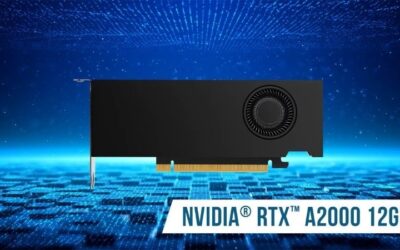
Yes, it is a low-profile dual-slot card supplied with both full-height and low-profile brackets, so it fits compact chassis where a standard GPU cannot. Check that your case allows dual-slot low-profile cards, as some very slim systems only accommodate single-slot designs.
Should I buy the 6GB or 12GB version?
The 12GB version is the one worth seeking out. Professional workloads such as large CAD assemblies, GPU rendering scenes and local AI models are limited by capacity far more than by compute, and 6GB fills quickly. The performance difference between the two is minor, but the capacity difference is decisive.
Is it still worth buying in 2026?
It makes sense for certified professional applications in a small chassis with no spare power connectors. For raw performance per pound it is poor value against consumer cards, so if you do not need ISV certification or the tiny form factor, a GeForce card delivers far more compute.



Write Your Review
No reviews yet. Be the first to share your experience!