


NVIDIA Quadro K2000 is a very old professional workstation card that still appears in used listings and legacy systems, so buyers wonder whether it has any place in 2026. You want to know what it can still do, whether its tiny memory buffer is a dealbreaker, and if it is worth buying, without a long video. This review lays out how the card holds up today and a clear verdict so you can decide with confidence.
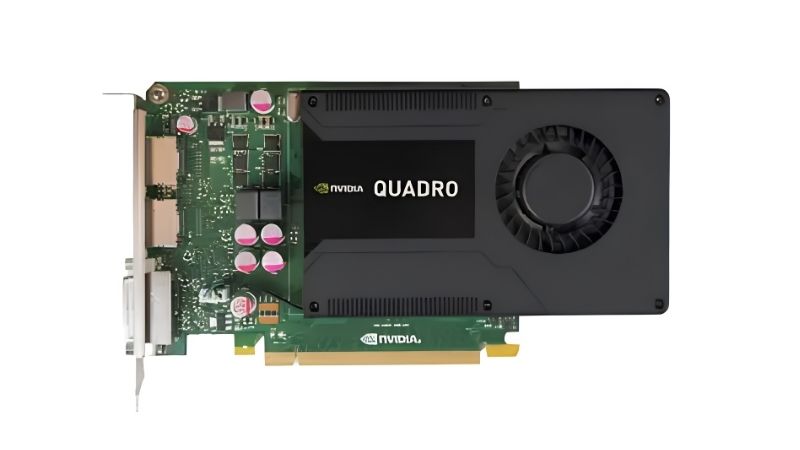
What the NVIDIA Quadro K2000 Offers in 2026
Before weighing a purchase, you need a clear picture of what this aging card is and where it fits today. This section covers its specs, its performance now, and the narrow buyer it might suit, so the nvidia quadro k2000 makes sense in context. Understanding its narrow role prevents buyers from expecting far too much of it.
As an Amazon Associate we earn from qualifying purchases at no extra cost to you.


Specs and Standing
The Quadro K2000 is a Kepler-generation professional card with just 2GB of GDDR5 and low power draw, designed for basic CAD and multi-display work many years ago. Here is the condensed spec sheet, with used pricing that varies, so always confirm the live listing. For a card this old, condition matters as much as the asking price. Always weigh both before committing.
| Spec | NVIDIA Quadro K2000 |
|---|---|
| VRAM | 2GB GDDR5 |
| Typical board power | Low, around 50W |
| Generation | Kepler, dated |
| Best use | Legacy CAD, basic displays |
| Market | Used and legacy systems |
The key context is that this is a legacy card by modern standards, so its usefulness is limited to specific low-demand tasks rather than current professional work. For anything modern, its capabilities simply fall short by a wide margin.
Performance Today
In 2026, the Quadro K2000 can still handle very light professional tasks such as basic CAD viewing, office work, and driving multiple standard displays. For those narrow uses, it remains functional and reliable enough. Within those strict limits, it can still quietly do a job.
For modern professional software, 3D rendering, or any demanding workload, however, it is far too slow and memory-limited to be practical. Its capabilities belong to an earlier era of computing. Expecting it to keep up with today’s software would only lead to frustration.
Performance read: the K2000 manages only light legacy tasks today and cannot handle modern professional workloads. The gap between it and current hardware is simply too large to bridge.
Who It’s For
The Quadro K2000 suits only very specific users, such as those maintaining legacy systems, running old CAD software, or needing a cheap card to drive basic displays. It is a niche, legacy-support choice rather than a general recommendation. For almost everyone, a modern card is the far more sensible choice.
Anyone doing modern creative, engineering, or AI work should look at a current card instead, since the K2000 cannot keep up. Knowing your needs makes the nvidia quadro k2000 easy to judge. Once you know it is a legacy-only card, the decision becomes clear.
Audience read: this is a legacy-support card for old systems and light display duties, not modern professional work. Being honest about that boundary is the fastest way to avoid disappointment. The card suits a shrinking list of tasks.
The Trade-Offs of the Quadro K2000 Today
An aging professional card comes with serious limitations. This section covers its dated architecture, its tiny memory buffer, and the risks of buying such an old card used, so you can judge the trade-offs honestly before spending. With a card this dated, the limitations far outweigh the modest savings for most buyers. Only a very specific need justifies it.
Aging Architecture and Features
The Quadro K2000’s Kepler architecture is many generations old, missing the features, efficiency, and performance of modern cards entirely. It lacks the compute capability that even entry modern GPUs take for granted. That missing capability rules it out for most current software.
This makes it unsuitable for any software that expects modern GPU features, which increasingly includes mainstream professional applications. Its age is its defining limitation. No amount of driver tuning can overcome a fundamentally dated design.
Architecture read: the K2000’s dated design leaves it far behind even modest modern cards in capability. Even inexpensive current GPUs leave it far behind in every meaningful way.
The 2GB VRAM Limit
With only 2GB of memory, the Quadro K2000 is severely limited for anything beyond basic tasks, since modern software and even multiple high-resolution displays can exceed that buffer. This tiny amount of memory is a hard ceiling on what the card can do. Once that buffer fills, performance collapses regardless of the workload.
For simple 2D work and basic displays it is adequate, but any modern 3D or professional workload will overwhelm it immediately. The memory limit alone rules it out for current professional use. For modern CAD or rendering, it is simply not a viable option.
VRAM read: 2GB is far too little for modern work and confines the card to only the lightest legacy tasks. Anything beyond basic 2D and display work will overwhelm it quickly.
Buying Used Considerations
Because the Quadro K2000 is a very old used card, buying one carries real risks, from age-related wear to no warranty and potential driver support limitations. Inspect any listing carefully and be wary of paying more than a token amount. Given its age, only the lowest prices make any sense at all.
Given its limited usefulness, it is only worth buying at a very low price for a specific legacy need. Paying much for such an old card rarely makes sense when better options exist. In most cases, even a cheap modern card is the wiser spend.
Risk read: only consider a K2000 at a very low price for a specific legacy purpose, and expect no warranty or modern support. Going in with clear eyes about those risks prevents a frustrating purchase. Treat any working unit as a bonus rather than a guarantee.
Is the NVIDIA Quadro K2000 Worth It
Whether the card is worth buying depends entirely on a narrow use case. This section covers its honest pros and cons, modern alternatives, and who might still buy it, so you can make a clear decision. The answer hinges entirely on whether you have a genuine legacy need. For everyone else, the choice is straightforward.
Pros and Cons
Here is the honest pros and cons summary for the nvidia quadro k2000 in 2026, based on how the card holds up today. These are the practical realities of running such an old card in a modern context. None of them should surprise a careful buyer.
Pros: very cheap on the used market, low power draw, and adequate for basic legacy CAD and multi-display duties. Cons: only 2GB of memory, a dated architecture, no modern features, and the risks of very old used hardware. Age-related failure is a genuine concern with a card this old.
On balance, the K2000 is worth considering only for specific legacy needs at a very low price, since it cannot handle modern work at all. Matching it to a narrow purpose is essential. Bought for the wrong task, it will only disappoint.
Modern Alternatives
For almost any current need, a modern entry-level GPU, whether consumer or professional, vastly outperforms the Quadro K2000 while offering current features and support. Even a modest modern card is a dramatic upgrade. The performance difference is not subtle; it is enormous.
Unless you specifically need the K2000 for a legacy system, a current card is the far better choice for both capability and longevity. The gap between old and new is simply too large to ignore. For any real work, that gap settles the decision instantly.
Alternatives read: any modern entry GPU far surpasses the K2000, so choose one unless a legacy system requires this exact card. Outside that specific scenario, there is little reason to choose it.
Who Should Buy It
Buy a Quadro K2000 only if you are maintaining or repairing a legacy system that specifically needs it, or require a dirt-cheap card for basic display duties. For that narrow purpose, it can still serve. Kept to its limits, it remains a functional legacy part.
Everyone else should choose a modern card, since the K2000 cannot handle current software or workloads. Its role today is purely legacy support. Think of it as a maintenance part rather than a performance choice.
Recommendation: buy the K2000 only for a specific legacy need at a very low price, and choose a modern card for anything else. That single rule covers nearly every buyer considering this card. Only a true legacy requirement points the other way.
See More:
- RX 9060 XT vs RTX 4060
- NVIDIA Jetson price
- NVIDIA GeForce GTX 1650 driver
- Intel Iris Xe graphics driver
- 9060 XT 16GB vs 5060 8GB
Final Verdict on the NVIDIA Quadro K2000
The NVIDIA Quadro K2000 is a legacy workstation card that in 2026 can manage only the lightest tasks, such as basic CAD viewing and driving standard displays, held back by its dated architecture and tiny 2GB memory buffer. It makes sense only for maintaining old systems or as a dirt-cheap display card, and any modern professional or creative work demands a current GPU instead. If you have a specific legacy need and can find one very cheap, it still functions, but for everyone else a modern card is the clear choice. Use the button below to check current prices on modern entry-level cards so you can judge the best upgrade for your needs. Comparing the K2000 against even a cheap modern card usually settles the matter quickly. The gap is simply too wide to ignore. For a small outlay, a modern card removes every limitation the K2000 imposes. That alone makes the upgrade an easy recommendation for almost anyone. In practice, only a specific legacy dependency should keep you on this aging card.
Frequently Asked Questions
What are the Quadro K2000 specifications?
It is a Kepler generation professional card with 384 CUDA cores, 2GB of GDDR5 on a 128-bit bus giving roughly 51 GB/s of bandwidth, and a board power near 51 watts. It draws power entirely from the PCIe slot with no supplementary connector, and outputs through DVI plus two DisplayPort connections.
Does it still receive driver updates?
No. Kepler reached end of support and NVIDIA stopped issuing new driver branches for it, so you are limited to the final legacy release. That means no security updates, no new API features, and growing incompatibility with modern applications that expect current runtime versions. Plan accordingly before deploying it anywhere important.
Can I game on a Quadro K2000?
Only in a limited sense. With 384 Kepler cores and 2GB of memory it handles very old or extremely lightweight titles at low settings, but modern games will either refuse to launch on the outdated feature level or run at unusable frame rates. Any current entry level card is dramatically faster.
What is it actually useful for now?
Driving multiple displays in an office or signage machine, reviving an old workstation that needs a graphics output, or running legacy CAD software certified against Kepler-era Quadro drivers. Its low profile availability, slot-only power and quiet operation make it convenient for small form factor boxes with weak power supplies.
Should I buy one second hand?
Only if the price is close to nothing and you need a specific legacy certification or multi-display output. For general use, a modern low profile card or even integrated graphics on a recent CPU will outperform it comfortably while retaining driver support, hardware video decoding for current codecs, and modern display outputs.




Write Your Review
No reviews yet. Be the first to share your experience!