
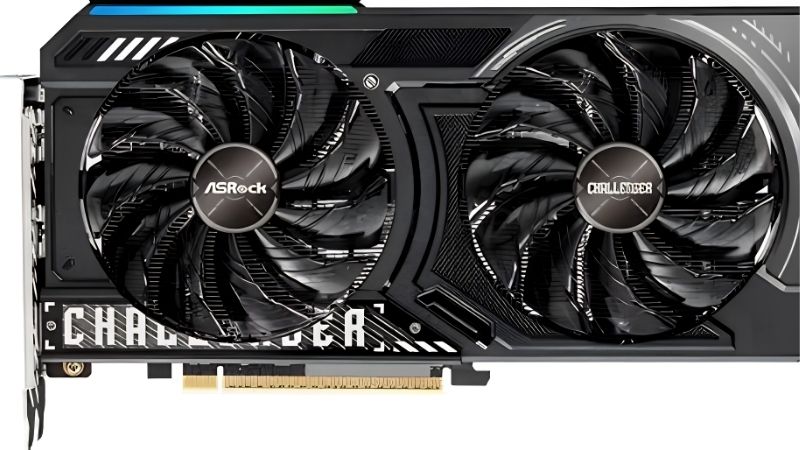
- Top Pick: ASRock Radeon RX 9060 XT Challenger 16GB OC, RDNA 4, 3290MHz Boost, 16GB GDDR6 128-bit, PCIe 5.0, Dual Fans, 0dB Silent, LED Indicator, DisplayPort 2.1a, HDMI 2.1b
- Best Value: ASUS Dual Radeon RX 9060 XT 16GB GDDR6 Gaming Graphics Card
- Premium Choice: ASRock Radeon RX 9060 XT Steel Legend 16GB GDDR6 OC Graphics Card | 3275 MHz Boost | Triple Fan | 0dB Cooling | Metal Backplate | PCIe 5.0 | DisplayPort 2.1a, HDMI 2.1b
3060 Ti vs 9060 XT is the exact crossroads thousands of mid-range upgraders are stuck at right now: keep hunting a discounted last-gen Nvidia card, or pay a little more for a fresh AMD RDNA 4 GPU? You are not here for a 15-minute video — you want the spec sheet, the frame rates, and the price logic side by side so you can open a shopping tab and decide in minutes. This comparison lays out both cards on hard numbers, tells you which one wins for your resolution and budget, and factors in where GPU pricing is actually heading before you spend a dollar.

Prime
Best Seller
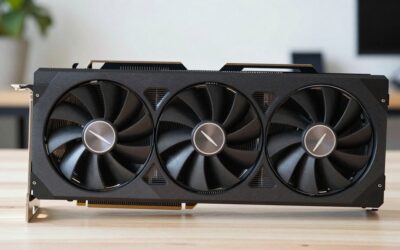
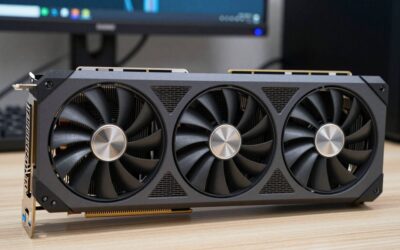
NVIDIA GeForce RTX 3060 Ti Founders Edition 8GB GDDR6 PCI Express 4.0 Graphics Card (Renewed)

3060 Ti vs 9060 XT — The Quick Verdict and Spec Sheet
Before the deep numbers, here is the honest short answer, because most buyers are cross-shopping five tabs and want the conclusion first. Broadly, the RX 9060 XT (especially the 16GB model) is the faster and more future-proof card in modern titles, while the RTX 3060 Ti stays relevant mainly as a cheaper used-market option for pure 1080p gamers. The rest of this section backs that claim with the full spec table and the architecture behind each design so you understand why the gap exists, not just that it does.
As an Amazon Associate we earn from qualifying purchases at no extra cost to you.






The Quick Verdict for Busy Buyers
If you game at 1440p or plan to keep this card three-plus years, the RX 9060 XT 16GB is the smarter purchase. The extra VRAM, newer RDNA 4 ray-tracing hardware, and FSR 4 upscaling directly address the two things that age a GPU fastest: memory pressure and upscaling quality.
If you game strictly at 1080p, buy mostly older or esports titles, and can find an RTX 3060 Ti used at a steep discount, it remains a competent value pick. It will not win benchmarks, but it delivers playable frame rates for a lower entry price.
The tie-breaker is simple: match the card to your monitor and your keep-it timeline, not to brand loyalty. Once you know your resolution, the 3060 Ti vs 9060 XT choice mostly answers itself.
Head-to-Head Specs Comparison Table
The table below distills the core silicon differences. These are the numbers that predict long-term behavior far better than any single benchmark run.
| Spec | RTX 3060 Ti | RX 9060 XT (16GB) |
|---|---|---|
| Architecture | Ampere (GA104) | RDNA 4 (Navi 44) |
| Launch | Dec 2020 | 2025 |
| Shading units | 4,864 CUDA cores | 2,048 stream processors |
| Boost clock | ~1,665 MHz | up to ~3,130 MHz |
| Memory | 8GB GDDR6 | 16GB GDDR6 (also 8GB variant) |
| Memory bus | 256-bit | 128-bit |
| Bandwidth | ~448 GB/s | ~320 GB/s |
| Board power | 200W | ~182W |
| Interface | PCIe 4.0 x16 | PCIe 5.0 x16 |
| Upscaling | DLSS (Super Resolution) | FSR 4 (AI) |
| Typical price | ~$220–260 used | ~$349 MSRP |
Notice the trade-off in memory design. The 3060 Ti has a wider 256-bit bus and higher raw bandwidth, but only 8GB of capacity. The 9060 XT flips that: a narrower bus offset by faster clocks, plus double the VRAM. In 2026 game engines, capacity increasingly matters more than bandwidth alone.
If the spec sheet already points you toward one card, you can check its current listing and live pricing before stock or price shifts again.
Ampere vs RDNA 4 — What the Architecture Means
The RTX 3060 Ti runs on Ampere, a five-year-old design. It was excellent at launch, but its second-generation RT cores and its lack of hardware frame generation put a ceiling on how it handles the newest ray-traced titles. It is a strong rasterization card that is beginning to show its age in feature support.
The RX 9060 XT uses RDNA 4, AMD’s newest architecture, with reworked ray-tracing units and dedicated AI accelerators. That generational jump is the real story behind the performance gap — the 9060 XT is not just clocked higher, it processes modern workloads more efficiently per watt.
For a buyer, the practical read is this: architecture age predicts how many driver-optimized years a card has left. Newer silicon typically receives longer, more aggressive game-ready tuning, which matters if this is a multi-year purchase.
Deep Dive Face-Off — Gaming, AI Features, and Real-World Use
This is where the 3060 Ti vs 9060 XT battle is won or lost. Raw specs set expectations, but frame rates, upscaling quality, and how the card fits your actual PC decide daily satisfaction. This section compares them on the three criteria that affect real gameplay: performance at your resolution, upscaling and AI features, and physical compatibility.
1080p and 1440p Gaming Performance
At 1080p, both cards deliver playable frame rates in most modern AAA titles at high settings. Based on aggregated community benchmarks and reviewer testing, the RTX 3060 Ti generally lands in the 70–90 fps range in demanding games, while the RX 9060 XT typically pushes roughly 25–40% higher, often clearing 100 fps. For esports titles, both easily exceed high-refresh targets.
The gap widens at 1440p. Here the 3060 Ti’s 8GB frame buffer becomes a real bottleneck in texture-heavy games, where stutter and dropped frames appear once VRAM fills. The 9060 XT 16GB holds steady in those same scenes, commonly sitting in the 65–85 fps band where the 3060 Ti drops into the 45–60 range.
The takeaway is resolution-driven. At 1080p the two are closer than the price suggests; at 1440p and above, the 9060 XT’s memory advantage turns a modest lead into a decisive one.
DLSS vs FSR 4 and Future AI Optimization
Upscaling is now a core buying factor, not a bonus. The RTX 3060 Ti supports DLSS Super Resolution, backed by Nvidia’s mature, widely adopted ecosystem — but it does not support hardware frame generation, which is reserved for newer RTX generations. So it gains sharp AI upscaling, but not the latest frame-multiplying features.
The RX 9060 XT ships with FSR 4, AMD’s AI-based upscaler built specifically for RDNA 4’s AI accelerators. This is the experimental edge worth weighing: FSR 4 leans on dedicated on-die AI hardware, and AMD is positioning it as the long-term optimization path for this architecture, with quality gains expected to land through driver updates.
For a forward-looking buyer, this tilts toward the 9060 XT. You are buying into a newer AI upscaling pipeline that is still ramping, whereas the 3060 Ti sits on a proven but feature-capped branch of Nvidia’s stack.
Power Draw, Card Size, and PC Compatibility
Here the practical, build-it-in-your-case realities matter. The RTX 3060 Ti draws 200W, while the RX 9060 XT sits lower at around 182W for the 16GB model. Both are comfortable on a quality 550W–650W power supply, but the newer AMD card is the more efficient of the two per frame.
Physical fit is easy to overlook until the side panel won’t close. Most 3060 Ti and 9060 XT models are dual-fan, compact-to-mid-length cards that suit standard ATX and many mini-ITX builds — but always check your case’s maximum GPU length and confirm you have the right PCIe power connectors before ordering.
One connection note: the 9060 XT uses a PCIe 5.0 interface, though it runs fine in PCIe 4.0 and even 3.0 slots with negligible loss on a card of this tier. Neither GPU demands a platform upgrade, which keeps the real cost limited to the card itself.
Price, Timing, and the Final Recommendation
Performance is only half the decision — the other half is when you buy and at what price, and right now that context genuinely favors moving deliberately rather than waiting for a miracle discount. This section covers the current pricing climate, the honest pros and cons of each card, and a clear who-should-buy-what verdict, plus a cheaper alternative if both cards stretch your budget.
Is Now the Right Time to Buy?
The pricing backdrop matters more than usual for this comparison, because both cards are exposed to it in different ways. Component and laptop prices have been trending upward, and memory is a major driver — GDDR and system DDR5 pricing pressure feeds directly into graphics card street prices. For the RX 9060 XT that can mean real-world listings sitting at or above its $349 MSRP; for the used RTX 3060 Ti, it means second-hand prices that don’t fall as fast as an older card normally would.
There is cautiously positive news, but it is weak and lives in the future. Prices have stopped climbing as steeply as they did in late 2025, and the market has entered a period of relative stability, though analysts still warn of ongoing volatility. In practical terms, “stable” here means plateaued, not falling — the sharp increases have paused, but a broad price drop has not begun.
New supply is opening up, which is the real long-term relief valve: OEMs can source DDR5 from Chinese suppliers such as CXMT, and Micron is building two fabrication plants in Idaho. The catch is timing — those facilities are not expected to come online until 2027–2028. For a buyer deciding today, the conclusion is blunt: meaningful price relief is years away, so holding out for a dramatic 2026 discount is a weak strategy. If a card fits your needs and budget now, buying into a stable window is more rational than gambling on a drop that supply data says won’t arrive soon. Given that outlook, locking in a card at a fair current price is the sensible move — it’s worth checking today’s live listing before the next pricing swing.
Pros and Cons of the 3060 Ti and 9060 XT
Every honest 3060 Ti vs 9060 XT comparison has to admit each card’s weak points, so here is the balanced view drawn from spec analysis and long-run user feedback.
RTX 3060 Ti strengths: lower entry price on the used market, wide 256-bit memory bus with high bandwidth, mature DLSS ecosystem, and rock-solid 1080p performance. Its weaknesses are real too: only 8GB of VRAM, aging Ampere architecture, no hardware frame generation, and higher power draw for less performance.
RX 9060 XT strengths: 16GB VRAM headroom, newer RDNA 4 architecture with improved ray tracing, FSR 4 AI upscaling, better efficiency, and stronger 1440p results. Its trade-offs: a higher upfront price, a narrower 128-bit bus, and street prices that can drift above MSRP in the current market. The pattern is clear: the 3060 Ti competes on price; the 9060 XT competes on capability and longevity. Which weakness you can live with should decide your pick.
The Alternative Pick and Final Verdict — Who Buys What
If both cards feel like a stretch, the sensible alternative is the 8GB version of the RX 9060 XT. It keeps the newer RDNA 4 architecture and FSR 4 support at a lower price than the 16GB model, trading only some VRAM headroom — a fair compromise for strictly 1080p players who still want current-generation features.
For the final call: buy the RTX 3060 Ti if you are a budget-first 1080p gamer, you can score a genuinely cheap used unit, and you don’t care about the newest ray-traced or frame-generation features. Buy the RX 9060 XT 16GB if you game at 1440p, you want the card to stay capable for several years, or VRAM-heavy and ray-traced titles are on your radar.
For most upgraders reading this in 2026, the 9060 XT 16GB is the recommendation — it wins on performance, features, and future-proofing, and the small price premium buys years of relevance. Ready to lock in your pick? Compare today’s live prices on both cards and grab the one that matches your resolution and timeline.
See More:
Conclusion
The 3060 Ti vs 9060 XT decision ultimately comes down to two questions: what resolution do you play at, and how long do you want this card to last? The RTX 3060 Ti remains a fair budget answer for used-market 1080p gamers, but the RX 9060 XT 16GB is the stronger all-around buy — faster at 1440p, richer in features, more efficient, and built on architecture with more optimized years ahead. With component pricing stable but relief years off, buying a well-matched card now beats waiting. Check the current listings and secure the GPU that fits your build today.
Frequently Asked Questions
Which card is faster?
The RX 9060 XT is the stronger performer, particularly at 1440p and in ray traced titles where RDNA 4 architectural improvements are significant. The RTX 3060 Ti with 4864 Ampere cores and a 256-bit GDDR6 bus still holds up in older rasterised games, but it is two architectural generations behind on features.
How much does the VRAM difference matter?
A great deal in newer titles. The 3060 Ti is limited to 8GB, which already causes texture stutter in demanding 1440p scenes with ray tracing enabled. The 16GB version of the 9060 XT eliminates that concern entirely, and this is arguably a bigger practical difference than the raw performance gap.
What about power consumption?
The RTX 3060 Ti is rated around 200W and typically uses one or two eight-pin connectors with a 600W to 650W supply recommended. The RX 9060 XT sits between roughly 150W and 182W on a single eight-pin, so it is both faster and more efficient, which lowers heat and running costs.
How do the feature sets compare?
The 9060 XT supports FSR 4 machine learning upscaling and AMD frame generation, along with improved media encoding. The 3060 Ti supports DLSS super resolution and ray reconstruction but cannot use frame generation of any kind, since that requires Ada or newer. That single limitation shapes most benchmark comparisons you will read.
Is a cheap used 3060 Ti better value than a new 9060 XT?
Only if the discount is steep. A used card brings no warranty, unknown mining or gaming history, higher power draw, an 8GB buffer and no frame generation. A new RX 9060 XT 16GB offers warranty coverage, lower running costs and years more headroom, which usually justifies the price difference.

Write Your Review
No reviews yet. Be the first to share your experience!