
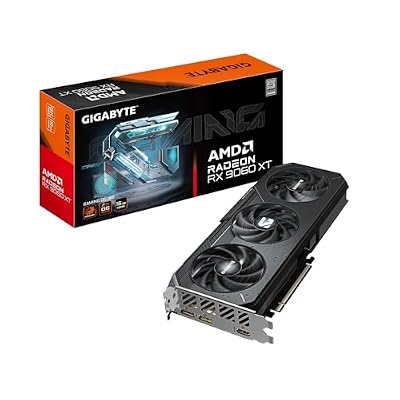
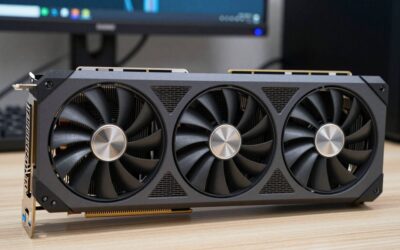
- Top Pick: GIGABYTE Radeon™ RX 9060 XT Gaming OC ICE 16G Graphics Card (16GB GDDR6, 128-bit, PCIe 5.0, HDMI/DP 2.1, 2 Slot, Hawk Fan, Server-Grade Thermal Gel, Reinforced Structure)
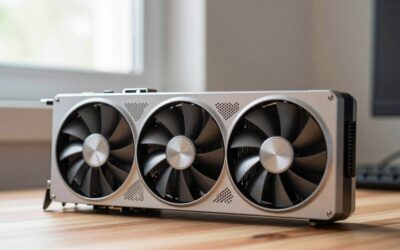
- Best Value: ASRock Radeon RX 9060 XT Challenger 16GB OC, RDNA 4, 3290MHz Boost, 16GB GDDR6 128-bit, PCIe 5.0, Dual Fans, 0dB Silent, LED Indicator, DisplayPort 2.1a, HDMI 2.1b
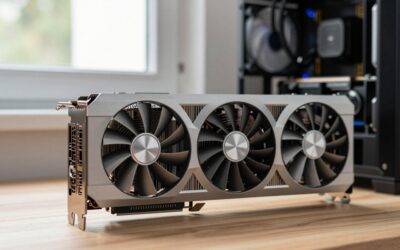
- Premium Choice: ASRock Radeon RX 9060 XT Steel Legend 16GB GDDR6 OC Graphics Card | 3275 MHz Boost | Triple Fan | 0dB Cooling | Metal Backplate | PCIe 5.0 | DisplayPort 2.1a, HDMI 2.1b
RX 9060 XT vs 5070 reframes the mid-range question from the value side: can AMD’s affordable RDNA 4 card give you enough performance to skip Nvidia’s pricier RTX 5070 entirely? If you are budget-conscious but do not want to feel like you settled, you want the value math, the real frame rates, and the efficiency picture laid out plainly — not a long video. This comparison approaches the matchup dollar-first, showing exactly what you gain and give up with each card so you can decide where your money is best spent.

Prime
Editor's Pick
ASUS Dual Radeon RX 9060 XT 16GB GDDR6 Graphics Card, AMD, for Desktop (PCIe 5.0, HDMI 2.1b, DisplayPort 2.1a, 2.5-Slot, Axial-tech Fan, 0dB Technology, and More)

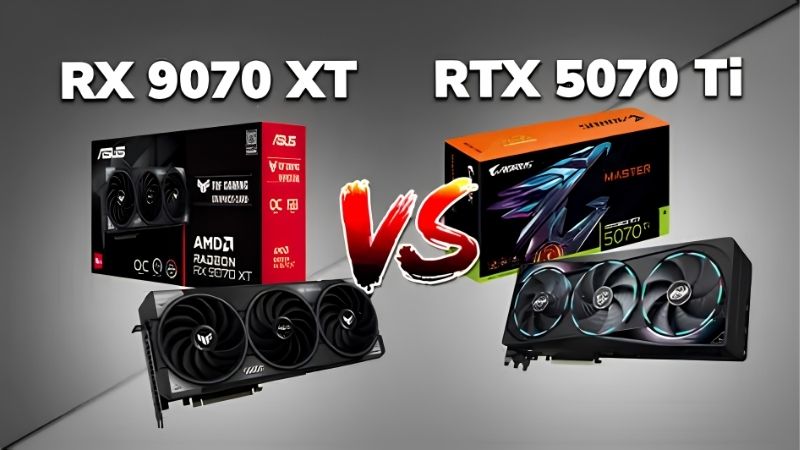
RX 9060 XT vs 5070 — Quick Verdict and Specs
Value shoppers want the bottom line first, so here it is: the RX 9060 XT 16GB delivers the best performance-per-dollar and is enough for most 1080p and 1440p gamers, while the RTX 5070 justifies its higher price only if you specifically need more raw power, better ray tracing, or DLSS 4. This section backs that with the full spec table and the value context behind each design.
As an Amazon Associate we earn from qualifying purchases at no extra cost to you.





The Quick Verdict for Value Shoppers
Choose the RX 9060 XT if maximizing value is your priority and you game mainly at 1080p or 1440p. It costs significantly less and covers those resolutions comfortably, keeping money in your pocket for the rest of your build.
Choose the RTX 5070 if you want noticeably higher frame rates, plan to push high-refresh 1440p or 4K, and value the best ray tracing and DLSS 4 features. It is the faster card, but you pay for it.
The core question is whether the extra performance is worth the extra money for how you actually play. For many, the RX 9060 XT vs 5070 decision ends with the cheaper card being genuinely enough.
Head-to-Head Specs Comparison Table
The table below focuses on the specs that matter most for a value-driven decision.
| Spec | RX 9060 XT (16GB) | RTX 5070 |
|---|---|---|
| Architecture | RDNA 4 | Blackwell |
| Memory | 16GB GDDR6 | 12GB GDDR7 |
| Memory bus | 128-bit | 192-bit |
| Bandwidth | ~320 GB/s | ~672 GB/s |
| Board power | ~182W | 250W |
| Upscaling | FSR 4 (AI) | DLSS 4 + Frame Gen |
| Best resolution | 1080p / 1440p | 1440p / 4K |
| Typical price | ~$349 MSRP | ~$549 MSRP |
| Price gap | Lower cost | ~$200 more |
The story the table tells is value versus power. The RX 9060 XT gives you more VRAM and much lower power draw at a far lower price, while the RTX 5070 offers substantially more bandwidth and raw performance for roughly 200 dollars more.
If the value math already speaks to you, it is worth checking each card’s live listing before pricing shifts again.
The Value Equation Explained
The heart of this comparison is cost per frame. The RTX 5070 is clearly faster, but performance does not scale linearly with price — that extra roughly 200 dollars buys a meaningful but not proportional jump in frame rates at the resolutions the 9060 XT already handles well.
For a value buyer, this is the crux. If you play at 1080p or 1440p, the RX 9060 XT delivers the large majority of a satisfying experience for a fraction more affordable price.
The practical read is that the 5070’s premium makes sense only when you genuinely use its extra power. Paying for performance you will not tap is the classic mistake this comparison helps you avoid.
A useful way to frame it is to think about your whole build budget. The roughly 200 dollars saved by choosing the 9060 XT could go toward a faster CPU, more storage, or a better monitor — upgrades that might improve your overall experience more than the extra GPU frames would on their own.
Deep Dive Face-Off — Performance, Features, and Efficiency
Specs and value set the frame; real performance, features, and efficiency fill in the picture. This section compares the two on the criteria a value-minded buyer cares about: frame rates by resolution, upscaling and ray tracing, and the efficiency and compatibility that affect total cost.
Frame Rates at 1080p and 1440p
At 1080p, the RX 9060 XT delivers excellent frame rates in modern games, comfortably handling high settings and easily exceeding high-refresh targets in esports titles. The RTX 5070 is faster, but at 1080p both cards produce frame rates most players will find more than sufficient.
At 1440p the gap grows. The RTX 5070 typically leads by a meaningful margin in demanding AAA titles, though the RX 9060 XT 16GB still delivers a solid, playable 1440p experience thanks in part to its generous VRAM.
The value takeaway is that at the resolutions the 9060 XT targets, it performs well enough that the 5070’s extra frames are a luxury rather than a necessity for many gamers.
There is also the monitor factor to consider. If you game on a 1080p or standard 1440p display, the RX 9060 XT can already push frame rates that match or exceed your screen’s refresh rate in many titles, meaning the 5070’s surplus performance would go partly unused unless you upgrade your monitor too.
FSR 4 vs DLSS 4 and Ray Tracing
Upscaling shapes the value picture. The RX 9060 XT uses FSR 4, AMD’s AI-based upscaler built for RDNA 4, which is a major improvement over older FSR versions and increasingly competitive in quality. It closes much of the gap that once separated AMD from Nvidia.
The RTX 5070 counters with DLSS 4 and multi-frame generation, which still leads on adoption, polish, and raw frame-rate uplift. This is the strongest experimental argument for the Nvidia card, and Nvidia continues refining it through driver updates.
In ray tracing the RTX 5070 holds a clear advantage thanks to Blackwell’s stronger RT cores. For value buyers who rarely enable ray tracing, this gap matters little; for those who prioritize ray-traced visuals, it is a real reason to spend more.
Power Efficiency and Total Cost
Efficiency is a quiet part of the value equation. The RX 9060 XT draws only around 182W and runs comfortably on a 550W power supply, while the RTX 5070 pulls 250W and typically wants a 650W unit. If your PSU is modest, the AMD card may save you an upgrade.
Lower power also means less heat and potentially lower running costs over time, small factors that reinforce the 9060 XT’s value positioning for budget-focused builders.
Both cards use modern PCIe interfaces that run fine on existing boards, so neither forces a platform upgrade. Always confirm your case clearance and power connectors, but for most builders the real cost stays limited to the card itself.
For anyone reusing an older or lower-wattage power supply, the RX 9060 XT’s efficiency is a genuine hidden saving. Avoiding a PSU upgrade can widen the real-world price gap between these cards well beyond the sticker difference, reinforcing the AMD card’s value case.
Price, Timing, and the Final Recommendation
Value is half the decision; price and timing are the other half, and the current market context genuinely rewards buying deliberately. This section covers the pricing climate, the honest pros and cons, and a clear who-buys-what verdict, plus a middle-ground alternative.
Is Now the Right Time to Buy?
Pricing context is central to a value comparison, because the whole case for the 9060 XT rests on that price gap. Component and laptop prices have been trending upward, with memory a major driver, and that pressure feeds directly into street prices — which can push both cards above their MSRPs and change the size of the gap between them.
The positive news is real but weak and distant. Prices have stopped climbing as steeply as they did in late 2025, and the market has entered a period of relative stability, though analysts still warn of ongoing volatility. “Stable” here means plateaued, not falling — the sharp increases paused, but a broad price cut has not started.
New supply is opening the long-term relief valve: OEMs can source DDR5 from Chinese suppliers such as CXMT, and Micron is building two plants in Idaho. The catch is timing — those fabs are not expected online until 2027–2028. For a value buyer today, the conclusion is blunt: meaningful relief is years away, so waiting for a dramatic 2026 discount is a weak plan. Buying a well-matched card during a stable window beats gambling on a drop the supply data says will not arrive soon. Checking the current price gap between these two cards before the next swing is the smart move.
Pros and Cons of the RX 9060 XT and RTX 5070
RX 9060 XT strengths: outstanding value, 16GB VRAM, excellent efficiency, modern FSR 4 support, and strong 1080p and 1440p performance. Its trade-offs: lower raw performance than the 5070, slower GDDR6 on a narrow bus, and weaker ray tracing.
RTX 5070 strengths: significantly higher performance, GDDR7 bandwidth, superior ray tracing, and DLSS 4 multi-frame generation. Its trade-offs: a roughly 200-dollar-higher price, only 12GB of VRAM, and a 250W power draw that may demand a stronger PSU.
The pattern is clean: the 9060 XT competes on value, the 5070 on capability. Whichever trade-off fits your budget and how you play should decide your pick.
The Alternative Pick and Final Verdict — Who Buys What
If the RX 9060 XT feels slightly underpowered but the RTX 5070 is too expensive, the RTX 5060 Ti 16GB is the natural middle ground — it adds DLSS 4 and generous VRAM at a price between the two, splitting the difference on both cost and performance.
For the final call: buy the RX 9060 XT if value is your priority, you game at 1080p or 1440p, and you would rather spend the savings elsewhere. Buy the RTX 5070 if you want the higher frame rates, better ray tracing, and DLSS 4, and the extra cost fits your budget.
One last practical filter: match the card to your actual monitor and games, not to the highest number on a benchmark chart. The best value buy is the card that fully drives your display in the games you play, and for many that card is the more affordable RX 9060 XT.
For most value-focused buyers in 2026, the RX 9060 XT is genuinely enough — it delivers the large majority of a great experience at the resolutions most people play, and the RTX 5070 is the upgrade only if you truly use its extra power. Ready to choose? Compare today’s live prices on both and grab the card that fits your budget and play style.
See More:
- 3060 Ti vs 9060 XT
- Nvidia Shield TV Pro
- RTX 5070 vs RX 9060 XT
- RTX 3090 24GB
- Nvidia price prediction
Conclusion
The RX 9060 XT vs 5070 decision is fundamentally about value versus raw power. The RX 9060 XT 16GB wins on performance-per-dollar, VRAM, and efficiency, making it genuinely enough for most 1080p and 1440p gamers who want to spend wisely. The RTX 5070 wins on frame rates, ray tracing, and DLSS 4, justifying its roughly 200-dollar premium only for those who will actually use that extra power. With pricing stable but real relief years away, comparing the live price gap and buying a well-matched card now is the rational move. Check the current listings and secure the GPU that fits your budget and play style today.
Frequently Asked Questions
How big is the performance difference?
The RTX 5070 is the significantly faster card, generally leading by around thirty to forty per cent at 1440p. It carries roughly 6144 CUDA cores and a 192-bit GDDR7 bus at about 672GB per second, while the RX 9060 XT has 2048 stream processors on a 128-bit GDDR6 bus near 322GB per second.
Does 16GB on the AMD card offset that?
Extra memory prevents texture-related stutter but does not create performance. The 9060 XT 16GB will handle maxed textures without running out of buffer, yet in the heaviest scenes it lacks the compute and bandwidth to hit high frame rates anyway. Twelve gigabytes on the 5070 is adequate at 1440p today, if less future-proof.
What power supplies do they require?
The RX 9060 XT is around 150W to 182W with a single eight-pin connector and works on a good 550W unit. The RTX 5070 is near 250W, typically using a 12V-2×6 connector with a dual eight-pin adapter, and wants 650W. Factor in a possible PSU upgrade when comparing total cost.
Which resolution does each card target?
Treat the RX 9060 XT as a high refresh 1080p and comfortable 1440p card with settings tuned rather than maxed. The RTX 5070 is a proper 1440p high settings card that manages 4K with upscaling enabled in many titles. Match the GPU to your monitor before comparing prices.
Which offers better value?
The 9060 XT usually wins on frames per dollar at its lower price point and asks less of your power supply and case. The 5070 costs more but delivers a genuine performance tier upgrade, better ray tracing and multi frame generation. If your monitor is 1080p, the cheaper card is the more rational purchase.

Write Your Review
No reviews yet. Be the first to share your experience!