
Asking which thermal paste is best usually produces a list of conductivity numbers that manufacturers measure in different ways. What actually matters is whether the compound spreads under mounting pressure, stays put for years, and cannot short anything if it escapes the heat spreader. Safety matters more than a number.
As an Amazon Associate we earn from qualifying purchases at no extra cost to you. Product prices and availability are accurate as of the date shown and are subject to change.


As an Amazon Associate we earn from qualifying purchases at no extra cost to you. Product prices and availability are accurate as of the date shown and are subject to change.
By Ryan Cole
How to Work Out Which Thermal Paste Is Best for You
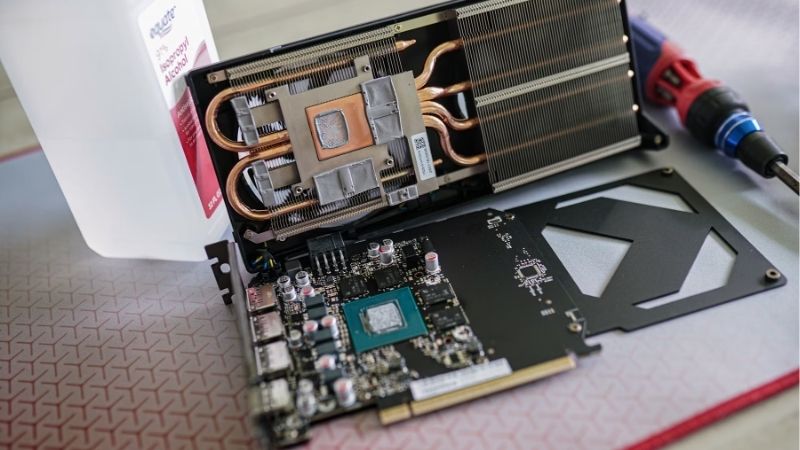
Thermal compound fills microscopic gaps between the heat spreader and the cold plate. Four properties decide how well it does that job, and only one of them appears on the front of the box. Working out which thermal paste is best starts with those four.
Conductivity claims and how to read them
Figures in watts per metre-kelvin are quoted by most brands, with premium compounds claiming somewhere between 8 and 14 W/mK. There is no shared test standard, so numbers from different manufacturers are not directly comparable. Compare within a brand, not across brands.
Treat conductivity as a rough tier indicator rather than a ranking. Between two decent compounds the real-world gap on a mainstream processor is usually small compared with mounting pressure and case airflow. Mounting pressure matters more than the number.
Electrical conductivity and safety
Standard ceramic and metal-oxide pastes are electrically non-conductive, so a smear over the edge of the heat spreader is harmless. Liquid metal compounds are conductive and can destroy a board if they escape. That safety margin is worth having.
Some compounds are also described as non-capacitive, meaning they will not hold a charge across nearby contacts. For a first build or a laptop repair, that safety margin is worth more than a degree of performance. Check the packaging for both claims.
Viscosity and how easily it spreads
Thick compounds resist spreading and can leave gaps if mounting pressure is uneven. Thinner pastes flow readily under the cold plate but can be messy, and both extremes are harder to apply neatly on a small die. Application technique matters more than viscosity.
If you reseat coolers often, a medium-viscosity paste is the practical choice. It spreads without running, cleans off easily with isopropyl alcohol, and does not need a warm-up period before it performs properly. Isopropyl alcohol removes it cleanly.
Longevity and pump-out resistance
Pump-out is the slow migration of compound away from the centre of the die as the system heats and cools. It is the main reason temperatures creep upward after a couple of years of daily use. It is the reason temperatures creep upward.
Phase-change pads resist this well because they melt into place once and stay there. Conventional pastes vary, and manufacturers who quote a durability figure in years are usually the ones with a stable formulation. A quoted durability figure is a good sign.
Top Picks: Which Thermal Paste Is Best in 2026?
These five compounds cover everyday reapplication, high-power processors and long-term stability. All are electrically non-conductive, so none of them will damage a board if a little escapes the edge. Which thermal paste is best depends on how often you reseat.
| Compound | Type | Manufacturer claim | Best for |
|---|---|---|---|
| Arctic MX-6 | Ceramic paste | Non-conductive, long service life | Everyday use |
| Noctua NT-H2 | Hybrid paste | Long shelf and service life | Easy application |
| Thermal Grizzly Kryonaut | High-performance paste | 12.5 W/mK | High-power chips |
| Thermalright TF7 | High-performance paste | 12.8 W/mK | Value performance |
| Honeywell PTM7950 | Phase-change pad | Melts into place on first heat cycle | Long-term stability |
Arctic MX-6
MX-6 is the default answer for most builds. It is non-conductive, spreads under moderate pressure without fuss, and Arctic sells it in sizes from small tubes up to bulk syringes for anyone maintaining several machines. It is the safe default choice.
It is slightly thicker than the older MX-4, so it needs a firmer squeeze and a properly seated cooler. Arctic no longer publishes a conductivity figure, which makes direct spec comparisons awkward. Seat the cooler firmly and tighten the screws diagonally.
If you are still deciding which thermal paste is best for a machine you reseat every couple of years, MX-6 is the low-risk answer, since it is easy to source, easy to clean off and stable over a long service life.
Noctua NT-H2
NT-H2 is the easiest compound here to apply cleanly. The viscosity is forgiving, it works immediately without a curing period, and the retail package includes cleaning wipes that save buying alcohol separately. It is the easiest option for a first build.
Noctua does not publish a conductivity number at all, which frustrates spec comparisons. It is also priced above bulk options, so it is a poor choice if you are repasting a dozen machines. Bulk repasting is not what this compound is priced for.
Thermal Grizzly Kryonaut
Kryonaut is aimed at high-power processors, with a claimed conductivity of 12.5 W/mK. It performs well immediately after mounting, which is why it remains popular with overclockers and benchmark builds. It reaches full performance from the first boot.
The formulation is known to dry out faster on very hot chips, so it suits systems you reseat periodically rather than a machine you build and forget. It is also among the more expensive options. Plan on reseating it every couple of years.
Thermalright TF7
TF7 offers a similar claimed conductivity of 12.8 W/mK at a noticeably lower price, and it ships in useful quantities. For anyone repasting several systems, that combination is difficult to argue with. The larger tubes are the real saving.
It is thicker than NT-H2, so application takes a little more care on small dies. Independent long-term data is thinner than for established brands, which matters if you plan to leave it untouched for years. Warm the tube slightly if it resists spreading.
Honeywell PTM7950
This is a phase-change pad rather than a paste. It melts into place during the first heat cycles and then stays put, which largely removes the pump-out problem that raises temperatures over time. It is the option to fit once and then forget about.
Application is different: you cut it to size and peel two films, and it needs a few heat cycles before it reaches full performance. Counterfeit sheets are common, so buy from a seller you trust. Buy from a seller with a clear supply chain.
What the 2026 Market Means for Repasting
Thermal compound is a small purchase, but this year it sits inside a wider maintenance case. Two factors are worth weighing before you decide whether to repaste or upgrade. Both point toward maintenance rather than an expensive replacement.
Cheap maintenance beats an expensive upgrade
Graphics card prices have risen sharply since late 2025 and no new CPU or GPU generation arrives before CES in January 2027. Against that, a tube of compound is a rounding error in any build budget. A tube costs less than a single game.
On a system that has run for two or three years, fresh paste and clean dust filters often recover several degrees. That is real, measurable improvement rather than a placebo upgrade. That is measurable improvement rather than a placebo.
Pricing and stock this year
Thermal compound and coolers have seen roughly 6% to 8% price movement, and promotional pricing policies ended at the start of February 2026. Compared with memory, that is a mild shift. Cooling has behaved far better than memory this year.
Prices here reflect August 2026 and should be checked against the current listing. Buying a slightly larger tube usually costs little more and covers several applications. A larger tube usually costs little more and covers several jobs.
Late November is still worth waiting for
Genuine Black Friday reductions are unlikely on memory, storage or prebuilt systems this year, because that stock reflects high contract pricing. Coolers, fans and thermal compound are a different case. Compound sits outside the memory contract problem.
If your temperatures are stable, holding out until 27 November is reasonable. If the system is throttling now, repaste immediately, because the saving is smaller than the performance you are losing. The saving is smaller than the performance you lose.
Frequently Asked Questions
The questions readers ask most often about thermal compound, covering quantity, replacement intervals, liquid metal and application technique. They also answer the practical side of which thermal paste is best once the tube arrives.
How much paste should I use?
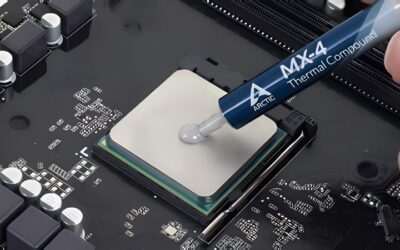
A pea-sized dot in the centre of the heat spreader is enough for a desktop processor. Mounting pressure spreads it outward, and excess simply squeezes past the edge without improving contact. Coverage matters more than the exact quantity.
How often should I replace it?
Every two to three years is a sensible interval for a daily-use system, or sooner if temperatures climb noticeably. Systems that heat and cool frequently see pump-out faster than machines left running. Watch idle temperatures for a slow upward drift.
Is liquid metal worth the risk?
It performs well but is electrically conductive, corrodes aluminium, and can ruin a board if it escapes. For almost every build, a good non-conductive compound is the sensible trade. For almost every desktop build the trade is simply not worth it.
Does the application pattern matter?
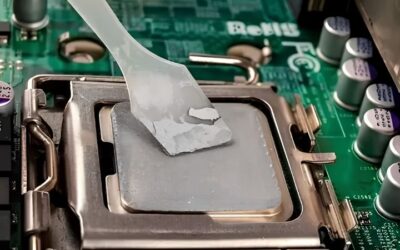
Less than most guides suggest. A centre dot works for standard heat spreaders, while a thin line along the long axis suits rectangular dies. Even coverage matters more than the shape you start with. Even coverage is what you are aiming for.
See More:
- best CPU cooler for Ryzen 5 5600X
- best small form factor CPU cooler
- best SFF CPU cooler
- best CPU cooler for i9-14900K
- What is the best AIO CPU cooler
Final Thoughts
Deciding which thermal paste is best comes down to how often you reseat coolers and how hot your chip runs. For most builds a non-conductive mid-range compound applied properly beats a premium tube applied badly. Technique beats brand every time.





Write Your Review
No reviews yet. Be the first to share your experience!