
- Top Pick: NVIDIA Shield Android TV Pro | 4K HDR Streaming Media Player High Performance, Dolby Vision, 3GB RAM, 2X USB, Works with Alexa, Model:945-12897-2500-101
- Best Value: NVIDIA Shield Remote; Voice Search, Motion-Activated, Backlit Buttons, Customizable Menu Buttons, and IR Blaster to Control Your TV (930-13700-2500-100)
- Premium Choice: NVIDIA GeForce RTX 5080 Founders Edition
What is Nvidia is a question more people are asking than ever, as the company has gone from a name gamers knew to one of the most valuable and talked-about businesses in the world. The short version is that Nvidia designs the chips and software that power both modern gaming and the artificial intelligence boom. This guide gives a clear, jargon-free explanation of what Nvidia is, what it actually makes, why it became so important, and what its dominance means if you are shopping for a graphics card.
What Is Nvidia, Exactly?
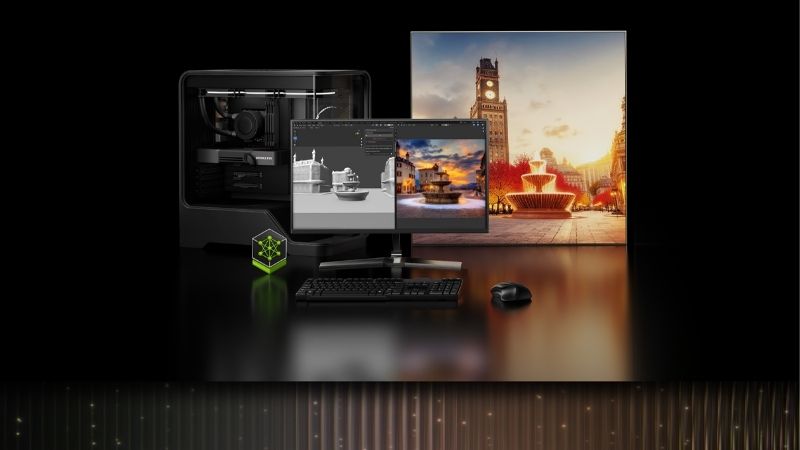
Before diving into products and history, it helps to answer the question simply, because Nvidia touches so many areas that a clear starting definition prevents confusion. At its heart, Nvidia is a technology company built around one very powerful idea, a type of chip it pioneered, and everything else it does flows from that foundation, from your gaming PC to the world’s largest AI systems.
The Short Answer
Nvidia is an American technology company best known for designing graphics processing units, or GPUs, the chips that render video game graphics and, increasingly, power artificial intelligence. It is a designer of chips and the software that runs them.
Founded in 1993, it spent decades as the leading name in gaming graphics before its technology became central to the AI revolution. That pivot transformed it into a global powerhouse.
In short, Nvidia makes the engines behind both immersive gaming and modern AI, which is why its name now appears in conversations ranging from PC building to global finance.
That dual identity is what makes Nvidia genuinely unusual. Few companies are simultaneously a household name among gamers and a central player in the global economy, yet Nvidia occupies both roles because the very same core technology serves both audiences, which is the thread running through everything that follows.
A Brief History
Nvidia was founded in 1993 with a bet that specialized graphics chips would transform computing, and it helped popularize the very idea of the GPU later that decade. Gaming was its first and long-standing home.
Over the years it expanded from pure graphics into general-purpose computing, thanks to software that let its chips tackle far more than games. That expansion set the stage for its current dominance.
By the time the AI boom arrived, Nvidia was uniquely positioned, with both the hardware and the software ecosystem the moment demanded, turning decades of groundwork into explosive growth.
What looks like an overnight success was really the payoff of long preparation. Nvidia spent years building both the specialized chips and the software tools that AI would eventually demand, so when that demand arrived, it was ready in a way competitors were not, which is a big part of why its rise was so sudden and dramatic.
Why Nvidia Became So Important
Nvidia’s importance comes down to a happy accident of design: the parallel-processing power built for graphics turned out to be exactly what artificial intelligence needs. Its chips became the default engines for training AI.
As demand for AI exploded, so did demand for Nvidia’s specialized chips, propelling it to become one of the world’s most valuable companies. Its hardware sits at the center of the AI economy.
This combination of gaming heritage and AI dominance is why understanding Nvidia matters, whether you are a gamer, an investor, or simply curious about the technology shaping the modern world.
For everyday readers, the most useful takeaway is that Nvidia’s importance is not hype for its own sake. Its chips genuinely sit underneath a huge share of modern computing, from the games people play to the AI tools appearing everywhere, which is why understanding the company helps make sense of a lot of today’s technology news.
What Nvidia Actually Makes
Nvidia’s reputation rests on a handful of distinct product lines, and knowing what they are clarifies the whole company. From the gaming graphics cards many people own to the AI chips powering data centers and the software tying it all together, each piece plays a specific role in why Nvidia matters today.
GeForce Gaming Graphics Cards
Nvidia’s most consumer-facing products are its GeForce graphics cards, the RTX series that powers gaming PCs and laptops. These are the products most individuals will actually buy and own.
GeForce cards render modern games at high resolutions and frame rates and include features like ray tracing and DLSS that improve visuals and performance. They remain a core part of Nvidia’s identity.
For decades, gaming graphics were Nvidia’s primary business, and they remain hugely important, serving as the foundation on which the company built its broader reputation and technology.
If you own a gaming PC or are thinking of building one, a GeForce card is almost certainly the piece of Nvidia hardware you will actually buy. These cards span a wide range of prices and capabilities, so the practical question for most people is simply which GeForce tier best matches their games and budget.
AI and Data-Center Chips
Nvidia’s biggest growth has come from specialized chips for data centers, such as the Hopper H100 and H200 and the newer Blackwell generation, which power AI training and computing. These drive much of its value today.
These chips are sold to cloud providers and enterprises rather than individuals, and demand for them has been enormous. In a notable recent development, the United States has allowed Nvidia to sell its H200 AI chips to China, affecting a major market for these processors.
Though you will never install one in a home PC, these AI chips are the main reason Nvidia has become a giant of the broader economy, not just the gaming world.
The distinction matters because it explains a common point of confusion. When headlines describe Nvidia’s soaring value, they are usually talking about these data-center AI chips, not the gaming cards most consumers know, even though both come from the same company and share the same underlying technology.
Software and Platforms
Nvidia is not only a chip company; its software is a huge part of its success. CUDA, its platform for general-purpose GPU computing, created an ecosystem that keeps developers and researchers tied to its hardware.
On the gaming side, technologies like DLSS use AI to boost performance, while other platforms support everything from professional creation to robotics. The software multiplies the value of the chips.
This blend of hardware and software is central to Nvidia’s staying power, since competitors must match not just the chips but the entire ecosystem built around them.
This is why Nvidia is often described as more than a hardware company. Its lasting advantage comes from the combination of capable chips and the software layer that makes them easy and powerful to use, a pairing that has proven far more durable than any single product and much harder for rivals to replicate.
Nvidia in 2026 and What It Means for You
Understanding what Nvidia is naturally leads to what its current position means in practice, especially if you are considering buying its hardware. This section looks at the AI boom driving the company, the trade-offs of its market dominance, and the practical implications for anyone shopping for a graphics card right now.
The AI Boom and Nvidia’s Role
Nvidia sits at the center of the artificial intelligence boom, supplying the chips that train and run the models behind modern AI. This role has fueled its remarkable rise in value and influence.
The intense demand for its AI chips shapes the whole market, since production capacity is shared with consumer products, which keeps gaming GPU supply disciplined and prices firm. The AI story affects gamers indirectly but really.
Understanding this connection explains a lot about the current graphics card market, where strong AI demand is one reason consumer prices have stayed elevated rather than falling.
For a gamer, this is the most practical consequence of Nvidia’s AI success. The company’s priorities and the shared production capacity mean the booming AI business quietly influences the price and availability of the very gaming cards you might want to buy, which is worth keeping in mind when you shop.
Pros and Cons of Nvidia’s Dominance
Pros for consumers: Nvidia’s lead brings genuinely advanced technology, a mature software ecosystem, strong features like DLSS 4, and reliable driver support across a wide range of products.
Cons for consumers: limited competition can mean higher prices and less pressure to lower them, and the company’s focus on lucrative AI chips can affect consumer supply and pricing.
On balance, Nvidia’s dominance gives buyers excellent technology but at a premium, which is why comparing options and buying at a fair price matters more than ever in the current market.
None of this should scare a prospective buyer away, though. Nvidia’s technology genuinely leads in important areas, and for many gamers a GeForce card remains the natural choice, so the goal is simply to shop with awareness, picking the right tier and paying a sensible price rather than assuming a discount is around the corner.
Approached that way, Nvidia’s dominance becomes something you can navigate rather than worry about. You benefit from its advanced technology and reliable support, and you offset the downside of limited competition simply by comparing current prices and choosing the card that fits your needs at a fair figure.
See More:
What This Means if You’re Buying a GPU
For a shopper, the practical upshot is that Nvidia makes excellent gaming cards, but you should match the card to your needs and buy at a sensible price rather than overpaying in a firm market. Value discipline pays off.
Because prices have paused rather than dropped, and meaningful new supply is a 2027-2028 story, waiting for a big fall is a weak bet. A fair price today is likely as good as you will see for a while.
Choose a GeForce card that suits your resolution and games, whether budget, mid-range, or high-end, and check current prices before you commit. Use the links on this page to compare today’s options and find the right fit.
So, what is Nvidia? It is the technology company whose chips and software power both modern gaming and the artificial intelligence revolution, a combination that turned a graphics specialist into one of the most important businesses in the world.
Whether you asked what is Nvidia out of curiosity or because you are about to buy a graphics card, the takeaway is the same: its technology is exceptional, its influence is vast, and choosing the right GeForce card at a fair price is how that power translates into value for you.
Frequently Asked Questions
What does Nvidia actually make?
Nvidia designs graphics and accelerated computing hardware and the software that runs on it. That spans GeForce gaming graphics cards, RTX Pro workstation cards, data centre accelerators and full rack systems for AI, Jetson modules for robotics, DRIVE platforms for vehicles, and a very large software stack including CUDA, DLSS and NIM.
Does Nvidia manufacture its own chips?
No. Nvidia is a fabless company: it designs the silicon and contracts manufacturing to foundries, principally TSMC, with packaging and memory sourced from other partners. This is why foundry capacity and memory supply constraints show up so directly in graphics card availability and pricing, since Nvidia does not control those factories.
What is the difference between GeForce, RTX Pro and data centre cards?
GeForce targets gaming and consumer creation with gaming-tuned drivers and consumer pricing. RTX Pro cards target workstations with ECC memory, certified application drivers and compact multi-GPU-friendly coolers. Data centre products such as the Blackwell accelerators are designed for server chassis, high-bandwidth memory and cluster interconnect, and are not usable in a normal desktop.
What is CUDA and why does everyone mention it?
CUDA is Nvidia’s parallel computing platform and programming model, which lets developers run general-purpose code on GPUs. Nearly two decades of libraries and tooling built on it mean most AI, scientific computing and rendering software assumes Nvidia hardware. It is the practical reason competing GPUs struggle to displace Nvidia even when their silicon is competitive.
When was Nvidia founded and how did it grow?
Founded in 1993, it made its name with the RIVA and GeForce lines in the late 1990s, coined the term GPU, then expanded into programmable shaders, general-purpose compute with CUDA, and eventually AI acceleration. Gaming built the company; accelerated computing for AI made it one of the most valuable firms in the world.
As an Amazon Associate we earn from qualifying purchases at no extra cost to you.







Write Your Review
No reviews yet. Be the first to share your experience!