
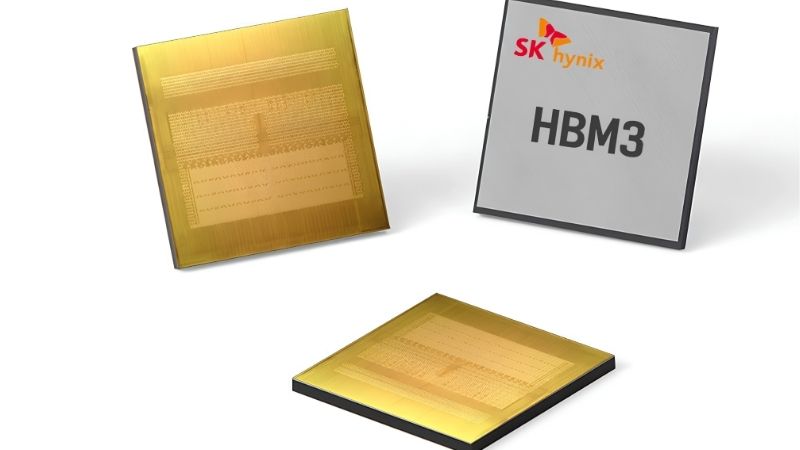
What is HBM3 is a question that keeps surfacing as artificial intelligence drives demand for ever-faster memory. In simple terms, HBM3 is the third major generation of High Bandwidth Memory, a stacked design that delivers enormous data throughput to the most powerful AI and data center GPUs. It is the memory that feeds today’s largest AI models, moving data fast enough to keep their massive processors busy. This guide explains how HBM3 works, how it improves on earlier generations, how it differs from the GDDR in gaming cards, and what the latest market and supply developments mean for anyone tracking this technology in 2026.
Understanding What HBM3 Is
Before looking at where HBM3 is used, it helps to understand what sets it apart from ordinary memory. HBM3 is built around a stacked architecture designed to maximize bandwidth, which is exactly what the most demanding processors need, and that focus explains both its power and its high cost, as well as why its name now appears in business and policy headlines as often as in technical ones.
As an Amazon Associate we earn from qualifying purchases at no extra cost to you.


How HBM3 Works
HBM3 stacks multiple memory chips vertically and links them through thousands of tiny connections, placing the entire stack extremely close to the processor. This short distance and enormous parallel interface are the keys to its bandwidth.
Rather than relying on a narrow, very fast bus like traditional memory, HBM3 uses an extraordinarily wide interface running at moderate speeds, moving a vast amount of data every cycle. The result is throughput far beyond what conventional memory can achieve.
This stacked design also keeps power use and physical footprint efficient for the bandwidth delivered, which is essential in dense data center hardware where both space and energy are at a premium and every watt counts. By building upward instead of outward, HBM3 places an enormous amount of memory bandwidth right beside the processor, something a traditional flat layout could never achieve in the same area.
HBM3 vs HBM2e and Earlier Generations
HBM3 is an evolution of earlier versions like HBM2 and HBM2e, each of which raised bandwidth and capacity. HBM3 pushes both significantly higher, delivering more throughput per stack and allowing larger memory configurations.
The practical effect is that HBM3 can feed bigger, faster processors than its predecessors, which matters enormously as AI models grow. Each generation has roughly increased the data rate while stacking more memory into the same footprint.
Refinements of the standard have continued to extend these gains, keeping high-bandwidth memory ahead of the relentless demands of modern AI and high-performance computing workloads. Each step forward buys the industry a little more headroom, but because AI models keep growing so quickly, even these large generational improvements are absorbed almost as fast as they arrive, which is part of why demand for the newest high-bandwidth memory never seems to ease.
HBM3 vs GDDR Memory
The gaming cards most people own use GDDR memory, which sits in separate chips around the GPU and connects over a fast but comparatively narrow bus. HBM3 takes an entirely different approach.
Where GDDR balances speed, cost, and availability for consumer products, HBM3 prioritizes maximum bandwidth and efficiency at a much higher price. Its stacked, ultra-wide design delivers bandwidth GDDR cannot match, but it is far more expensive and complex to manufacture.
This is why the two serve different markets. GDDR powers affordable gaming cards, while HBM3 drives the high-end accelerators where bandwidth is worth almost any cost.
Why HBM3 Matters
A memory standard only matters if it enables something important, so let us look at where HBM3 makes the difference. Its role in AI and data center computing has turned it into one of the most strategically vital technologies in the entire processor industry, to the point where access to it can influence which companies and even which countries lead in artificial intelligence.
HBM3 in AI and Data Center GPUs
HBM3 is the memory of choice for AI accelerators and data center GPUs, where processors must move colossal amounts of data at once. Its bandwidth directly determines how quickly these systems can train and run AI models.
The largest language models and scientific simulations are limited as much by memory bandwidth as by raw compute power, which is exactly the bottleneck HBM3 relieves. Without it, the pace of recent AI progress would be far slower.
This is why the most powerful Nvidia data center chips depend on HBM3 rather than GDDR, since feeding their enormous processing arrays requires bandwidth that only stacked high-bandwidth memory can provide. The memory effectively becomes the gateway through which all that compute power flows, so the amount and speed of HBM3 on a chip often define how large a model it can hold and how fast it can work through it.
The Pros and Cons of HBM3
HBM3 is remarkable technology, but it makes sense only in the right context, so here is the balanced view.
Pros:
- Extreme bandwidth that feeds the largest AI and high-performance computing workloads.
- Efficient in power and physical space for the throughput it delivers.
- Higher capacity per stack than earlier generations, supporting bigger models.
Cons:
- Very expensive and complex to manufacture, limiting it to high-end hardware.
- Tight supply due to intense AI demand and intricate stacked production.
- Overkill and not cost-effective for consumer gaming cards.
Why HBM3 Stays Out of Gaming Cards
Despite its impressive performance, HBM3 does not appear in mainstream gaming cards. The reason is cost, since HBM3 is dramatically more expensive than the GDDR that already provides ample bandwidth for games.
For gaming workloads, GDDR memory delivers more than enough performance at a fraction of the price, making it the sensible choice for consumer cards. The extreme bandwidth of HBM3 simply is not needed to render games.
As a result, HBM3 has settled firmly into its role as the memory of AI and high-performance computing, while GDDR remains the standard for the gaming cards the vast majority of buyers actually own. This is good news for gamers, since it means the expensive supply battles over HBM3 do not directly dictate the memory in their cards, and GDDR keeps delivering all the bandwidth a modern game could ask for at a sensible price.
HBM3 and the 2026 Market
HBM3 does not exist in isolation, and recent developments in AI hardware and the wider memory market shape both its availability and its importance. Understanding this context helps anyone following the technology make sense of the headlines around it, since much of the news about AI hardware ultimately traces back to the supply and demand for this single, hard-to-make component.
HBM3, AI Demand, and the H200 to China
HBM3 sits at the heart of the AI hardware boom, since the accelerators powering that boom depend on it. Demand has been so intense that supply stays tight and the memory’s strategic value remains extremely high.
A notable recent development is that the United States has allowed Nvidia to sell the H200, one of its most powerful AI chips and a heavy user of high-bandwidth memory, to China. This loosens some pressure at the very top of the market and underlines how central these HBM-powered accelerators have become to the global technology landscape.
For anyone tracking HBM3, this is a clear sign that the memory is now a geopolitical and economic flashpoint, not merely a technical specification, because control over the fastest AI memory translates into real strategic leverage. Decisions about which chips can be sold where ripple through the whole supply chain, shaping how much high-bandwidth memory is available for other products and how its price moves, which is why a single export decision can matter well beyond the specific chip involved.
Supply, Pricing, and What It Means
The broader memory market has been under pressure, and that strain reaches into high-end components. Laptop and PC-component prices, memory included, climbed sharply through late 2025 and have continued trending upward into 2026, while relentless AI demand keeps high-bandwidth memory in short supply.
There is cautious good news, though it is weak and still in the future. New capacity is on the way, with Micron, a major memory and HBM producer, building two new fabs in Idaho, which over time should ease constraints. The catch is timing, because those fabs only ramp in 2027 and 2028, so meaningful relief is still a year or more away.
For anyone watching this space, the practical reading is that HBM3 will remain scarce and highly valuable in the near term. Real relief depends on new capacity that is still being built, so tightness and elevated pricing are likely to persist for a while yet. That scarcity keeps HBM3-equipped hardware expensive and tightly allocated, which in turn shapes how quickly AI capacity can expand, since the memory is often the limiting factor rather than the processors it serves.
Choosing the Right Hardware for Your Needs
For the vast majority of users, including all gamers, a GDDR-based card is the right and far more affordable choice, since HBM3’s benefits apply to AI and data center work rather than gaming. Most buyers never need it at all.
If your work genuinely involves large-scale AI or high-performance computing, the hardware that uses HBM3 is specialized and priced to match. To explore the right tools for your needs, compare current high-performance cards and their verified prices through the links on this page and match the memory technology to your actual workload rather than the hype around it.
For everyone else, the reassuring takeaway is that you almost certainly do not need HBM3. The headlines describe a class of hardware aimed at AI labs and data centers, not the gaming and creative cards most people buy, which use GDDR and offer excellent value. Recognizing that distinction lets you choose a sensible GDDR card with confidence, following the HBM3 story with interest while knowing it does not dictate what belongs in your own system.
See More:
Final Thoughts on HBM3
To wrap up, HBM3 is the third-generation high-bandwidth memory that powers AI accelerators and data center GPUs, delivering throughput far beyond the GDDR found in gaming cards. Understanding what is HBM3 shows why it is essential for AI and high-performance computing, why its cost keeps it out of mainstream gaming cards, and why its supply and demand have become a major story in 2026. For gamers, GDDR remains the smart, affordable choice, while HBM3 stays the specialized engine behind the AI hardware reshaping the industry today. Knowing the difference lets you follow the HBM3 headlines with real understanding while confidently choosing the GDDR card that actually fits your needs and budget.
Top-Rated Picks


| Product | Brand | Rating | Reviews | Price |
|---|---|---|---|---|
| ARCTIC MX-4 (4 g) – Premium Performance Thermal Paste… | ARCTIC | ★ 4.8 | 104k | $4.99 |
| ARCTIC MX-4 (incl. Spatula, 4 g) – Premium Performanc… | ARCTIC | ★ 4.8 | 71.9k | $5.49 |
| Crucial 8GB DDR4 RAM 3200MHz (PC4-25600), Downclockab… | Crucial | ★ 4.8 | 62.8k | $74.99 |
| AMD Ryzen 5 5600X 6-core, 12-thread unlocked desktop … | — | ★ 4.8 | 30.2k | $177.60 |
| NVIDIA Shield Remote; Voice Search, Motion-Activated,… | — | ★ 4.7 | 10.6k | $25.99 |
Frequently Asked Questions
How fast is HBM3 compared with GDDR memory?
A single HBM3 stack delivers around 819GB/s, and accelerators use four to eight stacks for multiple terabytes per second of total bandwidth. A high-end gaming card with a 256-bit GDDR7 bus manages under 1TB/s. The difference comes from an extremely wide 1024-bit interface per stack rather than higher clock speeds.
Why is HBM3 not used in gaming graphics cards?
Cost and packaging. HBM stacks sit on a silicon interposer beside the GPU die, which requires advanced 2.5D packaging that is expensive and supply constrained. Gaming workloads are also less bandwidth starved than large AI models, so GDDR7 offers a far better price-to-performance ratio for consumer graphics cards.
What is the difference between HBM3 and HBM3E?
HBM3E raises per-stack bandwidth to roughly 1.2TB/s and increases capacity per stack, typically to 24GB or 36GB using taller twelve-high stacks. It is a refinement of the same standard rather than a new architecture, and it powers the current generation of high-end AI training and inference accelerators.
Which products actually use HBM3?
Data centre accelerators such as Nvidia H100 and H200, AMD Instinct MI300 series and various custom AI chips. Consumer cards have not used HBM since the Radeon VII and Vega generation. If you are shopping for gaming hardware, HBM3 is a specification you will read about but never buy directly.
Does HBM3 matter for local AI work at home?
Only indirectly. What limits local large language model performance is usually VRAM capacity first and bandwidth second. A consumer card with 24GB of GDDR7 will run larger models than a bandwidth-rich but small-capacity part, so prioritise total memory when choosing hardware for running models locally.





Write Your Review
No reviews yet. Be the first to share your experience!