
- Top Pick: GIGABYTE Radeon RX 9070 XT Gaming OC 16G Graphics Card, PCIe 5.0, 16GB GDDR6, GV-R9070XTGAMING OC-16GD Video Card
- Best Value: ASRock Radeon RX 9060 XT Challenger 16GB OC, RDNA 4, 3290MHz Boost, 16GB GDDR6 128-bit, PCIe 5.0, Dual Fans, 0dB Silent, LED Indicator, DisplayPort 2.1a, HDMI 2.1b
- Premium Choice: GIGABYTE Radeon™ RX 9070 XT Gaming OC ICE 16G Graphics Card (16GB GDDR6, 256-bit, PCIe 5.0, HDMI/DP 2.1, 2.7 Slot, Hawk Fan, Server-Grade Thermal Gel, Reinforced Structure)
What is GDDR6 is a question worth answering before you buy any mainstream graphics card, because GDDR6 remains the memory powering a huge share of GPUs on the market. In plain terms, GDDR6 is a generation of graphics double data rate memory that stores the textures, frames, and assets your GPU needs instant access to while gaming. It strikes a balance of solid speed, wide availability, and reasonable cost that keeps it relevant even as newer standards arrive. This guide explains how GDDR6 works, how it stacks up against GDDR6X and GDDR7, and how to shop wisely for a GDDR6 card in a memory market that is still settling in 2026.
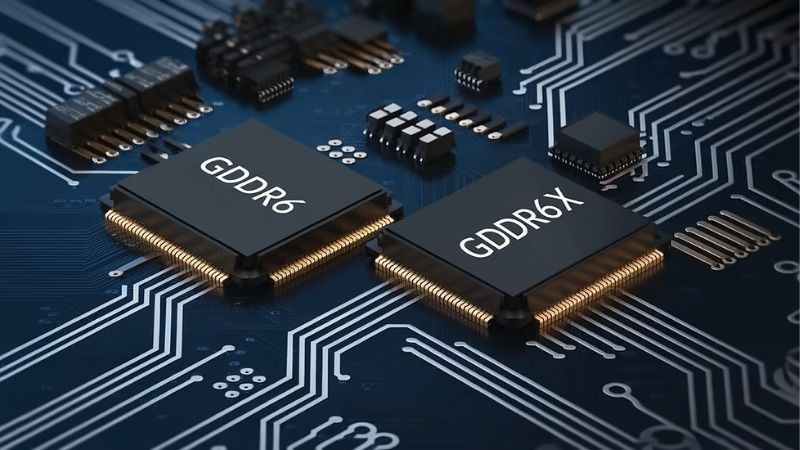
Understanding What GDDR6 Memory Is
Before comparing cards, it helps to know what this memory does and where it sits in the lineup. GDDR6 is the workhorse standard that brought a big leap over the previous generation and still anchors most mid-range graphics cards today, which is exactly why understanding it pays off when you are weighing one card against another.
As an Amazon Associate we earn from qualifying purchases at no extra cost to you.




How GDDR6 Stores and Delivers Data
GDDR6 acts as the high-speed short-term memory for your GPU. When a game loads a scene, textures and geometry sit in this memory so the processor can pull them in a fraction of a second.
Its job is to deliver that data fast enough to keep the GPU busy. If the memory is too slow, the powerful chip ends up waiting, so memory speed directly shapes real performance.
GDDR6 typically runs at speeds around 14 to 18 Gbps per pin, a major step up from the older GDDR5 it replaced, which is why it enabled smoother high-resolution gaming across an entire generation of cards.
GDDR6 vs GDDR6X and GDDR7
GDDR6 sits at the base of a three-tier family. GDDR6X uses a clever signaling trick to push speeds higher, while GDDR7 changes the signaling method again to reach far greater bandwidth.
In practice, GDDR6 offers the most balanced mix of cost and performance, GDDR6X targets higher-end cards needing more bandwidth, and GDDR7 leads the newest flagships. Each suits a different price and performance tier.
For many gamers, GDDR6 hits the sweet spot. It delivers enough bandwidth for excellent 1080p and 1440p gaming without the price premium of the faster standards.
How Bandwidth Comes Together
The memory speed is only half the bandwidth equation. Total bandwidth equals the memory speed multiplied by the memory bus width, so a GDDR6 card’s bus also shapes how much data it can move.
This is why two GDDR6 cards can perform differently. One with a 256-bit bus moves far more data than one with a 128-bit bus, even though both use the same memory type.
Modern cards add another factor: on-chip cache. A large cache stores frequently used data close to the cores, reducing how often the GPU reaches out to GDDR6 over the bus. This means a recent GDDR6 card with a generous cache can punch above what its raw memory specs suggest, which is one reason newer mid-range cards remain competitive despite using the older memory standard.
Why GDDR6 Still Matters in 2026
Even with newer standards available, GDDR6 remains highly relevant, so let us look at where it shines. For most buyers, it offers the right balance of performance and value, especially at the resolutions they actually play rather than the 4K extremes that dominate marketing comparisons.
GDDR6 Performance for Mainstream Gaming
For 1080p and 1440p gaming, GDDR6 provides plenty of bandwidth. The vast majority of popular titles run beautifully on GDDR6 cards, which is why the standard dominates the mainstream market.
At 4K with very demanding settings, the faster standards pull ahead, but most gamers do not play at 4K. For the resolutions people use most, GDDR6 delivers a smooth, enjoyable experience.
Paired with features like DLSS, a GDDR6 card can stretch even further, using AI upscaling to maintain high frame rates that the raw memory bandwidth alone might not reach.
This combination is part of why GDDR6 has stayed relevant longer than many expected. Where older cards leaned entirely on raw memory power, a modern GDDR6 card can lean on smart features and a large cache to deliver an experience that feels well above its memory tier, keeping the standard competitive even as faster options sit on the shelf beside it.
The Pros and Cons of a GDDR6 Card
Choosing GDDR6 over a faster standard makes sense for many buyers, but it helps to weigh both sides before deciding.
Pros:
- Excellent value, offering strong performance at a lower price than GDDR6X or GDDR7.
- Widely available across many card models and tiers.
- More than enough bandwidth for mainstream 1080p and 1440p gaming.
Cons:
- Lower peak bandwidth than GDDR6X and GDDR7 for heavy 4K workloads.
- Less future headroom as games grow more memory-hungry.
- Performance still depends heavily on the card’s bus width and capacity.
The honest summary is that GDDR6 is the value champion rather than the performance leader. For mainstream gamers it delivers nearly everything they need at a friendlier price, while only heavy 4K and future-proofing buyers truly benefit from stepping up to GDDR6X or GDDR7. If your budget and resolution sit in the mainstream, GDDR6’s mix of price, availability, and capable performance makes it an easy recommendation rather than a compromise.
GDDR6 Capacity and Real-World Use
Beyond speed, the amount of GDDR6 matters. Modern games increasingly want 8 GB or more, and some demanding titles at high settings prefer 12 GB to avoid running out of memory.
For 1080p gaming, 8 GB of GDDR6 is a sensible minimum today, while 1440p benefits from 12 GB or more. Pairing enough capacity with adequate bandwidth keeps a GDDR6 card comfortable for years.
Running short on memory causes a sharper problem than running short on raw speed. When a game needs more VRAM than the card has, it must swap data in and out constantly, which produces stutter and sudden frame drops even on an otherwise fast card. Because modern titles keep raising their texture and asset demands, choosing a GDDR6 card with a little extra capacity is cheap insurance against that frustrating kind of slowdown a year or two down the line.
How to Buy a GDDR6 Card in the 2026 Market
With the fundamentals clear, the goal is to shop smart in a market where memory pricing has reshaped what good value looks like. A little context about the current landscape helps you time your purchase well and recognize a genuinely fair deal when you see one.
Matching GDDR6 Capacity and Bandwidth to Your Needs
Start from your resolution and games. For 1080p, an 8 GB GDDR6 card with a reasonable bus handles modern titles comfortably. For 1440p, lean toward 12 GB and a wider bus for steadier frame rates.
Avoid the trap of buying capacity without bandwidth or the reverse. A GDDR6 card needs both enough memory for its textures and enough speed to feed them, so check the full spec rather than a single number.
A simple way to balance this is to anchor on your resolution first, then verify both numbers fit. For 1080p, confirm at least 8 GB and a reasonable bus, then check benchmarks. For 1440p, look for 12 GB and a wider bus or strong cache. Letting your resolution set the targets, rather than chasing whichever spec a listing happens to highlight, keeps you from overpaying for one strength while quietly accepting a weakness elsewhere.
GDDR6 Pricing and the 2026 Memory Situation
GDDR6 cards have not escaped the broader memory squeeze. Laptop and PC-component prices, memory among them, climbed sharply through late 2025 and have continued trending upward into 2026, which keeps even mainstream cards pricier than buyers would like. Because memory is such a large part of a graphics card’s bill of materials, these swings show up directly in the prices you see at checkout, even on the value-oriented GDDR6 models.
The good news is real but weak and still in the future. Prices have stopped climbing as steeply as they did at the end of 2025, and some hardware makers have reported a relatively stable stretch, while still cautioning that volatility has not ended. Fresh supply is also on the way, with OEMs able to source DDR5 from Chinese suppliers such as CXMT, and Micron building two new fabs in Idaho. The problem is timing, because those fabs only ramp in 2027 and 2028, so genuine relief is still a year or more out. In other words, the most encouraging developments are real, but they will take time to translate into the lower shelf prices buyers are hoping for.
For a GDDR6 buyer, the sensible reading is that prices have plateaued rather than dropped. Since GDDR6 cards already offer the best value in the lineup, grabbing a well-specced one at a fair price during this steadier period usually beats waiting for a steep discount that the supply timeline does not yet promise.
Choosing the Right GDDR6 Card
Once you know the capacity and bandwidth your resolution needs, the final step is finding a model at a fair price. Because GDDR6 spans so many cards, you have plenty of options across budgets.
To skip the guesswork, compare current GDDR6 cards and their verified prices through the links on this page and pick the one that matches your resolution and budget today. A quick check now helps you secure solid value before the next round of market swings.
When you compare, watch for the sweet-spot models that pair a sensible capacity with a healthy bus and good cooling at a fair price. Those are the cards that age gracefully and rarely leave buyers with regret. Because GDDR6 covers such a wide range of options, a little patience comparing two or three strong candidates usually turns up a card that delivers most of the experience of a pricier standard for noticeably less money.
See More:
Final Thoughts on GDDR6
To wrap up, GDDR6 is the balanced, widely available memory standard that still powers most mainstream graphics cards, offering strong performance and excellent value for 1080p and 1440p gaming. Understanding what is GDDR6 helps you see why it remains a smart choice, how it compares to GDDR6X and GDDR7, and why its bus width and capacity matter as much as the memory type. With 2026 prices plateaued rather than falling, a well-specced GDDR6 card bought at a fair price today is a sound, value-focused decision rather than a gamble on relief that is still years away. For the mainstream gamer who wants strong, dependable performance without paying for the latest standard, GDDR6 continues to be one of the smartest places to put your money.
Top-Rated Picks


| Product | Brand | Rating | Reviews | Price |
|---|---|---|---|---|
| ARCTIC MX-4 (4 g) – Premium Performance Thermal Paste… | ARCTIC | ★ 4.8 | 104k | $4.99 |
| ARCTIC MX-4 (incl. Spatula, 4 g) – Premium Performanc… | ARCTIC | ★ 4.8 | 71.9k | $5.49 |
| Crucial 8GB DDR4 RAM 3200MHz (PC4-25600), Downclockab… | Crucial | ★ 4.8 | 62.8k | $74.99 |
| AMD Ryzen 5 5600X 6-core, 12-thread unlocked desktop … | — | ★ 4.8 | 30.2k | $177.60 |
| NVIDIA Shield Remote; Voice Search, Motion-Activated,… | — | ★ 4.7 | 10.6k | $25.99 |
Frequently Asked Questions
How fast is GDDR6?
GDDR6 runs between 12Gbps and 20Gbps per pin depending on the specific modules a manufacturer chooses. On a 256-bit bus at 18Gbps that produces about 576GB/s of bandwidth. It uses two independent 16-bit channels per chip, which improves efficiency compared with the single wide channel of GDDR5.
Is GDDR6 still good enough for gaming?
Yes for most players. At 1080p and 1440p the GPU core and VRAM capacity limit performance long before GDDR6 bandwidth does. Bandwidth becomes a real constraint mainly at 4K with ray tracing enabled, and even there large on-die caches such as Infinity Cache reduce how often the card touches memory.
How much capacity does each GDDR6 chip hold?
Common modules are 1GB or 2GB, so a card with a 128-bit bus using four 2GB chips has 8GB total. This links capacity directly to bus width, which is why narrow-bus budget cards struggle to offer generous VRAM without clamshell layouts that place chips on both sides of the board.
Does GDDR6 memory speed affect frame rates much?
Overclocking memory typically yields two to five percent in bandwidth-limited scenarios and almost nothing elsewhere. Error correction on modern cards silently retries failed transfers, so pushing memory too far reduces performance without crashing. Watch for frame rate declining as you raise the clock, then back off from that point.
What replaced GDDR6?
GDDR7 is the successor, using PAM3 signalling to reach 28 to 32Gbps per pin with better efficiency. GDDR6 remains widespread on mid-range and budget cards because it is cheaper and mature. For mainstream gaming, choosing a card with enough GDDR6 capacity beats chasing the newer memory standard.



Write Your Review
No reviews yet. Be the first to share your experience!