
- Top Pick: ASRock Radeon RX 9060 XT Challenger 16GB OC, RDNA 4, 3290MHz Boost, 16GB GDDR6 128-bit, PCIe 5.0, Dual Fans, 0dB Silent, LED Indicator, DisplayPort 2.1a, HDMI 2.1b
- Best Value: GIGABYTE Radeon™ RX 9070 XT Gaming OC ICE 16G Graphics Card (16GB GDDR6, 256-bit, PCIe 5.0, HDMI/DP 2.1, 2.7 Slot, Hawk Fan, Server-Grade Thermal Gel, Reinforced Structure)
- Premium Choice: GIGABYTE GeForce RTX 5080 Gaming OC 16G Graphics Card, WINDFORCE Cooling System, 16GB 256-bit GDDR7, GV-N5080GAMING OC-16GD Video Card


Video card for 4K gaming is a search that returns a lot of confident nonsense, most of it written before DLSS 4.5 shipped and none of it reflecting what anything costs today. Four times the pixels of 1080p is a brutal, unforgiving workload, and the honest answer depends on three things nobody asks you first: what refresh rate your monitor runs, whether you care about ray tracing, and whether you consider upscaled frames real. This page sorts the market by budget tier, tells you the VRAM floor that actually matters in 2026, and explains which cards are quietly bad buys despite good marketing.
What 4K Gaming Actually Demands in 2026
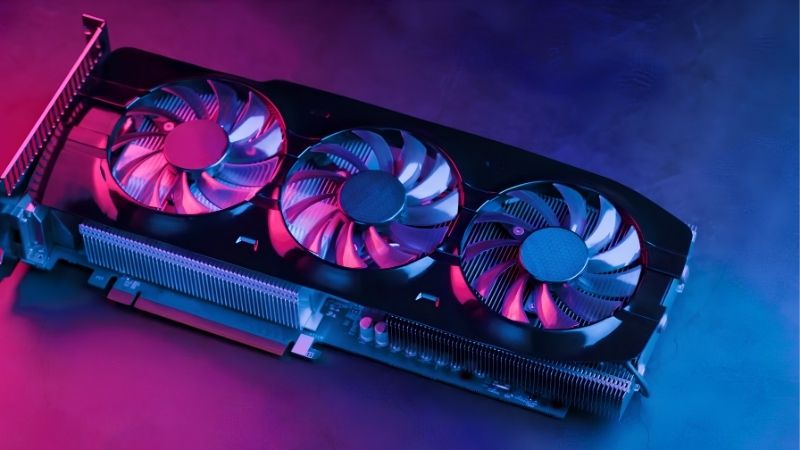
Start with the arithmetic, because it explains everything that follows. 3840×2160 is 8.3 million pixels per frame against 1080p’s 2.1 million. Your GPU is doing four times the work for the same scene. That single fact is why a card that dominates 1080p can be mediocre at 4K, and why the gap between tiers widens as resolution climbs rather than staying proportional.
As an Amazon Associate we earn from qualifying purchases at no extra cost to you.





The VRAM Floor Is 12GB, and 16GB Is the Real Target
This is the specification that decides whether a card ages well, and it is the one most buyers underweight in favour of core counts.
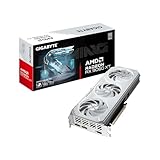
At 4K, frame buffers, texture pools and render targets all scale with resolution. 8GB cards are finished at this resolution — not slow, but broken, producing texture pop-in and frame time spikes that averages never reveal. 12GB works today with sensible settings. 16GB is where you stop thinking about it, and is the sane target for anything you expect to keep three years.
The practical rule: ignore any card under 12GB regardless of how its 1080p benchmarks look. A 4060 Ti 8GB is a perfectly good 1080p card and a genuinely bad 4K one, and no driver update will change that.
Bandwidth Matters More at 4K Than Anywhere Else
Memory bandwidth is the quiet variable that separates cards with similar core counts. At 1080p, large L2 caches can mask a narrow bus — Ada proved this convincingly. At 4K, the working set no longer fits in cache, traffic spills to VRAM, and the bus width starts dictating results.
This is why the RTX 5090’s 512-bit bus and 1,792 GB/s produce a bigger lead at 4K than its shader count alone predicts, and why 128-bit cards collapse at this resolution no matter how much cache they carry. When comparing two cards for 4K, check bus width before core count.
Your Monitor Decides More Than Your GPU Does
Before spending anything, look at what you are plugging into. A 4K 60Hz panel needs a card that holds 60 FPS — that is a $600-700 problem in 2026. A 4K 144Hz panel needs 120+ FPS, which is a $1,000-2,000 problem, and a fundamentally different purchase.
Buyers routinely get this backwards, pairing a 5090 with a 60Hz panel and capping 110 FPS of capability at 60. If your monitor is 60Hz, the honest advice is to spend $400 on a better monitor and $600 on the GPU rather than $2,000 on the GPU alone. The experience will be better and the total will be lower.
What Each Budget Tier Actually Delivers
Here is the market sorted by what you can spend, with honest expectations attached. These are 4K figures with DLSS or FSR Quality enabled, which is how anyone sane actually plays at this resolution.
The $600-800 Tier: 4K 60 With Compromises
| Card | VRAM | 4K 60 native? | 4K with upscaling |
|---|---|---|---|
| RX 9070 XT | 16GB | Most titles, high settings | ~75-95 FPS typical |
| RTX 5070 Ti | 16GB | Most titles, high settings | ~80-100 FPS + MFG |
| Used RTX 4070 Ti Super | 16GB | Most titles | ~75-90 FPS + FG |
This tier is where 4K becomes genuinely viable, and for most people it is the correct place to stop. The 9070 XT wins on price per frame and runs on a 750W supply. The 5070 Ti costs more and gives you DLSS 4.5 multi-frame generation, which on a high refresh panel is a meaningful capability rather than a checkbox.
What you give up: path tracing is out of reach, and in the heaviest titles you will be choosing High rather than Ultra. Neither is a real loss.
The $1,000-1,300 Tier: 4K Without Thinking
The RTX 5080 with 16GB of GDDR7 and 960 GB/s is the card most people searching this term actually want. It handles 4K at high settings across essentially everything, carries DLSS 4.5 with 5X and 6X multi-frame generation for 240Hz panels, and draws 360W — a figure an 850W supply handles without drama.
Its limitation is honest and worth stating: 16GB at 4K is comfortable now and will be adequate rather than generous by 2028. If that bothers you, the only answer is the 5090, and the next section explains why that is a harder sell than it looks.
Note that partner pricing in this tier varies more than performance does. The cheapest 5080 and the most expensive one differ by 2-4% in frames and by $150-250 in price. That gap is the best value decision available in the whole 4K market.
The $2,000 Tier: Path Tracing and Diminishing Returns
The RTX 5090’s 32GB and 1,792 GB/s make it the only card that turns path-traced 4K from a slideshow into something playable. In Cyberpunk with path tracing at 4K native, it manages roughly 29 FPS where a 9070 XT manages 11 — and 29 is a number upscaling can work with, while 11 is not.
The cost of that capability is severe. 575W, a 1000W supply, a 12V-2×6 connector, 3.5-slot partner models around 330-360mm, and roughly $2,000. Price per frame runs about double the 9070 XT’s.
Buy it if you play path-traced titles and see the difference, or if you also render or run local AI models where 32GB is a capability rather than a luxury. Otherwise the $1,400 difference buys a better monitor, a CPU upgrade and a proper PSU — all of which will improve your 4K experience more than the 5090 will.
Pros and Cons of the Upscaling-First Approach
Every recommendation above assumes upscaling is on. That assumption deserves examination, because it is doing enormous work in the frame rate numbers and not everyone agrees it should count.
Why 4K Native Is No Longer the Sensible Target
DLSS 4.5 introduced a second-generation transformer model trained with roughly five times the compute of the original, covering over 400 games and apps. At 4K Quality, the reconstructed image is close enough to native that identifying the difference requires looking for it deliberately. FSR 4 has closed most of the same ground.
This changes the maths fundamentally. A card rendering at 1440p internally and reconstructing to 4K is doing roughly half the pixel work for an image most people cannot distinguish in motion. Insisting on native 4K in 2026 means paying roughly double for a difference you will not see.
The Frame Generation Question Is Genuinely Contested
Multi-frame generation is where reasonable people disagree, and you should decide before you spend. DLSS 4.5’s Dynamic mode adjusts the multiplier in real time to hit your display’s refresh rate, with fixed 5X and 6X modes on RTX 50 series enabling 240+ FPS in path-traced titles.
The honest caveats: latency does not improve the way the counter suggests, fast motion can show artefacts, and Dynamic mode is not compatible with frame rate limiters or V-Sync — a restriction that catches people who cap their frames by habit. If your base frame rate before generation is below roughly 40, generated frames sit on top of input lag you will feel.
Where it works well: a 5080 at 70 native FPS on a 144Hz panel, generating up to 144, feels genuinely smoother. Where it does not: rescuing a card that cannot hit 40 in the first place.
Pros and Cons Summary
| Pros of upscaling-first 4K | Cons and caveats |
|---|---|
| A $700 card delivers a 4K experience that cost $1,600 in 2023 | Image reconstruction still trails native in fine detail and thin geometry |
| DLSS 4.5 works via Nvidia app override in 400+ titles, no dev patch needed | RTX 20/30 lack FP8, so newer models cost them more than they give |
| Lower power draw for the same output | Frame generation adds latency the counter does not show |
| FSR 4 gives AMD buyers a real option now | Dynamic MFG breaks with V-Sync and frame limiters |
| Extends a card’s usable life by years | Not every title supports every feature |
The summary: upscaling is why 4K is affordable in 2026. Frame generation is a bonus on top, not a foundation to build a purchase on.
The Market Reality Behind These Prices
Every recommendation here assumes you can buy at the prices quoted, and for eighteen months that assumption has been unreliable. For a purchase this size, the direction of the market deserves as much attention as the benchmarks.
Why 4K-Capable Cards Are Not Getting Cheaper
Component and laptop prices have continued trending upward rather than settling back, and graphics cards have taken a disproportionate share because of memory. The cards on this page carry 16GB or 32GB of GDDR6 or GDDR7 — a bill of materials that reprices directly with memory contracts, on a supply base concentrated among very few manufacturers.
The result is a market where the traditional pattern of a card drifting below MSRP by its second year simply has not happened. Buyers who spent 2025 waiting for the 5080 to approach launch pricing largely paid more later than they would have paid immediately. For a 4K purchase, where you are already spending $700-2,000, this matters more than it does anywhere else in the market.
The practical read: waiting is not free and it is not neutral. It has a cost, and the evidence of the last two years is that the cost has been real.
The Slowdown Is Real, But It Is Not Relief
There is genuine good news and it should be stated precisely. The steep climb of late 2025 has eased. Framework, which publishes unusually candid component pricing updates, has described a period of relative stability while continuing to warn that volatility has not ended. Prices stopped accelerating; they did not reverse.
New supply is coming. OEMs can now source DDR5 from Chinese manufacturers such as CXMT, and Micron is building two fabs in Idaho. Both add real capacity to a constrained market. But those plants do not begin production until 2027-2028 — beyond the useful horizon of any purchase you are making this year.
So: flat, not falling, with meaningful relief two to three years out. Plan around the prices in front of you rather than the ones you hope for.
Which Cards to Avoid for 4K
Three categories, stated bluntly. Any 8GB card, regardless of price or 1080p performance — the RTX 5060, 4060 Ti 8GB and RTX 3050 are not 4K cards and listings implying otherwise are wrong. Any 128-bit card, for the bandwidth reasons above. And older flagships bought used at optimistic prices — a used RTX 3090 has 24GB but lacks Frame Generation entirely and draws 350W to deliver less than a 5070 Ti.
The one exception worth considering used: a 4070 Ti Super or 4080 Super at a genuine discount. Both have 16GB, both support Frame Generation, and both remain competent 4K cards. Compare current pricing and stock across the 9070 XT, 5070 Ti and 5080 before committing — the ordering between them shifts month to month, and the card that made sense in January may not be the one that makes sense today.
See More:
- GTX 1650 vs RTX 3050
- Nvidia DIGITS
- Nvidia cuDNN
- Radeon RX 9070 XT vs RTX 5090
- PNY GeForce RTX 5080 review
Conclusion: Choosing a Video Card for 4K Gaming
Picking a video card for 4K gaming in 2026 comes down to three decisions made in order. Check your monitor’s refresh rate first — a 60Hz panel and a 144Hz panel are different purchases separated by roughly $1,000. Set 12GB as your hard floor and 16GB as your target, and ignore core counts on any card below that line. Then accept upscaling as the default, because DLSS 4.5 and FSR 4 have made native 4K an expensive way to buy a difference you will not notice.
For most people the answer is the RX 9070 XT or RTX 5070 Ti at $600-800 for 4K 60-90, or the RTX 5080 at $1,000-1,300 if you want to stop thinking about settings. The 5090 is for path tracing, rendering and local AI — genuine needs, but narrow ones. With memory costs holding board prices firm and no correction expected before 2027, the card that is in stock at a sane price today is a better plan than the one you are waiting for. Check current listings across the tier that matches your monitor.
Frequently Asked Questions
What is the minimum card for real 4K gaming?
The realistic floor for 4K at high settings with upscaling is around the RTX 5070 Ti, RX 9070 XT or RTX 4080 tier, which hold 60fps or more in most modern titles using DLSS or FSR quality mode. Anything below that means dropping to medium settings or accepting performance mode upscaling.
How much VRAM does 4K actually need?
Treat 12GB as the minimum and 16GB as the comfortable target for 4K with high textures. Path traced titles with frame generation and high resolution texture packs can push past 16GB, which is the argument for a 24GB or 32GB card if you want maximum settings without compromise.
Does upscaling count as real 4K?
Practically, yes. DLSS quality mode renders at 1440p and reconstructs to 4K, and with the transformer model the result is frequently indistinguishable from native at normal viewing distance, sometimes cleaner on fine detail. Nearly every 4K benchmark result you see quoted for playable frame rates assumes upscaling is on.
Do I need a stronger CPU for 4K?
Less than you think. At 4K the GPU is the bottleneck in almost every title, so a mid-range current CPU is sufficient. The exception is frame generation, which raises output frame rates enough to reintroduce CPU limits, and simulation heavy games like strategy titles that are CPU bound at any resolution.
What power supply should I plan for?
Budget 850W for an RTX 5080 class card and 1000W or more for an RTX 5090 at 575W. Use an ATX 3.0 or 3.1 unit with a native 12V-2×6 cable rather than a daisy chained adapter, and seat the connector fully. Transient spikes on high end cards trip undersized supplies even when average draw looks fine.
Ready to decide? Our #1 pick for 2026 is the RX 9070 XT.
Live price & availability on Amazon.

Write Your Review
No reviews yet. Be the first to share your experience!