
- Top Pick: ASUS Dual GeForce RTX 3050 6GB GDDR6 OC Edition Gaming Graphics Card
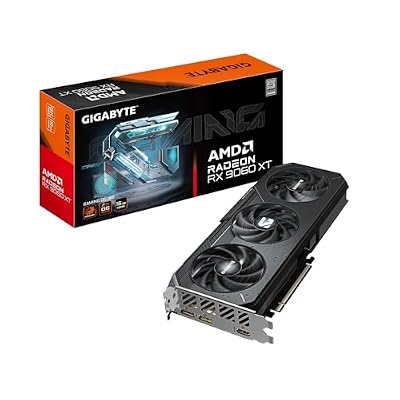
- Best Value: ASRock Radeon RX 9060 XT Challenger 16GB OC, RDNA 4, 3290MHz Boost, 16GB GDDR6 128-bit, PCIe 5.0, Dual Fans, 0dB Silent, LED Indicator, DisplayPort 2.1a, HDMI 2.1b
- Premium Choice: msi Gaming RTX 3050 Ventus 2X 6G OC Graphics Card (NVIDIA RTX 3050, 96-Bit, Boost Clock: 1492 MHz, 6GB GDDR6 14 Gbps, HDMI/DP, Ampere Architecture)
Top Budget Graphics Card Gaming Buyer Picks for 2026
Here are our current top budget graphics card gaming buyer picks, compared on real Amazon owner reviews, price, and features. Live prices update below.
- Top Budget Graphics Card Gaming Buyer Picks for 2026
- What Defines a Good Budget Gaming Card in 2026
- The Cards Worth Buying at Each Band
- Pros, Cons, and the Market Clock
- Recommended Products
- Final Verdict: The Budget Graphics Card for Gaming in 2026
- Related Guides
- Frequently Asked Questions
- Related Articles
- Related Guides

Dropped $25.00


Dropped $10.00
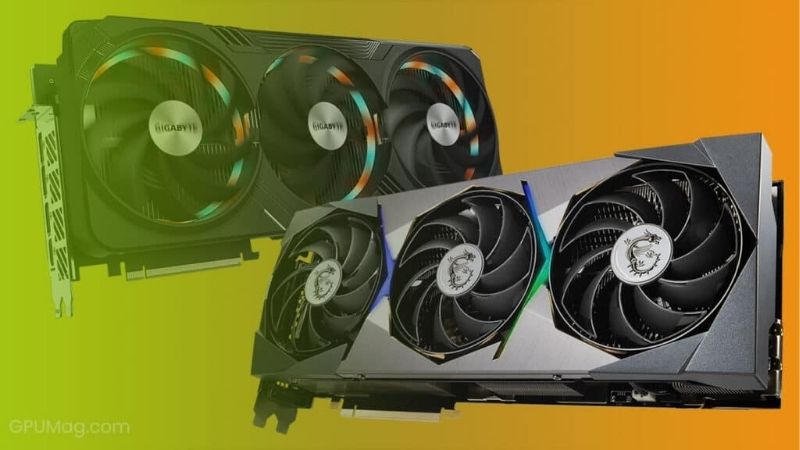
Budget graphics card for gaming shopping in 2026 is harder than the price tags suggest, because the $100-430 tier now spans four GPU generations, two memory standards, and a software divide — DLSS and frame generation — that matters more than raw silicon at this end of the market. Spend the same $200 on the wrong card and you buy three fewer years of usable life. This review maps the budget landscape band by band, identifies the specifications that actually predict longevity down here, names the cards worth your money at each price, and reads the market forces that make this quarter’s timing unusually consequential.
As an Amazon Associate we earn from qualifying purchases at no extra cost to you. Product prices and availability are accurate as of the date shown and are subject to change.





What Defines a Good Budget Gaming Card in 2026
Budget buying punishes spec-sheet shortcuts hardest, because every dollar matters and the marketing targets exactly this tier. This section establishes the price bands and what each genuinely buys, the three specifications that predict satisfaction, and the new-versus-used decision that frames everything.
The Three Price Bands and What Each Buys
The budget tier splits into three honest bands. At $100-180, you buy the used esports tier: smooth 1080p in competitive titles and the pre-2022 catalog, with modern AAA releases out of reach or compromised — RTX 2060-class hardware defines it. At $180-300, the used-value and new-entry band, 1080p Ultra and entry 1440p arrive along with the 8-12GB buffers modern titles assume — the tier’s value center of gravity.
At $300-430 sits the stretch band where budget quietly becomes mid-range: new 16GB cards with current-generation features, 1440p as the native habitat, and ownership windows measured in four-plus years. The most expensive mistake in budget shopping is buying twice — landing one band below your actual needs and repurchasing within eighteen months — which is why this review prices the bands against your library before it prices the cards.
The Three Specs That Predict Longevity Down Here
First, VRAM, the budget tier’s hard gatekeeper: 8GB is 2026’s minimum viable figure at 1080p Ultra, 6GB cards are retiring from modern AAA in real time, and 12-16GB is what separates a three-year card from a five-year one. No clock speed compensates for a buffer that will not load the textures.
Second, upscaler access, the software multiplier: DLSS-capable cards recover 25-40% performance in supported titles at near-invisible quality cost, effectively a free tier upgrade — and DLSS 4 frame generation on current Blackwell cards multiplies displayed frames further. Third, power draw, the hidden compatibility tax: 75-160W cards drop into any prebuilt; 200W+ cards quietly add PSU line items that erase budget savings. Together the three explain most budget-tier regret; the cores explain surprisingly little.
New vs Used at the Budget Tier
The used market owns the bottom two bands on pure arithmetic — depreciation did the discounting, and 150-220W mid-range cards age gently — but it charges the standard homework: photos, service-history questions, return windows, and the 5-10% risk premium of warranty-less hardware. Warrantied refurbished listings split the difference for a $15-30 premium that first-time buyers should pay without hesitation.
New cards own the top band and one argument lower down: warranty, current-generation software (DLSS 4 is new-card exclusive), and zero verification labor. The crossover rule that falls out: below $250, used value is usually unbeatable; above $300, new features and warranties usually win; between them, the specific listings decide. The picks below apply exactly that rule.
The Cards Worth Buying at Each Band
The picks that follow are deliberately few — at each band, one Nvidia lead and the honest cross-shop — because budget buyers drown in twenty-card lists. Every recommendation assumes the specs framework above; every price reflects 2026’s actual market rather than launch nostalgia.
Under $180: The Used Esports Tier
The pick is the RTX 2060 12GB at $130-170 used: Turing’s DLSS support gives it a modern-title lifeline no same-age GTX card possesses, the doubled buffer sidesteps the 6GB retirement wave, and 160W single-connector power drops into nearly any prebuilt. It runs the esports catalog past 100 FPS and the pre-2024 AAA library at honest 1080p settings.
The cross-shop is AMD’s RX 6600 at $140-170 — slightly stronger raster, lower 132W draw, but FSR-only upscaling that trails DLSS in the titles this band stretches for. Skip entirely: anything with 4GB or less at any price, and 6GB cards above $120 — both buy yesterday’s ceiling with today’s money. This band’s golden rule: the buffer and the upscaler are the purchase; the frame counter is a side effect.
$180-300: The Value Center of Gravity
The pick is the used RTX 3060 12GB at $180-210 — the budget market’s single best value inflection: a 12GB buffer that ends VRAM anxiety at 1080p entirely, DLSS 2 across the catalog, 170W friendliness, and Ampere driver maturity. It is the card this review hands to anyone who says “around two hundred dollars” without further questions.
The new alternative is the RTX 5060 at $299: a band-topping stretch that buys warranty, 145W simplicity, and DLSS 4 Multi Frame Generation — the multiplier that, in supported titles, outruns everything used below it. Its honest tax is the 8GB buffer, the band’s one compromise. The cross-shop, AMD’s RX 7600 at $200-240 new, undercuts both with solid 1080p raster but the same 8GB and a thinner feature column. Most buyers here should take the 3060’s twelve gigabytes; DLSS 4-curious buyers with $300 should take the new card and manage textures.
$300-430: Where Budget Becomes Four-Year Mid-Range
The pick is the RTX 5060 Ti 16GB at $429: the full Blackwell feature set, a buffer that ends every allocation conversation this review has had, 180W on one cable, and 1440p as a native habitat rather than an ambition. Fully costed against the bands below, its extra $200 over the 3060 buys roughly double the performance, double the memory, the multiplier, and a warranty — the rare stretch that prices fairly.
The cross-shop is AMD’s RX 9060 XT 16GB at $349, the band’s raster-per-dollar champion with the same capacity argument, trading the frame-generation catalog and creator ecosystem for an $80 saving. Verify one trap on both shelves: 8GB variants of both cards exist at small discounts and surrender the band’s entire point — confirm 16GB in the listing title before checkout, every time.
Pros, Cons, and the Market Clock
The honest ledger of budget gaming closes the review, alongside the two industry forces that make this particular quarter’s timing matter more than the tier’s prices usually do.
The Pros and Cons of Going Budget in 2026
The pros are stronger than the tier’s reputation: the $180-300 band delivers 80-90% of mainstream gaming satisfaction at 40-50% of mainstream cost, used depreciation has already paid the early-adopter tax, modest power draws skip the PSU-and-case ecosystem spending, and upscalers let yesterday’s silicon play tomorrow’s catalog. For 1080p libraries — still the majority of monitors — budget is not a compromise; it is the correct sizing.
The cons are equally concrete: settings literacy is mandatory rather than optional (Ultra-everything is not this tier’s promise), VRAM ceilings arrive years sooner than core performance fades, used-market homework taxes every sub-$250 purchase, and the feature gap to current generations — frame generation above all — widens with each driver cycle. The tier rewards buyers who match cards to libraries and punishes buyers who match them to marketing.
The H200 Approval and the Downhill Cascade
The United States has cleared Nvidia to sell the H200 — one of its most powerful AI accelerators — to China, reopening a multi-billion-dollar quarterly market and pulling Nvidia’s wafer allocation, packaging capacity, and memory contracts toward data-center silicon whose margins dwarf consumer cards. The documented consumer sequence follows within a quarter or two: new supply tightens, mid-range prices firm, and priced-out buyers cascade downhill.
The budget tier is where the cascade lands: the $150-300 bands have the market’s most buyers and least inventory elasticity, and prior AI-demand surges absorbed clean used listings there within days while firming prices across the shelf. The cards this review recommends are precisely the ones that surge demand targets first.
Component Inflation and the Buy-Now Arithmetic
Simultaneously, laptop and component prices are trending upward industry-wide, led by memory: DRAM and graphics memory contract prices have climbed as AI build-outs consume fab output, and the 12-16GB buffers this review insists on sit exactly on that cost line. Each new-card increase lifts the umbrella over every used band beneath it — the decade-long drift of old cards endlessly cheaper has paused.
The arithmetic at this tier is unforgiving: a 10-15% move on a $200 card is $20-30 — a meaningful slice of a budget that counts every dollar — and the news supports exactly that base case. The practical conclusion: identify your band from your library, pick from the cards above, and check current Amazon pricing this week rather than next quarter. At this tier, hesitation has a sticker price.
Recommended Products

GIGABYTE
Gigabyte GV-R76GAMING OC-8GD Radeon RX 7600 Gaming OC 8G Graphics Card, 3X WINDFORCE Fans 8GB 128-bit GDDR6, Video Card
View on Amazon
1 day ago

GIGABYTE
GIGABYTE GeForce RTX 4090 Gaming OC 24GB Graphics Card – 24GB GDDR6X, PCI-E 4.0, Core 2535Mhz, RGB Fusion, Anti-sag Bracket, Metal Back Plate, DP 1.4, HDMI 2.1a, NVIDIA DLSS 3, GV-N4090GAMING OC-24GD
View on Amazon
1 day ago

PNY
PNY GeForce RTX 4090, 24GB GDDR6X, Verto Triple Fan, Graphics Card, DLSS 3, 384-Bit, PCIe 4.0, HDMI/DisplayPort, NVIDIA, Desktop Computers, Gaming PCs, Workstations
View on Amazon
1 day ago
As an Amazon Associate we earn from qualifying purchases. Product prices and availability are accurate as of the date/time indicated.
Final Verdict: The Budget Graphics Card for Gaming in 2026
The budget graphics card for gaming search ends well in 2026 if it starts with the right questions: band before brand, buffer and upscaler before clock speeds, library before marketing. The answers this review can defend — the RTX 2060 12GB under $180, the used RTX 3060 12GB as the $200 default, the new RTX 5060 for DLSS 4 reach, and the RTX 5060 Ti 16GB where budget graduates into a four-year card — each price honestly against what they deliver, with AMD’s RX 6600, 7600, and 9060 XT as the legitimate cross-shops at every rung. With the H200 approval cascading demand downhill and component inflation lifting even the bottom shelf, this tier’s famous patience discount has inverted. Match your band, check today’s Amazon listings on your pick, and spend your budget exactly once — while the prices still belong to this quarter.
Frequently Asked Questions
What is the best budget graphics card gaming in 2026?
The best budget graphics card gaming depends on your budget and how you plan to use it. The options compared above are our top-rated picks based on real customer ratings, build quality, and overall value — start with the highest-rated model that fits your budget.
How much should I expect to spend on a budget graphics card gaming?
Prices vary by brand and features. Budget options cover the essentials, while mid-range and premium models add durability, performance, and extra features. Compare the prices in the list above to find the best value for your needs.
What should I look for when buying a budget graphics card gaming?
Focus on what matters most for your use case — build quality, compatibility, performance, warranty, and verified customer reviews. Every pick above is selected to balance these factors.
Are budget budget graphics card gaming options worth it?
Yes. For most people a well-reviewed budget or mid-range budget graphics card gaming delivers excellent value. You only need to spend more if you specifically require premium materials or top-tier performance.
How did we choose these budget graphics card gaming picks?
We compare current Amazon ratings, review counts, key features, and price to surface the options with the best real-world value. The list is refreshed as ratings and availability change.



Write Your Review
No reviews yet. Be the first to share your experience!