
- Top Pick: GIGABYTE Radeon RX 9070 XT Gaming OC 16G Graphics Card, PCIe 5.0, 16GB GDDR6, GV-R9070XTGAMING OC-16GD Video Card
- Best Value: ASRock Radeon RX 9060 XT Steel Legend 16GB GDDR6 OC Graphics Card | 3275 MHz Boost | Triple Fan | 0dB Cooling | Metal Backplate | PCIe 5.0 | DisplayPort 2.1a, HDMI 2.1b
- Premium Choice: ASUS Prime Radeon RX 9070 XT 16GB GDDR6 OC Edition Gaming Graphics Card
Choosing a graphics card can look like a simple question of buying the most VRAM available. It is not. For anyone searching “how to choose gpu vram for 1440p,” the biggest mistake is treating memory capacity as a substitute for the entire graphics processor. VRAM matters, but so do the GPU’s rendering speed, memory bandwidth, cooling system, power requirements, game settings, and monitor refresh rate.
- Decide These 3 Things First
- Size: Check the Card and the Case
- Material and Cooling Design
- Construction: Match the GPU to the VRAM
- Comfort and Performance: Think in Frames, Not Just Gigabytes
- Price Tiers: Spend on the GPU Before Extra VRAM
- Warranty: Read the Actual Coverage
- Delivery and Assembly: Protect the Investment
- Spec Checklist
- Red Flags
- FAQ
Another common mistake is assuming that every 16GB card performs alike. A Radeon RX 9060 XT with 16GB and a Radeon RX 9070 XT with 16GB have the same capacity, but they are aimed at very different performance levels. Buyers also overlook physical clearance, power-supply requirements, and whether a card’s features suit their preferred games.
As an Amazon Associate we earn from qualifying purchases at no extra cost to you. Product prices and availability are accurate as of the date shown and are subject to change.


This guide focuses on practical 1440p buying decisions, including how much VRAM you need, when 8GB becomes restrictive, and where spending more delivers a visible benefit.
Decide These 3 Things First
- Your target settings: Decide whether you want high or ultra presets, ray tracing, texture packs, frame generation, or competitive settings. Ultra textures and ray tracing can increase VRAM use substantially.
- Your performance target: A 60Hz monitor has different needs from a 165Hz or 240Hz display. A card that is adequate for 75 frames per second may not keep up with a high-refresh gaming monitor.
- How long you will keep the card: If you upgrade every two or three years, 12GB may be reasonable for a midrange system. If you want five or more years of use, 16GB gives more breathing room.
For most new 1440p gaming builds, 12GB is a practical starting point and 16GB is the more comfortable long-term choice. Eight gigabytes can still work, especially with adjusted textures and settings, but it leaves less room for newer games and high-resolution texture assets.
Size: Check the Card and the Case
Graphics cards have become physically large. Before buying, measure the case’s maximum GPU length, height, and thickness rather than relying only on the model name. A card listed as 2.5 slots may occupy more than two standard expansion slots, while a triple-fan cooler can make a card roughly 12 to 14 inches long and 4.5 to 6 inches tall.
Leave clearance around the card whenever possible. A front-mounted radiator, drive cage, or intake fan can reduce usable GPU length. A sensible target is at least 25mm of extra length beyond the card specification. Also check the side-panel clearance for the power connector. Some modern cards require the cable to bend close to the side panel, which can put unnecessary stress on the plug.
For a compact case, look for a dual-fan card under about 11 inches long and two slots thick. Full-size triple-fan cards are often better suited to mid-tower cases with strong front-to-back airflow.
Material and Cooling Design
“Material” matters less than the cooler’s engineering, but it still affects durability and noise. Aluminum heatsinks provide the main cooling surface, while copper heat pipes or vapor chambers transfer heat from the GPU. A metal backplate can support the circuit board and protect it, although it does not automatically make a card cooler.
For 1440p gaming, prefer a cooler with at least two fans, a substantial fin stack, and a full-length heatsink. Triple-fan designs typically spread cooling over a larger area and can run fans more slowly, but they also increase card length and weight. Cards weighing 2.5 to 4 pounds should have a reinforced case slot; a support bracket is useful for especially long models.
Zero-RPM fan modes are helpful for desktop work because the fans stop at low temperatures. They do not mean the card will be silent during gaming. Look for a ventilated case with at least two intake fans and one exhaust fan, and avoid blocking the GPU’s bottom intake with a solid power-supply shroud or poorly positioned cables.
Construction: Match the GPU to the VRAM
VRAM is dedicated graphics memory used for textures, geometry, frame buffers, ray-tracing data, and other assets. At 1440p, capacity needs vary by game and settings:
- 8GB: Usable for many current games at high settings, but texture quality may need to be reduced in demanding titles. It is best for budget systems and shorter upgrade cycles.
- 12GB: A sensible mainstream target for high-settings 1440p. It offers a better balance between capacity and price.
- 16GB: Recommended for ultra textures, ray tracing, mods, large open-world games, and longer ownership. It is also reassuring for future software demands.
- 20GB or more: Usually unnecessary for ordinary 1440p gaming unless the card also delivers very high rendering performance or you use professional workloads.
Do not compare capacity alone. Memory type, bus width, cache design, and bandwidth affect how efficiently a GPU uses its VRAM. An 8GB GDDR7 card and a 16GB GDDR6 card may behave differently depending on the GPU architecture and game. The processor itself remains the primary performance factor.
Comfort and Performance: Think in Frames, Not Just Gigabytes
For a 1440p monitor, 60 to 75 frames per second is a comfortable target for slower single-player games. A 100 to 165 fps target calls for a stronger GPU, especially if you play shooters, racing games, or other titles where responsiveness matters. Reaching 240 fps consistently generally requires reduced settings and a high-end GPU; more VRAM alone will not provide those frames.
Upscaling technologies can improve frame rates by rendering internally at a lower resolution, but they do not eliminate VRAM requirements. High-resolution textures still consume memory, and ray tracing can add another memory burden. Frame generation may increase displayed smoothness, but native rendering performance and latency still matter.
The GIGABYTE Radeon RX 9070 XT Gaming OC 16G and ASUS Prime Radeon RX 9070 XT 16GB are examples of 16GB cards positioned for demanding 1440p settings and higher performance targets. The ASRock Radeon RX 9060 XT Steel Legend 16GB also offers 16GB, but its lower-tier GPU places it in a more value-focused performance class. These examples show why “16GB” is only one line on the specification sheet.
Price Tiers: Spend on the GPU Before Extra VRAM
As a general buying guide, budget 1440p cards typically cost about $350 to $500 and may include 8GB or 12GB. They suit high settings with selective compromises and are a good match for 60Hz to 100Hz monitors.
Midrange cards commonly fall between $500 and $750. This is where 12GB and 16GB options become more common, with enough rendering power for high-refresh 1440p in many games. The ASRock RX 9060 XT 16GB, listed at $539.99, is an example of a capacity-focused midrange option.
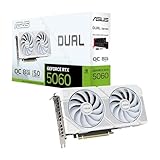
Premium 1440p cards usually cost $750 to $1,000 or more. They tend to pair 16GB with a faster GPU, stronger cooling, and better ray-tracing or high-refresh performance. The listed GIGABYTE RX 9070 XT Gaming OC 16G is $799.51, while the ASUS Prime RX 9070 XT 16GB is $829.99. By comparison, the ASUS Dual GeForce RTX 5060 8GB is listed at $479.99 and represents a lower-cost 8GB approach.
Prices change, so judge value by the complete package. Paying $100 more for a faster GPU can be worthwhile; paying the same amount solely to move from 12GB to 16GB may not be, depending on the card’s performance.
Warranty: Read the Actual Coverage
Check the manufacturer’s warranty length, registration requirements, and regional terms before purchase. Many graphics cards include a limited warranty, but some require registration within a specific period for extended coverage. Keep the receipt and the original packaging until you are sure the card works correctly.
Also review return terms from the retailer. A return window of 14 to 30 days gives you time to check display outputs, temperatures, fan behavior, coil noise, and stability. Warranty coverage generally addresses manufacturing defects, not damage caused by installation, modified coolers, liquid exposure, or physical stress on a power connector.
Delivery and Assembly: Protect the Investment
Order from a retailer with secure packaging and a clear return policy. A graphics card should arrive in an antistatic bag inside a protective box, not loose in a large carton. Inspect the package for crushed corners before accepting delivery when possible.
During installation, switch off the power supply, unplug the system, and secure the card with every required case screw. Connect all recommended power leads directly from the power supply rather than using questionable adapters or heavily shared cables. Confirm the card’s power recommendation; a modern high-performance card may call for a 650W to 850W power supply, depending on the exact model and the rest of the system.
After assembly, install the current graphics driver, verify that the monitor is connected to the GPU rather than the motherboard, and test several games. Watch temperatures, fan speeds, and stability instead of relying on a single benchmark.
Spec Checklist
| Spec | Budget | Mid | Premium |
|---|---|---|---|
| VRAM | 8GB to 12GB | 12GB to 16GB | 16GB or more |
| 1440p target | 60 to 100 fps | 90 to 165 fps | 120 to 240 fps, depending on the game |
| Typical price | $350 to $500 | $500 to $750 | $750 to $1,000+ |
| Card size | About 9 to 12 inches; 2 to 2.5 slots | About 10 to 13 inches; 2.5 to 3 slots | About 12 to 14 inches; 2.5 to 4 slots |
| Power supply | 550W to 650W | 650W to 750W | 750W to 850W |
| Best use | High settings and value builds | High refresh and longer ownership | Ultra settings, ray tracing, and demanding games |
Red Flags
- A card has the desired VRAM but weak overall GPU performance for your target frame rate.
- The listed dimensions omit height, thickness, or power-connector clearance.
- The case has one rear exhaust fan and no direct intake airflow.
- The power supply is old, lacks the required connectors, or barely meets the wattage recommendation.
- A seller offers an unusually low price without a clear warranty or return policy.
- The product listing uses “OC” branding as though it guarantees a major performance increase.
- You are paying for 20GB or more when your monitor, games, and workload do not need it.
FAQ
Is 8GB VRAM enough for 1440p?
Eight gigabytes can handle 1440p gaming, particularly at high rather than ultra settings. However, demanding new releases, ray tracing, mods, and high-resolution texture packs may require texture reductions or other compromises. Choose 8GB when price is the priority and you accept a shorter comfort zone.
Is 12GB or 16GB better for 1440p?
Both can be appropriate. Choose 12GB for a balanced mainstream build, especially if the GPU is faster or better priced. Choose 16GB if you use ultra textures, ray tracing, mods, or plan to keep the card for several years.
Does more VRAM increase fps?
Not by itself. More VRAM prevents memory shortages, texture pop-in, stuttering, and forced setting reductions. Once a game has enough VRAM, a faster GPU, better architecture, and stronger cooling are more important for increasing frame rates.
Should I buy a 16GB card for future-proofing?
For a new 1440p system, 16GB is a sensible longevity choice, but it should not come at the expense of a much slower GPU. A well-balanced 12GB card can be better than an underpowered 16GB card. Compare rendering performance, price, power needs, dimensions, and warranty before making the final decision.






Write Your Review
No reviews yet. Be the first to share your experience!