
Top Rtx 3080 Rtx 5080 Time Picks for 2026
Here are our current top rtx 3080 rtx 5080 time picks, compared on real Amazon owner reviews, price, and features. Live prices update below.
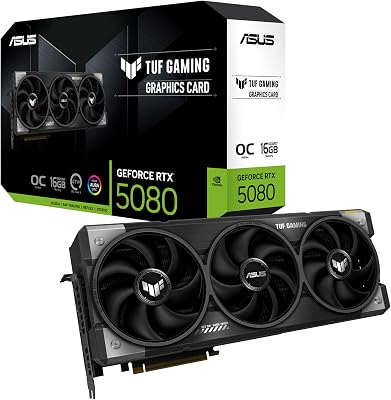


RTX 3080 vs RTX 5080 is the classic two-generation upgrade question, comparing the 2020 high-end favorite with its modern Blackwell successor at the same xx80 tier. The 3080 brought accessible 4K gaming to the mainstream, while the 5080 builds on that legacy with a 16GB buffer, far more performance, and the complete DLSS 4 feature set including Multi Frame Generation. For the many gamers still running a 3080 and wondering whether now is the right moment to upgrade, this comparison breaks down the specifications, real-world performance, power demands, and value so the decision becomes clear rather than guesswork.
As an Amazon Associate we earn from qualifying purchases at no extra cost to you. Product prices and availability are accurate as of the date shown and are subject to change.


Quick Verdict and Specifications
Here is the high-level read on this generational matchup, followed by the spec sheet that quantifies how much the xx80 tier has advanced in roughly five years.
The Bottom Line Up Front
The RTX 5080 is substantially faster than the RTX 3080, with more cores, a larger 16GB buffer, better efficiency relative to its performance, and exclusive DLSS 4 Multi Frame Generation. As a two-generation jump at the same tier, it represents a major upgrade rather than a marginal one.
The 3080 is by no means obsolete and still games well at 1440p and even 4K with sensible settings, so the decision is about whether the gains justify the cost rather than whether the older card has stopped working.
For 3080 owners who play at 4K, chase high refresh rates, or want modern ray tracing and frame generation, the 5080 is a compelling upgrade. For those content at 1440p, the urgency is lower.
Specifications Side by Side
The spec sheet shows a clear generational step at the xx80 tier, with the 5080 ahead on the metrics that matter most.
| Spec | RTX 3080 | RTX 5080 |
|---|---|---|
| Architecture | Ampere | Blackwell |
| CUDA cores | 8704 | 10752 |
| VRAM | 10GB GDDR6X | 16GB GDDR7 |
| Memory bus | 320-bit | 256-bit |
| Total graphics power | 320W | 360W |
| Launch MSRP | $699 | $999 |
| DLSS support | DLSS upscaling (no Frame Gen) | DLSS 4 (Multi Frame Gen) |
The 5080 adds cores, a larger and faster 16GB buffer, and the full DLSS 4 feature set, while the 3080 retains a slightly wider bus that no longer offsets its overall disadvantage.
Reading the Spec Gap
While the core counts look closer than expected, the 5080’s Blackwell architecture, GDDR7 memory, and higher clocks deliver far more real performance per core than the 3080’s Ampere design. The generational efficiency gains are the key story the raw numbers understate.
The 3080’s 320-bit bus is technically wider than the 5080’s 256-bit interface, but the 5080’s faster GDDR7 more than compensates, providing greater effective bandwidth alongside a 16GB buffer that comfortably exceeds the 3080’s 10GB.
The feature gap is decisive. As an Ampere card the 3080 supports DLSS upscaling but not Frame Generation, while the 5080 adds DLSS 4 Multi Frame Generation, multiplying its effective performance in supported titles on top of its hardware advantage.
Performance Face-Off
The specifications promise a clear generational lead, and real-world behavior across resolutions and features confirms how meaningful the upgrade is in practice.
4K Gaming Performance
At 4K the 5080 is comfortably ahead, sustaining high frame rates at high settings in demanding titles where the 3080 must rely on upscaling and reduced settings to stay smooth. The 16GB buffer also keeps the 5080 stable in memory-heavy 4K scenes.
The 3080 remains a capable 4K card in many games, but it is increasingly working at its limit in the newest releases, while the 5080 has genuine headroom to spare. For dedicated 4K gamers, that difference is the upgrade’s strongest justification.
For high-refresh 4K specifically, the 5080 can pursue the frame rates those monitors demand far more readily than the 3080, which is generally limited to a smoother 60-class experience in heavy titles.
Ray Tracing and DLSS 4
In ray tracing the 5080 holds a large advantage, combining stronger ray-tracing hardware with DLSS 4 Multi Frame Generation to keep demanding ray-traced and path-traced titles smooth, where the 3080 struggles under the same loads.
The DLSS divide widens the gap further. The 3080 can use upscaling to recover frames but cannot generate them, while the 5080’s Multi Frame Generation can dramatically boost on-screen smoothness in supported games, extending its lead well beyond the raw hardware difference.
For anyone interested in cutting-edge ray-traced gaming, this is the single biggest reason to upgrade. The 5080 makes effects playable that the 3080 can only run as a slideshow at high settings.
Power, Heat, and Practicality
The 5080’s 360W draw is modestly higher than the 3080’s 320W, a reasonable increase given the large performance gain. Most existing high-end systems built around a 3080 will handle a 5080 with little or no change to the power supply.
That makes the 5080 a relatively painless upgrade in practical terms, since it does not demand the extreme power and cooling overhaul that a flagship like the 5090 would require. A quality existing build is usually ready for it.
For upgraders, this is a welcome detail: the jump delivers a major performance increase without forcing a costly rework of the rest of the system around the card.
Value, Alternatives, and Market Forces
Performance clearly favors the 5080, but value and current market conditions shape whether now is the right time to make the move.
Price and Value
At a $999 launch price against the 3080’s original $699, the 5080 costs more but delivers a generational leap in performance and features, making it a reasonable value for those who will use its capabilities at 4K or in ray-traced titles.
For a 3080 owner, the alternative to a full 5080 upgrade is a mid-tier Blackwell card for a smaller jump at lower cost, or simply holding the 3080 longer if current performance remains acceptable for your games.
The 5080 makes the most sense for those whose 3080 is now limiting them, where the upgrade unlocks higher resolutions, smoother ray tracing, and a larger buffer that the older card cannot provide.
Rising Prices and Buying Urgency
Laptop and PC-component prices are trending upward and are expected to keep climbing. That pressure makes upgrading sooner rather than later more appealing, since waiting may mean paying more for the same 5080 down the line.
For 3080 owners on the fence, rising prices tilt the calculation toward acting when a fair price appears rather than waiting for discounts that are unlikely in the current market. Selling the 3080 while used values remain firm also helps offset the cost.
The reliable approach is to decide whether the upgrade meets a real need, then buy promptly if it does, rather than trying to time a market moving against buyers.
Nvidia’s AI Focus and Supply
The U.S. recently cleared Nvidia to sell its H200 AI chips to China. The H200 is a data-center accelerator, not a GeForce card, so it does not directly change how either of these gaming cards performs.
The indirect effect is on supply and pricing: strong demand for Nvidia’s AI products keeps capacity and attention focused on accelerators, which can firm up consumer GPU prices and slow discounts, affecting 5080 availability and cost.
For 3080 owners this also explains why used prices have stayed firm, which is good news when selling an old card to fund an upgrade, partially offsetting the higher cost of buying new in this environment.
Final Verdict: Should You Upgrade?
The performance case is strong, so the verdict is about whether the gains match your needs and whether now is the right time to spend.
Upgrade to the RTX 5080 if…
Choose the 5080 if you game at 4K, want high refresh rates, value modern ray tracing, and want DLSS 4 Multi Frame Generation, especially if your 3080 is now limiting your experience. The two-generation jump is substantial and broadly painless to install.
It also suits creators who benefit from the larger 16GB buffer and added compute, delivering meaningful productivity gains alongside the gaming improvements.
Keep the RTX 3080 a little longer if…
If your 3080 still handles your games well, particularly at 1440p, there is no pressing need to upgrade. It remains a capable card that performs respectably with sensible settings in most modern titles.
Waiting also lets you stretch the value of your existing card, and if you do upgrade later, you can reassess whether the 5080 or a newer option offers the best balance at that time.
Pros and Cons Recap
Here is the concise trade-off summary for both cards.
RTX 5080 pros: major performance leap, 16GB VRAM, DLSS 4 Multi Frame Generation, easy upgrade from a 3080 build. Cons: higher price, slightly higher 360W draw. RTX 3080 pros: still capable at 1440p and 4K with settings, cheap to keep, proven design. Cons: only 10GB VRAM, no Frame Generation, behind at 4K and in ray tracing.
Frequently Asked Questions
Quick answers to the questions 3080 owners most often ask when considering an upgrade to the RTX 5080.
Is the RTX 5080 a big upgrade over the 3080?
Yes. As a two-generation jump at the same tier, it offers a large performance increase, a 16GB buffer, and DLSS 4 Multi Frame Generation.
The gains are most dramatic at 4K and in ray-traced titles, where the 3080 increasingly struggles.
At 1440p the gap is smaller, so gamers content with that resolution may feel less urgency to upgrade right away.
Will my 3080 power supply work with a 5080?
In most cases yes, since the 5080’s 360W draw is only modestly higher than the 3080’s 320W.
A quality high-end power supply built for a 3080 will typically handle a 5080 without an upgrade.
If your existing supply is a lower-wattage or older unit, it is still worth checking the connector and headroom before buying.
Does the RTX 3080 support DLSS Frame Generation?
No. The Ampere-based 3080 supports DLSS upscaling but not Frame Generation of any kind.
The 5080 adds DLSS 4 Multi Frame Generation, a major part of its advantage in supported games.
That feature gap is one of the clearest reasons a 3080 owner might choose to upgrade rather than keep waiting.
Conclusion
In the RTX 3080 vs RTX 5080 comparison, the 5080 stands out as a genuine generational upgrade, delivering substantially more performance, a larger 16GB buffer, and the full DLSS 4 feature set including Multi Frame Generation, all while remaining easy to drop into an existing 3080-class build. The 3080 is still a capable card that 1440p gamers can keep using, but for 4K play, high refresh rates, and modern ray tracing it has fallen behind. With component prices trending upward, 3080 owners who feel limited should upgrade decisively while used values remain firm, making the RTX 5080 a strong and timely choice in 2026.










Write Your Review
No reviews yet. Be the first to share your experience!