
MSRP stands for manufacturer’s suggested retail price, and for the GeForce RTX 4060 it is the launch figure NVIDIA announced in May 2023 when the card was revealed. That number is a starting point for judging a deal, not a promise of what any given listing will cost. Retailers, partner brands, and the used market all move the real price up or down from it.
- What MSRP Actually Means for the RTX 4060
- What Drives the Price of an RTX 4060
- The Role of the Generation Cycle
- Why Partner Models Differ So Much
- New, Open-Box, Refurbished, and Used
- How to Judge a Deal
- Scam and Used-Card Checks
- Who Should Buy or Skip It at Today’s Prices
- Deal-Hunting Checklist
- Frequently Asked Questions
- Related Guides
This guide does not quote figures, because prices change with supply and time, and a stale number is worse than none. Instead, it explains what drives the cost of an RTX 4060, how to compare a deal against sensible reference points, and how to avoid the traps that show up when a popular budget card is in demand. The card has been on the market since mid-2023, and as of late 2026 it competes with both newer budget GPUs and a large pool of used alternatives.
What MSRP Actually Means for the RTX 4060
NVIDIA sets a suggested price for its own Founders Edition cards and for the reference tier of partner cards, but the RTX 4060 was sold mainly through partner brands. Those brands build their own designs, and each one decides its own pricing on top of NVIDIA’s guidance. The entry-level models that match the base specification are the ones most likely to sit near the suggested price. Factory-overclocked, larger-cooler, or white-themed models usually cost more.
To find the launch figure, check NVIDIA’s announcement page for the RTX 4060. Use it as your baseline, then compare current listings against it for the same tier of cooler and features.
What Drives the Price of an RTX 4060
| Factor | How it affects the price |
|---|---|
| Launch positioning | NVIDIA’s suggested figure anchors every later comparison |
| Supply and demand | Shortages push prices above suggested levels, while surplus stock pushes them down |
| Partner model tier | Overclocked and premium-cooler cards cost more than basic ones |
| New generation arrival | Successors usually lower the price of older cards over time |
| Condition | New, open-box, refurbished, and used differ widely |
| Seasonal sales | Holiday and back-to-school periods often bring discounts |
| VRAM and features | 8 GB of memory and DLSS 3 support shape what buyers will pay |
The Role of the Generation Cycle
When NVIDIA releases a newer card in the same tier, older models usually get cheaper as retailers clear stock. The RTX 5060 arrived in 2025 as the Blackwell-generation successor, and its presence has changed how shoppers weigh the 4060. A leftover new 4060 can be a bargain, but only if it is meaningfully cheaper than the newer card. If the gap is small, the newer card with more modern features is usually the safer choice.
The used market follows the same pattern. Cards from the 30 Series, such as higher-tier models with more raw speed, often sit near the same cost as a new 4060 and may be faster in many games. They draw more power and lack frame generation, which is a trade-off to consider.
Why Partner Models Differ So Much
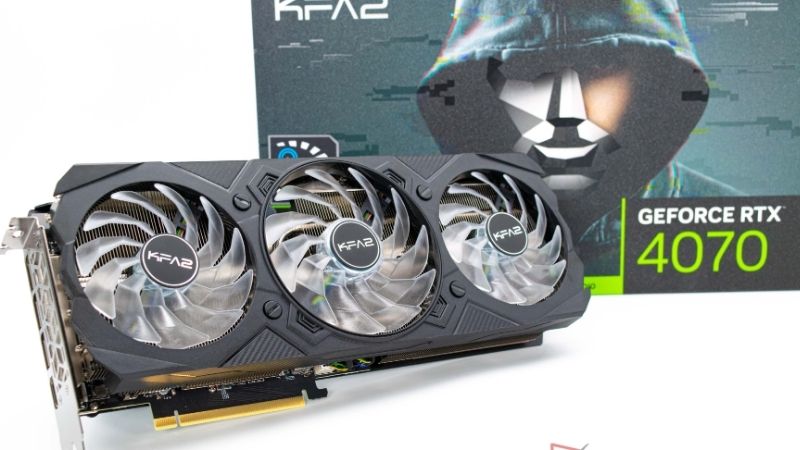
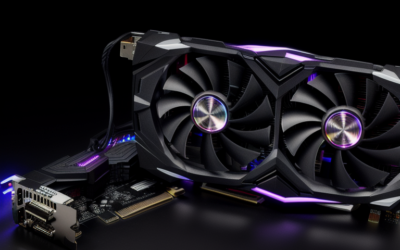
Two boxes labeled RTX 4060 can sit at quite different price points, and the reasons are mostly physical. A basic model with a two-fan cooler, a plain shroud, and reference clocks costs the least to build. A premium model may add a larger heatsink, a metal backplate, a dual-BIOS switch, RGB lighting, or a factory overclock that adds a few percent of speed at best.
For a 115-watt card, the cooler differences are rarely about survival. They affect fan noise and boost consistency. If your case is small or your room is quiet, a better cooler can be worth a modest premium. If you want the lowest cost, a basic model delivers the same chip and the same memory.
Warranty terms also vary by brand and region. Some partners offer longer coverage on higher-tier models, and registration may be required to activate it. Read the terms before you decide that a lower-priced listing is the better deal.
New, Open-Box, Refurbished, and Used
- New: full manufacturer warranty, sealed packaging, and the highest price. Best for peace of mind.
- Open-box: returned items, often in good condition and sold at a discount, with warranty rules that vary by seller. Ask what is included.
- Refurbished: inspected and repaired by the manufacturer or a retailer. Look for a stated warranty period.
- Used: lowest cost and highest risk. The 4060 is a low-power card that is less likely to have been run hard in mining or rendering, which is a small point in its favor.
A big saving is only a good deal if the card works and you have recourse when it does not. A seller who offers returns, payment protection, or a transferable warranty adds real value.
How to Judge a Deal
Use a short checklist of comparisons instead of reacting to a single number.
- Find NVIDIA’s launch figure and note how far the current listing is above or below it.
- Compare the same model tier across several retailers, because cooler quality and warranty terms differ.
- Compare against the newer RTX 5060 and against used cards that have more VRAM or more speed.
- Count total cost, including shipping, taxes, and any return fees.
- Check whether a promotion bundles a game or accessory you would actually use, rather than counting it as automatic value.
- Look at how long the price has held, since a temporary discount is different from a permanent drop.
Scam and Used-Card Checks
A popular budget card is a favorite target for fake listings. Be skeptical of prices far below the market, sellers with no history, and listings that use stock photos only.
- Confirm the exact model name: RTX 4060, RTX 4060 Ti, and laptop versions are different products.
- Ask for photos showing the actual card, the serial number, and the ports.
- Use payment methods with buyer protection, and avoid wire transfers or gift cards.
- When the card arrives, verify the name and memory in a GPU information tool and run a stress test before the return window ends.
- Be wary of reflashed or relabeled cards, which can report fake specifications.
Who Should Buy or Skip It at Today’s Prices
The 1080p budget builder
If you find a new 4060 at or below the launch figure from a reputable seller, it fits a compact, efficient 1080p build with low power draw. Its single 8-pin connector and modest wattage make it easy to install in most systems.
The bargain hunter comparing used cards
Compare carefully. A used higher-tier 30 Series card can beat the 4060 in raw speed for the same money, but costs more to run and lacks frame generation. Decide which trade-off matters to you.
The buyer who wants longevity
Skip a 4060 if the price is near a newer card, or if you play at 1440p with high textures. The 8 GB frame buffer is the limit that shows first, and a card with more memory will serve you longer.
Deal-Hunting Checklist
- Confirm the launch figure on NVIDIA’s announcement.
- Match the exact model, cooler tier, and warranty when comparing.
- Compare against the RTX 5060 and used alternatives.
- Count shipping, tax, and return terms in the total.
- Use protected payment and keep all packaging until you are satisfied.
Frequently Asked Questions
What is the RTX 4060 MSRP?
It is the suggested launch price NVIDIA announced in May 2023, which you can find on NVIDIA’s official announcement. Real prices differ by partner model and retailer.
Why does the RTX 4060 cost more than the suggested price at some stores?
Partner cards with factory overclocks, larger coolers, or added features usually carry a premium. Stock levels and local taxes also play a role.
Will the RTX 4060 get cheaper?
Older cards generally drop in price as newer models arrive and retailers clear stock. Prices can also rise if supply tightens, so there is no guarantee.
Is a used RTX 4060 worth buying?
It can be if the discount is meaningful and the seller offers returns or a warranty. Verify the model, test the card promptly, and avoid deals that look too good to be true.
Related Guides
- RTX 4060 Review: Still the Best Budget 1080p GPU in 2026?
- Best RTX 4060 Ti in 2026: Top Picks Compared
- Best RTX 4060 8gb in 2026: Buying Guide
- PNY RTX 4060 Review: Is This Budget Card Worth It?


Write Your Review
No reviews yet. Be the first to share your experience!