


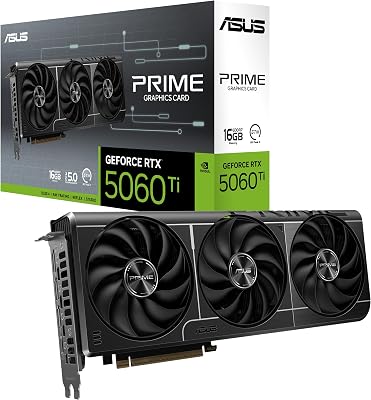

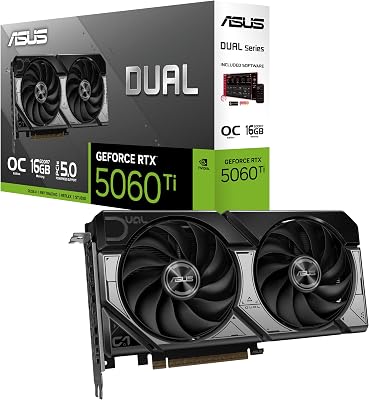
Asus Dual GeForce RTX 5060 Ti is one of the most practical mainstream cards of this generation, built compact enough to fit the small and mid-size cases most buyers actually own. If you are considering it, you want to know whether it fits your build, which memory variant to choose, and what performance you can realistically expect for the money. This review lays out the specs, the physical fit, and an honest value read so you can decide fast.
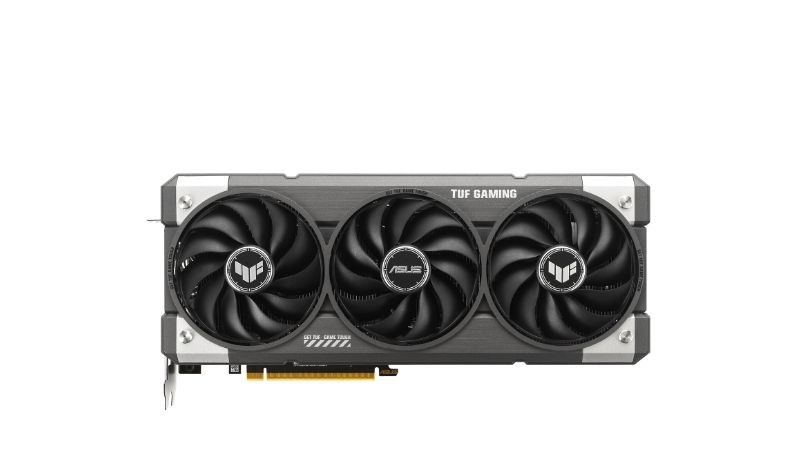
Asus Dual GeForce RTX 5060 Ti Design and Compact Build
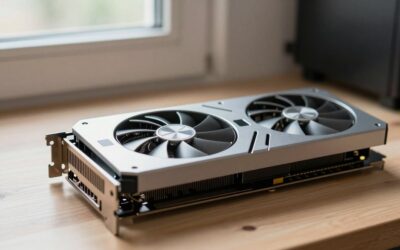
Asus positions the Dual line as its clean, no-nonsense cooler tier, and on a card like the 5060 Ti that focus on a sensible size is a genuine selling point. Where higher tiers ship enormous triple-fan boards, the Dual’s compact two-fan design is what lets this card slot into builds that larger cards simply cannot.
As an Amazon Associate we earn from qualifying purchases at no extra cost to you.


The Dual-Fan Cooler and Compact Dimensions
The Dual uses a two-fan cooler on a shorter board, which is the single biggest reason to choose this model over a longer triple-fan alternative. For small ATX and many mATX or compact builds, that reduced length is the difference between a card that fits and one that does not.
Despite the smaller footprint, the cooler is well matched to the 5060 Ti’s modest power draw, so temperatures stay in a comfortable band and the fans idle off during light desktop use. A card that runs cool and quiet without demanding a huge chassis is exactly what a mainstream builder wants.
The practical takeaway is that this is a card designed to disappear into a build rather than dominate it. If your priority is a tidy, space-efficient system, the Dual’s dimensions are a feature, not a compromise.
This also makes it a natural choice for small living-room or desk builds where a full-size chassis is not an option. Compact gaming PCs and mini-ITX systems are increasingly popular, and a card that delivers real 1080p and 1440p performance without demanding a large case is exactly what those builds need, which is a big part of why the Dual keeps appearing on compact-build shortlists.
Build Quality and Case Compatibility
The Dual pairs a sturdy construction with a restrained, understated look and typically a metal backplate for rigidity. There is no elaborate lighting here, which suits buyers who want a clean build and keeps the price focused on the essentials rather than spectacle.
Even though this is a compact card, still confirm the basics against your case: the maximum GPU length your case supports, and whether the card clears any front radiator or drive cage. The Dual makes this easy because its shorter length gives you margin, but a quick check prevents any surprise.
For small-form-factor builders in particular, this card’s proportions open up options that a larger board would rule out. It is one of the safer choices when case clearance is tight, which is a large part of its appeal.
8GB vs 16GB: Which Variant to Choose
The 5060 Ti comes in two memory configurations, and this is the most important decision you will make about the card. The 8 GB version costs less, but the 16 GB version gives you far more headroom for high-resolution textures, future titles, and any creative or local AI work.
For pure 1080p gaming on a budget, the 8 GB card is serviceable today. But texture budgets in modern games keep growing, and 8 GB is increasingly the specification that forces compromises soonest, which is why the 16 GB variant is the smarter long-term buy for most people.
The honest guidance: unless budget is the absolute priority, choose the 16 GB version. The extra memory is what keeps the card comfortable at 1440p and protects its value over the years you plan to keep it, and it is the configuration this review treats as the one to get.
The price gap between the two variants is usually modest relative to what it buys you. Paying a little more for double the memory is one of the better value decisions in this class, because running out of VRAM forces you to lower texture settings, which is exactly the kind of visible compromise most buyers upgraded to avoid. Viewed over the life of the card, the 16 GB version is the one that ages gracefully.
RTX 5060 Ti Performance for 1080p and 1440p
The 5060 Ti targets the mainstream sweet spot of high-refresh 1080p and capable 1440p gaming, which is exactly where the largest group of buyers actually plays. Understanding its comfort zone keeps your expectations realistic and your money well spent.
Real-World Frame Rates and Target Resolution
At 1080p the 5060 Ti delivers high frame rates across modern titles and easily drives a fast high-refresh monitor in competitive games. This is its most comfortable resolution and where it feels effortless in day-to-day play.
At 1440p it remains very capable, especially with sensible settings and DLSS where available, making it a strong choice for a 1440p high-refresh display. It is not a 4K card, and treating it as a 1080p-to-1440p performer rather than a 4K one keeps your expectations aligned with reality.
With the 16 GB variant, the card has the memory headroom to hold texture quality at these resolutions without the compromises that pinch the 8 GB version, which is another reason the larger buffer is worth prioritizing.
It is also a sensible pairing for popular high-refresh esports titles, where it can push the frame rates competitive players want on a fast monitor. For someone whose library mixes AAA single-player games at 1080p or 1440p with competitive shooters, the 5060 Ti covers both comfortably, which is a large part of why it suits the mainstream buyer so well.
DLSS 4 and Blackwell Features
The 5060 Ti’s Blackwell architecture unlocks DLSS 4 with Multi Frame Generation, which can meaningfully boost frame rates in supported titles and extend the card’s usable performance well beyond its raw numbers. For a mainstream card, this software layer is a significant part of the value.
The forward-looking benefit is real: NVIDIA continues to expand its AI feature set through driver updates, so a card bought today often performs better in newly supported games later. For a buyer keeping the card several years, that ongoing optimization stretches its life.
The 16 GB variant also makes light creative and local AI work practical, giving a mainstream buyer a taste of capabilities usually associated with pricier cards. It is a useful bonus for anyone who does more than game.
Power Draw, PSU, and Efficiency
The 5060 Ti is an efficient card with a modest power draw, and a quality 550 to 650-watt power supply is a sensible target depending on the rest of your system. Its low power appetite is part of why it fits so easily into compact and mainstream builds.
That efficiency has practical benefits beyond the spec sheet. A card that draws less power dumps less heat into your case and your room, which keeps a small build comfortable during long sessions and lets a modest PSU run well within its efficiency range.
In real use, the compact cooler keeps temperatures and noise low, provided your case has basic airflow. If your chassis runs warm, a single added intake fan resolves most concerns, since ambient case temperature is the variable that most affects any cooler’s performance.
Is the Asus Dual RTX 5060 Ti Worth Buying?
The value case comes down to whether you want a compact, efficient mainstream card that fits real-world builds, and whether the 2026 market rewards buying now. For the right buyer, especially in the 16 GB configuration, this is one of the most sensible cards in its class.
Pros and Cons From Owner Feedback
The strengths that recur in positive reviews are the compact size that fits small builds, quiet and cool operation, strong 1080p and capable 1440p performance, low power draw, and a clean understated look. Buyers who wanted a tidy, space-efficient system are consistently satisfied.
The criticisms are narrow and mostly point to the 8 GB variant. The common complaints are that the 8 GB model runs short on memory in demanding titles, that the plain aesthetics lack lighting, and that market-driven price swings affect every GPU right now. Choosing the 16 GB version removes the biggest of these concerns.
Weighed together, the drawbacks are about the memory choice, looks, and market timing rather than the card’s core capability. Pick the 16 GB variant and the reasons not to buy shrink to almost nothing.
2026 Pricing: Buy Now or Wait?
Graphics card prices trended upward and have not fully released that pressure. The qualified good news is that prices stopped climbing as steeply as they did at the end of 2025, and the market has entered a period of relative stability, though analysts still warn volatility is not over. The panic phase eased; a real discount did not arrive.
Anyone hoping to simply wait for cheaper cards should know the relief is further off than it looks. New memory supply is opening up, but the factories that would loosen pricing are not expected to run until 2027 to 2028. For a card you need now, waiting exposes you to volatility with little near-term upside, which nudges the practical buyer toward acting while pricing is stable.
Who Should Buy This Card
The Asus Dual 5060 Ti is the right pick for a mainstream 1080p or 1440p gamer, especially one building in a small or mid-size case, who wants a cool, quiet, efficient card without paying for size or lighting they do not need. In the 16 GB configuration it is a well-rounded, future-friendly choice.
It is a weaker fit for someone chasing 4K ultra performance or elaborate aesthetics, who should look at a higher tier or a lit variant. But for a tidy, capable mainstream build, this card is one of the easiest recommendations in its bracket, and the compact size means it rarely rules out a case you already own.
See More:
- NVIDIA GeForce Game Ready Driver
- NVIDIA CUDA Toolkit Archive
- Gigabyte GeForce RTX 5070 Windforce OC
- AMD Radeon RX 9070 XT vs NVIDIA GeForce RTX 5070
- PNY GeForce RTX 5070 Ti Triple Fan
Conclusion
The Asus Dual GeForce RTX 5060 Ti delivers exactly what a mainstream builder should want: a compact, efficient, cool-running card with strong 1080p and capable 1440p performance and DLSS 4 features, all in a size that fits real cases. Choose the 16 GB variant for the memory headroom that keeps it comfortable and protects its value. With 2026 prices stable but unlikely to fall soon, locking in a card that fits your build and budget today is a defensible move, so check the latest price and availability through the link below before stock and pricing shift again.
Frequently Asked Questions
Will the ASUS Dual RTX 5060 Ti fit in a small form factor case?
The Dual is roughly 227mm long and occupies about 2.5 slots, which clears most mini tower and many SFF chassis. Measure your case GPU clearance and check that the third slot is not blocked by a riser or drive cage before ordering, since 2.5 slots surprises builders expecting dual-slot.
What power supply and connector does it need?
It draws roughly 180W board power and uses a single 8-pin PCIe connector rather than the 16-pin found on higher end Blackwell cards. A quality 550W unit is comfortable for most builds, or 600W if you pair it with a power hungry CPU like a Core i7 or Ryzen 9.
Should I buy the 8GB or 16GB version?
Get the 16GB model if you play modern titles with high textures, use ray tracing, or do any local AI and video work. The 8GB card already hits its VRAM ceiling in several 2025 and 2026 releases at 1440p, causing stutter and texture pop that no driver update fully removes.
What resolution and frame rates should I expect?
It is a strong 1080p card and a capable 1440p card in most titles once DLSS 4 upscaling is enabled. Expect well over 100fps at 1080p high in competitive shooters, and roughly 60 to 90fps at 1440p high in demanding single player games with quality upscaling.
Does the narrow PCIe x8 interface hurt performance?
On a PCIe 5.0 or 4.0 motherboard the x8 link is effectively invisible in games. On older PCIe 3.0 boards the reduced bandwidth can cost a few percent, and more in VRAM constrained scenes on the 8GB card, so pair it with a reasonably modern platform.


Write Your Review
No reviews yet. Be the first to share your experience!