
- Top Pick: GIGABYTE GeForce RTX 5070 Ti WINDFORCE OC V2 16G Graphics Card – 16GB GDDR6, 256bit, PCI-E 5.0, 2497 MHz Core Clock, 3 x DisplayPort, 1 x HDMI, GV-N507TWF3OCV2-16GD
- Best Value: GIGABYTE GeForce RTX 5070 Ti Gaming OC 16G Graphics Card, 16GB 256-bit GDDR7, PCIe 5.0, WINDFORCE Cooling System, GV-N507TGAMING OC-16GD Video Card
- Premium Choice: GIGABYTE GeForce RTX 5070 WINDFORCE OC SFF 12G Graphics Card, 12GB 192-bit GDDR7, PCIe 5.0, WINDFORCE Cooling System, GV-N5070WF3OC-12GD Video Card


Gigabyte GeForce RTX 5070 Ti Windforce OC pairs a genuine 4K-capable GPU and a 16 GB buffer with Gigabyte’s value-focused cooler, making it a favorite for buyers who want strong performance without the flagship tax. If you are weighing this exact card, you want the real specs, the thermals, the physical fit, and an honest reliability read before you commit. This review pulls that together so you can decide quickly and buy with confidence.
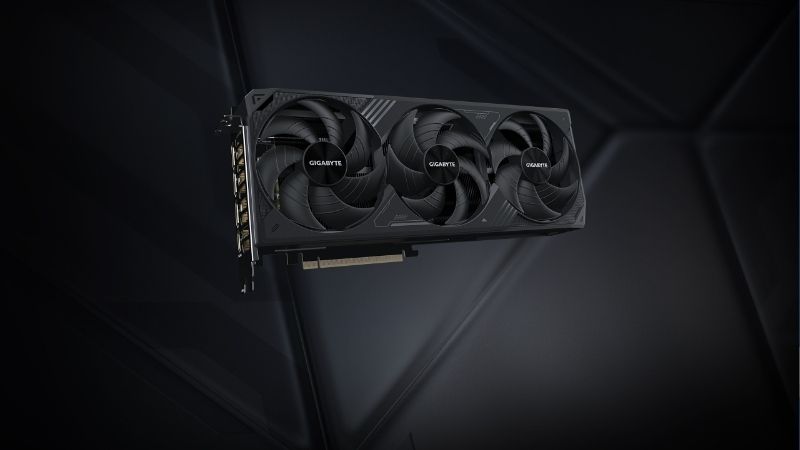
Gigabyte RTX 5070 Ti Windforce OC Design and Cooling
The Windforce line is Gigabyte’s value cooler tier, positioned below the Gaming OC and Aorus models. That matters because most of the price difference between a value 5070 Ti and a flagship board is spent on the shroud and lighting, not the silicon, and the Windforce OC delivers the full GPU with a modest factory overclock at a leaner price.
As an Amazon Associate we earn from qualifying purchases at no extra cost to you.




The Windforce Cooler and Thermal Performance
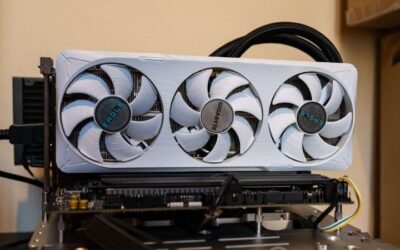
The card uses a triple-fan Windforce array with alternate-spinning blades over a large fin stack. The alternate-spinning design reduces turbulence between adjacent fans, which is the main reason this cooler runs quieter than older triple-fan boards at the same fan speed.
The 5070 Ti runs warmer than lower tiers, so the cooler matters here, and this one is sized to keep the GPU in a healthy thermal band through long sessions. Owner feedback generally reports steady clocks and quiet operation, with a semi-passive mode that keeps the fans off entirely under light desktop load.
Sustained clocks are the metric that actually matters, because a card that stays cool holds its boost longer and delivers more consistent frame rates. The Windforce cooler’s ability to hold the line is what makes the factory overclock translate into real, usable performance rather than a number that throttles away.
Dimensions, Slot Size, and Case Fit
A triple-fan 5070 Ti is a large board, so measure before you buy. These cards typically run well past 300 mm long and around 2.5 to 3 slots thick, which is comfortable in a mid-tower but can crowd a front radiator or drive cage in compact ATX and many mATX cases.
Before buying, check three things: your case’s listed maximum GPU length, whether a front 360 mm radiator eats into that length, and whether a card of this thickness blocks the PCIe slot below it. If you run a small-form-factor build, verify vertical clearance too, since the extra slot thickness is what catches most people out.
A quick two minutes with a tape measure prevents the most common reason these cards get returned. In a standard mid-tower this card fits comfortably, while in a case rated near 300 mm you are right at the edge, and a front radiator can push you over.
Build Quality and Aesthetics
The shroud is plastic with a metal backplate that adds rigidity and helps the long card resist sag over time. There is no elaborate RGB spectacle here beyond a subtle accent, which is intentional for the value tier and appeals to buyers who prefer an understated build.
The power connector is a single modern input. Route the cable cleanly and seat it fully until it clicks, since a partially seated connector is the most common cause of thermal or stability complaints on modern high-power boards.
If understated is your taste, the Windforce design is a plus; if you want a light show, this is not the model to chase. Gigabyte spends the budget on cooling and silicon rather than spectacle, which is the right priority for a value buyer.
RTX 5070 Ti Windforce OC Performance and Features
The reason to buy a 5070 Ti is its balance of memory and horsepower, and the Windforce OC’s factory clock adds a small bump on top. The defining specification is its 16 GB of GDDR7 on a 256-bit bus, which shapes both its strengths and the workloads it handles best.
1440p and 4K Frame Rates with 16GB GDDR7
At 1440p the 5070 Ti is a high-refresh champion, clearing high frame rates at ultra settings across modern titles and pairing naturally with a 1440p 144 Hz or 165 Hz monitor. This is the resolution where the card feels most comfortable and delivers the cleanest value.
At 4K it is genuinely capable rather than merely playable. The 16 GB buffer and wider 256-bit bus mean it handles high-resolution textures without the memory anxiety of 12 GB cards, so 4K gaming with sensible settings, and DLSS where available, is well within reach.
The factory overclock adds a few percent over reference clocks, which is measurable but not transformative. Buy this model because it pairs that small bump with quiet cooling at a value price, not because you expect a leap over a baseline 5070 Ti.
The 16 GB buffer is the specification that ages best on this card. Where a 12 GB card can start to feel constrained by growing texture budgets, the 5070 Ti has room to spare, which is a large part of why it commands a premium over the standard 5070 and holds its value longer. For a buyer who keeps a card for several years, that memory headroom is the clearest justification for stepping up to the Ti.
DLSS 4 and Blackwell AI Features
The card’s Blackwell architecture unlocks DLSS 4 with Multi Frame Generation, which can multiply output frames in supported titles and make demanding path-traced games far more viable than raw rasterization numbers alone would suggest. It is the feature that most separates this generation.
The forward-looking value is concrete: NVIDIA keeps expanding its AI feature set through driver updates, so a card bought today often gains performance in newly supported games later. For a purchase you plan to keep for years, that ongoing optimization protects your investment.
Beyond gaming, the combination of 16 GB and Blackwell’s tensor hardware makes this a capable card for creative and local AI workloads, so a buyer who games and creates gets strong dual-purpose value from a single purchase.
Power Draw, PSU, and Real-World Thermals
The 5070 Ti draws more power than the standard 5070, and a quality 750-watt power supply is the sensible target to give you headroom for transient spikes. Undersizing the PSU is a frequent and avoidable cause of instability, so this is not the place to economize.
In real use, the Windforce cooler keeps temperatures in a healthy band and clocks steady, provided your case has reasonable airflow. If your case runs hot, add an intake fan rather than blaming the card, because ambient case temperature quietly determines how well any cooler performs.
The card’s efficiency for its performance class also keeps heat output reasonable, which helps in a mid-tower with decent ventilation. Give it fresh air and it rewards you with steady clocks and civil noise levels through long sessions.
Is the Gigabyte RTX 5070 Ti Windforce OC Worth Buying?
The value case rests on whether you want a 4K-capable card with 16 GB and a factory overclock at the lowest sensible price, and whether the 2026 market rewards buying now. For the right buyer, this variant is one of the smarter ways into the 5070 Ti tier.
Pros and Cons From Owner Feedback
The strengths that recur in positive reviews are strong 1440p and capable 4K performance, the reassuring 16 GB buffer, quiet and effective triple-fan cooling, the free factory overclock, and Gigabyte’s value pricing that avoids the flagship tax. Buyers who wanted capability over decoration are consistently satisfied.
The criticisms are narrow and honest. The most common complaints center on the card’s large physical size not fitting compact builds, the plain aesthetics lacking elaborate lighting, and the same market-driven price swings affecting every GPU right now. None of these are faults in the silicon or its performance.
Weighed together, the drawbacks are about fit and looks, not capability. If the dimensions clear your case, the reasons not to buy shrink dramatically, and what remains is a strong, well-cooled 4K-capable card at a value price.
2026 Pricing: Buy Now or Wait?
Graphics card prices trended upward and have not fully released that pressure. The qualified good news is that prices stopped climbing as steeply as they did at the end of 2025, and the market has entered a period of relative stability, though analysts still warn volatility is not over. The panic phase eased; a real discount did not arrive.
Anyone hoping to simply wait for cheaper cards should know the relief is further off than it looks. New memory supply is opening up, but the factories that would loosen pricing are not expected to run until 2027 to 2028. Because this card carries 16 GB of GDDR7, memory pricing has an outsized effect on it, so a card you need now is unlikely to get meaningfully cheaper soon, which nudges the practical buyer toward acting while pricing is stable.
Who Should Buy This Card
The Gigabyte 5070 Ti Windforce OC is the right pick for a 1440p high-refresh gamer, or a 4K player with sensible settings, who wants 16 GB and Blackwell features at the lowest reasonable price and does not care about elaborate lighting. In a mid-tower with decent airflow and a 750-watt supply, it slots in cleanly.
It is the wrong pick for a tight compact build where its length and thickness become a problem, or for a buyer who specifically wants flagship aesthetics. Those users are better served by a compact model or a premium board, but for pure price-to-performance in the Ti tier, this card is a strong contender.
It also suits the buyer who wants one card to handle both high-refresh 1440p today and a future move to 4K. Because the 5070 Ti has the memory and horsepower for both, it is a sensible choice for someone who may upgrade their monitor before their GPU, giving the build room to grow without an early graphics upgrade. That flexibility is part of what makes the Ti tier worth its premium for forward-looking buyers.
See More:
- NVIDIA GeForce Game Ready Driver
- NVIDIA CUDA Toolkit Archive
- Gigabyte GeForce RTX 5070 Windforce OC
- AMD Radeon RX 9070 XT vs NVIDIA GeForce RTX 5070
- PNY GeForce RTX 5070 Ti Triple Fan
Conclusion
The Gigabyte GeForce RTX 5070 Ti Windforce OC delivers exactly what a value-focused buyer should want: full 16 GB GDDR7 silicon, 4K-capable performance, DLSS 4 and Blackwell features, quiet cooling, and a factory overclock at a leaner price than flagship boards. Its only real caveats are physical size and understated looks, both easy to plan around. With 2026 prices stable but unlikely to fall soon, locking in a card that fits your case and budget today is a defensible move, so check the latest price and availability through the link below before stock and pricing shift again.
Frequently Asked Questions
How does the Windforce OC differ from the Aero and Gaming OC models?
Windforce is Gigabyte’s value tier. It uses the same GB203 GPU with 8960 CUDA cores and 16GB of GDDR7, but pairs it with a simpler heatsink, a modest factory overclock, and fewer extras such as RGB lighting. Performance is within a couple of percent of the pricier models.
What PSU does it need?
The RTX 5070 Ti is a 300W card and NVIDIA recommends a 750W system supply. It uses a single 12V-2×6 connector, and Gigabyte includes an adapter to two 8-pin PCIe cables. A native ATX 3.1 cable is preferable, since it removes the adapter and handles power transients more cleanly.
Will it fit in a compact case?
Windforce models are triple-fan cards around 300mm or longer and roughly 2.5 slots thick, so a genuinely small chassis is unlikely to accommodate one. Verify your case GPU length rating and check for interference from front radiators, and allow extra depth for the 16-pin cable bend.
How loud and hot does the Windforce cooler run?
It manages the 300W load adequately, typically settling in the high 60s to mid 70s Celsius under sustained gaming with fans audible but not intrusive. It is the warmest of Gigabyte’s 5070 Ti tiers. A custom fan curve or a small undervolt improves acoustics considerably with negligible frame rate loss.
Is 16GB enough at 4K?
Yes for nearly all current games. The 16GB buffer on a fast 256-bit GDDR7 bus handles 4K ultra textures and ray tracing without trouble. Path traced titles and heavily modded games can push it, and DLSS 4 upscaling reduces the internal resolution and eases memory pressure in exactly those scenarios.


Write Your Review
No reviews yet. Be the first to share your experience!