
- Top Pick: Alienware AW2725DF OLED Gaming Monitor – 26.7-inch Quantom-Dot WQHD (2560×1440) 360Hz 0.03Ms Display, AMD FreeSync Premium Pro, HDMI/DP/USB 3.2 Gen1, Height/Tilt/Swivel/Pivot Adjustability – Black
- Best Value: GAMEPOWER Rapid 27 inch Gaming Monitor 360Hz 1ms, 1080P Flat IPS, HDR10 Height/Tilt/Swivel/Pivot Adjustable RGB Anti-Glare Display, HDMI/DP/USB, FreeSync, G-Sync, 350 cd/m² Bright LEDs, Laser Logo
- Premium Choice: KTC 24.5 Inch 400Hz Gaming Monitor, 240Hz Monitor 1080P, Fast IPS, H25X7
GPU for 1080p 360Hz gaming is a very specific goal, and hitting it takes more than just throwing the most expensive card at your PC. Feeding a 360Hz monitor means sustaining extremely high frame rates, and that depends as much on your CPU and settings as on the graphics card itself. This guide breaks down exactly what you need, which GPUs make sense, and how to build a system that actually delivers the ultra-smooth competitive experience a 360Hz panel promises in 2026.
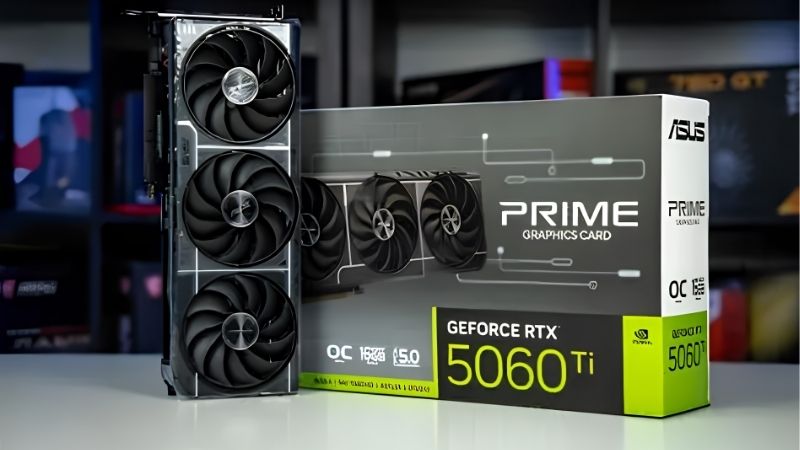
What It Takes to Game at 1080p 360Hz
Before choosing a card, it helps to understand what a 360Hz target actually demands. This is a competitive-focused goal where consistency and latency matter more than raw visual fidelity, and the bottleneck is often not where beginners expect. Here is a grounded look at the requirements and where your money is best spent.
As an Amazon Associate we earn from qualifying purchases at no extra cost to you.


1080p 360Hz Explained: Why FPS and CPU Matter Most
A 360Hz monitor refreshes 360 times per second, so to feel its full benefit you want frame rates approaching that number. In fast esports titles like CS2, Valorant, and Overwatch 2, those frame rates are achievable, which is exactly why 360Hz panels are aimed at competitive players.
The key insight is that at 1080p, the workload is light enough that the processor, not the graphics card, usually sets your frame rate. This makes 360Hz gaming unusually CPU-dependent compared to higher resolutions, where the GPU does more of the heavy lifting.
Understanding this changes how you spend. For a GPU for 1080p 360Hz, a strong-but-sensible card paired with a fast CPU beats an ultra-expensive GPU held back by a weak processor, which is a common and costly mistake.
This CPU-first reality is the single most important thing to grasp about 360Hz gaming. Many buyers assume the graphics card alone determines their frame rate, then feel let down when a powerful GPU delivers frames far below their monitor’s ceiling. Recognizing that the processor sets the pace at 1080p is what steers your budget toward the components that actually move the needle at this refresh rate.
Recommended GPUs for 1080p 360Hz
The right card depends on whether you play esports only or also want high frame rates in more demanding games. Here is how the main options stack up for this target.
| GPU | Best For | 360Hz Capability |
|---|---|---|
| RTX 5060 / RTX 4060 | Esports-focused play | Reaches 360 fps in light esports titles |
| RTX 5070 / RTX 4070 Super | Esports plus some AAA | High frames in esports, strong elsewhere |
| RTX 5070 Ti | Headroom and future-proofing | Comfortable high frames across titles |
| RX 7700 XT / 7800 XT | AMD value option | Strong raster frames in esports titles |
For pure esports, a mid-range card is often enough to hit very high frame rates, so the extra money is better spent on your CPU. If you also play modern AAA games and want high frames there, a card like the RTX 5070 or 5070 Ti gives you the headroom to get closer to 360 fps in a wider range of titles.
It is worth being realistic about AAA games at this target. Even the strongest cards rarely sustain 360 fps in demanding modern single-player titles at high settings, so 360Hz is fundamentally an esports-oriented goal. The higher-tier cards in the table matter mainly for players who want to push competitive frame rates while still enjoying good performance in their occasional AAA sessions.
Why Your CPU Is the Real Bottleneck at 360Hz
At 1080p, the graphics card renders each frame quickly, so your frame rate is frequently limited by how fast the CPU can prepare those frames. This is why two systems with the same GPU can post very different frame rates depending on the processor.
For 360Hz gaming, a high-performance gaming CPU is essential. Chips with strong single-threaded performance and large caches feed the GPU fast enough to approach those extreme frame rates, while a mid-range or older CPU will cap you well below the monitor’s potential.
The practical rule is to balance your build around the CPU first for this target. A capable GPU matched to a top gaming CPU will consistently outperform a more expensive graphics card bottlenecked by a slower processor.
In practice, this means pairing your GPU with one of the fastest available gaming processors and quick memory to match. The gap between an average CPU and a top gaming chip can be enormous at 360Hz, often the difference between comfortably clearing 300 fps and stalling well short of it, so this is genuinely not a component to economize on for this specific target.
Choosing the Right GPU for 1080p 360Hz
With the fundamentals clear, the next step is matching a specific card to how you play and what else you want from your system. The best choice balances raw frame rates, useful features, and value. Here is how to narrow it down for a 360Hz build.
Best Value GPU Picks for 360Hz Esports
For a purely competitive player, the best value comes from a mid-range card paired with a strong CPU. A card in the RTX 5060 or 4060 class can already push very high frame rates in light esports titles, letting you invest the savings where it counts.
For players who want both high esports frame rates and strong performance in modern games, stepping up to an RTX 5070 or 4070 Super hits a sweet spot. It delivers the frames competitive titles demand while remaining capable across a broader library.
The value trap to avoid is overspending on a flagship GPU for a 1080p target. Beyond a certain point, extra GPU power goes unused at this resolution, so the money is better directed toward your CPU and monitor.
Pros and Cons of Chasing 1080p 360Hz
Targeting 360Hz is a specific choice with real trade-offs. Here is the direct breakdown to help you decide if it fits your goals.
- Pros: Exceptionally smooth, low-latency gameplay, a genuine competitive edge in fast esports titles, and a responsive feel that lower refresh rates cannot match.
- Cons: Requires a strong CPU as well as a capable GPU, unrealistic in demanding AAA games, and diminishing returns for casual or single-player-focused players.
The balance favors 360Hz for dedicated competitive players and against it for those who mainly play story-driven or graphically intense games, where a lower refresh rate at higher settings makes more sense.
Features That Help: Reflex, DLSS, and Frame Pacing
Beyond raw frame rates, latency-reducing technology matters enormously at this level. Nvidia Reflex, supported across modern RTX cards, trims system latency to make high-refresh gameplay feel even more immediate, which is a genuine advantage for competitive players.
DLSS can also help in the more demanding games you play alongside esports titles, using AI upscaling to lift frame rates closer to your monitor’s refresh rate without a heavy visual cost. It is less relevant in light esports games but valuable for mixed libraries.
Consistent frame pacing matters as much as peak frame rate. A card and system that deliver steady, evenly-timed frames feel smoother at 360Hz than one that posts a higher average with stutters, so stability is part of the goal, not just raw numbers.
Buying Smart: Timing, Setup, and Verdict
Choosing the card is only part of the picture; timing your purchase and building the rest of the system correctly determine whether you actually hit 360Hz. Here are the market realities, the supporting components that matter, and a final recommendation for this target.
Should You Buy Now? The 2026 Market
Timing affects value even for a focused build like this. Component prices have been trending upward again across the PC market, and graphics cards have followed, so waiting for a steep drop generally works against the current direction of the market rather than with it.
There is measured good news, though. Prices have stopped climbing as sharply as they did in late 2025 and have settled into a stretch of relative stability, even if more volatility is possible. Fresh memory supply is also on the way, with new fabrication capacity being built, but those facilities are not expected to run until 2027–2028, so meaningful relief is years out rather than months.
The practical takeaway is that prices are stable but not falling, so if the right card for your 360Hz build appears at a fair price, buying sooner is generally smarter than waiting on relief the market is not signaling. You can compare current pricing on suitable cards through the links here in seconds.
For a competitive build specifically, it also helps to prioritize spending in the right order regardless of timing: a fast CPU and a genuine 360Hz monitor first, then the best GPU your remaining budget allows. Buying the right balance of parts at today’s stable prices beats waiting for a GPU discount while a mismatched system leaves your monitor underfed.
Beyond the GPU: Monitor, CPU, and Settings
Hitting 360Hz is a whole-system effort. You need a genuine 360Hz monitor with the right DisplayPort connection, a top-tier gaming CPU to feed the frames, and fast memory to support it, since any weak link caps your results.
Settings matter too. Competitive players often run lower graphical presets specifically to maximize frame rate and clarity, which also eases the load on both CPU and GPU and helps you approach that 360 fps target.
Balancing all of these elements is what turns a fast graphics card into an actual 360Hz experience. The GPU is one piece of a system built around low latency and high, consistent frame rates.
See More:
Final Verdict: The Right GPU for 1080p 360Hz
For most competitive players, a mid-range to upper-mid-range card like the RTX 5070 paired with a strong gaming CPU is the smart choice for 1080p 360Hz. It delivers the frames esports titles demand without overspending on GPU power you cannot use at this resolution.
Esports-only players can go a tier lower and invest more in their CPU, while those who also want high frames in demanding games can step up to an RTX 5070 Ti for extra headroom.
Whatever you choose, build around the CPU and a true 360Hz monitor to realize the card’s potential. You can compare current pricing on suitable GPUs through the links on this page.
In summary, the best GPU for 1080p 360Hz is a capable mid-range or upper-mid-range card paired with a top gaming CPU, since this competitive target is more CPU-limited than GPU-limited. Match a card like the RTX 5070 to a fast processor, a genuine 360Hz monitor, and competitive settings, and you will unlock the ultra-smooth, low-latency experience these panels are built for—without wasting money on GPU power that a 1080p target simply cannot use.
Top-Rated Picks


| Product | Brand | Rating | Reviews | Price |
|---|---|---|---|---|
| ARCTIC MX-4 (4 g) – Premium Performance Thermal Paste… | ARCTIC | ★ 4.8 | 104k | $4.99 |
| ARCTIC MX-4 (incl. Spatula, 4 g) – Premium Performanc… | ARCTIC | ★ 4.8 | 71.9k | $5.49 |
| Crucial 8GB DDR4 RAM 3200MHz (PC4-25600), Downclockab… | Crucial | ★ 4.8 | 62.8k | $74.99 |
| AMD Ryzen 5 5600X 6-core, 12-thread unlocked desktop … | — | ★ 4.8 | 30.2k | $177.60 |
| NVIDIA Shield Remote; Voice Search, Motion-Activated,… | — | ★ 4.7 | 10.6k | $25.99 |
Frequently Asked Questions
What graphics card do I need for 360fps at 1080p?
For competitive shooters and MOBAs, a mid to upper mid-tier current card is sufficient because those engines are deliberately lightweight. The card is rarely the limiting factor at 1080p; you will hit processor and engine limits long before the graphics hardware runs out of headroom at these settings.
Does 1080p at 360Hz waste a high-end graphics card?
Largely yes. At this resolution the CPU becomes the bottleneck in almost every title, so a top-tier card sits underused while the processor struggles to feed it. Money is better allocated toward a high-cache processor, fast memory and a quality monitor rather than the fastest available GPU.
Which settings should I change to reach 360fps?
Reduce shadow quality, volumetric effects, ambient occlusion, reflections and any post-processing that blurs motion, while keeping textures high because they cost memory rather than shader time. Disable vsync, cap frames slightly below your refresh rate, and enable a latency reduction mode if the game offers one.
How important is Reflex or a latency reduction mode?
Very. At 360Hz the display refreshes every 2.8 milliseconds, so queued frames in the render pipeline become the dominant source of delay. Nvidia Reflex removes that backlog and typically cuts system latency by a larger margin than the difference between a 240Hz and 360Hz panel alone.
What monitor connection do I need?
DisplayPort 1.4 carries 1080p at 360Hz without compression in most configurations, and it remains the recommended connection. Use the cable supplied with the monitor or a certified replacement, and confirm in the operating system display settings that the full refresh rate has actually been selected rather than a lower fallback.





Write Your Review
No reviews yet. Be the first to share your experience!