
The best performing thermal paste is not necessarily the one that posts the lowest temperature on the first boot. What separates compounds over a year of use is how well they stay in place, and that is a different question from which one wins a fresh-mount comparison. Stability over time is the specification nobody prints.
As an Amazon Associate we earn from qualifying purchases at no extra cost to you. Product prices and availability are accurate as of the date shown and are subject to change.


As an Amazon Associate we earn from qualifying purchases at no extra cost to you. Product prices and availability are accurate as of the date shown and are subject to change.
By Ryan Cole
How to Judge the Best Performing Thermal Paste
Most comparisons measure a single mount and stop there. These four factors explain why that snapshot is a poor guide to how a compound behaves in a machine you actually use every day for years. That is the frame for judging the best performing thermal paste honestly.
First mount versus twelve months later
A fresh application puts every quality compound within a couple of degrees of the others. The interesting differences appear months later, once thermal cycling has pushed some formulations away from the centre of the die and left others largely intact. A fresh mount flatters every quality compound equally.
That is why idle temperature drift is a better signal than a launch-day chart. If your processor idles several degrees warmer than it did last year with the same cooler and the same dust levels, the interface has degraded rather than the cooler failing. Track idle temperatures across months, not minutes.
Sustained load versus short bursts
Benchmarks that run for a few minutes reward compounds with high peak conductivity, since the heatsink absorbs much of the burst into its own mass. A long render or compile session tells you far more about how the interface behaves under real conditions. Burst tests reward peak conductivity unfairly.
Under sustained load the differences narrow considerably, because the cooler becomes the limiting factor rather than the thin layer beneath it. This is the main reason premium compound upgrades disappoint people expecting a dramatic change. The cooler becomes the limit long before the paste does.
Where the compound sits
A desktop processor with a large heat spreader is the most forgiving case, and almost any decent compound performs adequately. Laptops, bare dies and graphics card repastes concentrate heat far more, and there the choice starts to matter. Heat density is what makes the choice visible.
Mount type matters too. A heavy air tower applies different pressure from a liquid cooler block, and thicker compounds need that pressure to spread properly, which is why the same paste can behave differently on two machines. The same compound behaves differently on two machines.
Reapplication interval as part of the decision
If you reseat coolers regularly, a compound that performs brilliantly and dries out in eighteen months is a perfectly reasonable choice. If the machine will be untouched for years, stability matters far more than the number on the tube. Match the compound to your actual habits.
Be honest about which you are. Most people intend to repaste regularly and never do, which is the strongest argument for choosing a stable formulation over the highest conductivity claim available at the time of purchase. Intentions and behaviour rarely line up here.
Top Picks: Best Performing Thermal Paste Over Time
These five are ordered by how well they hold performance rather than by first-mount results. All are electrically non-conductive, so a small overspread will not damage anything. Stock was checked in August 2026. Which is the best performing thermal paste depends on how long it will sit untouched.
| Compound | Type | Manufacturer claim | Holds up best in |
|---|---|---|---|
| Honeywell PTM7950 | Phase-change pad | Melts into place on first heat cycles | Machines left untouched for years |
| Arctic MX-6 | Ceramic paste | Non-conductive, long service life | Everyday desktop use |
| Noctua NT-H2 | Hybrid paste | Long service and shelf life | Frequent reseating |
| Thermalright TFX | High-performance paste | Around 14 W/mK | High heat density chips |
| Thermal Grizzly Kryonaut Extreme | High-performance paste | 14.2 W/mK | Short-term peak performance |
Honeywell PTM7950
The phase-change pad is the strongest option for long-term stability. It melts into place across the first few heat cycles and then stops migrating, which largely removes the slow temperature creep that affects conventional compounds after a year. It is the fit-and-forget option in this list.
It does not reach full performance immediately, so expect temperatures to settle over several sessions. Counterfeit sheets are common enough that buying from a seller with a clear supply chain matters more here than with any paste. Expect a settling period rather than instant results.
Arctic MX-6
MX-6 is the sensible default for a desktop that will run for years without being opened. It is stable, easy to source, non-conductive and priced so that buying a larger tube for several machines costs very little extra. It is the sensible default for a long-lived build.
It gives up a small amount of peak performance to the premium tier, and Arctic no longer publishes a conductivity figure at all. It is also thicker than MX-4, so a firm and even mount is necessary for it to spread properly. A firm, even mount matters more with thicker paste.
Noctua NT-H2
NT-H2 is the choice for anyone who reseats coolers regularly, since it applies cleanly, works from the first boot with no curing period, and comes with cleaning wipes in the retail package for removing the previous application. It suits anyone who reseats coolers often.
The price per gram is high compared with bulk options, which makes it poor value for maintaining a fleet of machines. Noctua also publishes no conductivity figure, so comparing it on specification alone is impossible. Bulk maintenance is not what it is priced for.
Thermalright TFX
TFX sits in the high-conductivity tier with a claim around 14 W/mK at a fraction of the price of comparable premium compounds. For a high heat density chip where the interface genuinely matters, it is the value route into that tier. It is the value route into the premium tier.
It is thick and needs care to apply on a small die, and warming the tube slightly helps it spread. Long-term independent data is thinner than for established brands, which matters if the machine will not be reopened for years. Warming the tube helps it spread evenly.
Thermal Grizzly Kryonaut Extreme
Kryonaut Extreme posts among the best first-mount results of any conventional paste, with a claimed 14.2 W/mK. For benchmarking, delidded processors or extreme cooling work, that peak capability is exactly what it was designed for. It is built for peak numbers rather than longevity.
It is the weakest choice for longevity, since the formulation is known to dry out faster on very hot components. It is also expensive per gram, which makes it hard to justify for a machine you intend to leave alone. Plan on reseating it every year or so.
What the 2026 Market Means for Repasting
Compound is a small purchase, but it competes with other upgrades for attention. Two current factors are worth weighing before deciding where the money goes this year. Both affect whether the best performing thermal paste is worth buying over a mid-range tube.
Maintenance is the sensible spend
Graphics card pricing has risen sharply since late 2025 and no new processor or graphics generation arrives before CES in January 2027. Against that, replacing a dried interface is a trivial cost with a measurable and immediate result. A tube costs less than a single new game.
On a machine two or three years old, fresh compound and clean dust filters together often recover several degrees. That is a larger gain than moving from a mid-range compound to a premium one on a system that was already maintained. That gain is measurable rather than theoretical.
Pricing and availability
Thermal compound and coolers have seen roughly 6% to 8% price movement since promotional pricing policies ended at the start of February 2026, which is mild compared with the memory and storage markets over the same period. Cooling parts have behaved far better than memory.
Prices quoted here reflect August 2026 and should be checked against the current listing. A larger tube usually costs little more per gram and covers several applications, which is worthwhile if you maintain more than one machine. A larger tube covers several applications easily.
Late November still works here
Genuine Black Friday reductions are unlikely on memory, storage or prebuilt systems this year, since that stock reflects high contract pricing agreed earlier. Coolers, fans and compound sit outside that constraint entirely. Compound sits outside the memory contract problem.
If your temperatures are stable, waiting until 27 November is reasonable. If the machine is already throttling under load, repaste now, because the saving is far smaller than the performance you are losing every session. Throttling costs more than the discount saves.
Frequently Asked Questions
Common questions about how compounds behave over time, covering replacement intervals, expected gains, warning signs and application technique. They come up most from readers judging the best performing thermal paste on first-mount numbers alone.
How often should I replace thermal paste?
Every two to three years for a daily-use machine, or sooner if idle temperatures have drifted upward. Systems that heat and cool frequently see migration faster than machines left running continuously at a steady load. Drift in idle temperature is the practical trigger.
How much difference does the compound make?
Usually one to three degrees between quality compounds on a well-mounted cooler. The larger gains people report almost always come from replacing an old, dried or badly applied layer rather than from the new compound itself. Old or badly applied layers show the biggest gains.
What are the signs of pump-out?
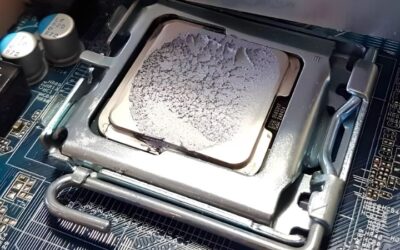
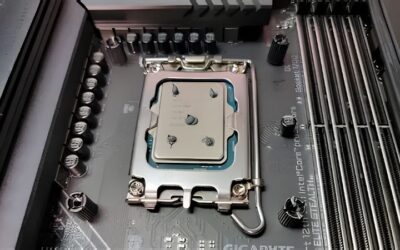
A gradual rise in idle and light-load temperatures over months, with no change in dust levels or fan behaviour. Removing the cooler usually reveals compound pushed toward the edges with a thin patch over the centre of the die. The pattern under the cooler tells the story.
Does application pattern matter much?
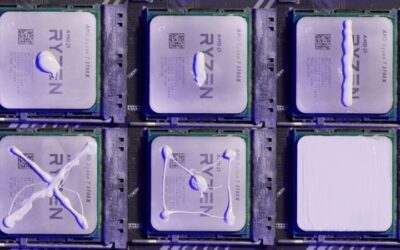
Less than most guides suggest. A centre dot works for standard heat spreaders and a thin line suits rectangular dies, but even coverage under proper mounting pressure matters far more than the shape you start with. Even coverage beats a clever shape every time.
See More:
- best CPU cooler for Ryzen 5 5600X
- best small form factor CPU cooler
- best SFF CPU cooler
- best CPU cooler for i9-14900K
- What is the best AIO CPU cooler
Final Thoughts
The best performing thermal paste over a machine’s life is usually the most stable one rather than the one with the highest claim. Decide how often you will realistically reseat the cooler, then choose the compound that suits that answer. Be honest about how often you will reopen it.



Write Your Review
No reviews yet. Be the first to share your experience!