
- Top Pick: maxsun GEFORCE GTX 1050 Ti 4GB GDDR5 128 Bit Video Gaming Graphics Card for Gaming PC Mini Small Form Factor SSF Slim Low Profile Design GPU, DisplayPort, HDMI (Low Profile)
- Best Value: Yeston GTX 1050 ti 4GB GDDR5 Low Profile Small Form Factor Graphics Card
- Premium Choice: GIGABYTE Graphics Card – GeForce GTX 1050 Ti, OC 4GB GDDR5
GTX 1050 Ti vs 1650 is the classic dilemma for anyone reviving an old office PC or building the cheapest possible gaming rig. Both cards run without a power connector, both target entry-level 1080p, and both show up constantly on the used market for pocket change. If you want a straight answer instead of a long video, this side-by-side breaks down the specs, the real frame rates, and exactly which of these budget GPUs is the smarter pickup in 2026.
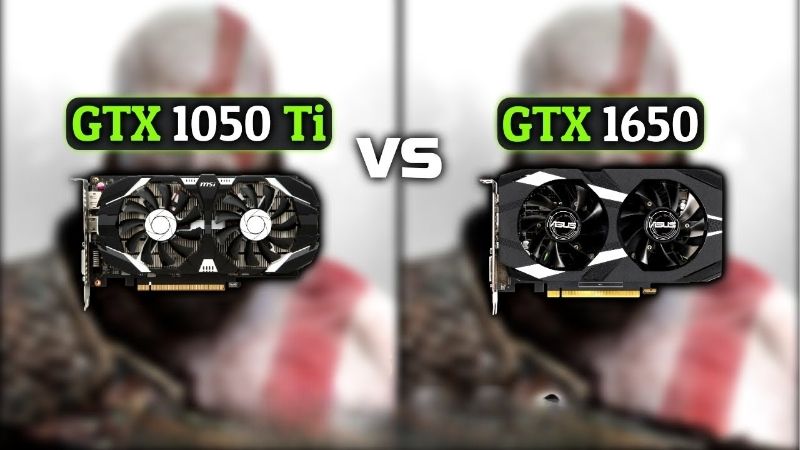
The Quick Verdict and Full Spec Comparison
Let us start with the answer, then back it up with numbers. These two cards look similar on paper—both are compact, low-power, 4GB entry cards—but a generation of architecture separates them, and that gap shows up clearly once the games start running. The table below lays out every spec that actually changes your experience.
As an Amazon Associate we earn from qualifying purchases at no extra cost to you.




Quick Verdict: Who Wins at a Glance
For almost every buyer, the GTX 1650 is the better card. It delivers roughly 40–50% more performance than the GTX 1050 Ti while drawing similar power and often needing no extra connector, which makes it the clear pick for smooth 1080p esports and lighter AAA titles.
The GTX 1050 Ti only makes sense in one scenario: when it is dramatically cheaper, or when you are squeezing a card into an ancient prebuilt on the tightest possible budget. It still plays older and esports titles fine, but it runs out of headroom faster in modern games.
Short version: buy the GTX 1650 for the extra performance at the same power, and only drop to the 1050 Ti if the price gap is large and your budget is absolute.
Full Spec Comparison Table
Numbers first. These reference specs explain every frame-rate difference you will feel in real games.
| Spec | GTX 1050 Ti | GTX 1650 |
|---|---|---|
| Architecture | Pascal | Turing |
| VRAM | 4GB GDDR5 | 4GB GDDR5 / GDDR6 |
| Memory bus | 128-bit | 128-bit |
| CUDA cores | 768 | 896 |
| Board power | ~75W | ~75W |
| Power connector | None on most models | None on most models |
| Recommended PSU | 300W | 350W |
| Typical used price | ~$70–$100 | ~$100–$130 |
The core count looks close, but Turing does far more work per core than Pascal, so the GTX 1650 pulls ahead by much more than the 128-core difference suggests. Both stay near 75W, which is why neither typically needs a power cable.
What the Raw Numbers Actually Mean
Architecture is the whole story here. The GTX 1650’s Turing design handles modern game engines more efficiently, translating into noticeably higher frame rates even though the two cards share the same 4GB buffer and 128-bit bus.
That 4GB of VRAM is the shared ceiling. It is enough for esports titles and older games at 1080p, but both cards will force you to lower textures in the newest AAA releases. Neither is built for high settings in demanding modern titles.
It is also worth understanding why the gap between them is not even wider. Both cards share the same 128-bit memory bus and 4GB capacity, which caps how far the faster 1650 can stretch in memory-heavy scenes. That shared bottleneck keeps the two closer than their architecture difference alone would suggest, and it is the main reason neither card is suited to high textures in the latest titles.
The identical power envelope is what makes this matchup interesting. You get a real performance jump from the 1650 without paying anything extra in watts, heat, or PSU requirements, which is rare in a budget upgrade.
Deep Dive Face-Off: Performance, Features, and Real-World Fit
Averages only tell part of the story. To choose correctly you need to see how each card behaves in frame rates, what extra features they bring, and how easily they slot into a real budget machine. This is where the GTX 1050 Ti vs 1650 debate stops being about spec sheets and starts being about your actual PC.
Rasterization Performance at 1080p
In esports titles like CS2, Valorant, and Rocket League, the GTX 1650 comfortably holds high frame rates at 1080p, often landing in the 90–140 fps range depending on the game, while the GTX 1050 Ti tends to sit in the 60–90 fps range in the same titles.
In mainstream AAA games at low-to-medium settings, the gap stays consistent. The GTX 1650 keeps many titles above the 60 fps mark where the GTX 1050 Ti frequently dips into the 40s, which is the difference between smooth and merely playable.
For a first-time builder targeting 1080p esports, that margin is the deciding factor. The 1650 simply gives you more comfortable headroom before you are forced to compromise on settings.
Look at specific games and the pattern holds. In popular titles like GTA V, Fortnite, and Apex Legends at 1080p, the GTX 1650 maintains a smoother, higher average, while the GTX 1050 Ti leans harder on lowered settings to stay fluid. For older favorites and lighter indie games, the two feel effectively identical, so the 1650’s advantage grows the more modern and demanding your library becomes.
Encoding, Features, and the Turing Advantage
Beyond raw frames, the GTX 1650’s newer Turing architecture brings better video decode support and, on several models, an improved encoder that is handy for lightweight streaming or recording. The Pascal-based GTX 1050 Ti is more limited here.
Neither card supports ray tracing or DLSS, so do not buy either expecting Nvidia’s AI upscaling. That technology lives on the RTX line, and it is worth knowing that Nvidia’s ongoing investment in AI features keeps widening the gap between these old cards and modern RTX options over time.
For pure day-to-day use, the 1650’s modern media engine also makes it a slightly better fit for a general-purpose PC that occasionally plays video or handles light creative work.
This matters more than it first appears for a budget machine that pulls double duty. A card destined for a family or dorm-room PC will spend plenty of time on video playback, browser tabs, and the occasional light edit, and the 1650’s newer decode support handles modern codecs more smoothly in those everyday tasks—another small but real reason it ages better than the older 1050 Ti.
Power, Size, and System Compatibility
This is where both cards shine and stay evenly matched. At roughly 75W, both typically run without a dedicated power connector, drawing everything they need from the PCIe slot. That makes either card a perfect drop-in for a locked-down office prebuilt with a weak power supply.
Both are also available in compact and low-profile versions, so they fit small form-factor and slimline cases where bigger GPUs simply will not go. Always confirm the exact model’s length and bracket height before buying.
If your goal is the simplest possible upgrade with zero fuss over power or cabling, both qualify—but since the 1650 offers more performance at the same power, it remains the smarter compatibility-friendly choice.
One more compatibility note: because neither card needs auxiliary power, upgrading is often as simple as removing the old GPU and sliding the new one into the slot, with no cabling or power-supply changes required. That low-friction install is a genuine part of these cards’ appeal for first-time builders who would rather not open up the rest of the system.
Value, the 2026 Price Picture, and Final Verdict
Performance points to the 1650, but value depends on what you actually pay and when you buy. With the used market shifting and component prices climbing again, timing matters as much as the hardware. Here are the honest trade-offs, a look at the current market, and a clear recommendation.
Pros and Cons of Each Budget GPU
Both cards are compromises by design. Here is the blunt breakdown.
GTX 1050 Ti
- Pros: Rock-bottom used price, no power connector needed, tiny and low-profile options, dependable for esports and older games.
- Cons: Weakest performance here, aging Pascal architecture, 4GB VRAM ceiling, struggles in modern AAA titles.
GTX 1650
- Pros: Clearly faster, same low power draw, no connector on most models, better media engine, still cheap used.
- Cons: Costs a bit more, still only 4GB VRAM, no ray tracing or DLSS.
Should You Buy Now? What the 2026 Market Means
Timing has become part of this decision. Component prices have been drifting upward again across the PC market, and that pressure lands hardest on cheap used cards like these, where a few dollars of movement changes the whole value equation. Sellers are asking a little more than a year ago, so holding out for a bargain that keeps sliding is risky.
The encouraging news is real but modest. Prices have stopped climbing as sharply as they did in late 2025, and the market has settled into a period of relative stability, even if more swings are possible. Fresh memory capacity is on the way as well, with new manufacturing coming online later this decade—but those plants are not expected to run until 2027–2028, so meaningful price relief is still years out rather than months.
It helps to keep the scale in perspective, too. On cards this inexpensive, even a $15–$20 swing in used pricing changes the value equation dramatically, so market timing carries more weight at the very bottom of the range than it does for pricier GPUs. That is exactly why watching listings for a week to learn the going rate pays off before you commit to either card.
For a bargain-tier buyer, the takeaway is simple: if a clean GTX 1650 or GTX 1050 Ti appears at a fair price today, grab it rather than gambling on a discount the market is not promising. You can compare current listings on both cards through the links here in seconds.
See More:
The Alternative and Final Recommendation
If you can stretch your budget a little, a used GTX 1660 or RX 6600 delivers a huge step up in performance for not much more money and is worth considering before you settle on either card here. For a strict no-connector, low-power build, though, the two cards in this comparison remain the easiest fit.
Choose the GTX 1650 if you want the best performance per watt in this class and smooth 1080p esports. Choose the GTX 1050 Ti only if it is significantly cheaper and your budget leaves no room to move up.
Whichever you pick, prices shift constantly on the used market, so it pays to compare live listings before you buy. You can check current deals on both cards through the links on this page.
In the end, the GTX 1050 Ti vs 1650 decision is straightforward: the GTX 1650 is the better card for almost everyone, offering a real performance jump at the same low power and connector-free convenience, while the GTX 1050 Ti survives only as a rock-bottom fallback when price is the single deciding factor. Match the card to your budget and your case, buy while pricing is stable, and you will get the most gaming out of the least money.
Top-Rated Picks


| Product | Brand | Rating | Reviews | Price |
|---|---|---|---|---|
| ARCTIC MX-4 (4 g) – Premium Performance Thermal Paste… | ARCTIC | ★ 4.8 | 104k | $4.99 |
| ARCTIC MX-4 (incl. Spatula, 4 g) – Premium Performanc… | ARCTIC | ★ 4.8 | 71.9k | $5.49 |
| Crucial 8GB DDR4 RAM 3200MHz (PC4-25600), Downclockab… | Crucial | ★ 4.8 | 62.8k | $74.99 |
| AMD Ryzen 5 5600X 6-core, 12-thread unlocked desktop … | — | ★ 4.8 | 30.2k | $177.60 |
| NVIDIA Shield Remote; Voice Search, Motion-Activated,… | — | ★ 4.7 | 10.6k | $25.99 |
Frequently Asked Questions
How much faster is the GTX 1650 than the GTX 1050 Ti?
The GTX 1650 is roughly 30 to 40 percent faster at 1080p. Both carry 4GB of VRAM on a 128-bit bus, but the Turing architecture in the GTX 1650 is more efficient per clock, and the GDDR6 revision adds meaningful bandwidth over the GDDR5 used by the 1050 Ti.
Do either of these cards need a power connector?
Usually not. The GTX 1050 Ti draws about 75W and reference designs use slot power only. The GTX 1650 is also rated 75W, though some overclocked partner models add a 6-pin connector. Both are popular choices for upgrading office prebuilts with weak power supplies.
Is 4GB of VRAM a limitation on both?
Yes, equally. Modern AAA titles at high textures exceed 4GB even at 1080p, causing stutter on either card. Both are best used at medium settings or in esports titles. Neither has enough memory for high-resolution texture packs or heavy modding.
Which is better for video encoding and streaming?
The GTX 1650 is better if you get a TU116-based revision with the newer Turing NVENC encoder. Early TU117 models use the older Volta-generation encoder, roughly matching Pascal quality. The GTX 1050 Ti uses the Pascal encoder, which is dated but still functional for basic recording.
Which one should I buy used today?
The GTX 1650 unless the GTX 1050 Ti is dramatically cheaper. The performance gain, better memory bandwidth, and newer architecture with longer driver relevance make it the stronger pick. The GTX 1050 Ti remains a reasonable last-resort card for very old systems and light gaming.





Write Your Review
No reviews yet. Be the first to share your experience!