
RX 9060 XT vs 5060 is the cross-brand budget battle on the mind of almost every value-focused gamer in 2026. AMD’s Radeon RX 9060 XT and Nvidia’s GeForce RTX 5060 both promise excellent 1080p gaming with modern features, but they take different paths to get there — one leaning on memory and raw value, the other on upscaling and ray tracing. This comparison cuts straight to what matters: a quick verdict for the impatient, a clear spec table, a detailed face-off including the crucial VRAM question, the real pricing picture, and a plain recommendation on which card deserves your money.

Prime
Editor's Pick
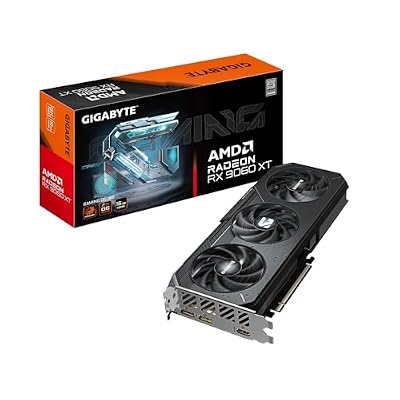
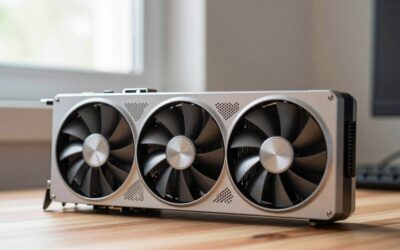
ASUS Dual Radeon RX 9060 XT 16GB GDDR6 Graphics Card, AMD, for Desktop (PCIe 5.0, HDMI 2.1b, DisplayPort 2.1a, 2.5-Slot, Axial-tech Fan, 0dB Technology, and More)

RX 9060 XT vs 5060: Quick Verdict and Specs
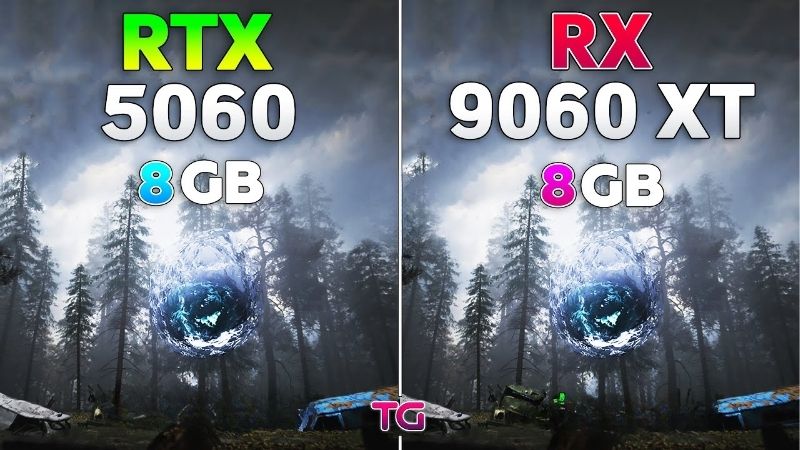
If you only remember one thing, remember this: the RX 9060 XT leans on strong rasterization and a generous memory option for the money, while the RTX 5060 counters with Nvidia’s superior upscaling and ray tracing features. Which one wins for you depends on whether you prioritize raw value and VRAM or the polish of DLSS and RT — and the sections below break that choice down in detail so you can decide with confidence rather than brand loyalty. The encouraging part is that both are genuinely good budget cards from the current generation, so this is a choice between two strengths rather than an attempt to avoid a weak product.
As an Amazon Associate we earn from qualifying purchases at no extra cost to you.


The Quick Verdict for Busy Buyers
For pure value and future-proofing, the RX 9060 XT is the compelling pick, especially its higher-memory version, offering strong rasterization and more VRAM headroom for the price. Budget gamers who mostly play traditional, non-ray-traced games will find a lot to love.
The RTX 5060 fights back with Nvidia’s feature advantage: DLSS 4 with Multi Frame Generation and stronger ray tracing, plus the broad Nvidia ecosystem. If you value those technologies and play RT-enabled titles, it justifies its place.
So the honest quick answer is this: pick the 9060 XT for raster value and memory, and the 5060 for upscaling, ray tracing, and ecosystem. Both are strong 1080p cards that simply prioritize different strengths. A useful way to decide is to look at your own library: if it’s dominated by competitive and traditional titles, the AMD card’s raw value wins, while a library full of the latest RT-enabled blockbusters tilts the scales toward Nvidia’s feature set.
Head-to-Head Comparison Table
Before the deep dive, here’s a side-by-side look at the core specifications that shape how these two budget cards behave in real games.
| Specification | RX 9060 XT (AMD) | RTX 5060 (Nvidia) |
|---|---|---|
| Architecture | RDNA4 | Blackwell |
| Memory options | 8GB or 16GB GDDR6 | 8GB GDDR7 |
| Upscaling | FSR 4 (AI-based) | DLSS 4 (incl. Multi Frame Generation) |
| Ray tracing | Improved RDNA4 RT | Stronger, more mature RT |
| Rasterization | Very strong for the price | Strong, feature-led |
| Best resolution | Excellent 1080p | Excellent 1080p |
| Typical edge | Value and VRAM | Features and ecosystem |
On paper, the headline differences are memory and upscaling: the 9060 XT offers a 16GB option the 5060 lacks, while the 5060 answers with DLSS 4 and frame generation. Those two factors sit at the heart of this entire comparison, and almost every buyer’s decision ultimately traces back to how they weigh one against the other.
AMD RDNA4 vs Nvidia Blackwell
The RX 9060 XT is built on AMD’s RDNA4 architecture, the generation where AMD made major strides in both efficiency and ray tracing while maintaining its traditional strength in rasterization value. It’s a well-rounded budget design that finally addresses the ray tracing weakness that held earlier AMD cards back in cross-brand comparisons.
The RTX 5060 uses Nvidia’s Blackwell architecture, which powers the latest DLSS 4 features and refined ray tracing hardware. Nvidia’s long lead in these AI-driven technologies is the 5060’s defining advantage.
The takeaway is a familiar one, sharpened by the latest generation: AMD leads on raw value and memory, Nvidia leads on features and RT. How much each matters to you is the crux of the decision. What’s new this generation is how much closer the two have become, with RDNA4 narrowing Nvidia’s long-standing advantages in ray tracing and upscaling to the point where the choice is genuinely competitive rather than lopsided.
RX 9060 XT vs 5060: The Detailed Face-Off
With the specs established, the interesting part is how these cards differ where it counts. This face-off compares them on rasterization and ray tracing, their competing upscaling technologies, and the practical realities of memory, power, and cooling. Rather than declaring a blanket winner, it’s more useful to see how each card behaves in the situations you’ll actually encounter, because the right pick shifts depending on the mix of games you play and how long you want the card to last.
Rasterization and Ray Tracing Performance
In traditional rasterized games — the bulk of most libraries — the RX 9060 XT is a strong performer for the money, often delivering excellent 1080p frame rates that make it a superb value for competitive and mainstream titles.
When ray tracing is switched on, the RTX 5060 generally pulls ahead, thanks to Nvidia’s more mature RT hardware. The 9060 XT has closed the gap significantly with RDNA4, but Nvidia still tends to lead in heavier ray-traced scenes.
So the performance story splits by workload. If you play mostly non-RT games, the 9060 XT’s raster value shines; if ray tracing matters to you, the 5060’s stronger RT gives it the edge in those specific titles. For a lot of budget buyers this tips the balance toward AMD, simply because the majority of games they play — competitive shooters, older favorites, and many mainstream titles — don’t lean heavily on ray tracing in the first place.
Upscaling: FSR 4 vs DLSS 4 and Frame Generation
Upscaling is where budget cards earn extra frames, and both bring modern solutions. AMD’s FSR 4 is a genuine leap forward, moving to an AI-based approach that dramatically narrows the historic quality gap with Nvidia’s technology.
Nvidia’s DLSS 4, however, remains the benchmark, and its Multi Frame Generation can multiply frame rates in supported games in a way FSR cannot match. For buyers who prioritize the smoothest possible performance in supported titles, this is a real advantage.
The practical read is that FSR 4 makes the 9060 XT far more competitive than older AMD cards were, but DLSS 4 with frame generation still gives the 5060 the stronger upscaling story overall. It’s a narrower gap than before, but a real one. For buyers who want the smoothest possible frame rates in supported games and don’t mind that frame generation works best from an already-decent base frame rate, that DLSS advantage is one of the 5060’s most persuasive selling points.
VRAM, Power, and Thermals
The most consequential practical difference is memory. The RX 9060 XT offers a 16GB option, while the RTX 5060 ships with 8GB — and in modern games with high texture settings, that extra memory can be the difference between smooth play and stutter down the line.
For buyers planning to keep their card for several years, the 16GB 9060 XT is genuinely appealing, since VRAM is the hardest limitation to work around later. An 8GB card remains perfectly capable at 1080p today, but the headroom question favors AMD here.
On the practical side, both are efficient, mainstream cards that don’t demand an enormous power supply, though you should still confirm your PSU and case clearance. Neither is difficult to run, which suits the budget builders these cards target. This approachability is a genuine advantage for first-time builders and for anyone upgrading an older system, since it usually means no costly power-supply swap is required to drop either card in.
Price, Alternatives, and Final Verdict
A budget comparison lives or dies on value, so money and context matter as much as raw specs. This section covers the 2026 pricing climate, a sensible alternative if neither card fits, and the final recommendation on who should buy which. For budget buyers especially, the price gap between these two cards and their memory variants is often the deciding factor, so understanding the wider market forces behind that gap helps you judge whether the extra spend is worth it right now.
Pricing in the 2026 Market
Pricing is central to the RX 9060 XT vs 5060 decision, and the market backdrop rewards careful shopping. Graphics-card and component prices have trended upward, and while the steep climb of late 2025 has cooled into relative stability, suppliers still warn the situation remains volatile rather than truly settled.
Fresh supply is on the way — memory makers such as CXMT can feed DDR5 into the market, and Micron is building two new plants in Idaho — but those facilities aren’t expected online until roughly 2027 to 2028. In plain terms, prices have plateaued rather than fallen, and real relief is still years away.
The practical read is to buy on value, not on hope. Since the market isn’t poised for a sudden drop, the smart move is to pick the card that fits your needs and budget now, weighing AMD’s memory-and-value proposition against Nvidia’s feature set rather than waiting for a crash the supply data doesn’t support.
The Alternative if Neither Fits
If neither card is quite right, there are sensible middle paths. Stepping up slightly to a higher-tier current card from either brand buys more performance for buyers who can stretch, while a previous-generation card can offer strong value if you find a good deal.
For buyers torn purely on memory, waiting to afford the 16GB version of whichever card suits you can beat settling for an 8GB model you might outgrow. Memory headroom is the one thing you can’t add later. This is increasingly relevant as newer games push texture budgets higher, so treating the extra VRAM as insurance against the next few years of releases is a reasonable way to think about the modest price difference.
Whichever direction you lean, you can compare current options and their prices through the links on this page to find the best balance of performance, features, and value for your specific games and budget.
See More:
- AMD graphics driver download
- Is Nvidia American
- Nvidia 1080 Ti drivers
- Radeon graphics driver update
- Nvidia RTX 3060 drivers
Final Verdict: Who Should Buy Which
The clearest way to decide is by priority, so here’s a focused pros-and-cons summary of the two cards for the budget-conscious buyer.
| Card | Best For (Pros) | Watch-Outs (Cons) |
|---|---|---|
| RX 9060 XT | Excellent raster value; 16GB memory option; strong RDNA4 efficiency; FSR 4 | Trails in heavy ray tracing |
| RTX 5060 | DLSS 4 Multi Frame Generation; stronger RT; broad Nvidia ecosystem | Only 8GB VRAM |
Buy the RX 9060 XT — ideally the 16GB model — if you want the best rasterization value and memory headroom for the money and play mostly traditional games. Buy the RTX 5060 if DLSS 4, frame generation, ray tracing, and the Nvidia ecosystem matter more to you than raw VRAM. If you’re genuinely undecided, the memory question is often the tiebreaker for longevity, while the DLSS question is the tiebreaker for smoothness in the newest games — so weigh which of those two futures you care about more.
In the RX 9060 XT vs 5060 battle, AMD wins on rasterization value and memory while Nvidia wins on upscaling, ray tracing, and ecosystem — a genuinely close fight that comes down to your priorities. Match the card to how you actually play, keep the flat-but-firm 2026 pricing climate in mind, and you’ll land on a GPU you’re happy with for years. Compare the latest prices and availability for both cards through the links on this page to lock in the right choice for your build.
Frequently Asked Questions
Which card is faster in normal games?
In raster performance they are close, with the RX 9060 XT usually a little ahead, particularly in the 16GB configuration where memory pressure would otherwise bite. The RTX 5060 pulls back ground in ray traced titles and any game supporting DLSS 4 multi frame generation, which Radeon cannot use.
Should I take the 16GB Radeon over the 8GB Nvidia card?
If the price difference is small, yes. Sixteen gigabytes removes the texture streaming stutter that afflicts 8GB cards at 1440p with ultra textures, and it helps with modded games and local AI models. The 8GB 9060 XT and the 5060 share the same memory limitation.
How do power requirements compare?
The RTX 5060 is the more efficient card at roughly 145W and runs on a 450W to 550W supply with a single 8-pin. The RX 9060 XT sits nearer 150W to 180W and wants 550W or better. Both are easy fits for prebuilt systems with modest power supplies.
Which is better for streaming and video editing?
Nvidia still leads here. NVENC produces cleaner streams at a given bitrate than AMD’s encoder in most comparisons, and CUDA acceleration is the default path in Premiere Pro, DaVinci Resolve and Blender. If you stream regularly or edit for work, the 5060 is the more predictable choice.
What resolution should I target with either card?
Both are designed for 1080p high refresh gaming, where they comfortably exceed 100fps in most titles. They can reach 1440p with upscaling and tuned settings, but 1440p native at ultra with ray tracing is beyond both. Pair either with a 1080p 144Hz or 165Hz monitor for the best experience.
Ready to decide? Our #1 pick for 2026 is the Specification.
Live price & availability on Amazon.

Write Your Review
No reviews yet. Be the first to share your experience!