
- Top Pick: ASRock Radeon RX 9060 XT Challenger 16GB OC, RDNA 4, 3290MHz Boost, 16GB GDDR6 128-bit, PCIe 5.0, Dual Fans, 0dB Silent, LED Indicator, DisplayPort 2.1a, HDMI 2.1b
- Best Value: ASRock RX6950XT OCF 16G Graphics Board, AMD Radeon RX6950XT
- Premium Choice: GIGABYTE Radeon RX 9070 XT Gaming OC 16G Graphics Card, PCIe 5.0, 16GB GDDR6, GV-R9070XTGAMING OC-16GD Video Card
RX 6950 XT was the top of AMD’s last-generation stack, and now that it sells for a fraction of its original price, it has turned into an intriguing discounted-flagship buy. With 16GB of VRAM and 4K-capable performance, it offers a lot of raw rasterized power for the money, provided you can accommodate its high power draw. As an RDNA 2 card it trails newer options on ray tracing and features, so the real question is whether the discount makes it a smart buy or whether a newer card serves you better. This review covers the 4K performance, the practical build details, and the value math.
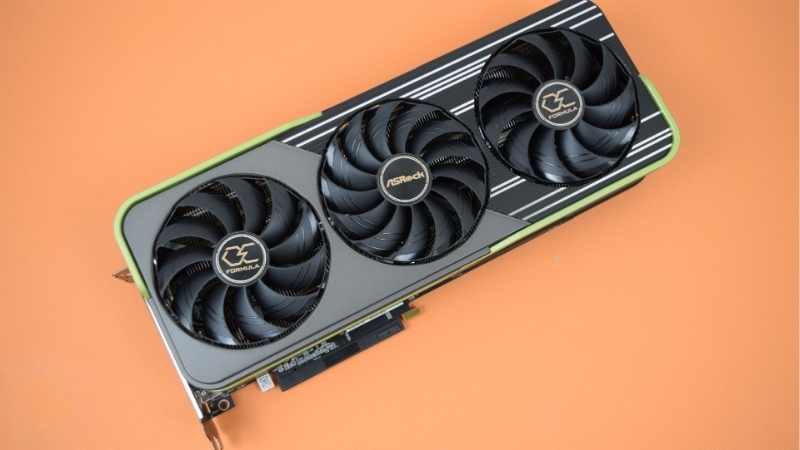
RX 6950 XT Performance: A Discounted Last-Gen 4K Flagship
The RX 6950 XT is the fully unlocked, factory-tuned version of AMD’s RDNA 2 Navi 21 flagship, with 16GB of GDDR6 on a 256-bit bus and a high 335W board power. It sits at the top of the previous generation, and that raw power is the basis of its value now that prices have fallen sharply. Below, the performance is broken down the way a value-focused buyer evaluates a discounted flagship.
As an Amazon Associate we earn from qualifying purchases at no extra cost to you.





4K and 1440p Frame Rates
At 1440p the RX 6950 XT is comfortably overkill in the best way, posting very high frame rates at maxed settings that easily feed fast 1440p panels with headroom to spare. This is where it feels most luxurious, rarely dropping below the refresh rates most gamers target.
At 4K it is a genuine high-settings card, clearing 60 FPS and often more across most modern titles in rasterized workloads, with FSR available for the heaviest games. The 16GB frame buffer is more than enough for 4K and provides solid longevity, which is part of why a discounted 6950 XT can still feel like a high-end card today.
The practical takeaway is that the 6950 XT offers near-the-top last-generation rasterized performance and a generous 16GB of VRAM at a heavily reduced price. For a 1440p high-refresh or entry-4K gamer who values raw raster, that is a lot of performance for the money.
Ray Tracing, FSR and Feature Limitations
Ray tracing is the clearest weakness relative to newer flagships. The 6950 XT can run ray tracing, and it handles it better than the smaller RDNA 2 cards, but it still trails newer architectures in heavy ray-traced and path-traced titles. Most owners use ray tracing selectively and rely on the card’s strong rasterized performance instead.
On upscaling it supports FSR, including the software-based FSR 3 Frame Generation that works on RDNA 2, which helps boost frame rates in demanding 4K titles and extend the card’s usable life. It does not support the newer RDNA 4-exclusive FSR 4, so it misses that specific upscaling advance.
As an older card it also lacks AV1 encoding, found on newer RDNA 3 cards. For pure high-end gaming that is irrelevant, but a streamer or creator may weigh it. For most value buyers chasing raw 4K-capable raster, the strong performance and 16GB of VRAM far outweigh these gaps.
What Owners Praise and Criticize
Owner sentiment is positive among those who bought at a steep discount, with the most common praise being high-end rasterized performance, the 16GB of VRAM, and the sense of getting flagship-class power for far less than the original price. Many owners are happy running it at 1440p high-refresh or entry 4K in mostly traditional titles.
The criticisms are the expected ones for a discounted older flagship: the high 335W power draw and heat are the most prominent, followed by weaker ray tracing and the lack of modern features like AV1 encoding and FSR 4. The fair conclusion is that the 6950 XT is a strong value when deeply discounted, but its power and heat make it a less efficient choice than newer cards.
Taken together, owners describe a lot of raw performance for the money when the card is discounted, tempered by a power appetite that makes it a less efficient choice than the newer cards it competes against.
| Strengths | Trade-offs |
|---|---|
| High-end 4K-capable rasterized performance | Very high 335W power draw and heat |
| 16GB VRAM for longevity | Ray tracing trails newer flagships |
| Excellent raw power per dollar when discounted | No AV1 encoding; no FSR 4 |
| Strong at 1440p high-refresh and entry 4K | Less efficient than newer cards |
RX 6950 XT Build Fit: Power, Size and Cooling
As a power-hungry flagship, the RX 6950 XT has the most demanding build requirements of the older AMD cards, so a clean install depends on three things lining up: a power supply with real headroom, a case that fits a large card, and airflow to keep a 335W GPU comfortable. Each is covered below so your build comes together without a thermal or acoustic headache.
Power Draw and PSU Requirements
With a high 335W board power, the RX 6950 XT wants a quality 850W power supply as a sensible floor, with more headroom advisable for a strong CPU pairing. It uses standard 8-pin connectors, and rail stability matters given the card’s substantial draw.
This is the most power-hungry of the older AMD cards covered here, so confirm your power supply has the capacity before buying. For a build coming from a lower-tier card, the 6950 XT is the kind of upgrade that may well justify a power-supply upgrade alongside it.
Card Size and Case Compatibility
Partner RX 6950 XT cards are large, typically 2.5 to 3 slots and often well over 300 mm long, so confirm your case clearance before buying. The high-end coolers needed to tame this card’s heat are not compact.
Measure length against any front radiator or fans and confirm the slot below is not blocked by a thick card. In tighter cases, prioritize a shorter model, and a support bracket is worth fitting given the card’s considerable weight.
Cooling, Noise and Temperatures
The RX 6950 XT runs warm given its high power draw, and the larger partner coolers are needed to keep temperatures and noise in check under sustained load, while smaller models can struggle. Fan-stop keeps it silent at idle.
Case airflow is more important here than on the lower-tier cards. With 335W of heat to dissipate, the 6950 XT rewards a well-ventilated chassis with strong intake and exhaust, so pairing it with a case that has good front-to-back airflow keeps the whole system comfortable during long sessions.
An undervolt is one of the most worthwhile tweaks for this card, often cutting power draw, temperatures, and noise meaningfully with little performance loss. Given the card’s appetite for power, it is a tweak well worth doing for a quieter, cooler system.
RX 6950 XT Pricing, Value and When to Buy
The RX 6950 XT’s entire appeal is flagship power at a discounted price, so pricing is decisive, and the current component market is part of the picture. This section covers where prices sit, how the card compares to newer options, and which buyer it suits.
Where Prices Stand Right Now
For a value buyer, the market backdrop matters. PC component prices have broadly trended upward, driven mainly by memory costs, and that pressure reaches graphics cards and the rest of a build. The encouraging side is real but limited: the steep climb seen at the end of 2025 has cooled, and some makers, Framework among them, have reported a relatively stable recent stretch while still warning of further movement.
New memory supply is on the way but not soon. OEMs can now source DDR5 from suppliers like CXMT, and Micron is building two fabs in Idaho, yet those plants are not expected to come online until 2027–2028. In short, prices have stopped spiking rather than started falling, so genuine relief is still some distance out, which is worth keeping in mind when budgeting a high-end build.
The practical implication for an RX 6950 XT buyer is that its value depends heavily on how deep the discount is relative to newer high-end cards. As a power-hungry older flagship, it should be substantially cheaper than current-generation options to justify the higher running power, so compare it directly against newer cards on the day you buy.
RX 6950 XT vs the Competition
Against newer high-end cards, the 6950 XT trades modern features, efficiency, and ray-tracing performance for raw rasterized power when deeply discounted. Its 16GB of VRAM keeps it competitive on longevity, but its high power draw is a real drawback against more efficient newer options.
The decision usually comes down to how much you value raw raster per dollar versus efficiency and features. If a newer card is only modestly more expensive, its lower power draw and better feature set often make it the smarter long-term choice; if the 6950 XT is dramatically cheaper, its raw power can win out for a raster-focused buyer.
A practical way to frame it is total cost of ownership: the 6950 XT’s higher power draw means more heat and a slightly higher electricity bill over time, so a deep discount needs to be deep enough to offset both the missing features and the running costs before it becomes the clear winner over a newer card.
Who Should Buy the RX 6950 XT
Buy it if you want high-end 1440p or entry-4K rasterized performance with 16GB of VRAM at a deeply discounted price, prioritize raw power over efficiency, and have a strong power supply and a roomy, well-ventilated case. For that buyer, a heavily discounted 6950 XT delivers a lot of performance for the money.
Look at a newer card instead if efficiency, ray tracing, or modern features matter to you, or if you cannot accommodate its 335W power draw and heat. If the RX 6950 XT is deeply discounted relative to newer options, check the current price and availability through the link here, and weigh the raw power against the higher running costs before deciding.
See More:
- Colorful iGame RTX 4090
- Founders Edition vs AIB
- Best RTX 4080 Super card
- Best RTX 5080 AIB
- Best RTX 5070 Ti card
Conclusion: Is the RX 6950 XT Worth It?
The RX 6950 XT is a discounted last-generation flagship that offers a lot of raw rasterized power and 16GB of VRAM for the money, making it a tempting value buy for 1440p high-refresh and entry-4K gaming. Its drawbacks, a high 335W power draw, weaker ray tracing, and the absence of newer features like AV1 encoding and FSR 4, mean it only makes sense when the discount is genuinely deep. With component prices stabilizing rather than falling, the move is clear: if the RX 6950 XT is substantially cheaper than newer high-end cards and you can feed and cool it, it can be a strong raw-performance buy, so weigh the discount against the running power before you commit.
Top-Rated Picks


| Product | Brand | Rating | Reviews | Price |
|---|---|---|---|---|
| ARCTIC MX-4 (4 g) – Premium Performance Thermal Paste… | ARCTIC | ★ 4.8 | 104k | $4.99 |
| ARCTIC MX-4 (incl. Spatula, 4 g) – Premium Performanc… | ARCTIC | ★ 4.8 | 71.9k | $5.49 |
| Crucial 8GB DDR4 RAM 3200MHz (PC4-25600), Downclockab… | Crucial | ★ 4.8 | 62.8k | $74.99 |
| AMD Ryzen 5 5600X 6-core, 12-thread unlocked desktop … | — | ★ 4.8 | 30.2k | $177.60 |
| NVIDIA Shield Remote; Voice Search, Motion-Activated,… | — | ★ 4.7 | 10.6k | $25.99 |
Frequently Asked Questions
Is a discounted RX 6950 XT a smart buy?
It can be, since it delivers near flagship RDNA 2 raster performance with 16GB of VRAM for mid-range money. The caveats are high power draw, weak ray tracing compared with Ada or RDNA 4, and no FSR 4 support. For raster-first 1440p and 4K gaming it remains genuinely fast.
What power supply does it need?
This is the important part. Total board power is around 335W, with partner cards pushing higher, and AMD recommends 850W. Most designs use three 8-pin connectors. Do not attempt it on a cheap 650W unit; transient spikes on this class of card will trip overcurrent protection and shut the system down.
Will it fit in my case?
Check carefully. Many 6950 XT models are triple-fan, 2.5 to 3 slot designs over 320mm long and require significant clearance from the front panel and drive cages. Reference cards are more compact but were produced in smaller numbers. Measure before buying, particularly in mid towers with front-mounted radiators.
How is ray tracing performance?
Adequate at 1080p and 1440p with medium presets, but RDNA 2 ray accelerators are well behind Nvidia Ada and AMD RDNA 4. Combined with only FSR 3.1 upscaling, heavy ray traced or path traced titles are not a strong point. Treat it as a raster card that can dabble in ray tracing.
How does it compare with a new RX 9070?
The 9070 is close in raster while drawing 220W instead of 335W, and it adds far better ray tracing plus FSR 4. If prices are similar, the newer card is the better long-term purchase. The 6950 XT only wins when heavily discounted and you already own a large power supply.



Write Your Review
No reviews yet. Be the first to share your experience!