
RTX 4060 1080p benchmark numbers matter because 1080p is exactly where this card is meant to live. The RTX 4060 is not built for 4K heroics; it is a focused, efficient 1080p performer that pairs low power draw with DLSS 3 to punch above its raw specs. This review breaks down the real frame rates across AAA and esports titles, examines the much-debated 8 GB VRAM question at this resolution, and covers the practical details, power, size, and CPU pairing, that decide whether the 4060 is the right heart for your build.
By the end you will know what frame rates to expect, where the limits sit, and whether the current GPU market makes buying now the smart move.
RTX 4060 1080p Performance, Game by Game
The RTX 4060 brings 3072 CUDA cores, 8 GB of GDDR6, and a 115W TDP, a modest specification that nonetheless handles 1080p with ease in most titles. The story splits cleanly between demanding AAA games, light esports titles, and ray-traced workloads, each behaving very differently. Here is how the card performs across that spread.
AAA Titles at 1080p Ultra
In modern AAA games at 1080p Ultra, the RTX 4060 generally lands between 60 and 100 fps depending on the engine. Lighter titles cruise past 90, while the heaviest recent releases sit closer to 60, still a smooth, playable experience at this resolution.
Owners report that 1080p Ultra is the card’s comfort zone, with consistent frame rates and quiet thermals. Where a game offers DLSS, dropping to Quality mode adds a comfortable cushion without a visible loss of sharpness.
The pattern is consistent: at 1080p the RTX 4060 rarely struggles, which is exactly what a 1080p card should deliver.
It is also worth setting expectations against higher resolutions. Pushing the same Ultra settings to 1440p drops these figures noticeably, which is precisely why the 4060 is positioned as a 1080p card. Kept at its intended resolution it rarely disappoints; asked to climb beyond it, the modest core count and narrow memory bus show their limits quickly.
Esports Titles and High Refresh
Esports is where the RTX 4060 truly stretches its legs. Competitive titles like CS2, Valorant, and Apex run well past 200 fps at 1080p, making the card an excellent match for a 240Hz panel.
Because these games lean on the CPU, the 4060 is rarely the limiting factor, it simply feeds frames as fast as the processor allows. Pair it with a current 6-core chip and a high-refresh monitor for a clean competitive setup.
For players whose library is mostly esports, the 4060 is arguably all the GPU they need at 1080p.
One practical caveat is the CPU. Because esports frame rates at 1080p are driven mostly by the processor, the 4060 only reaches its potential alongside a capable 6-core chip. Paired with an older or weaker CPU, even this efficient card sits idle waiting for frames, so balance the build rather than spending everything on the GPU.
Ray Tracing and DLSS 3 at 1080p
Ray tracing is more demanding, and here the 4060 leans on DLSS 3. In a title like Cyberpunk at 1080p with RT and DLSS Quality, the card holds a playable 60-plus fps, and Frame Generation pushes that higher still.
Native ray tracing without upscaling is a stretch for this class of card, so treat DLSS as a required companion rather than an optional extra. At 1080p the upscaler has plenty of input pixels to work with, keeping the image clean.
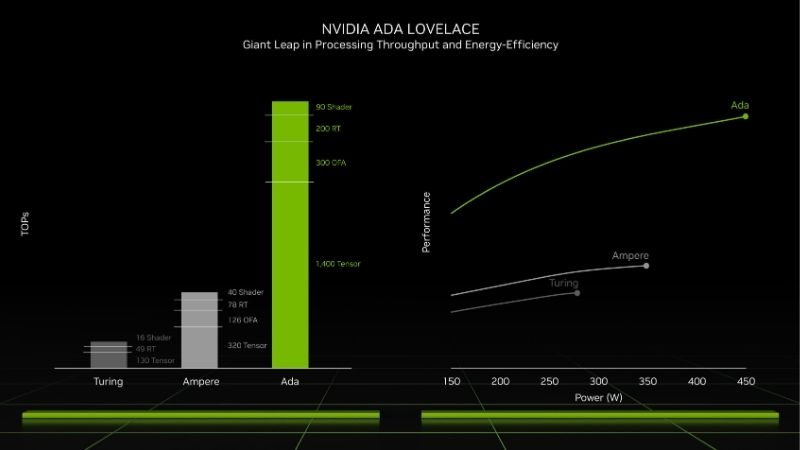
This is the experimental edge that keeps the 4060 relevant: the same AI features that define Nvidia’s roadmap let an entry card touch effects that would otherwise be out of reach.
What the Benchmarks Mean for Your Build
Raw frame rates only help if they fit your system and your expectations. The table below summarizes typical RTX 4060 results at 1080p, and the breakdowns that follow cover the practical considerations owners raise most often.
| Game type | Setting | Typical 1080p FPS |
|---|---|---|
| Heavy AAA | Ultra | 60-75 |
| Lighter AAA | Ultra | 90-120 |
| Esports | Competitive | 200+ |
| Ray tracing | RT + DLSS Quality | 60+ |
VRAM: The 8 GB Question at 1080p
The most common criticism of the RTX 4060 is its 8 GB of VRAM. At 1080p, however, the concern is largely overstated: the vast majority of games stay within that budget at this resolution, even at Ultra textures.
The exceptions are a handful of recent titles with very large texture packs, where 8 GB can fill and cause occasional stutter. Dropping texture quality one notch resolves it without a meaningful visual hit, and at 1080p that compromise is minor.
The honest read from owners is that 8 GB is adequate for 1080p today, but it is the spec most likely to age, so factor that in if you plan to keep the card for many years or move to 1440p later.
Power, Size, and CPU Pairing
Practically, the RTX 4060 is one of the easiest cards to fit into any build. Its 115W TDP runs on a single 8-pin connector and a 550W PSU, and compact dual-fan models slot into small-form-factor cases without trouble.
For CPU pairing, a current 6-core such as a Ryzen 5 7600 or Core i5-13400 is ideal; anything weaker risks bottlenecking the card in esports titles. The low power draw also means quiet operation and minimal heat added to the case.
This combination of efficiency and easy compatibility is a real part of the card’s appeal, especially for first-time or budget builders.
It is also a genuinely quiet card in most builds. The low power draw keeps fan speeds down and heat output modest, which matters in compact cases where airflow is limited. Owners frequently single out the near-silent operation under load as one of the card’s underrated strengths at this price.
Pros and Cons at 1080p
Stripping away the marketing, here is the honest balance sheet for the RTX 4060 as a 1080p card. The picture is strong for its intended resolution, with caveats that center on VRAM and headroom.
Pros
- Comfortable 60 to 120 fps in AAA games at 1080p Ultra.
- Easily exceeds 200 fps in esports for high-refresh play.
- Low 115W power draw, quiet, and small-case friendly.
- DLSS 3 unlocks ray tracing and extends future value.
Cons
- 8 GB of VRAM is the spec most likely to age, especially beyond 1080p.
- A narrow memory bus limits scaling to higher resolutions.
- Native ray tracing without DLSS is a stretch.
Should You Buy the RTX 4060 Now?
Choosing the card is only half the decision; timing is the other half. The current hardware market sends mixed signals, and a budget 1080p buyer should read them differently than a 4K enthusiast. Here is what is moving prices and what it means for you.
Prices Still Elevated
Laptop and PC-component prices have continued to trend upward, and that pressure shows up in RTX 4060 street prices that sometimes drift above the target figure. The move is to wait for a model to settle near 299 rather than overpay during a spike.
Memory cost is the quiet driver. With DRAM and GDDR still tight, even an efficient card like the 4060 carries that cost forward, so a little patience usually pays at this price point.
There is a tactical angle worth using. The 4060 is a high-volume card, so it sees regular short sales tied to promotions and new launches. A patient buyer who watches a few retailers over a week or two can usually catch one at or below 299, rather than paying a spot price inflated by a temporary stock crunch.
AI Demand and the H200 Headline
One development worth understanding is that the US is now allowing Nvidia to sell the H200, one of its most powerful AI chips, to China. That is a data center story, but it confirms where Nvidia’s highest-margin demand and memory allocation are heading.
For a budget buyer, the practical read is that consumer pricing is unlikely to fall sharply while AI demand stays this hot. It also explains why DLSS keeps improving, the same AI push that drives data center revenue feeds the features that keep a card like the 4060 punching above its weight.
That software angle matters more than it first appears. For an entry card, the gap between native performance and DLSS-assisted performance is large, so the steady improvement of Nvidia’s upscaling quietly raises what the 4060 can do over its lifetime. A budget builder effectively gets a slow stream of free gains through driver updates.
Buy Now or Wait?
There is genuine but distant good news. Prices have stopped climbing as steeply as in late 2025 and the market has entered a calmer stretch, though volatility remains. New supply is coming, with Micron building two fabs in Idaho, but those plants do not come online until 2027 to 2028.
If you are building or upgrading a 1080p system today, there is little reason to hold out. The 4060 is already affordable, and a year of smooth 1080p play outweighs the small, uncertain saving a distant supply boost might deliver, so set a target price and act when a fair listing appears.
In plain terms, prices have plateaued rather than fallen, and real relief is years out. Because the 4060 is already an affordable 1080p card, waiting rarely pays: bought today it delivers a full year of smooth play. Watch for a fair price tied to a stock-clearing window, then check today’s deal and buy.
See More:
- GPU for Valorant 240fps
- GPU for Fortnite 240fps
- GPU for CS2 high fps
- GPU for Apex Legends
- RTX 4070 Cyberpunk FPS
Final Verdict and Recommendation
For 1080p gaming, the RTX 4060 1080p benchmark results make the case plainly: this is a quiet, efficient card that delivers smooth AAA frame rates, effortless esports performance, and DLSS-enabled ray tracing at its intended resolution. It is the right pick for a budget or compact build paired with a capable 6-core CPU, provided you accept that 8 GB of VRAM is the spec most likely to age. Treat 1440p as a stretch rather than a target, and lean on DLSS for the heaviest effects. With elevated prices likely to persist while AI demand stays high, buying a sensible Nvidia card now beats waiting for relief that is still years away. If your monitor is 1080p and your CPU is reasonably current, this card effectively removes the GPU from your list of worries, leaving frame rate down to settings and refresh rate rather than raw power. Check the current price on the RTX 4060 that fits your build and start gaming at a clean 1080p.
Top-Rated Picks


| Product | Brand | Rating | Reviews | Price |
|---|---|---|---|---|
| ARCTIC MX-4 (4 g) – Premium Performance Thermal Paste… | ARCTIC | ★ 4.8 | 104k | $4.99 |
| ARCTIC MX-4 (incl. Spatula, 4 g) – Premium Performanc… | ARCTIC | ★ 4.8 | 71.9k | $5.49 |
| Crucial 8GB DDR4 RAM 3200MHz (PC4-25600), Downclockab… | Crucial | ★ 4.8 | 62.8k | $74.99 |
| AMD Ryzen 5 5600X 6-core, 12-thread unlocked desktop … | — | ★ 4.8 | 30.2k | $177.60 |
| NVIDIA Shield Remote; Voice Search, Motion-Activated,… | — | ★ 4.7 | 10.6k | $25.99 |
Frequently Asked Questions
What average FPS should I expect from an RTX 4060 at 1080p?
In esports titles like CS2, Valorant and Rocket League the RTX 4060 clears 200-300 FPS at high settings. In modern AAA games at 1080p high it generally lands between 60 and 90 FPS natively, and DLSS Quality plus Frame Generation can push demanding titles such as Cyberpunk 2077 or Alan Wake 2 well past 100 FPS.
Is 8GB of VRAM still enough for 1080p gaming?
For 1080p it is usually adequate, but it is the card weakest point. Games like Call of Duty, Hogwarts Legacy, Indiana Jones and The Last of Us can exceed 8GB with ultra textures or ray tracing enabled, causing stutter and texture pop-in. Dropping textures one notch normally restores smooth frame pacing without a visible quality loss.
What power supply does the RTX 4060 need?
NVIDIA rates the RTX 4060 at just 115W TGP and recommends a 550W power supply. It draws power through a single 8-pin PCIe connector, so no 12VHPWR adapter is required. Almost any decent 500-550W 80 Plus Bronze unit from a reputable brand will run it comfortably alongside a mid-range CPU.
Does the narrow PCIe 4.0 x8 bus hurt performance?
On a PCIe 4.0 motherboard the x8 link costs essentially nothing. On older PCIe 3.0 boards the effective bandwidth halves, and reviewers have measured a few percent average loss with larger dips in VRAM-limited scenes. If you are pairing it with an older platform, expect slightly worse one percent lows in texture-heavy titles.
Is the RTX 4060 still worth buying over newer cards?
It only makes sense at a discount. The RTX 5060 offers similar raster performance with faster GDDR7 and Multi Frame Generation, while a used RTX 3060 Ti or an Intel Arc B580 with 12GB can be better value. Buy the 4060 when it is clearly cheaper and you want low power draw and DLSS support.






Write Your Review
No reviews yet. Be the first to share your experience!