


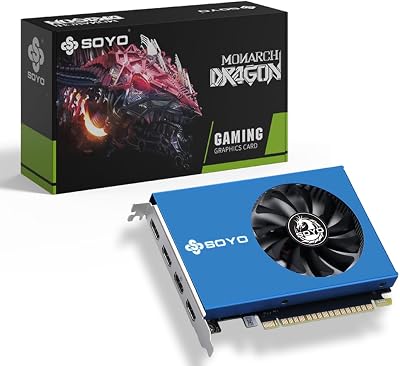


Choosing a gpu for 1440p 144hz is the single most common upgrade question in PC gaming, and it is usually answered badly – with a card recommendation that ignores what you actually play. Driving 1440p at 144Hz is not one target; it is three different targets depending on whether you play esports, modern AAA, or ray-traced showcases. This review breaks down what each of those genuinely requires, where owners report being disappointed after purchase, and how the current pricing situation should change your shortlist. You already bought the monitor. Let us not waste the panel.
What 1440p 144Hz Actually Demands From a GPU
The first thing worth saying plainly: almost nobody hits 144 fps at 1440p in every game they own, and buying as if you will is how people overspend by $300. A 144Hz panel is a ceiling, not a contract. The useful question is which games you want pinned at the ceiling and which you are happy running at 90-110 fps with the smoothness of a variable refresh display doing the rest.
As an Amazon Associate we earn from qualifying purchases at no extra cost to you.



The Three Different 1440p 144Hz Targets
| Your library | Realistic 1440p target | Card tier | VRAM | PSU |
|---|---|---|---|---|
| Esports only | 144+ fps easily | RTX 5060 Ti 16GB / RX 9060 XT 16GB ($429) | 16GB | 550W |
| Esports + some AAA | 144 fps esports, 65-80 AAA | RTX 5060 Ti 16GB ($429) | 16GB | 550W |
| Modern AAA, no RT | 85-105 native, 110-130 upscaled | RTX 5070 / RX 9070 ($549) | 12GB / 16GB | 650W |
| AAA with ray tracing | 55-70 native, 144 needs frame gen | RTX 5070 Ti and above ($749+) | 16GB | 750W |
The row you belong to is the entire decision. Buying two rows above your actual library is the most common way people overspend by $300 on this purchase.
Target one is esports. Valorant, CS2, Rainbow Six, Overwatch, League. These titles hit 144 fps at 1440p on almost anything current – an RTX 5060 Ti or RX 9060 XT saturates the panel with room to spare. If this is your library, spending more than $400 buys you nothing your monitor can display.
Target two is modern AAA rasterised. Think large open-world and single-player titles at high settings, no ray tracing. This is where 144 fps stops being automatic. Expect roughly 85-105 fps from an RTX 5070 or RX 9070 class card, climbing into the 110-130 range with DLSS or FSR set to Quality. This tier is where most people actually live.
Target three is ray-traced AAA. Enable meaningful RT at 1440p and frame rates drop hard – a 5070 lands around 55-70 fps native. Reaching 144 here requires upscaling plus frame generation, or a card two tiers up. Be honest about whether you belong in this group, because it is the difference between a $549 purchase and a $999 one.
The VRAM Floor Nobody Wants to Talk About
At 1440p in 2026, 8GB is no longer a comfortable buffer and 12GB is the working minimum for high textures. This is not a future concern. Several current titles at 1440p with maxed textures already push past 12GB when ray tracing is enabled.
What matters is how the failure presents. A card short on shader power runs slower – annoying but predictable. A card short on VRAM stutters, pops textures in late, and watches its 1% lows collapse while the average fps stays deceptively high. On a 144Hz panel this is especially cruel, because the entire reason you bought the monitor was smoothness, and VRAM starvation attacks exactly that.
This is the most frequent theme in critical owner feedback for 8GB cards at this resolution. The complaint is rarely that the card is slow. It is that the game feels bad in a way the frame counter does not explain. Buyers who chose 16GB variants at the same tier consistently report the opposite – lower averages, better feel.
Power, Case Size and the Checks People Skip
The most common post-purchase disappointment has nothing to do with performance. It is a card that does not fit, or a PSU that cannot feed it.
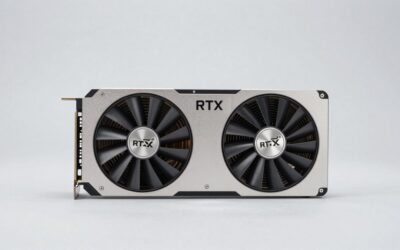
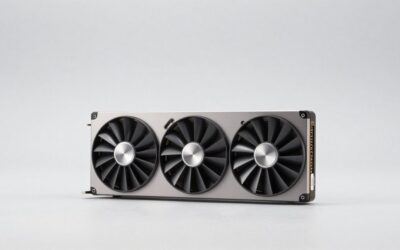
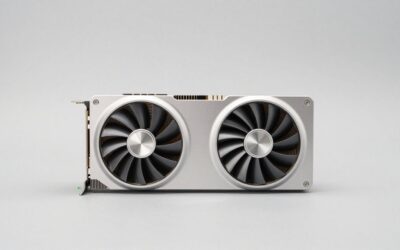
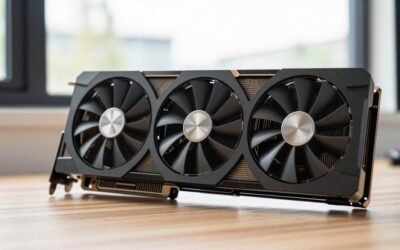
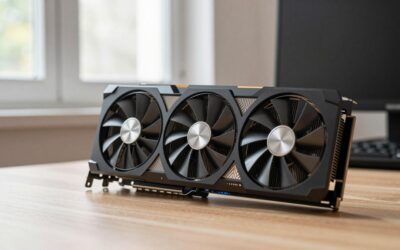
Measure three things before you shortlist anything. Your case clearance in millimetres, front to back – many 1440p-class cards run 240-300mm and modern triple-fan designs are frequently 2.5 to 3 slots thick, which blocks the PCIe slot below. Your PSU wattage and, more importantly, whether it has a native 16-pin 12V-2×6 cable or requires the bundled adapter. And your ambient case airflow, because a card that fits physically but suffocates thermally will throttle away the performance you paid for.
For reference: cards in the 180W class run comfortably on a 550W supply. The 250W class wants 650W. The 300W-plus class wants 850W and a genuine native connector. Owners who ignored this are the ones filing reviews about shutdowns under load, and the card was never the problem.
Matching the Right Card to Your Actual Library
With the targets and the constraints defined, the shortlist gets short quickly. What follows is organised by what you play rather than by price, because price-first shopping is what produces the mismatches described above.
The Value Pick for Esports and Mixed Play
If your hours are mostly esports with some AAA on the side, the RTX 5060 Ti 16GB at $429 or the RX 9060 XT 16GB are the rational choices. Both saturate 144Hz in competitive titles, both handle AAA at 1440p high in the 65-80 fps band, and critically both carry 16GB – which means the AAA games you dabble in will not stutter even when they are not your priority.
The tradeoff is honest: neither will hold 144 fps in a demanding single-player title, and ray tracing is a stretch. Owner feedback at this tier is consistently positive from people who bought for esports and consistently negative from people who bought expecting AAA 144Hz – the card did not change, the expectation did.
At roughly 180W on a 550W PSU with compact dual-fan designs available, this tier also solves the fit-and-power problem for anyone upgrading a prebuilt.
The Mainstream Pick for AAA at 1440p
For genuine AAA at 1440p high, the RTX 5070 at $549 or the RX 9070 at $549 are the tier that matches the panel. Expect 85-105 fps native at high settings, 110-130 with upscaling at Quality, and a comfortable 144 in anything older or lighter.
The split between them is the one running through this whole category. The RX 9070 carries 16GB and slightly better raster; the RTX 5070 carries 12GB with better ray tracing and DLSS 4. For a 144Hz panel specifically, there is a real argument for Nvidia here that goes beyond raw frames: Multi Frame Generation exists precisely to fill high-refresh panels, and on a 144Hz display it converts an 80 fps render rate into motion that genuinely feels like the panel is being used. Whether generated frames satisfy you is personal. Whether they move the needle on a high-refresh monitor is not really in dispute.
Against that, the 12GB buffer is the recurring complaint in critical feedback from 1440p owners – not today, but as a nagging worry about texture settings three years out. The 9070 owners report the mirror image: no VRAM anxiety, occasional frustration when a game leans hard on RT.
Pros and Cons of Chasing 144Hz at 1440p
Where it genuinely delivers. The jump from 60Hz to 144Hz at 1440p is the most noticeable upgrade in PC gaming, and it is not close – it improves aiming, tracking, camera motion, and even menu navigation. It benefits every game you own rather than the handful that support a specific feature. And with variable refresh, you get most of the benefit even at 90-110 fps, which means you do not need to hit 144 to justify the panel.
Where it disappoints. The cost curve is brutal at the top – going from 100 fps to 144 fps in demanding AAA titles frequently costs twice as much as reaching 100 did, for a difference you notice far less than the jump from 60. Ray tracing and 144Hz are close to mutually exclusive below $1,000 without frame generation. And the panel exposes weaknesses elsewhere: a CPU that was fine at 60 fps may become the limiter, which is the most common reason people report their new GPU underdelivered.
The balanced read: buy for the 90-120 fps band, treat 144 as a bonus in the games that reach it, and put the money you saved into a card with enough VRAM to still be doing this in 2029.
How 2026 Pricing Should Change Your Shortlist
Every recommendation above assumes today’s prices. That assumption deserves scrutiny, because the supply picture behind these cards has shifted in ways that directly affect whether waiting is a strategy.
Prices Have Flattened but Are Not Falling
The memory-driven surge through late 2025 lifted component and laptop pricing broadly. The genuinely positive development is real but narrow: the steep climb seen at the end of 2025 has stopped, and manufacturers including Framework have reported a period of relative stability – while continuing to warn openly that further volatility is possible.
Parse it precisely. Flat is not falling. The card you want for your 144Hz panel is unlikely to be meaningfully cheaper in three months. The panic to buy immediately is gone; the reward for waiting never arrived.
This has a direct consequence for the VRAM decision. If GPUs got cheaper annually, buying 12GB now and replacing it in three years would be sensible. In a flat market, the 16GB card is quietly worth more than its benchmark position suggests, because the upgrade you were counting on as an escape hatch is not getting cheap.
The Nvidia H200 Decision and Consumer Supply
The US has cleared Nvidia to sell the H200 – among its most capable AI accelerators – to China. That sounds like data centre news with no bearing on your monitor, but the link is direct enough to matter before you buy.
Nvidia has finite advanced packaging and high-bandwidth memory allocation, and every unit of it gets assigned somewhere. AI silicon carries margins consumer GPUs cannot approach. Opening a large additional market for H200 increases the pull on the same upstream supply that feeds consumer memory production and board partner allocation. It does not mean cards vanish. It does mean the structural pressure points toward firm pricing rather than the discounts buyers keep waiting for.
The practical read for a 1440p 144Hz build: buy in the near-term window rather than planning around a crash. And if AMD discounts more aggressively – historically the pattern – the value case for the 16GB option may widen rather than close.
What to Buy Alongside the Card
Two things routinely undermine an otherwise correct GPU purchase, and both cost a fraction of the card.
Case airflow comes first. A 250W card in a chassis with one intake fan will throttle, and throttling on a 144Hz panel shows up as exactly the frame time inconsistency you bought the monitor to eliminate. Two 120mm or 140mm static-pressure intake fans are the highest-return accessory in this entire category.
The power connector comes second. If your PSU lacks a native 16-pin cable, the bundled adapter must be fully seated – partial seating is the single most reported cause of melted 12V-2×6 connectors, and it is a user-installable failure rather than a design flaw. A native cable for your specific PSU removes the risk entirely for a small outlay.
See More:
- A fan curve msi afterburner
- amd radeon rx 9070 vs rtx 5070
- 5060 ti vs 5070 benchmark
- rx 6600 vs rtx 3050
- 2060 vs 3060
Final Verdict
The right gpu for 1440p 144hz is decided by your library, not by a benchmark leaderboard, and the most expensive mistake in this category is buying for a target you will never actually play at.
If you play esports and dabble in AAA, buy the 16GB $429 tier and stop – your panel is already saturated in the games that matter to you. If you play modern AAA at high settings, buy the $549 tier and aim for the 90-120 fps band, choosing the 12GB Nvidia card if ray tracing and frame generation matter to you or the 16GB AMD card if longevity and texture headroom do. If you demand ray tracing at 144Hz, be honest that you are shopping a tier above this article.
Whatever you pick, measure your case, verify your PSU connector, and fix your airflow before you blame the card. And buy on the current window – with supply pressure running toward AI silicon and new memory capacity not arriving until 2027-2028, the card that fits your panel today is unlikely to be a bargain later this year.
Frequently Asked Questions
What is the minimum GPU for 1440p at 144Hz?
For esports titles a card in the RTX 5060 Ti 16GB or RX 7700 XT class already clears 144fps. For AAA games at high settings you want at least a 5070, RX 9070 or 4070 Super equivalent, using upscaling to hold the frame target. Below that you will be dropping settings frequently.
How much VRAM do I need at 1440p?
Twelve gigabytes is the working minimum in 2026 and sixteen gigabytes is the comfortable choice. Eight gigabyte cards now hit the ceiling at high textures with ray tracing, producing frame time spikes rather than a lower average. Capacity protects your settings headroom over the life of the card.
Does my CPU limit 144fps at 1440p?
It can. At 1440p the GPU is usually the limit in AAA titles, but competitive shooters at 144fps and above are frequently CPU-bound. A modern eight-core chip with strong single-thread performance, especially one with large cache, keeps one percent lows healthy. Pairing a fast GPU with an ageing quad core wastes money.
What power supply should I budget for?
Mid-range cards in this segment draw between 180W and 300W. A quality 650W to 750W ATX 3.1 unit covers everything from a 5060 Ti to a 5070 Ti or 9070 XT with headroom for transient spikes. Buy the unit before the GPU if your current supply is old or unbranded.
Do I need a G-SYNC or FreeSync monitor?
Adaptive sync is strongly recommended. When frame rate dips below your refresh ceiling, variable refresh removes tearing and the judder of a fixed refresh mismatch, which matters more than a few extra average frames. Nearly all current 1440p 144Hz monitors support FreeSync and are G-SYNC compatible, so this rarely costs extra.

Write Your Review
No reviews yet. Be the first to share your experience!