
NVIDIA launched the GeForce GTX 1660 in mid-March 2019, about three weeks after the GTX 1660 Ti. It was the second desktop card in the GTX 16 family and the one aimed at buyers who wanted 6GB of VRAM and solid 1080p performance without paying for the Ti’s faster GDDR6 memory. The plain 1660 kept GDDR5, and that single choice defines most of what separates it from its siblings.
- Where the GTX 1660 Fits in the Release Order
- What the GTX 1660 Was Built From
- How to Tell Which “1660” You Are Looking At
- Realistic Performance Expectations
- What Came After the GTX 1660
- Is a GTX 1660 Still Relevant in Late 2026?
- Who Should Buy / Skip It
- Short Buying Checklist
- Frequently Asked Questions
- Related Guides
Below is a plain timeline of when the card arrived, what it was built from, which cards were released around it, and where it stands now. The goal is to help you identify exactly which 1660 you are looking at, because the name covers three distinct cards and a refresh that came later in 2019.
Where the GTX 1660 Fits in the Release Order
The GTX 16 series appeared in a quick sequence during 2019. The table below uses month-and-year dates; verify exact days on NVIDIA’s announcement pages if you need them.
| Card | Launch window | Memory type |
|---|---|---|
| GTX 1660 Ti | February 2019 | GDDR6 |
| GTX 1660 | March 2019 | GDDR5 |
| GTX 1650 | April 2019 | GDDR5 |
| GTX 1660 Super | October 2019 | GDDR6 |
| GTX 1650 Super | November 2019 | GDDR6 |
This order explains why the plain 1660 can feel like a middle child. It launched during the first wave, then within seven months NVIDIA introduced a Super version with faster memory, which pushed the original model into a secondary position in the lineup.
What the GTX 1660 Was Built From
The card uses the TU116 chip, the same silicon family as the 1660 Ti, with one fewer block of shaders enabled. The spec sheet lists 1408 CUDA cores, 6GB of GDDR5 on a 192-bit bus, and a board power in the 120-watt range. Most partner boards use a single eight-pin or six-pin PCIe connector, and NVIDIA’s guidance has pointed buyers toward a power supply in the mid-400-watt class. Exact connectors vary by manufacturer, so check the model you are buying.
The key architectural point is that this is Turing without the ray tracing and Tensor hardware found on the RTX 20 series. You get the newer Turing shader design, concurrent integer and floating-point execution, and support for features such as variable rate shading. You do not get hardware ray tracing or DLSS.
Against the 1660 Ti, the main practical difference is memory. GDDR5 on the same width of bus delivers less bandwidth than the Ti’s GDDR6, and that gap shows up most in games that move a lot of data. Against the later 1660 Super, the memory type is again the primary difference, along with slightly different clocks and power targets.
How to Tell Which “1660” You Are Looking At
Because the family is crowded, listings often blur the names. A quick way to sort them out is to check three things in order. First, read the full model name on the box or the cooler shroud: a plain “GTX 1660” has no suffix, while the Super and Ti carry their suffix on the label. Second, check the memory type in the spec listing, since GDDR5 points to the original and GDDR6 points to the other two. Third, open a GPU utility after installation and compare the reported memory size and clock behavior with the listing. If a seller refuses to show the card running in a utility, that is worth noticing.
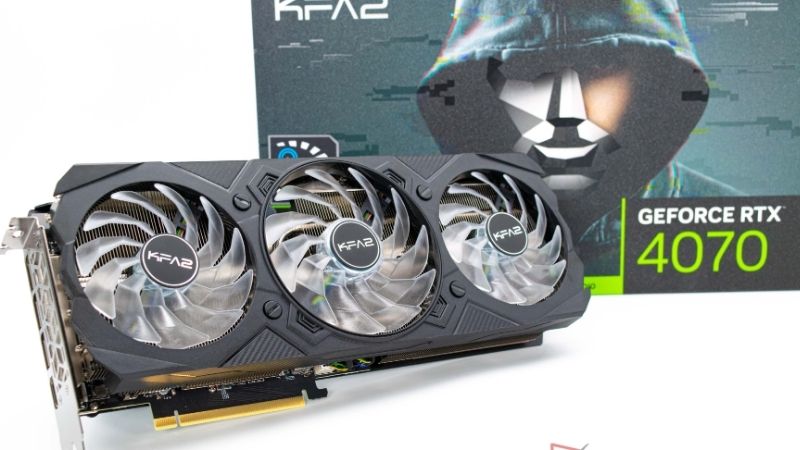
Also be aware that board partners release several designs of the same card. A compact dual-fan version and a larger triple-fan version can share the same chip and memory yet differ in noise, temperature and length. Measure your case before ordering, particularly in small-form-factor builds.
Realistic Performance Expectations
The 1660 is a 1080p card by design. In esports titles and older games it can hold comfortable frame rates, and in many current releases it works with reduced settings and moderate texture quality. At 1440p the 6GB frame buffer and the GDDR5 bandwidth start to show strain, so treat that resolution as a stretch. Pairing it with a very old processor can also become a bottleneck, because modern games lean harder on the CPU than games from 2019 did.
The lack of DLSS is the biggest feature gap today. Newer games frequently ship with upscaling options tuned for RTX hardware, and while cross-vendor upscalers exist, the support list varies from game to game. Check the settings menu of the games you play before you assume you can recover performance that way.
What Came After the GTX 1660
GTX 1660 Super (October 2019)
The Super effectively replaced the plain 1660 in NVIDIA’s lineup by pairing the same core count with GDDR6. For anyone shopping used, this is the more attractive card in most cases, because the memory upgrade is the main benefit and the shader count is unchanged.
RTX 20 and RTX 30 neighbors
The RTX 2060 sat above the GTX 16 family in the Turing lineup, and in 2021 the RTX 3060 arrived with 12GB of VRAM. NVIDIA’s later budget cards, including the RTX 3050, the RTX 4060 and the RTX 50 entry models, continued to move buyers toward RTX features.
No direct successor
NVIDIA retired the GTX branding for mainstream desktop cards after the 16 series, aside from the low-end GTX 1630 in 2022. If you are searching for a “GTX 1660 successor,” the usual answer is an entry-level RTX card from the 30, 40 or 50 generation.
Is a GTX 1660 Still Relevant in Late 2026?
The 6GB frame buffer is the card’s saving grace and its ceiling. It is enough for esports titles, older AAA games and many current games at reduced settings in 1080p. It is not enough for recent titles that want higher texture quality, and it has no DLSS, so you lose a common way to claw back performance. As far as NVIDIA’s public announcements show, Turing remains in the supported driver family, but confirm on NVIDIA’s driver pages before relying on that.
The card also still makes sense as a used purchase when the price is right and you understand its limits. Because there are several 1660-branded cards, buyers should verify the full name on the box, the listing and the cooler label. Mixing up a 1660, 1660 Super and 1660 Ti is the most common mistake in used listings.
Who Should Buy / Skip It
The esports and older-games player
If you play competitive shooters, MOBAs and older single-player games at 1080p, a 1660 can still deliver a smooth experience. Look for a model with a quiet cooler and a clean fan history.
The second-PC builder
If you need a spare PC for a family member, a used 1660 is a straightforward option. It does not need extreme power supplies, and its drivers are mature.
The buyer who wants modern features
If DLSS, ray tracing or AV1 decode matter to you, skip the 1660. A newer entry-level RTX card offers those features and is a better long-term choice, even at slightly lower raw performance in older games.
Short Buying Checklist
- Confirm the exact name: 1660, 1660 Super or 1660 Ti.
- Check that the memory type is what the listing claims.
- Match the power connector to your power supply.
- Inspect fans, backplate and thermal paste condition for used cards.
- Check NVIDIA’s driver page for current support status.
- Consider whether 6GB will limit the games you plan to play.
Frequently Asked Questions
When did the GTX 1660 come out?
It launched in mid-March 2019, shortly after the GTX 1660 Ti. For the exact day, consult NVIDIA’s original announcement.
Is the GTX 1660 older than the 1660 Super?
Yes. The Super version appeared in October 2019, several months after the plain 1660. It uses GDDR6 memory instead of GDDR5.
Does the GTX 1660 support DLSS?
No. The GTX 16 series lacks the Tensor cores that DLSS requires. You can still use upscaling options that run on standard shader hardware where games include them.
What should replace a GTX 1660?
There is no direct GTX successor. Most buyers look at entry-level RTX cards from the 30, 40 or 50 generation, depending on what is available in their market and budget.
Related Guides
- GTX 1660 Ti Review: Worth It Over the 1660 Super in 2026?
- GTX 1660 Super Review: Still the Budget Value King?
- NVIDIA GTX 1660 Ti in 2026: Is This Budget Card Worth It
- GTX 1660 vs RTX 4060: Is the Upgrade Worth It?

Write Your Review
No reviews yet. Be the first to share your experience!