
The GTX 1080 was announced on May 6, 2016, and reached stores on May 27, 2016. It was the first consumer GeForce card built on the Pascal architecture and the first to use GDDR5X memory, and it became the flagship until the GTX 1080 Ti arrived in March 2017.
If you are searching for the “1080 release date” because you are dating a used card or trying to understand where it sits in NVIDIA’s history, there is a bit more to it than one date. This article lays out the launch sequence, the specs that defined it, the refreshes and rivals that followed, and whether it deserves a place in a build as of late 2026.
Launch Sequence in 2016
NVIDIA unveiled the GTX 1080 at an event in Austin in May 2016 and positioned it as a major leap over the Maxwell-based GTX 980 and 980 Ti. The company launched a Founders Edition, a reference-design card sold directly and through partners, and board makers followed with their own cooler designs over the next weeks.
In the months after launch NVIDIA filled out the Pascal stack: the GTX 1070 in June, the GTX 1060 in July, and the GTX 1050 family in October. A faster-memory revision of the GTX 1080 appeared in 2017, so you may encounter cards with different memory speeds under the same model name. Check the manufacturer’s spec sheet for the exact memory rating on any board you are considering.
Laptop GTX 1080 parts followed later in 2016, which was unusual because they were close to the desktop chip in capability, though they ran under notebook power limits.
Launch Specs and How They Compare
The desktop GTX 1080 has 2,560 CUDA cores, 8GB of GDDR5X memory on a 256-bit bus, and a board power rating of around 180W, usually fed by a single eight-pin connector. NVIDIA suggested a 500W power supply as a baseline at launch. Pascal brought a move to a 16nm-class process, which delivered large clock speed gains alongside efficiency improvements.
| Milestone | Product | Date | Why it matters |
|---|---|---|---|
| Announcement | GTX 1080 and GTX 1070 | May 6, 2016 | Pascal desktop debut |
| Retail launch | GTX 1080 | May 27, 2016 | First GDDR5X consumer card |
| Mainstream follow-up | GTX 1060 | July 2016 | Brought Pascal to the mid-range |
| Flagship update | GTX 1080 Ti | March 2017 | Moved the 1080 down a tier |
| Next architecture | RTX 2080 | September 2018 | Introduced hardware ray tracing |
Use this table as a quick map. If a used listing claims “latest-generation” status or implies a different date, compare it to this timeline.
What Made the GTX 1080 Stand Out
The headline was speed per watt. The GTX 1080 delivered a large performance jump over the GTX 980 while using a similar amount of power, which helped it spread quickly into compact enthusiast builds. Memory was the second headline: GDDR5X offered higher data rates than the GDDR5 on earlier cards, which helped with high resolutions.
It also introduced or popularized features that were prominent in 2016, such as DisplayPort 1.4 readiness, HDR support, and Simultaneous Multi-Projection for VR. For 1440p high-refresh gaming and early 4K, it was seen as a top-tier choice, though in demanding titles buyers still dialed settings down for 4K.
What it did not have are the features that define later cards: no ray-tracing cores, no Tensor cores, and therefore no DLSS. That is baked into the silicon.
What Followed the GTX 1080
The GTX 1080 Ti in 2017 offered substantially more performance, and the Titan Xp followed. In September 2018 the RTX 2080 launched on Turing as the direct successor, bringing ray tracing and Tensor cores. NVIDIA then continued with later RTX generations that are better matched to modern games and creative software.
For buyers comparing used cards, the practical successors are an RTX 2060 Super, RTX 2070 class card, or newer mid-range models. These typically match or exceed the 1080 in rasterized performance in many cases while adding DLSS and a newer video encoder, so check current specs before deciding.
Is It Still Relevant Today?
Age is the first thing to weigh. The design is a decade old, so thermal paste, fan bearings, and capacitors have all had time to wear, and a used unit may behave very differently from one that was lightly used in an office tower. A card that has lived in a cramped, dusty case can show higher temperatures and louder fans than the original reviews described.
For 1080p and 1440p gaming at moderate settings, the 8GB GTX 1080 can still deliver a smooth experience in many games, particularly esports titles and older AAA releases. Modern games that rely heavily on upscaling or ray tracing may push it beyond comfort.
Driver support is a long-term concern. Pascal has moved to NVIDIA’s legacy track, and you should check NVIDIA’s legacy driver notes for the current branch and security-update window. That does not make the card unusable, but it does mean fewer new game-specific optimizations over time.
It remains a capable card for a secondary gaming PC, a home-theater machine, or a rig that drives several monitors, provided your power supply has the right connector and your case offers the airflow it needs.
Founders Edition, Partner Cards and the Memory Revision
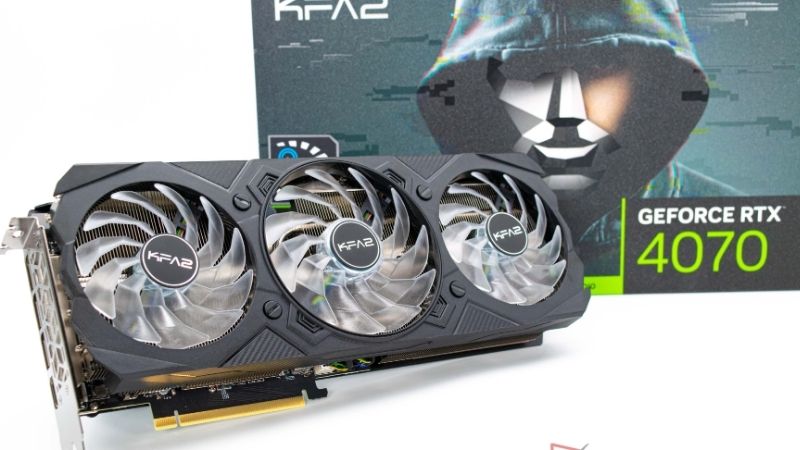
The GTX 1080 came in several physical forms. The Founders Edition used a vapor-chamber blower cooler that exhausts air out of the case, which suits compact builds but can be loud when pushed. Partner models from major brands used large open-air heatsinks with two or three fans, higher power limits, and often a factory overclock. A few special editions used liquid cooling.
The later memory revision matters because it changes the bandwidth number on paper. If a listing mentions a higher memory speed, that points to a late production run. Either version uses the same GP104 chip and the same 8GB capacity, so the difference is modest in everyday play, but it is worth knowing when comparing spec sheets.
Because used cards can be modded, flashed, or swapped with look-alike coolers, compare the name printed on the PCB label and the model code against the maker’s product page. A mismatch is a warning sign.
Who Should Buy or Skip It
The Value-Focused Used Buyer
If you find one in good condition from a trustworthy seller, it can offer solid 1080p-to-1440p performance. Prioritize cards with intact coolers and clean listings with real photos.
The Collector or Hobbyist
The Founders Edition has a recognizable metal shroud and a place in GPU history. Owners often keep these for display or for retro builds.
The Buyer Who Wants Modern Features
Skip it if you want DLSS, ray tracing, or long-term driver updates. A current mid-range card is a better fit and generally uses less power.
Pre-Purchase Checklist
- Verify the card is a GTX 1080 and not a 1080 Ti or laptop variant.
- Check memory speed and the exact board model from the label.
- Confirm your PSU has an eight-pin PCIe cable and enough capacity.
- Look at fans, thermal pads, and PCB condition on used cards.
- Ask about prior mining use and whether the BIOS was modified.
- Read NVIDIA’s legacy driver notes before planning long-term use.
Frequently Asked Questions
When was the GTX 1080 released?
It was announced on May 6, 2016, and went on sale on May 27, 2016. It was the first Pascal-based consumer GeForce card.
What came after the GTX 1080?
The GTX 1080 Ti arrived in March 2017 as a faster sibling, and the RTX 2080 followed in September 2018 as the architectural successor. Both are listed in NVIDIA’s product archive.
Is the GTX 1080 the same as the 1080 Ti?
No. The Ti has more cores and more memory and sits in a higher performance tier. Always confirm the exact model name.
Does the GTX 1080 support ray tracing?
It does not have dedicated ray-tracing hardware. Some software can emulate effects, but performance is typically poor compared with RTX cards.
Related Guides
- GTX 1080 Review 2026: Is This Used GPU Still Worth It?
- GTX 1080 Ti in 2026: Is This Legend Still Worth Buying?
- GTX 1080 Drivers Review: Keep This Classic GPU Alive in 2026
- GTX 1080 vs Arc B580: Specs, Performance and Value
Write Your Review
No reviews yet. Be the first to share your experience!