
- Top Pick: NVIDIA GEFORCE RTX 2080 Ti Founders Edition (Renewed)
- Best Value: NVIDIA GEFORCE RTX 2080 Ti Founders Edition
- Premium Choice: PNY GeForce RTX 2080 Ti 11GB Blower Graphics Card (Renewed)
Top Geforce Rtx 2080 Old Flagship Picks for 2026
Here are our current top geforce rtx 2080 old flagship picks, compared on real Amazon owner reviews, price, and features. Live prices update below.


Prime
Top Rated
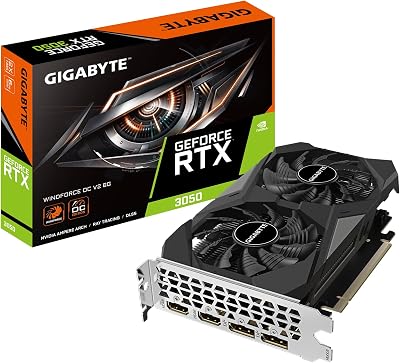
GIGABYTE GeForce RTX 3050 WINDFORCE OC V2 6G Graphics Card, 2X WINDFORCE Fans, 6GB GDDR6 96-bit GDDR6, GV-N3050WF2OCV2-6GD Graphics Card

Dropped $5.00
GeForce RTX 2080 Ti was the undisputed king of consumer graphics when it launched in 2018 with a $999 price tag, and even in 2026 its name carries weight. Built on Turing with 4352 CUDA cores, 11GB of GDDR6, and a wide 352-bit memory bus, it was engineering excess for its era. Today it lives a second life on the used market, where the real question is whether a former flagship still delivers flagship-class value, or whether newer mid-range cards have quietly passed it by. This review breaks down the specs and owner consensus to settle it.
As an Amazon Associate we earn from qualifying purchases at no extra cost to you. Product prices and availability are accurate as of the date shown and are subject to change.




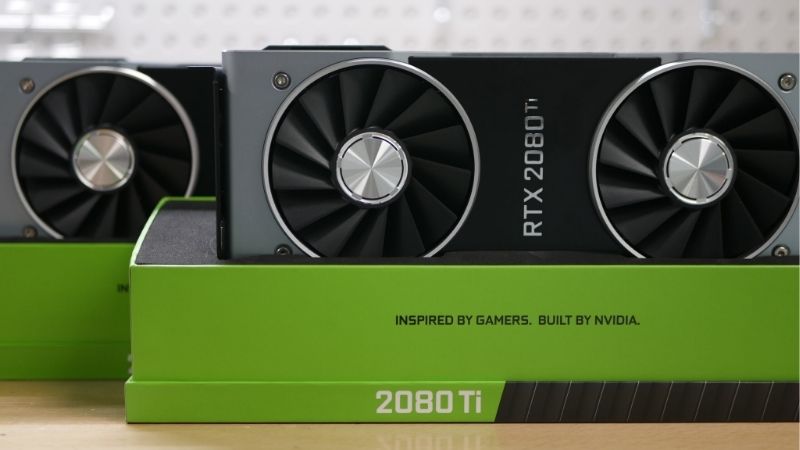
Specifications and Hardware Overview
The RTX 2080 Ti was a large, power-hungry card designed to win benchmarks, and its hardware profile still explains both its strengths and its compromises in 2026.
The Core Numbers
It packs 4352 CUDA cores alongside 11GB of GDDR6 on a 352-bit bus, yielding roughly 616 GB/s of bandwidth. Rated total graphics power is 250W, with most cards drawing from dual 8-pin connectors.
That 11GB buffer is the headline. While many newer mid-range cards ship with 8GB or 12GB, the 2080 Ti’s larger pool gives it breathing room in memory-heavy scenarios that can choke smaller cards.
In bandwidth terms the 352-bit bus is a real asset, feeding the cores well at high resolutions where memory throughput often becomes the bottleneck. It is one reason the 2080 Ti holds together at 4K noticeably better than narrower-bus cards of a similar age.
Size, Power, and Build
This is a physically demanding card. Many models stretch past 290mm and occupy 2.5 to 3 slots, so case clearance is a genuine planning concern rather than an afterthought.
Plan for a quality 650W to 750W power supply with two 8-pin PCIe connectors free. The 2080 Ti runs warm under load, so good case airflow is not optional if you want sustained boost clocks and low noise.
Because models vary so much in length and thickness, measuring your case before buying is essential rather than optional. Smaller cases may need a blower or shorter dual-fan variant, while spacious towers can host the largest triple-fan designs without any trouble.
Connectivity and Compatibility
Output options generally include three DisplayPort, one HDMI, and a USB-C VirtualLink port. For a high-refresh 1440p or a 4K monitor, the DisplayPort outputs handle the job comfortably.
The card works with any modern platform, but to avoid leaving performance on the table you want a reasonably current CPU. Pairing a flagship-class GPU with a very old processor wastes its potential, particularly at lower resolutions.
For multi-monitor setups the output selection is generous, comfortably driving a primary high-refresh display alongside secondary panels. Just confirm your chosen monitor uses DisplayPort for the best refresh-rate support, as that is where the card performs at its peak.
Performance in Modern Games
The 2080 Ti was built for 4K ambitions, and how those ambitions hold up in 2026 is the heart of this review.
1440p and 4K Results
At 1440p the RTX 2080 Ti remains genuinely strong, sustaining high frame rates at high settings in the majority of current titles and only needing setting adjustments in the most demanding releases.
At 4K it still performs respectably in many games, landing in the playable 40 to 70 fps band at high settings, though the newest heavyweights will push it toward upscaling to stay smooth. For its age, that 4K competence is impressive.
The reasonable way to deploy it today is as a high-refresh 1440p card first and a situational 4K card second. In that role it still feels genuinely premium, delivering smooth gameplay in the resolution most enthusiast monitors actually run.
Ray Tracing and DLSS
As a first-generation RTX card, the 2080 Ti can run ray tracing but pays a steep performance cost in heavy implementations. It is best treated as a card that does light-to-moderate ray tracing rather than a path-tracing machine.
DLSS remains its key proprietary lifeline, clawing back frames in supported titles. Like other Turing cards, however, it is restricted to earlier DLSS versions and cannot access the newest Frame Generation features built into later GeForce generations.
Practically, that means treating ray tracing as an occasional showcase rather than a default setting. Enable it in lighter titles, lean on DLSS where it is offered, and prioritize the card’s substantial raster muscle for everything else you play.
The 11GB Advantage
The 2080 Ti’s larger 11GB buffer ages better than the 8GB found on many contemporaries. In texture-heavy or modded games it avoids the stutter that smaller cards can suffer when VRAM runs out.
That makes it a comfortable high-settings card for 1440p and a flexible one for 4K, where memory pressure is highest. It is one of the strongest practical reasons to still consider this card today.
It also benefits creators and multitaskers who keep memory-hungry applications open alongside games. The extra headroom reduces the chance of hitting a hard memory wall, which is increasingly valuable as software demands keep climbing each year.
Owner Feedback: Pros and Cons
Looking across years of positive and critical owner reports paints the most honest portrait of living with the GeForce RTX 2080 Ti long term.
What Owners Love
Satisfied owners consistently praise its enduring performance, especially at 1440p, and value the 11GB buffer for keeping the card relevant longer than expected.
Many highlight the satisfaction of buying a former flagship for a fraction of its original price, treating it as a high-tier experience on a mid-range budget.
A recurring sentiment is pleasant surprise at how long the card has stayed viable, with owners noting it outlasted their original expectations. For a used purchase, that kind of durability feedback is exactly what reduces buyer risk.
The Recurring Complaints
The most cited concern is reliability history. Early production units developed a reputation for failures, so buyers are right to favor sellers offering some warranty or test footage.
Other complaints center on heat, noise, and size, plus the unavoidable reality that newer cards now match or beat it while using far less power. Efficiency, not raw output, is the 2080 Ti’s weakest modern trait.
Buyers can mitigate the reliability concern by favoring sellers who provide proof the card works under sustained load, and by budgeting for a fresh thermal-paste application. With those precautions, the risk on a used 2080 Ti drops considerably.
Pros and Cons Summary
For the GeForce RTX 2080 Ti, the trade-offs are clear once weighed side by side.
Pros: strong 1440p and capable 4K performance, generous 11GB VRAM, flagship build quality, large performance for a now-modest used price. Cons: high power draw and heat, large physical footprint, dated efficiency, early-unit reliability reputation, no newest DLSS features.
Taken together, these trade-offs frame the 2080 Ti as a high-capability card that asks for a capable system around it. If your build can supply the power, cooling, and space it demands, the rewards at a discounted price are substantial.
Should You Buy the RTX 2080 Ti in 2026?
The verdict depends heavily on price, and current market forces are tilting that math in interesting directions.
Rising Prices and the Value Equation
With laptop and PC-component prices trending upward and expected to keep rising, a capable 11GB card bought cheaply secondhand looks increasingly smart against pricier new options.
If you can find a tested 2080 Ti at a strong discount, its cost-per-frame can rival or beat newer mid-range cards. But because rising prices lift the used market too, the best deals tend to vanish quickly, so move decisively when one appears.
The smart approach is to compare its asking price against current mid-range cards on a cost-per-frame and a cost-per-gigabyte basis. When the 2080 Ti wins on both, as it often does at a discount, the value case becomes hard to argue against.
Nvidia’s AI Pivot and Its Ripple
The recent U.S. approval for Nvidia to sell H200 AI chips to China underscores where the company’s priorities sit. The H200 is a data-center product and does not affect the 2080 Ti directly.
Indirectly, sustained heavy demand for Nvidia’s AI silicon can keep consumer GPU supply tight and prices firm, which slows the price erosion older cards normally see. That makes a well-priced used flagship a more durable value than it might first appear.
Who Should Buy It, and the Alternative
The 2080 Ti suits gamers who want strong 1440p performance with VRAM headroom and do not mind a power-hungry, large card. It also appeals to enthusiasts who simply want a flagship experience on a budget.
If efficiency, warranty peace of mind, or the latest DLSS features matter most, a current mid-range RTX card is the safer alternative. Otherwise, for raw capability per dollar, the 2080 Ti still competes. Check today’s listings before prices climb further.
Conclusion
In 2026, the GeForce RTX 2080 Ti is a fascinating value proposition: a former $999 flagship that now sells for mid-range money while still delivering genuinely capable 1440p and even respectable 4K gaming. Its power draw and reliability reputation demand caution, but its 11GB buffer and enduring muscle keep it relevant as rising component prices push buyers toward proven hardware. For the right price from a trustworthy seller, the RTX 2080 Ti remains one of the most compelling secondhand performance buys you can make this year.
Frequently Asked Questions
What is the best geforce rtx 2080 ti in 2026?
The best geforce rtx 2080 ti depends on your budget and how you plan to use it. The options compared above are our top-rated picks based on real customer ratings, build quality, and overall value — start with the highest-rated model that fits your budget.
How much should I expect to spend on a geforce rtx 2080 ti?
Prices vary by brand and features. Budget options cover the essentials, while mid-range and premium models add durability, performance, and extra features. Compare the prices in the list above to find the best value for your needs.
What should I look for when buying a geforce rtx 2080 ti?
Focus on what matters most for your use case — build quality, compatibility, performance, warranty, and verified customer reviews. Every pick above is selected to balance these factors.
Are budget geforce rtx 2080 ti options worth it?
Yes. For most people a well-reviewed budget or mid-range geforce rtx 2080 ti delivers excellent value. You only need to spend more if you specifically require premium materials or top-tier performance.
How did we choose these geforce rtx 2080 ti picks?
We compare current Amazon ratings, review counts, key features, and price to surface the options with the best real-world value. The list is refreshed as ratings and availability change.


Write Your Review
No reviews yet. Be the first to share your experience!