
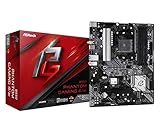
- Top Pick: Asus ROG Strix B550-F Gaming WiFi II AMD AM4 (3rd Gen Ryzen) ATX Gaming Motherboard (PCIe 4.0,WiFi 6E, 2.5Gb LAN, BIOS Flashback, HDMI 2.1, Addressable Gen 2 RGB Header and Aura Sync)
- Best Value: GIGABYTE B550 Gaming X V2 AMD AM4 ATX Motherboard, Supports Ryzen 5000/4000/3000 Series Processors, DDR4, 10+3 Power Phase, 2X M.2, PCIe 4.0, Front USB-C, GbE LAN, Q-Flash Plus, RGB Fusion
- Premium Choice: ASUS TUF Gaming B550-PLUS WiFi II AMD AM4 (3rd Gen Ryzen™) ATX Gaming Motherboard (PCIe 4.0, WiFi 6, 2.5Gb LAN, BIOS Flashback, USB 3.2 Gen 2, Addressable Gen 2 RGB Header and Aura Sync)
Best cheapest motherboard for gaming shopping has become harder in 2026, because vendors have thinned out the bottom of their ranges. There are still genuinely good boards from around $109, but the compromises have shifted, and knowing which ones matter is the difference between a bargain and a bottleneck.
As an Amazon Associate we earn from qualifying purchases at no extra cost to you. Product prices and availability are accurate as of the date shown and are subject to change.




As an Amazon Associate we earn from qualifying purchases at no extra cost to you. Product prices and availability are accurate as of the date shown and are subject to change.
By Ryan Cole
How to Choose the Best Cheapest Motherboard for Gaming
A budget board can be perfectly adequate or quietly limiting, and the spec sheet rarely makes the difference obvious. These four checks separate the best cheapest motherboard for gaming from one that saves money now and costs performance later.
VRM Is the One Specification You Cannot Compromise
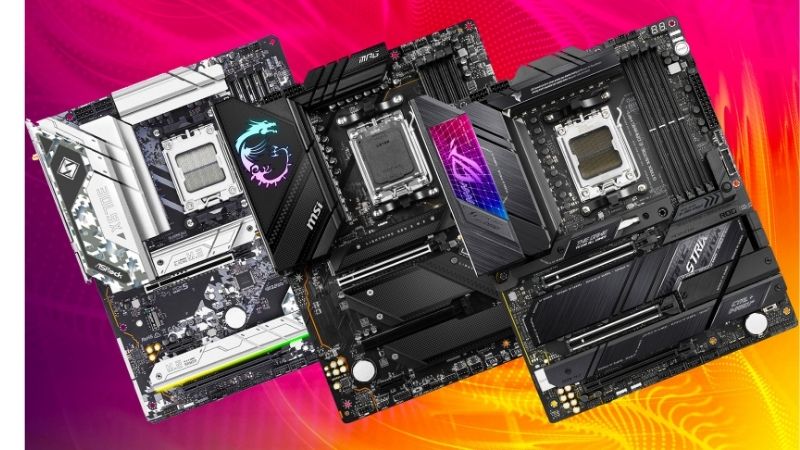
Entry boards frequently ship with 6+2 or 8+2 power delivery and little or no VRM heatsink. That is fine for a six or eight-core processor, and genuinely inadequate for a 12 or 16-core part under sustained load, where boost clocks will begin dropping.
Look for at least an 8+2+1 arrangement with a visible aluminium heatsink over the upper VRM. If the board shows bare chokes near the socket, assume it is designed for a Ryzen 5 class chip and plan accordingly.
Confirm the GPU Slot Runs at Full Speed
Most current budget boards give the primary graphics slot PCIe 5.0 or at minimum PCIe 4.0 at x16, which is what you want. A few very cheap models wire the slot at x8 or share lanes with a secondary M.2 socket.
The practical impact is small on a mid-range card and larger on anything above it, particularly at 1440p. Check the manual’s lane allocation table rather than the retail listing, which frequently omits the sharing behaviour entirely.
Do Not Pay Extra for Wi-Fi You Will Not Use
Wireless adds roughly $20 to $30 to a budget board. If the machine sits next to a router or a switch, that money is better spent elsewhere, and a non-Wi-Fi variant of the same board is usually otherwise identical.
If you do need wireless, buy the board with it built in rather than adding a card later. A PCIe Wi-Fi adapter occupies a slot and typically costs more than the price gap between the two board variants.
Count Rear USB Ports Before You Commit
Budget boards economise most visibly on the back panel. Four rear USB ports sounds sufficient until a keyboard, mouse, headset, webcam and external drive are all connected, and front-panel headers do not solve the problem for permanent peripherals.
Six rear ports is a reasonable minimum for a gaming machine. This is the specification budget builders most often regret, precisely because it seems trivial when comparing boards on a listing page.
What the 2026 Market Means for Budget Board Buyers
The budget end of the market has changed more than any other tier this year, so the usual advice about the best cheapest motherboard for gaming no longer applies cleanly. Three trends matter here.
The Cheap Tier Is Genuinely Shrinking
Motherboard unit sales have fallen more than 25 percent, vendors have shifted SKUs toward the mid and upper range, and promotional pricing policies were withdrawn in February 2026. Intel has also reduced its emphasis on mainstream consumer chips.
What that means in practice is that the value pick has crept up about one tier. A board that would have been a $130 recommendation is now closer to $160, and the sub-$120 options cut networking, USB or VRM cooling to hold the price.
Black Friday Will Not Rescue a Tight Budget
The usual advice to wait until late November does not hold for 2026. Stock sold in November was built using memory bought at this year’s elevated contract prices, so pre-built systems and memory kits in particular will not see genuine reductions.
Motherboards, coolers, case fans and power supplies are the categories where real discounts still appear. If you are buying a budget board, a seasonal sale is a reasonable time to look, but do not delay an entire build waiting for it.
AM5 Makes a Cheap Board a Better Long-Term Bet
AMD will keep releasing processors for socket AM5 through the end of 2029. A $109 B650 board bought today can host a much stronger CPU in two years, which turns the cheapest sensible entry into a staged upgrade rather than a dead end.
That changes the budget calculation meaningfully. Buying a cheap AM5 board with a Ryzen 5 now and adding a stronger chip later is a legitimate strategy, provided the board’s power delivery can support the eventual processor.
Top Picks: Best Cheapest Motherboard for Gaming Options
These six run from the cheapest credible entry point up to the board most budget builders should stretch for. Pricing at this end moves constantly, so verify cost and availability before ordering.
| Board | Socket | Form Factor | Wi-Fi | Best Paired With |
|---|---|---|---|---|
| GIGABYTE B650M Gaming Plus WiFi | AM5 | microATX | Wi-Fi 6E | Ryzen 5 9600X |
| ASRock B850M Pro RS | AM5 | microATX | No | Ryzen 5 / Ryzen 7 |
| ASUS Prime B650M-A II | AM5 | microATX | No | Ryzen 5 9600X |
| MSI PRO B650M-A WiFi | AM5 | microATX | Wi-Fi 6E | Ryzen 7 9700X |
| GIGABYTE B850 AORUS Elite WIFI7 | AM5 | ATX | Wi-Fi 7 | Ryzen 7 9800X3D |
| ASUS Prime Z890-P WiFi | LGA 1851 | ATX | Wi-Fi 7 | Core Ultra 5 / 7 |
GIGABYTE B650M Gaming Plus WiFi
At roughly $109 this is the cheapest board that still makes sense for a gaming build. It provides PCIe 5.0 to the graphics slot, 2.5GbE, Wi-Fi 6E and two M.2 sockets, which is a complete feature set for a Ryzen 5 machine.
The 8+2+1 VRM is the boundary. It runs a six or eight-core chip comfortably and will throttle a Ryzen 9 under sustained load, and Wi-Fi 6E rather than 7 dates it slightly. As a platform ticket it is unbeaten on price.
ASRock B850M Pro RS
The Pro RS delivers B850 chipset features, including a Gen5 graphics slot and a Gen5 M.2 socket, at a price normally associated with B650. For a builder who wants current-generation storage without paying for it, that is a rare combination.
It skips wireless entirely, so budget for a cable or a separate adapter. ASRock’s BIOS is also the least beginner-friendly of the four brands, and the microATX layout limits you to fewer expansion slots than an ATX board.
ASUS Prime B650M-A II
The Prime line is where ASUS strips out the gaming branding and keeps the fundamentals. You get a stable BIOS with ASUS memory tuning menus, adequate power delivery for a mid-range Ryzen chip, and a plain design that suits a work-and-play machine.
There is no Wi-Fi, no Q-code display and only basic M.2 heatsinking. Rear USB provision is also modest, which is the compromise most likely to irritate over time. Pair it with a Ryzen 5 and it does exactly what it needs to.
MSI PRO B650M-A WiFi
MSI’s Click BIOS is the strongest argument for this board, and it is genuinely valuable on a first build. EXPO, boot order and fan curves are all easy to reach, and the board handles a Ryzen 7 9700X without power delivery concerns.
The PRO series is built for reliability rather than expansion, so M.2 provision and rear I/O are both modest, and there is no Gen5 storage slot. For a straightforward gaming machine with one drive and one GPU, none of that is limiting.
GIGABYTE B850 AORUS Elite WIFI7
This is the board worth stretching for if the budget can absorb it. A 14+2+2 power stage design, three M.2 slots, Wi-Fi 7 and a five-year warranty make it capable of hosting a 9800X3D now and a much stronger CPU in 2028.
It costs meaningfully more than the entries above, and Gigabyte Control Center remains awkward software. If you plan to keep the machine through two processor upgrades, the longer warranty and stronger VRM justify the increase.
ASUS Prime Z890-P WiFi
For anyone committed to Intel, the Prime Z890-P is the cheapest sensible route onto the current platform. Wi-Fi 7, 2.5GbE and a competent VRM support a Core Ultra 5 or Core Ultra 7 build without the mid-range board premium.
Storage is limited to three M.2 slots, there is no 5GbE and no Q-code display, and LGA 1851 will not accept future Intel processors. Buy it with the CPU you intend to keep rather than as the first step in an upgrade plan.
Frequently Asked Questions
These questions come up constantly from builders working out how far the hunt for a best cheapest motherboard for gaming can go before it starts costing performance.
How cheap is the best cheapest motherboard for gaming really?
Around $100 is the practical floor for a current platform. Below that, boards typically cut VRM cooling, rear USB count and networking to the point where they limit the CPU or become inconvenient. At $109 the B650M Gaming Plus still does everything a Ryzen 5 build needs.
Does a cheap motherboard reduce gaming performance?
Not directly, provided the VRM can feed the processor and the graphics slot runs at full width. Frame rates are set by the CPU and GPU. A budget board costs you connectivity, memory tuning headroom and expansion, not frames per second.
Is B650 still worth buying instead of B850?
Only at a real discount. B850 brings a PCIe 5.0 graphics slot as standard, better VRM designs at similar prices and broader Wi-Fi 7 support, and the price gap has narrowed considerably. A heavily discounted B650 board remains a fine budget anchor.
Should I skip Wi-Fi to save money on a budget board?
If the machine will be wired, yes. Wireless typically adds $20 to $30, and a non-Wi-Fi variant is usually otherwise identical. If you do need it, buy it integrated rather than adding a PCIe card, which costs more and occupies a slot.
See More:
- Who makes the best motherboard
- Best budget AM5 CPU for gaming
- What is the best thermal paste pattern
- Best mini ITX computer case
- Best desktop RAM for gaming
Final Thoughts
Finding the best cheapest motherboard for gaming in 2026 means accepting that the floor has risen by roughly one tier. The B650M Gaming Plus at $109 remains the value anchor for a Ryzen 5 build, the B850M Pro RS gets you current-generation storage for less, and the B850 AORUS Elite is the board to stretch for if you intend to upgrade the CPU later. Check VRM capacity and rear USB count before price. Figures quoted reflect August 2026 and should be verified before purchase.


Write Your Review
No reviews yet. Be the first to share your experience!