
Best case for mini ITX decisions are compatibility decisions first and aesthetic ones second. A chassis that looks perfect on a desk is worthless if your graphics card is 15mm too long or your cooler is 10mm too tall, so measure the parts you already own before you fall in love with a product photo and order the wrong box.
As an Amazon Associate we earn from qualifying purchases at no extra cost to you. Product prices and availability are accurate as of the date shown and are subject to change.
By Ryan Cole, PC hardware writer at NvidiaReview
How to Choose the Best Case for Mini ITX Builds
Finding the best case for mini ITX comes down to three measurements and one honest assessment of your patience. Small chassis trade assembly comfort for volume, and every litre you save costs you clearance somewhere, so start with the components you already own rather than the case you want.
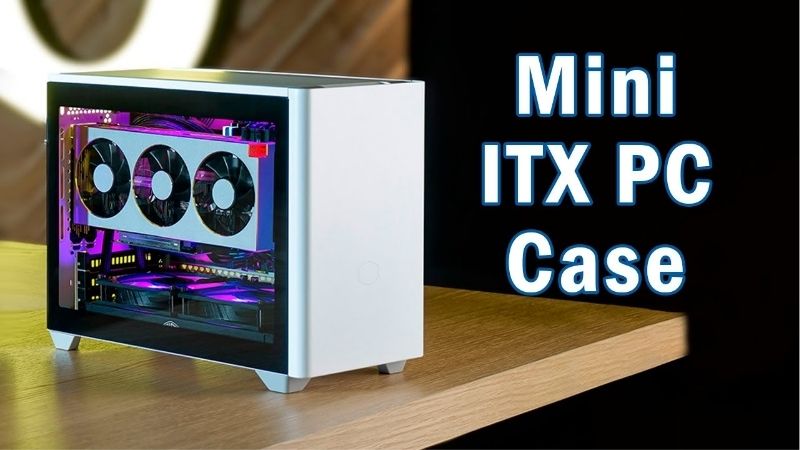
GPU Length, Thickness and Slot Count
Card length is the obvious limit, but thickness catches more people out. Sandwich-layout cases publish a maximum GPU width in millimetres, and many current partner cards run two and a half or three slots. A card rated at 65mm thick will not fit a chassis that allows 43mm, whatever its length.
Check the vendor figure for your exact model rather than the reference design, since partner coolers vary by 20mm or more. Fractal quotes 322mm maximum length on the Terra with 72mm of thickness in its widest configuration, and that thickness figure is what rules cards in or out.
CPU Cooler Height and Radiator Support
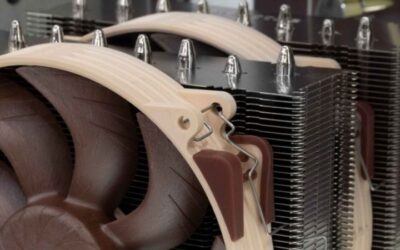
Cooler clearance in this category runs from roughly 47mm for slim low-profile heatsinks to around 155mm in the larger boxes that accept proper tower coolers. Below about 70mm you are limited to designs like the Noctua NH-L9 family, which caps the processor you can realistically cool.
Liquid cooling changes the maths. Cases in the 11 to 15 litre range often support a 240mm or 280mm radiator where they would never fit a tower heatsink, which is why AIO-focused chassis pair better with high-TDP chips. Confirm both radiator length and combined radiator plus fan thickness.
Power Supply Format and Cable Reality
Most compact chassis require an SFX or SFX-L unit, which costs more per watt than a standard ATX supply and comes with shorter cables. A few larger designs accept full ATX units, which saves money at the cost of several litres of volume and a much tighter cable routing job.
Budget for the cables themselves. Stock SFX cables are often too long and too stiff for a 12 litre box, and custom short cable kits are one of the few genuinely worthwhile accessories in small form factor building. Plan the routing before assembly, not while holding a half-built machine.
Top Picks: Best Case for Mini ITX From 10L to 18L
These five cover the practical range for the best case for mini ITX builds, running from a tiny sandwich chassis to a box roomy enough for a full tower cooler. All clearance figures are vendor-published; confirm against your exact graphics card. Availability was checked in August 2026.
| Case | Volume | Max GPU length | Cooler height | PSU format |
|---|---|---|---|---|
| Fractal Design Terra | 10.4 L | 322 mm | 48-77 mm (adjustable) | SFX / SFX-L |
| Lian Li A4-H2O | 11 L | 322 mm | Low profile only | SFX / SFX-L |
| Lian Li Q58 | 14.5 L | Full length, 3-slot | Low profile | SFX or ATX |
| SSUPD Meshlicious | 14.9 L | 336 mm | 73 mm | SFX or ATX |
| Cooler Master NR200P V2 | 18.25 L | 330 mm | 153 mm | SFX / SFX-L |
Cooler Master NR200P V2 – Best for First-Time SFF Builders
At 18.25 litres this is the roomiest option here, and that space buys forgiveness. It accepts tower coolers up to roughly 153mm, graphics cards around 330mm, and a side-mounted radiator, while the V2 revision includes a PCIe 4.0 riser for vertical card mounting if you prefer that layout.
The trade-off is that it is noticeably larger than a true sandwich chassis, so it reads as a small desktop rather than a console-sized box. The steel construction also feels less premium than the aluminium competition. If this is your first compact build, the extra clearance is worth every litre.
Fractal Design Terra – Best Looking Small Build
The Terra packs a 10.4 litre volume into a 343 by 153 by 218mm aluminium shell with a walnut front panel, and its adjustable spine lets you shift space between the graphics card and cooler chambers across seven positions. Cards up to 322mm long and 72mm thick fit in the widest setting.
That flexibility is zero-sum: maximising GPU width drops cooler clearance to 48mm, which restricts you to slim low-profile heatsinks and modest processors. Liquid cooling support is limited to a 120mm radiator, and only with a much shorter card. It is a design-led case, and it asks for compromises.
Lian Li Q58 – Best Balance of Size and Flexibility
At 14.5 litres, the Q58 supports a full-length triple-slot graphics card, ships with a PCIe 4.0 riser, and accepts either an SFX unit or an ATX supply up to 160mm using the included bracket. In SFX mode there is room for a 280mm radiator depending on the mounting configuration you choose.
Building in it takes patience, particularly around tube routing for larger AIO coolers, and the ATX power supply mode eats the space you would want for cooling. Air cooling is limited to low-profile heatsinks. For flexibility per litre, it remains one of the strongest designs in the category.
Lian Li A4-H2O – Best Console-Sized Chassis
Around 11 litres, the A4-H2O is built specifically around a 240mm radiator rather than air cooling, which is what lets it handle a warm processor in a footprint close to a games console. Graphics cards up to 322mm fit in the opposite chamber, connected through the bundled riser cable.
Air cooling is effectively off the table, so an AIO is mandatory and that adds cost and a pump to the noise profile. Cable routing is the tightest of any case here, and drive mounting is minimal. Choose it when the size target is absolute and you are willing to build carefully.
SSUPD Meshlicious – Best Airflow Per Litre
The Meshlicious wraps a 14.9 litre volume in mesh panels on nearly every surface, which makes it one of the better breathing chassis in the class. It takes graphics cards up to 336mm, supports either an SFX or a full ATX power supply, and allows around 73mm of cooler height in sandwich mode.
The mesh is a dust magnet and the acoustic penalty is real, since almost nothing damps fan noise. The ATX power supply option also costs you radiator space, and panel removal takes more steps than the tool-less competition. For thermals per litre, though, it is very hard to beat.
What the 2026 Market Means for Small Form Factor Builders
Compact builds are more sensitive to component pricing than full-size ones, because the supporting parts carry premiums of their own. Three market factors are worth knowing before you order a chassis and then discover what the rest of the small form factor bill looks like.
Cases and Cooling Are the Sane Corner of the Market
While graphics cards have climbed sharply, chassis, fans, coolers and paste have stayed relatively stable, which makes them the sensible place to spend a modest upgrade budget. Moving an existing build into a better-ventilated small case genuinely lowers temperatures without touching the expensive parts.
That reframes the decision. If your current machine runs hot in a cramped old box, a chassis with real airflow plus a fresh set of fans costs a fraction of a graphics card upgrade and delivers a measurable improvement in sustained clocks and noise during long sessions.
SFX Power Supplies Carry a Premium
Power supply pricing has crept up roughly 6 to 10 percent, and small form factor units start from a higher base because the format itself commands a premium. Promotional pricing policies were withdrawn in February 2026, so the discounts that used to soften that gap appear less frequently now.
Factor the supply into the case decision rather than treating it as an afterthought. If your budget is tight, a chassis that accepts a standard ATX unit, such as the Q58 or Meshlicious, can save a meaningful amount at the cost of a few litres and a tighter cable routing job.
Late-Year Discounts Are Still Real Here
The usual advice to wait for November sales does not hold for memory or storage this year, since that stock was built from expensive contract components. Cases, fans, coolers and power supplies are different, and they still see genuine discounts during that window most years.
So if a chassis is the only thing on your list and your build is waiting, buying now is fine. If you are assembling a whole small form factor machine including the supply and cooling, holding until late November is defensible. All pricing described here reflects August 2026 conditions.
Frequently Asked Questions
The questions that come up most from builders sizing their first compact machine: how much smaller these really are, whether liquid cooling is mandatory, when a riser cable is needed, and whether the best case for mini ITX really has to be an expensive aluminium one rather than steel.
How much smaller is mini ITX than a normal case?
Considerably. A mainstream ATX mid-tower typically occupies 40 to 50 litres, while the best case for mini ITX options here run from roughly 10 to 18 litres. That means a compact build can sit on a desk beside a monitor rather than under it, at the cost of clearance, drive bays and assembly comfort.
Do I need an AIO cooler in a small case?
Not always. Boxes around 18 litres accept tower coolers up to roughly 150mm, which handle most processors comfortably. Below about 12 litres, cooler height often drops under 70mm, and a 240mm radiator becomes the practical way to cool anything above a mid-range chip under sustained load.
Is a riser cable required for these builds?
In sandwich layouts, yes, and the good news is that most such cases include one. Check the specification, because a PCIe 4.0 riser is worth having over a 3.0 cable for future cards. A poor-quality riser can cause link instability, so avoid unbranded replacements if you need a spare.
Are compact cases harder to keep cool?
They run warmer than a large tower, but a well-designed mesh chassis with two or three good fans keeps modern components within safe limits. The real difference is noise: less internal volume means fans work harder and there is nothing to absorb the sound, so quality fans matter more here.
See More:
- Best thermal compound paste
- Thermal paste at Best Buy
- Graphics card at Best Buy
- Best AM4 CPU for gaming
- Best motherboard for 9800x3d
Final Thoughts
The best case for mini ITX is whichever one fits the graphics card and cooler you already plan to use. The NR200P V2 is the forgiving starting point, the Q58 balances size against flexibility, and the Terra wins on looks if you accept its trade-offs. Measure your parts first, then budget for an SFX supply and short cables.
As an Amazon Associate we earn from qualifying purchases at no extra cost to you. Product prices and availability are accurate as of the date shown and are subject to change.





Write Your Review
No reviews yet. Be the first to share your experience!