
- Top Pick: Geforce GTX 750 Ti 4G D5 128-bit Graphics Card DVI HDMI VGA for Windows 11
- Best Value: GPVHOSO GTX 750Ti 4GB Graphics Card GDDR5,
- Premium Choice: QTHREE GeForce GTX 750 Ti 4GB Graphics Card,GDDR5,128bit,HDMI,DVI,VGA,Video Card for PC Working,Computer GPU,PCI Express x16,Dual Fans,DirectX 12
GTX 750 Ti earned a place in PC building history as the little card that could, a tiny, power-sipping GPU that needed no extra power connector and breathed new life into countless budget and office PCs. More than a decade after its 2014 launch, it still surfaces in conversations about reviving old prebuilt machines on a shoestring. This review looks honestly at what the GTX 750 Ti can and cannot do in 2026, where it still makes sense, and whether it is worth tracking one down today.
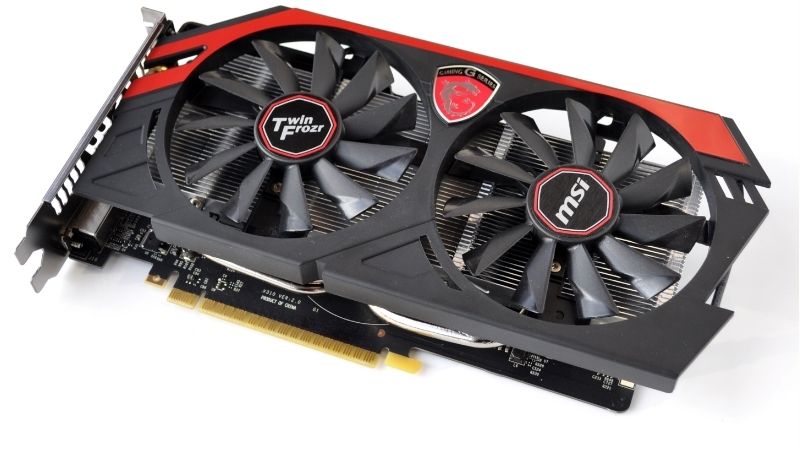
The GTX 750 Ti: Specs and Legacy
To judge this card fairly, you have to view it through the lens of its era and its purpose. The GTX 750 Ti was never a powerhouse; it was a clever, efficient budget card whose defining trait was doing a lot with very little power. Its specs and reputation both flow from that design goal.
As an Amazon Associate we earn from qualifying purchases at no extra cost to you.




Core Specs and the Maxwell Debut
The GTX 750 Ti is built on Nvidia’s Maxwell GM107 chip with 640 CUDA cores, 2GB of GDDR5 memory on a 128-bit bus, and around 86 GB/s of bandwidth. It launched in February 2014 at roughly $149.
Its most remarkable trait is efficiency. The card draws only about 60W, low enough that most versions need no PCIe power connector at all, running entirely off the motherboard slot. That single fact is the heart of its enduring reputation.
The 750 Ti was also notable as the debut of Nvidia’s Maxwell architecture, which prioritized performance per watt. That efficiency focus is exactly what made the card such a capable little performer for its modest power budget.
To appreciate the achievement, consider the context of 2014. Most graphics cards of any real capability required supplementary power and a decent power supply, but the 750 Ti delivered genuine gaming ability within the roughly 75W a motherboard slot can provide. That combination of capability and frugality was unusual at the time and is the foundation of the card’s lasting reputation.
Why It Became a Budget Legend
The GTX 750 Ti’s claim to fame is reviving cheap, prebuilt office computers. Many such machines ship with weak power supplies and no spare power connectors, which rules out most graphics cards, but not the slot-powered 750 Ti.
For the price of a budget card, owners could drop a 750 Ti into an old office tower and transform it into a capable entry-level gaming machine for popular titles of its day. That accessibility made it a beloved gateway into PC gaming.
Its low power and cool operation also made it reliable and easy to cool, often with a compact single-fan design. For a generation of budget builders, the 750 Ti was the card that made PC gaming affordable.
This role gave the card an outsized cultural footprint relative to its modest specs. Countless first-time builders and students started their PC gaming journey by dropping a 750 Ti into a hand-me-down office computer, and that accessibility built a loyalty and nostalgia around the card that pure performance numbers never could explain.
What 2GB of VRAM Means Today
The hardest truth about the GTX 750 Ti in 2026 is its 2GB of VRAM. That was reasonable in 2014 but is severely limiting now, as modern games often demand far more memory just to load.
This memory ceiling, combined with its modest core count, means the card cannot run modern AAA titles in any meaningful way. It is firmly an esports, older-game, and light-task card today, not a modern gaming solution.
Understanding that limit is essential to setting realistic expectations. The 750 Ti’s value now lies in specific niche uses rather than general gaming, and judging it against modern cards misses the point of what it offers.
The honest framing is to treat it as a tool for a particular job rather than a general-purpose GPU. Approached that way, its limitations stop being disappointments and become simply the boundaries of its niche. A buyer who needs exactly what the 750 Ti provides will be satisfied, while one expecting modern performance was always looking at the wrong card.
Real-World Use in 2026
Specs only tell part of the story; what matters is where this aging card still earns its keep. Drawing on how budget builders and retro enthusiasts use it, a clear picture emerges of the GTX 750 Ti’s narrow but real modern purpose. Here is the honest assessment.
What It Can Still Do
The 750 Ti remains capable of running older games and many popular esports titles at 1080p with modest settings. Lightweight competitive games and titles from its era are well within its abilities.
It is also a fine display and light-task card, driving a desktop, handling video playback, and serving basic computing needs without trouble. For a secondary machine or a simple build, it does the job.
Its standout modern role remains reviving connector-starved prebuilt PCs. When a cheap office machine needs any dedicated graphics and lacks a power connector, the slot-powered 750 Ti is still one of the few simple answers.
Where It Falls Short
Against any modern expectation, the 750 Ti shows its age immediately. Modern AAA games are effectively off the table, hampered by the 2GB VRAM and limited horsepower, and even some lighter recent titles will struggle.
It also lacks modern features entirely, with no ray tracing, no DLSS, and no support for the latest APIs and codecs that newer cards handle natively. For anyone wanting current technology, it simply is not designed for that world.
Build quality and condition are concerns too, since any 750 Ti for sale today is a decade-old used card. Aging fans and thermal paste mean buyers should expect to clean or service a unit, which is part of the retro-hardware experience.
A small amount of maintenance goes a long way with a card this old. Cleaning out accumulated dust, and in some cases refreshing the thermal paste, can restore a tired 750 Ti to quiet, cool operation. Buyers comfortable with that light servicing will get the best results, while those who want a plug-and-play experience should factor the effort into their decision.
Pros and Cons of the GTX 750 Ti
Bringing its strengths and limits together gives a clear verdict on who it serves today. Here is the balance sheet for the GTX 750 Ti.
- Pros: very low 60W power, no power connector needed on most models, slot-powered, cheap used, reliable, ideal for reviving prebuilt PCs.
- Cons: only 2GB VRAM, cannot run modern AAA games, no ray tracing or DLSS, decade-old used hardware, very limited by today’s standards.
The pattern is clear: as a niche budget and revival card the 750 Ti still has a purpose, but it is in no way a modern gaming GPU.
Buying One in 2026 and Final Verdict
If the 750 Ti’s niche strengths match your needs, a few practical points shape whether and how to buy one today, and how it fits the broader market. This section covers buying advice and a verdict.
Pricing and Smarter Alternatives
Because it is long discontinued, the GTX 750 Ti exists only on the used market, where it typically sells very cheaply given its age. Its low price is part of its appeal for ultra-budget revival projects.
That said, with dedicated GPU prices elevated across the board in 2026 by the memory shortage and AI-driven demand, some budget buyers turn to old cards like this out of necessity. But for only a little more money, a used card a generation or two newer offers far more capability, so weigh the 750 Ti against slightly newer budget options before buying. If your PC has a spare power connector, those alternatives are usually the smarter choice.
Who Should Still Consider It
The GTX 750 Ti makes sense for one specific buyer: someone reviving a cheap prebuilt PC that lacks a power connector and only needs light gaming or basic dedicated graphics on a minimal budget.
It also appeals to retro PC enthusiasts and tinkerers who appreciate its place in history and its remarkable efficiency. For anyone wanting to play modern games, though, it is the wrong card, and even a modest modern GPU would serve far better.
Final Verdict: Is It Worth It
The GTX 750 Ti remains a charming, useful card for its narrow purpose: cheap, slot-powered graphics for reviving old machines and running light or older games. For that role, its efficiency is still genuinely impressive.
For modern gaming it is long past its prime, and most buyers with any flexibility should choose a newer card. Understood as the budget revival legend it is, rather than a current gaming GPU, the 750 Ti still earns a quiet respect from anyone who remembers what it made possible. Few cards in the entire history of the hobby have ever delivered so much real capability from so little power, and that remarkable legacy quietly endures to this day.
See more:
- What graphics card do I have?
- How to tell what graphics card I have
- 5070 Ti vs 4080
- 5060 vs 3080
- RTX 2060 graphics card
Recommended Products

GIGABYTE
Gigabyte GV-R76GAMING OC-8GD Radeon RX 7600 Gaming OC 8G Graphics Card, 3X WINDFORCE Fans 8GB 128-bit GDDR6, Video Card

GIGABYTE
GIGABYTE GeForce RTX 4090 Gaming OC 24GB Graphics Card – 24GB GDDR6X, PCI-E 4.0, Core 2535Mhz, RGB Fusion, Anti-sag Bracket, Metal Back Plate, DP 1.4, HDMI 2.1a, NVIDIA DLSS 3, GV-N4090GAMING OC-24GD

PNY
PNY GeForce RTX 4090, 24GB GDDR6X, Verto Triple Fan, Graphics Card, DLSS 3, 384-Bit, PCIe 4.0, HDMI/DisplayPort, NVIDIA, Desktop Computers, Gaming PCs, Workstations
As an Amazon Associate we earn from qualifying purchases. Product prices and availability are accurate as of the date/time indicated.
Conclusion
The GTX 750 Ti is a piece of budget PC history, a 60W, slot-powered Maxwell card that revived countless prebuilt machines and introduced many people to PC gaming. In 2026 its 2GB of VRAM and lack of modern features rule out current AAA games, but it still shines for reviving connector-starved PCs and running older or esports titles cheaply. With GPU prices elevated, some budget builders still reach for it, though a slightly newer used card is usually wiser if your system allows it. If you need that specific slot-powered revival, hunt down a clean GTX 750 Ti, or take a moment to compare a range of affordable modern budget GPUs on Amazon for far more capability and value.
Frequently Asked Questions
Can the GTX 750 Ti still run modern games in 2026?
Only in a very limited sense. It handles esports and older titles such as CS2, Rocket League, Minecraft and Valorant at 1080p low settings, and indie games run fine. Anything built for current consoles will either refuse to launch because it requires DirectX 12 Ultimate features, or run in the teens of frames per second.
Does the GTX 750 Ti need a PCIe power connector?
Most GTX 750 Ti models draw their full 60W from the PCIe slot alone and need no supplemental connector, which is exactly why the card became famous as the go-to upgrade for cheap office prebuilds with 250W to 300W OEM power supplies. A handful of factory-overclocked variants do add a single 6-pin connector.
Does NVIDIA still release drivers for the GTX 750 Ti?
No. The Maxwell architecture has been moved to legacy status, so the card receives no new feature drivers and no game-ready optimisations, only rare critical security patches. Windows 11 will install a working legacy driver, but expect zero support for new API extensions and increasing incompatibility with games released from here on.
Is 2GB of VRAM enough for anything today?
2GB of GDDR5 on a 128-bit bus is the card’s hardest limit. Many modern games allocate more than that just for textures at their lowest preset, causing constant stutter as assets stream over PCIe. Even lightweight titles force you to drop texture quality to minimum, which usually looks worse than simply running at a lower resolution.
What is a sensible upgrade path from a GTX 750 Ti?
If your power supply is weak and you cannot replace it, look at a modern low-power card in the 75W class. If you can fit a proper PSU, a used RTX 3060 12GB or RX 6600 costs little and delivers roughly five to eight times the performance, plus current driver support, hardware ray tracing and modern upscaling.


Write Your Review
No reviews yet. Be the first to share your experience!