
- Top Pick: GIGABYTE GeForce RTX 5070 Ti Gaming OC 16G Graphics Card, 16GB 256-bit GDDR7, PCIe 5.0, WINDFORCE Cooling System, GV-N507TGAMING OC-16GD Video Card
- Best Value: GIGABYTE GeForce RTX 5060 Ti WINDFORCE OC 8G Graphics Card, 8GB 128-bit GDDR7, PCIe 5.0, WINDFORCE Cooling System, GV-N506TWF2OC-8GD Video Card
- Premium Choice: ZOTAC Gaming GeForce RTX 5070 Ti Solid SFF OC DLSS 4 16GB GDDR7 256-bit 28 Gbps PCIE 5.0 Gaming Graphics Card, IceStorm 2.0 Advanced Cooling, ZT-B50710J3-10A
5060 ti vs 5070 benchmark searches almost always come from the same person: someone who has already decided on Nvidia, already knows roughly what they want, and is now trying to work out whether the extra $150 buys enough frames to justify itself. That is a numbers question, so this is a numbers article. You get the verdict up front, a full benchmark table across 1080p and 1440p, a breakdown of the VRAM split that makes this comparison messier than it looks, and an honest fps-per-dollar calculation. No preamble, no montage.
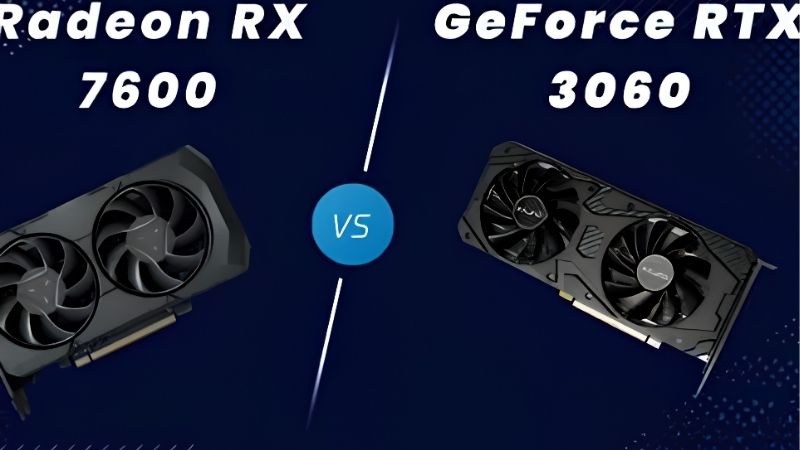
Quick Verdict: What the 5060 Ti vs 5070 Benchmark Numbers Say
The short version: the RTX 5070 is roughly 25-30% faster than the RTX 5060 Ti at 1440p for roughly 38% more money, which makes it the worse value on paper and the better buy in practice for anyone running above 1080p. The complication is that the 5060 Ti exists in 8GB and 16GB variants, and the 16GB model changes the entire calculation – it is slower than the 5070 but it will not fall off a cliff when a game asks for more memory than it has.
As an Amazon Associate we earn from qualifying purchases at no extra cost to you.


The Headline Numbers at 1080p and 1440p
At 1080p, both cards are frequently CPU-limited in competitive titles, which compresses the gap to around 15-20%. In esports titles – Valorant, CS2, Rainbow Six – both push well past 240 fps and the comparison becomes academic. If your monitor is 1080p and you play shooters, the benchmark difference is largely money spent on frames your panel will never display.
At 1440p the gap opens to its true 25-30%. This is where the 5070’s wider effective bandwidth and higher shader count actually get to work, and it is the resolution where the extra $150 starts making sense rather than just making numbers larger.
At 4K neither card is really the right tool. The 5070 manages upscaled 4K in many titles; the 5060 Ti struggles outside of lighter games. If 4K is the plan, both of these are the wrong page.
Full Benchmark Comparison Table
Approximate averages at high settings, upscaling off, on a modern CPU. Treat these as relative positioning rather than lab-precise figures – the ratios hold even where absolute numbers shift by system.
| Metric | RTX 5060 Ti 16GB | RTX 5070 |
|---|---|---|
| MSRP | $429 | $549 |
| VRAM | 16GB GDDR7 | 12GB GDDR7 |
| Memory bus | 128-bit | 192-bit |
| Board power | ~180W | ~250W |
| Recommended PSU | 550W | 650W |
| AAA 1080p high (avg) | ~95-115 fps | ~115-135 fps |
| AAA 1440p high (avg) | ~65-80 fps | ~85-105 fps |
| 1440p RT on (avg) | ~40-50 fps | ~55-70 fps |
| Relative 1440p perf | 100% | ~127% |
| Relative price | 100% | ~128% |
| Best for | 1080p high refresh, VRAM safety | 1440p 144Hz |
Look at the bottom three rows together, because that is the whole argument. Performance scales at roughly 127% and price scales at roughly 128% – meaning fps per dollar is effectively identical between these two cards. Nvidia priced this stack carefully. There is no bargain hiding here; there is only a question of which tier matches your monitor.
Why the 8GB vs 16GB 5060 Ti Ruins Simple Benchmarks
Any 5060 ti vs 5070 benchmark that does not specify which 5060 Ti is being tested is nearly useless, and a large share of results circulating online do exactly that. The 8GB and 16GB versions carry the same GPU die and the same clocks. In light workloads they are within 1-2% of each other. In heavy ones they diverge violently.
Once a game exceeds 8GB – which at 1440p with high textures is now routine rather than exotic – the 8GB card does not lose 10%. It loses 30-50% of its 1% lows and starts hitching. Benchmarks that average out that behaviour report a card that looks merely slower when what it actually is, in that scenario, is broken.
The rule that follows is simple: never buy the 8GB 5060 Ti for 1440p, and treat the $429 16GB model as the real comparison point against the 5070. The $50 saved on the 8GB version is the most expensive $50 in the current GPU stack.
Deep Dive: Where the Extra $150 Actually Goes
A 27% performance gap is not evenly distributed. It concentrates in specific scenarios and vanishes in others, and knowing which is which is the difference between spending $150 well and spending it out of anxiety.
Ray Tracing and DLSS 4 Scaling
With ray tracing enabled at 1440p, the gap widens beyond the raster average – closer to 30-35% in mixed RT titles. RT workloads lean on the parts of the chip where the 5070 has the most surplus, so this is the scenario where the price difference buys the most.
DLSS 4 works on both, and this is where the comparison gets interesting rather than linear. With DLSS Quality plus Multi Frame Generation, the 5060 Ti can produce a 1440p experience that feels smooth on a high-refresh panel despite a modest base render rate. Whether that satisfies you depends on your tolerance for generated frames and input latency, which is genuinely personal rather than measurable.
What is worth noting for a longer horizon: Nvidia’s AI-driven feature set has repeatedly added capability to cards after purchase. The 5060 Ti’s 16GB buffer combined with an upscaling pipeline that keeps improving is a more durable combination than its raw benchmark position suggests today.
Power, Case Fit and Real-World Compatibility
This is where the 5060 Ti quietly wins and where benchmark charts say nothing at all. At roughly 180W against 250W, it runs on a 550W PSU. Many prebuilt systems and older budget builds ship with 500-600W units, and the 5070 pushes that uncomfortably close – especially paired with a modern high-core CPU.
Add the connector. Most 5060 Ti models use a single 8-pin. Most 5070 models use the 16-pin 12V-2×6, meaning an adapter on older PSUs and a connector that must be fully seated. That is a real, physical failure mode, not a spec-sheet footnote.
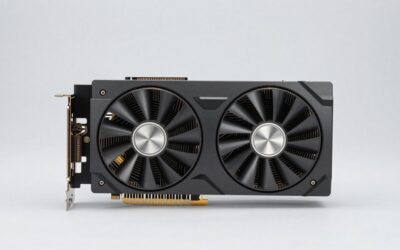
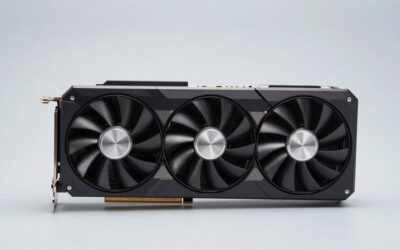
Then measure your case. 5060 Ti cards are frequently compact dual-fan designs at 200-250mm. 5070 models often run 240-300mm triple-fan. If you are upgrading a small form factor or an OEM chassis, the 5060 Ti may be the only one of the two that physically fits – which makes the entire benchmark discussion moot.
Pros and Cons of Each Card in This Benchmark
RTX 5060 Ti 16GB – strengths: $429 entry; 16GB buffer that outlasts the 5070’s 12GB in memory-heavy scenarios; 180W and a 550W PSU requirement; compact designs that fit small cases; single 8-pin with no adapter risk; identical fps-per-dollar to the 5070.
RTX 5060 Ti 16GB – weaknesses: 128-bit bus caps it at 1440p and it fades at 4K; 25-30% slower at 1440p and further behind with RT enabled; the 8GB variant sharing the name creates real buying confusion.
RTX 5070 – strengths: the right card for 1440p 144Hz; 30-35% RT advantage; comfortable headroom to hold settings for several years; 192-bit bus that scales better upward.
RTX 5070 – weaknesses: $549 buys no efficiency gain in fps per dollar; 12GB against the 5060 Ti’s 16GB is genuinely awkward for a more expensive card; 250W, 650W PSU, 16-pin connector, larger physical footprint.
The pattern is unusual and worth naming: this is not a good-versus-better comparison. It is a tier match. The cheaper card has more VRAM; the pricier card has more bandwidth and shaders. You are not buying quality, you are buying a resolution.
Pricing Reality: What These Benchmarks Are Worth in 2026
Benchmark ratios are stable. Prices are not, and in this market the price line moves more than the performance line ever will. Anyone deciding between these two cards needs the supply picture as much as the fps chart.
Prices Have Flattened – They Have Not Dropped
The memory-driven surge through late 2025 lifted component pricing broadly. The genuine positive is narrow: the steep climb seen at the end of 2025 has stopped, and manufacturers including Framework have reported a period of relative stability, while continuing to warn that further volatility is possible.
Note the wording. Flat is not falling. Neither of these cards is likely to be meaningfully cheaper in three months. The urgency to panic-buy is gone, but so is any real reward for waiting – and a fps-per-dollar calculation assumes today’s dollar, not a hypothetical future one.
This tilts the VRAM argument. In a market where replacement cost is flat-to-rising, the 16GB card is worth more than its benchmark ranking implies, because upgrading out of a VRAM problem in two years will not be cheap.
New Memory Supply Is Coming – in 2027 or 2028
Relief is genuinely being built. OEMs can now source DDR5 from Chinese suppliers such as CXMT, and Micron is constructing two fabrication plants in Idaho. These are funded, structural additions to supply rather than rumour.
The problem is the calendar. Those Idaho plants do not come online until 2027-2028. Fabs take years, not quarters. The entire 2026 buying cycle – including yours – concludes before that capacity ships a single wafer.
So “wait for prices to fall” is not a plan for this purchase. It is a plan for a purchase two or three years out, at which point you will be comparing entirely different cards anyway.
The Alternative If Neither Card Fits Your Budget
If $429 is already a stretch, the RTX 5060 or a used RTX 4070 are worth pricing before you overextend – the 4070 in particular often lands between these two in both performance and cost on the secondhand market, with the tradeoff that you inherit someone else’s thermal history.
If you are upgrading from a 3060 Ti or 3070 and 1080p is your ceiling, be honest that the benchmark gain may not justify either card yet – a case airflow fix costs a fraction of $429 and can recover throttled performance you already paid for.
See More:
Final Verdict and Recommendation
The 5060 ti vs 5070 benchmark verdict comes down to one line on your desk, not one line on a chart: what resolution is your monitor?
Buy the RTX 5060 Ti 16GB at $429 if you game at 1080p, run a small case or a 550W PSU, want the larger VRAM buffer, or simply want equal fps per dollar with less money at risk. Do not buy the 8GB version for 1440p under any circumstances.
Buy the RTX 5070 at $549 if your panel is 1440p 144Hz, if you enable ray tracing regularly, or if you want to hold high settings for four years without renegotiating. The extra $150 buys 25-30% at 1440p and 30-35% with RT on – fair, not generous.
And decide on today’s prices. With supply pressure firm and new memory capacity years away, the benchmark ratio you are reading now will hold long after the hope of a discount has quietly expired.
Frequently Asked Questions
How much faster is the RTX 5070 than the 5060 Ti?
Expect roughly twenty-five to thirty-five percent more performance at 1440p, widening at 4K where the 5070 wider memory bus helps. The gap narrows at 1080p where both become partly CPU-bound. That scaling means the premium looks better the higher the resolution you intend to play at.
Is 16GB on the 5060 Ti better than 12GB on the 5070?
Capacity favours the 5060 Ti, bandwidth favours the 5070. In practice the 5070 is fast enough to stay ahead in nearly every game, but the 5060 Ti 16GB holds settings headroom in memory-heavy scenarios such as ultra textures with frame generation, and in local AI work where model size is the limit.
What power supply does each need?
The 5060 Ti sits near 180W with a 550W recommendation, and the 5070 near 250W with a 650W recommendation. Both can use a 12V-2×6 connector depending on the partner model, so check whether your supply has a native cable or whether you will rely on the bundled adapter.
Does PCIe generation affect these cards?
It affects the 5060 Ti more, since it runs a PCIe 5.0 x8 link. On a PCIe 3.0 board that halves available bandwidth and costs measurable performance, especially on the 8GB variant. The 5070 uses a wider link and is far less sensitive to older platforms.
Which is the better value for 1440p 144Hz?
The 5070 is the safer pick for sustained high frame rates at 1440p in AAA titles. The 5060 Ti 16GB is the better value if you play mostly esports and older titles, or if your budget is fixed and you would otherwise cut corners on the CPU or power supply.
Ready to decide? Our #1 pick for 2026 is the MSRP.
Live price & availability on Amazon.

Write Your Review
No reviews yet. Be the first to share your experience!