


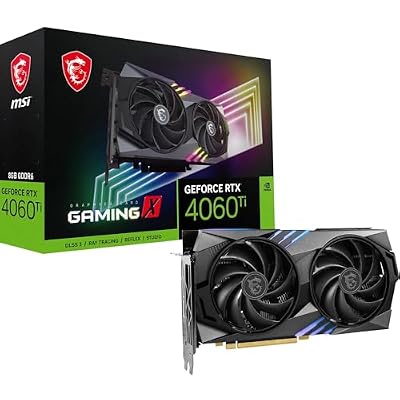


Choosing between the rtx 3070 vs 4060 has become a critical decision for gamers looking to get the best value in 2026. With the hardware market experiencing unprecedented supply shifts and rising component costs, choosing the right GPU requires a clear-eyed look at raw performance versus modern feature sets. In this guide, we will break down the essential specifications, real-world benchmarks, and market factors influencing these graphics cards today.
Comparing the Core Value: RTX 3070 vs RTX 4060 Quick Verdict
Before we jump into individual benchmark numbers, we must evaluate how these two graphics processors position themselves within NVIDIA’s broader lineup. On one side, we have a former high-end champion from the Ampere generation; on the other, a modern, highly efficient mid-range contender from the Ada Lovelace family.
The Quick Verdict and Buyer Recommendation
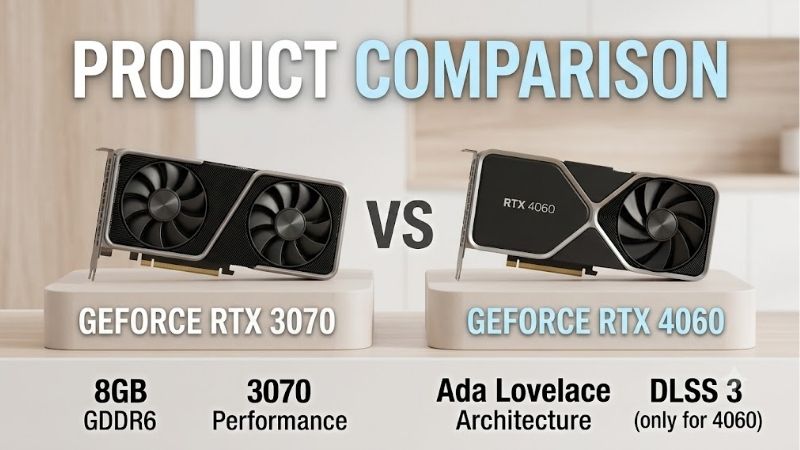
The matchup between these two mid-range graphic cards highlights a fundamental shift in how NVIDIA designs consumer hardware. The RTX 3070 still holds the crown for raw rasterization performance and memory bus width, making it highly competitive at native 1440p resolutions. However, the RTX 4060 brings DLSS 3.0 Frame Generation and superior power efficiency, making it an incredibly attractive option for budget-conscious builders who want modern feature support.
If you play games that extensively support DLSS Frame Generation or prioritize a lower electricity bill and quieter operation, the RTX 4060 is the clear choice. On the other hand, if you play older titles or competitive esports at native resolutions, the older 3070 remains a powerful powerhouse. To check current pricing and availability, check the latest price on Amazon.
Core Specifications and Comparison Table
Let us lay out the raw hardware specs of both cards. The RTX 3070 is built on the GA104 Ampere chip, featuring 5888 CUDA cores, a 256-bit memory bus, and 8GB of GDDR6 VRAM. The RTX 4060 is powered by the AD107 Ada Lovelace GPU, offering 3072 CUDA cores, a narrow 128-bit memory bus, and 8GB of GDDR6 memory.
While the specs seem to heavily favor the older card at first glance, the architectural enhancements of the Ada Lovelace generation balance the scales. The L2 cache on the newer card is significantly larger, compensating for the smaller memory bus. Let us look at the complete breakdown of their technical specifications:
| Feature | NVIDIA GeForce RTX 3070 | NVIDIA GeForce RTX 4060 |
|---|---|---|
| Architecture | Ampere (GA104) | Ada Lovelace (AD107) |
| CUDA Cores | 5888 | 3072 |
| VRAM Capacity | 8GB GDDR6 | 8GB GDDR6 |
| Memory Bus | 256-bit | 128-bit |
| Bandwidth | 448 GB/s | 272 GB/s |
| TGP (Power) | 220W | 115W |
| DLSS Version | DLSS 2 | DLSS 3 / Frame Gen |
This specification table reveals that while the older card dominates in memory bandwidth and processing cores, the newer GPU is incredibly power-efficient, requiring almost half the wattage of its older sibling.
Architectural Differences: Ampere vs Ada Lovelace
The architectural gap between these two GPUs is the defining factor in how they handle modern titles. The Ampere architecture of the RTX 3070 relies on sheer brute force, utilizing high power consumption and wide memory buses to push high frame rates. This approach makes it exceptionally good at managing complex rendering tasks at native resolutions without upscaling.
Conversely, the Ada Lovelace architecture inside the RTX 4060 relies heavily on advanced silicon design and software integration. By incorporating updated Tensor Cores and optical flow accelerators, NVIDIA designed the newer card to rely on smart reconstruction techniques. This allows the newer card to achieve comparable or superior performance in modern games while drawing vastly less power.
Additionally, the newer architecture includes massive improvements to ray tracing execution. The third-generation RT cores inside the RTX 4060 handle lighting and shadow calculations far more efficiently than the older second-generation cores found in the RTX 3070, closing the performance gap in ray-traced games.
Deep Dive Performance and Thermal Face-Off
To fully appreciate the real-world value of these graphics cards, we must put them through their paces in actual gaming environments. We will look at how they handle traditional native rendering, modern upscaling techniques, and the thermal realities of running heavy gaming workloads inside standard mid-tower setups.
Rasterization and Raw 1440p Gaming Performance
When it comes to pure rasterization—rendering games without the help of upscalers or frame generation—the RTX 3070 is still the undisputed king in this comparison. In demanding titles like Cyberpunk 2077 or Red Dead Redemption 2 at native 1440p, the older card consistently pulls ahead by about 15% to 20%. This is primarily due to its wider 256-bit memory bus, which prevents bottlenecks when processing high-resolution textures.
The RTX 4060, while capable of 1440p gaming, is fundamentally optimized as a high-refresh-rate 1080p card. Its narrow 128-bit memory bus and restricted memory bandwidth can cause it to struggle in highly detailed scenes at higher resolutions, resulting in lower minimum frame rates. For players who prefer playing games natively without DLSS enabled, the older 3070 provides a noticeably smoother experience.
However, at 1080p, the performance gap shrinks significantly. In competitive esports titles like Valorant or Apex Legends, both cards easily saturate high-refresh-rate monitors, making the difference in raw power less noticeable during actual gameplay.
DLSS 3 Frame Generation vs Native Performance
The major turning point in this matchup is the inclusion of DLSS 3 Frame Generation on the newer graphics card. This technology uses the AI-focused Tensor Cores to insert entirely new frames into the render queue, effectively doubling or tripling the apparent frame rate. Because this feature is locked to the Ada Lovelace generation, the older card is limited to traditional DLSS 2 spatial upscaling.
In games that fully support Frame Generation, such as Alan Wake 2 or Microsoft Flight Simulator, the RTX 4060 easily surpasses the RTX 3070 in terms of overall fluidity. Even though the native rendering of the older card is stronger, the synthetic frames generated by the newer GPU create a visual experience that feels far smoother on high-refresh-rate monitors.
That being said, players must understand that Frame Generation does have its trade-offs, such as a slight increase in input latency. For casual single-player adventures, this feature is a massive game-changer that extends the life of the card, while competitive players may still prefer the native, ultra-low latency response of the older GPU.
👉 Check the latest price on Amazon:
Thermal Efficiency, Power Consumption, and Noise Levels
One of the most striking differences between these two generations of graphics cards is their power consumption and heat output. The RTX 3070 has a rated Total Graphics Power (TGP) of 220 watts, which can spike higher under heavy workloads. This high power draw translates directly into more heat being dumped into your computer case, requiring a robust cooling setup and a reliable power supply.
On the other hand, the RTX 4060 is an absolute marvel of power efficiency, pulling only 115 watts at full load. This ultra-low power consumption means that the card runs exceptionally cool and quiet, even in dual-fan configurations. It also makes it an ideal upgrade for older pre-built systems, as it does not require a massive power supply upgrade to run safely.
Furthermore, the low thermal output means that your system fans can spin at lower speeds, resulting in a much quieter gaming environment. If you value a silent PC or live in a warmer climate where ambient room heating is a concern, the newer card offers a massive quality-of-life improvement.
Market Realities, Pros and Cons, and Alternative Options
Choosing a graphics card in 2026 is about more than just looking at performance charts. We must also navigate global supply-chain shifts, understand the long-term benefits and drawbacks of each option, and consider alternative hardware solutions that might better serve your specific needs and budget.
The Impact of AI Chip Exports and Supply Constraints
The consumer graphics card market in 2026 is heavily influenced by international trade policies and corporate priorities. Recently, the United States adjusted its regulations to allow NVIDIA to export its highly advanced H200 AI chips to Chinese markets. While this was designed to boost the enterprise AI sector, the immediate impact on consumer-grade GPUs like the RTX series has been profound.
Because high-margin AI silicon represents a goldmine for chip makers, NVIDIA and its manufacturing partners have shifted a massive portion of their production capacity toward enterprise silicon. This has severely limited the availability of consumer wafers, keeping retail prices for gaming cards artificially high and stock limited. Consequently, older models like the RTX 3070 are becoming rare on the secondary market, while newer options like the RTX 4060 face constant pricing pressures.
Adding to these supply struggles, the broader electronics industry is dealing with continuous component price hikes. Throughout 2026, the costs of raw materials, manufacturing labor, and logistics have steadily climbed, raising the prices of power supplies, RAM, and motherboard components. For gamers, this means waiting for a massive drop in GPU prices is no longer a realistic strategy, making it wiser to purchase your hardware today to avoid future inflation.
Pros and Cons of RTX 3070 vs RTX 4060
To help simplify your decision-making process, we must compare the clear advantages and disadvantages of both options side by side. Each card has a distinct set of strengths and weaknesses that make it suitable for different types of PC setups and gaming preferences.
Here is a breakdown of the pros and cons of choosing either option:
RTX 3070 Pros:
- Stronger raw rasterization performance at 1440p resolution.
- Wider 256-bit memory bus for faster texture processing.
- Higher overall CUDA core count for productivity workloads.
RTX 3070 Cons:
- Higher power consumption (220W) requiring a better power supply.
- Lacks support for DLSS 3 Frame Generation.
RTX 4060 Pros:
- Incredibly energy-efficient (115W) and runs very cool.
- Full support for DLSS 3 and Frame Generation.
- Newer hardware with active manufacturer warranty support.
RTX 4060 Cons:
- Narrow 128-bit memory bus limits high-resolution scaling.
- Slower raw performance compared to the older card at native 1440p.
Weighing these trade-offs will help you determine whether raw horsepower or modern efficiency fits your specific system goals better.
The Smarter Alternative: RTX 4060 Ti 16GB
If you find yourself torn between the raw native power of the older card and the modern feature set of the newer model, there is a compelling third option to consider. The RTX 4060 Ti 16GB serves as an excellent alternative that bridges the gap between these two GPUs. It offers the advanced Ada Lovelace architecture alongside a much larger memory pool to address VRAM concerns.
By choosing this alternative, you get the full benefits of DLSS 3 Frame Generation, exceptional power efficiency, and enough VRAM headroom to handle demanding high-resolution texture packs in modern 2026 games. It is a highly future-proof option that prevents the early stuttering associated with 8GB cards. To see if there are active discounts on this model, you can check the latest price on Amazon.
Conclusion
When summarizing the rtx 3070 vs 4060 comparison, the right choice ultimately depends on your budget and display resolution. The older card remains a formidable native 1440p gaming machine, while the newer option stands as a masterclass in modern efficiency and smart upscaling technology. With 2026 component price hikes showing no signs of slowing down, securing your graphics processor today is the smartest way to safeguard your gaming budget.
Frequently Asked Questions
Which card is faster in real games?
The RTX 3070 is generally ten to twenty percent faster in rasterization, especially at 1440p where its 256-bit memory bus and higher bandwidth matter. The RTX 4060 closes the gap only in titles that suit its large L2 cache, or when frame generation is enabled and raw throughput is less relevant.
Both have 8GB, so does memory matter here?
Capacity is identical but bandwidth is not. The 3070 has substantially more memory bandwidth, which helps at higher resolutions. Both cards, however, hit the same 8GB ceiling in modern titles with ultra textures and ray tracing, so neither is a comfortable 1440p ultra card in 2026.
How big is the efficiency difference?
Large. The 3070 draws around 220W while the 4060 sits near 115W, roughly half the power for somewhat less performance. In a small case, a warm room, or on an older 500W supply, that efficiency gap is a genuine practical advantage rather than a specification footnote.
Does frame generation change the verdict?
It can. The 4060 supports DLSS frame generation and the 3070 does not, so in supported titles the 4060 posts far higher frame counters and feels smoother on a high refresh display. Input latency does not improve proportionally, and frame generation costs VRAM, which is tight on both cards.
Which should I buy used?
If a used 3070 is meaningfully cheaper and you have a 650W supply with room in the case, it is the better raw performer. If you value low power, a compact dual-fan card, AV1 encoding and frame generation support, the 4060 is the more modern package despite being slower on paper.




Write Your Review
No reviews yet. Be the first to share your experience!