
- Top Pick: ASUS Dual GeForce RTX 4060 Ti EVO OC Edition 8GB GDDR6 (PCIe 4.0, 8GB GDDR6, DLSS 3, HDMI 2.1a, DisplayPort 1.4a, Axial-tech Fan Design, Auto-Extreme Technology), 3 Year Warranty
- Best Value: MSI GeForce RTX 4060 Ti Ventus 3X 16G OC Graphics Card -NVIDIA RTX 4060 Ti, 16GB GDDR6 Memory, 18Gbps, PCIe 4.0, DLSS3
- Premium Choice: PNY GeForce RTX™ 4060 Ti 8GB Verto™ OC Dual Fan Graphics Card DLSS 3 (128-bit, PCIe 4.0, GDDR6, HDMI/DisplayPort, Supports 4k, 2 Slot)
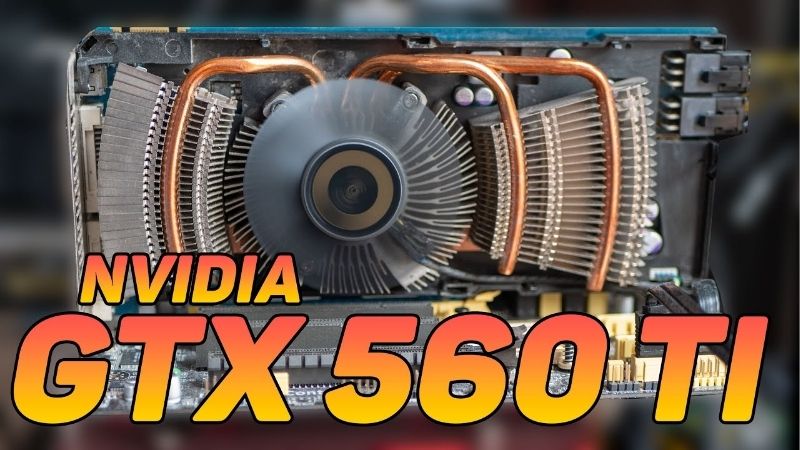
1080 ti vs 4060 is the comparison that produces the most buyer’s remorse in PC hardware, and the reason is uncomfortable: on two of the three metrics that matter most, the older card wins. The GTX 1080 Ti carries 11 GB of VRAM against the RTX 4060’s 8 GB, and 484 GB/s of memory bandwidth against 272 GB/s — a 78% advantage for a card released six years earlier. If your instinct is that this upgrade might be a sidegrade wearing a new box, that instinct is correct, and the data below confirms it. But the full picture is more interesting than a simple vindication, because there are three areas where the 4060 wins decisively.
The Quick Verdict on 1080 Ti vs 4060
Do not do it. The RTX 4060 is roughly 5% to 15% faster than a GTX 1080 Ti at 1080p and can lose at 1440p, while giving up 3 GB of VRAM and 78% of the memory bandwidth. It is not an upgrade in any meaningful raster sense. It is an upgrade in efficiency, features, and codec support — and if none of those are what you need, you would be spending $300 to move sideways.
As an Amazon Associate we earn from qualifying purchases at no extra cost to you.


Why the 4060 Is Not the Answer Here
The 1080 Ti was Nvidia’s flagship. The 4060 is a modern entry-level card. Comparing them is comparing a 2017 halo product to a 2023 budget product, and the fact that this comparison is close at all is the most damning thing anyone can say about progress at the low end of the stack.
The 128-bit bus is the specific defect. The 4060 has a large L2 cache designed to compensate, and it does compensate — at 1080p, where the working set fits. Push to 1440p, where it does not, and the compensation runs out. The 1080 Ti’s 352-bit bus keeps delivering.
The Three Areas Where the 4060 Genuinely Wins
First, power. 115W against 250W. That is not a footnote — it is 135W less heat in your case, a much quieter card, and a system that will run on a 450W PSU rather than needing 600W with two 8-pin cables.
Second, DLSS 3 Frame Generation. The 1080 Ti has no Tensor Cores and no optical flow accelerator, so it cannot run DLSS at all — not now, not ever. In a supported title, frame generation can put the 4060 well ahead in raw frame count. Whether you accept the latency cost is a legitimate question, but the capability exists on one side only.
Third, AV1 encode. If you stream, record, or upload, the 4060’s eighth-generation NVENC with AV1 is a genuine generational leap over Pascal’s encoder. The 1080 Ti also lacks AV1 decode, which means modern streaming sites lean on your CPU.
1080 Ti vs 4060 Spec Comparison Table
Read the VRAM and bandwidth rows first. They are the reason this comparison exists and the reason people feel cheated by it.
| Specification | GTX 1080 Ti | RTX 4060 |
|---|---|---|
| Architecture | Pascal (2017) | Ada Lovelace (2023) |
| Shader Units | 3,584 CUDA cores | 3,072 CUDA cores |
| RT Cores | None | 24 (3rd gen) |
| Tensor Cores | None — no DLSS | 96 (4th gen) |
| VRAM | 11 GB GDDR5X | 8 GB GDDR6 |
| Memory Bus | 352-bit | 128-bit |
| Bandwidth | ~484 GB/s | ~272 GB/s |
| L2 Cache | 2.75 MB | 24 MB |
| Board Power | 250W | 115W |
| Power Connector | 1x 8-pin + 1x 6-pin | 1x 8-pin |
| Recommended PSU | 600W | 450W |
| Frame Generation | No | DLSS 3 FG |
| AV1 Encode | No | Yes |
| Launch MSRP | $699 (2017) | $299 |
The L2 cache row is the whole engineering argument. Nvidia traded a wide bus for a large cache — 24 MB against 2.75 MB — because cache is cheaper to manufacture than memory controllers and pins. That trade works brilliantly at 1080p and progressively less well as resolution climbs.
Deep Dive Face-Off: Where the Cache Stops Compensating
Aggregated across published benchmark suites, the pattern is unusually clean and unusually revealing. The 4060’s lead is entirely resolution-dependent, and the crossover point is somewhere most enthusiasts already game.
Raster Performance at 1080p and 1440p
At 1080p high settings, the 4060 leads the 1080 Ti by roughly 5% to 15% across a mixed suite. Six years and two full architecture generations bought a low-double-digit gain over a card that cost more than twice as much at launch. The cache is doing its job here.
At 1440p the picture changes materially. The gap narrows to roughly parity, and in bandwidth-sensitive titles the 1080 Ti pulls ahead. The 24 MB of L2 stops holding the working set, every miss goes out to a 128-bit bus, and the 4060 runs into a wall the 1080 Ti simply does not have.
At 4K the 1080 Ti wins more often than it loses. Neither card is a 4K card in 2026, but the direction of the result is the point: a 2017 flagship outperforming a 2023 mid-range card at higher resolutions is a statement about product segmentation, not about progress.
The VRAM Question: 11GB vs 8GB
This is the part that ages worst. 8 GB is already a constraint at 1440p in modern titles with high texture settings, and the failure mode is not graceful degradation — it is stutter. Frame times spike from 14 ms to 60 ms as textures swap over PCIe, and the average fps number hides it completely.
The 1080 Ti’s 11 GB does not have this problem. A card from 2017 has more headroom for modern texture packs than a card from 2023. That is not a quirk; it is a direct consequence of what memory costs now versus what it cost then, and the news section below explains why.
The counter-argument is honest and worth stating: the 4060 can hold 8 GB comfortably at 1080p, which is where a 4060 buyer probably games. That is true. It is also an admission that the 4060 is a 1080p card and the 1080 Ti was not.
Practical Reality: Power, Heat and What 135W Buys
The efficiency gap is the 4060’s strongest genuine argument, and it deserves better than a footnote. 115W against 250W means a smaller cooler, less noise, less case heat affecting your CPU and NVMe thermals, and materially lower running costs if you game several hours a day.
It also means the 4060 fits systems the 1080 Ti cannot. A 450W PSU with a single 8-pin runs a 4060. The 1080 Ti wants 600W and both an 8-pin and a 6-pin. If you are building compact or replacing a failing card in a pre-built, that is decisive.
And a 1080 Ti in 2026 is a nine-year-old card. The thermal paste has almost certainly degraded, the thermal pads on the memory have dried, and the fan bearings are near end of life. Before you conclude your 1080 Ti is fine, check its hotspot temperature — if it is above 95°C, you are not comparing a 1080 Ti to a 4060, you are comparing a throttling 1080 Ti to a 4060. Repasting a card of that age is genuinely the highest-return maintenance available, and a tube of quality paste plus fresh pads costs a fraction of any GPU.
Pros, Cons and What You Should Actually Buy
Here is the plain ledger, followed by the cards that constitute a real upgrade rather than a lateral move.
GTX 1080 Ti: Pros and Cons
Pros: 11 GB of VRAM — more than most current mid-range cards. 352-bit bus with 484 GB/s of bandwidth, a 78% advantage over the 4060. Wins at 1440p and above in bandwidth-bound titles. A genuinely exceptional product that has aged better than anything since. Already paid for.
Cons: No Tensor Cores, so no DLSS — permanently, at the silicon level. No RT cores. No AV1 encode or decode. 250W and substantial heat. Pascal is in legacy driver status, so new game optimisations will thin out. Nine years old, with degraded thermal materials and ageing fans as near-certainties.
RTX 4060: Pros and Cons
Pros: 115W — less than half the power for slightly more 1080p performance. DLSS 3 Frame Generation, which the 1080 Ti can never have. Eighth-generation NVENC with AV1 encode and decode. Runs on a 450W PSU with one 8-pin. Compact, quiet, cool. Current driver support. Warranty.
Cons: 8 GB of VRAM is less than a 2017 card and already limiting at 1440p. 128-bit bus and 272 GB/s of bandwidth — a 44% deficit. Only 5% to 15% faster at 1080p and loses at higher resolutions. Ray tracing is present but not usable in demanding titles. As a $300 upgrade from a 1080 Ti it is poor value bordering on pointless.
The Alternative: What a Real Upgrade Looks Like
If you own a 1080 Ti, the correct upgrade targets are the RTX 5070, the RX 9070, or the RX 9070 XT — all of which carry 12 GB or 16 GB, wide-enough buses, and deliver 100% to 200% more performance rather than 10%. That is what leaving a 1080 Ti should feel like.
If budget forces you lower, the RTX 5060 Ti 16GB or the Intel Arc B580 are the entry points that do not go backwards on VRAM. Both carry more memory than a 4060 and both would represent a genuine step forward rather than a lateral one.
The general rule for any 1080 Ti owner: do not buy a card with less than 12 GB. You already have 11. Worth checking current listings on the 5070 and 9070 before settling for anything that asks you to give up memory you already own.
Why the VRAM Went Backwards
An analytical reader deserves the mechanism, not just the observation. A 2017 flagship having more memory than a 2023 mid-range card is not an accident, and three market forces explain it.
The H200 Decision and Who Is Buying the Memory
The United States has cleared Nvidia to sell the H200 — among its most capable AI accelerators — into China. That matters here for a reason that is not obvious: Nvidia allocates finite memory supply across its product lines, and data centre margins dwarf GeForce margins by a wide multiple.
An accelerator carries 141 GB of HBM3e. A 4060 carries 8 GB of GDDR6. When the same company is choosing where to direct memory procurement and wafer allocation, the entry-level gaming card is not where the priority sits. A large new market reopening reinforces that ordering rather than relieving it.
Read that backwards and the 1080 ti vs 4060 result stops being surprising. The 1080 Ti was specified in a world where memory was a component. The 4060 was specified in a world where memory is a contested resource. 24 MB of L2 cache instead of a 352-bit bus is what that world produces.
Component Prices Are Still Trending Up
The broad direction for laptops and PC components remains upward, and memory is the driver. AI infrastructure is consuming DRAM and GDDR at a scale that consumer graphics cannot outbid, and that cost lands in every board partner’s bill of materials.
Entry-level products absorb it worst. On a $999 card a memory cost increase disappears into margin. On a $299 card it is a large percentage — which is exactly why 8 GB on a 128-bit bus keeps appearing at this tier while an 11 GB card from 2017 sits in your case looking increasingly generous.
The practical implication for you: cards at the 4060’s price point are more likely to get stingier than more generous. Your 11 GB is an asset the current market does not reproduce cheaply.
New Supply Arrives in 2027 at the Earliest
Fresh capacity is genuinely coming. OEMs can increasingly source DDR5 from Chinese suppliers such as CXMT, and Micron is building two fabs in Idaho. Both are real and substantial. Neither runs before 2027 or 2028.
So relief exists, but it is weak and years out. Waiting for the memory market to make 16 GB standard at the mid-range means waiting through two more product generations — and your 1080 Ti’s fans have to survive that long.
Which gives you a clear plan rather than a vague hope. Repaste the card you have, keep it running, and when you upgrade, skip the tier that would ask you to trade 11 GB for 8.
See More:
Final Verdict and Recommendation
The 1080 ti vs 4060 verdict is that your suspicion was right: this is not an upgrade. You would gain 5% to 15% at 1080p, roughly nothing at 1440p, and you would lose 3 GB of VRAM and 78% of your memory bandwidth to do it. The only genuine wins are efficiency — 115W against 250W — plus DLSS 3 Frame Generation and AV1 encode, which are real capabilities the 1080 Ti will never have. If you stream, or if heat and noise are the reason you are shopping, those three things may justify it. For raster performance alone, they do not.
The better plan is two-part. First, check your 1080 Ti’s hotspot temperature before concluding anything — a nine-year-old card with original paste and dried memory pads is almost certainly throttling, and repasting it is the cheapest frames you will ever buy. Second, when you do upgrade, do it properly: an RTX 5070, RX 9070, or 9070 XT delivers 100% to 200% more rather than 10%, and none of them ask you to give up memory you already have. With AI demand pulling on the same GDDR supply and no new memory capacity online before 2027, your 11 GB is worth more than the market will sell you cheaply. Check pricing on a proper upgrade tier and on a quality thermal paste kit — one of those two is your actual next purchase, and it is not a 4060.
Frequently Asked Questions
Is moving from a GTX 1080 Ti to an RTX 4060 actually a downgrade?
In raw rasterisation, often yes. The GTX 1080 Ti frequently matches or beats the RTX 4060 at 1440p, and it has 11GB of VRAM on a 352-bit bus against 8GB on a narrow 128-bit interface. The RTX 4060 only pulls clearly ahead once DLSS and frame generation are enabled.
What do you gain by switching?
Modern features and efficiency. The RTX 4060 supports DLSS 3 frame generation, hardware ray tracing, AV1 encoding for streaming, and it draws only about 115W against 250W for the GTX 1080 Ti. It also keeps receiving current Game Ready drivers, while Pascal has moved to legacy support with security fixes only.
Is 8GB of VRAM a real problem?
It can be. Several 2024 and later titles exceed 8GB at 1440p with high textures and ray tracing, causing frame-time spikes or forced texture downgrades. The GTX 1080 Ti larger frame buffer genuinely helps in those scenarios, which is the core reason this upgrade disappoints some owners.
Do I need a new power supply?
Almost certainly not, and you may be able to use a smaller one. The RTX 4060 needs a single 8-pin and runs happily on a 450 to 500W unit, whereas the GTX 1080 Ti wanted 600W or more. Lower heat and noise are a real quality-of-life benefit in compact cases.
What should I buy instead?
If you are coming from a GTX 1080 Ti, aim at least at an RTX 5060 Ti 16GB, RX 9060 XT 16GB or RTX 5070. Those deliver a genuine performance jump plus modern features and enough VRAM, which is what makes an upgrade feel worthwhile rather than a sideways move.
Ready to decide? Our #1 pick for 2026 is the Architecture.
Live price & availability on Amazon.




Write Your Review
No reviews yet. Be the first to share your experience!