
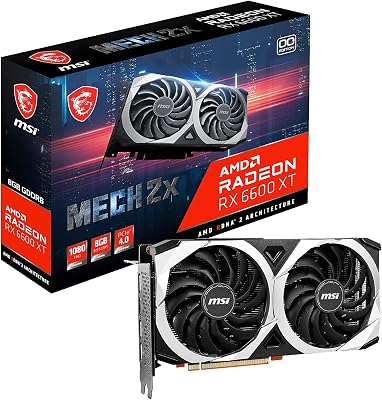
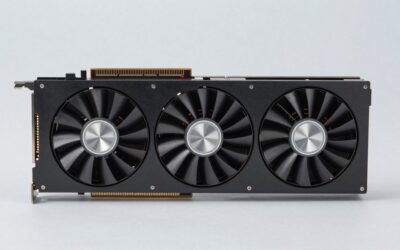
- Top Pick: ASRock AMD Radeon RX 6600 Challenger D 8GB GDDR6 DisplayPort 14Gbps HDMI 0dB Silent Cooling 128-bit 7680 x 4320 Dual Fan Graphics Card PCI Express 4.0 x8 8-pin
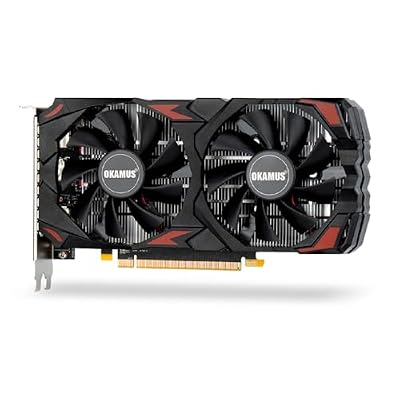
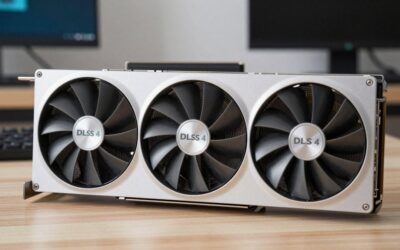
- Best Value: ZOTAC Gaming GeForce RTX 5050 Twin Edge OC DLSS 4 8GB GDDR6 128-bit 20 Gbps PCIE 5.0 Gaming Graphics Card, SFF-Ready Compact Card, ZT-B50500H-10M
- Premium Choice: Sapphire Technology Pulse AMD Radeon RX 6600 XT Gaming Graphics Card with 8GB GDDR6, AMD RDNA 2 (11309-03-20G) (Renewed)


RTX 5050 vs RX 6600 pits a modern NVIDIA entry card against a proven AMD budget favorite, and if you are shopping the low end you want a clear answer, not a highlight reel. Both target 1080p gamers on a tight budget but win on different strengths. This comparison lays out the specs side by side, breaks down each card honestly, and tells you which one fits which buyer so you can decide in minutes.
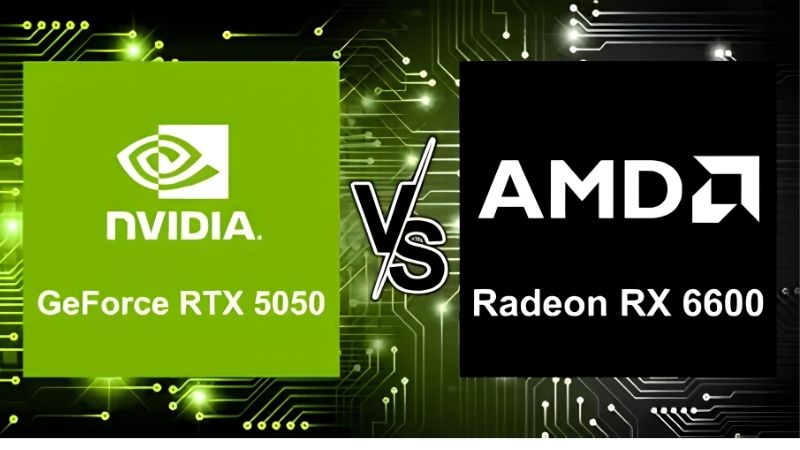
The Quick Verdict: RTX 5050 vs RX 6600
For readers who want the answer immediately: the RTX 5050 wins on modern architecture, DLSS 4, and ray tracing, while the RX 6600 competes on efficiency and value for pure rasterized 1080p gaming, especially when it is priced lower. The right pick depends on whether you want NVIDIA’s feature set or AMD’s budget frames-per-dollar. Below, each claim is grounded in the specs.
As an Amazon Associate we earn from qualifying purchases at no extra cost to you.


Who Wins on Raw Performance
The RTX 5050 generally leads on raw performance thanks to its newer Blackwell architecture, delivering stronger frame rates than the older RDNA 2-based RX 6600 in modern titles at 1080p.
The RX 6600 remains a very capable budget 1080p card that punches above its price in rasterized games, and in lighter or well-optimized titles it holds up well. But for a buyer chasing the smoothest performance in demanding current games, the 5050’s newer hardware has the edge.
The size of the lead varies by title, and that variance is worth understanding rather than averaging away. Well-optimized and older games can run beautifully on the 6600, narrowing the gap, while the newest demanding releases play more clearly to the 5050’s strengths. Checking results for the specific games you play is the honest way to gauge the real-world difference.
Who Wins on Features and Upscaling
The RTX 5050 wins on features. Its Blackwell architecture supports DLSS 4 with Multi Frame Generation and stronger ray tracing, giving it a meaningful advantage in supported games where those features are available.
The RX 6600 relies on AMD’s FSR upscaling, which works across many games but generally trails DLSS in capability, and its RDNA 2 ray tracing is comparatively weak. For features and future-facing technology, the 5050 is clearly the stronger card.
Ray tracing deserves a realistic caveat at this tier: neither card is built for heavy path tracing, so the 5050’s advantage is mostly about making lighter ray-traced effects playable rather than enabling maxed-out visuals. Treated as a useful bonus rather than a headline feature, the 5050’s stronger ray tracing still tips the balance for buyers who care about it.
Who Wins on Value and Efficiency
The RX 6600 has long been a value and efficiency champion in the budget segment, drawing very little power and often selling at an attractive price. For a buyer focused purely on rasterized frames per dollar in a low-power build, it remains compelling.
The RTX 5050 argues its value through modern features and future-proofing rather than rock-bottom pricing. If DLSS 4 and ray tracing matter to you, the 5050 justifies its cost; if you only want the cheapest capable 1080p card, the 6600 stays in the conversation, particularly at a lower price.
Full Specs Comparison Table: RTX 5050 vs RX 6600
Numbers cut through marketing, so here is the core specification face-off. Pay closest attention to the architecture and feature rows, because they explain most of the real-world difference between these two budget cards.
| Spec | RTX 5050 | RX 6600 |
|---|---|---|
| Brand | NVIDIA | AMD |
| Architecture | Blackwell | RDNA 2 |
| VRAM | 8 GB GDDR7 | 8 GB GDDR6 |
| Upscaling | DLSS 4 + Multi Frame Gen | FSR |
| Ray Tracing | 4th-gen RT (stronger) | RDNA 2 RT (weaker) |
| Power Efficiency | Efficient | Very efficient |
| Target Resolution | 1080p high-refresh | 1080p |
Architecture, Cores, and Clocks
The RTX 5050 uses the newer Blackwell architecture, while the RX 6600 is based on the older RDNA 2. That gives the 5050 a clear generational edge in features and modern hardware, while the 6600 relies on a mature, efficient design that has earned its budget reputation.
For a budget buyer, the architecture matters most for what it unlocks. The Blackwell design brings DLSS 4 and stronger ray tracing to the 5050, whereas the RDNA 2 design in the 6600 delivers dependable rasterization and excellent efficiency without those newer features.
Maturity is its own kind of value, though. The RDNA 2 design in the 6600 has years of driver optimization behind it, which makes it a stable, well-understood card. For a buyer who simply wants dependable 1080p gaming without fuss, that track record is a genuine point in its favor.
VRAM, Power, and Cooling
Both cards carry 8 GB of memory, with the 5050 using faster GDDR7 and the 6600 using GDDR6. For entry-level 1080p gaming, 8 GB is workable on both, though it is increasingly the specification that limits texture settings in the most demanding modern titles.
The RX 6600 is notably power-efficient, making it an easy fit for low-power and compact builds, while the 5050 is also efficient thanks to its newer architecture. Neither demands an oversized power supply, so confirm your PSU meets each card’s requirement and check the partner model’s dimensions against your case.
Pros and Cons of Each Card
The RTX 5050’s pros are its newer architecture, DLSS 4, stronger ray tracing, and future-proofing. Its cons are that its rasterization value advantage over a discounted 6600 is not guaranteed, and it may carry a price premium for those features.
The RX 6600’s pros are strong rasterization value, excellent power efficiency, and often an attractive budget price. Its cons are weak ray tracing, an older upscaling technology, and the lack of the latest features, which leave it behind the 5050 on modern capability.
Neither list contains a dealbreaker for a 1080p budget gamer. The choice comes down to whether you prioritize NVIDIA’s modern feature set or AMD’s efficient, cost-effective rasterization.
Deep Dive Face-Off: Performance, Features, and Timing
With the specs established, this section compares the cards on what actually shapes daily use: real-world frame rates, the upscaling gap, and the market timing that determines when you should buy.
Real-World 1080p Frame Rates
At 1080p, both cards deliver a playable experience in modern titles, with the 5050 generally ahead thanks to its newer architecture. The RX 6600’s efficiency and value keep it competitive, especially in lighter and well-optimized games.
The 5050 extends its lead in games that use ray tracing or DLSS, where its Blackwell hardware makes a visible difference. So the practical performance gap depends heavily on whether your favorite games use those newer features.
Frame-rate consistency, not just peak numbers, is another quiet advantage of the newer card. A modern architecture tends to hold steadier frame times through demanding scenes, which feels smoother in play than an average benchmark implies, and that steadiness is worth factoring into a close budget decision.
DLSS 4 vs FSR
This is where the matchup is decided for many buyers. DLSS 4 with Multi Frame Generation can substantially boost the 5050’s frame rates in supported titles, and NVIDIA’s upscaling is generally regarded as producing cleaner results than the alternative.
AMD’s FSR works across a wide range of games, including some where DLSS is unavailable, which is a genuine strength for the 6600. But when both are available, DLSS 4’s frame generation gives the 5050 a performance advantage the 6600 cannot match, and NVIDIA continues to expand DLSS through updates, widening the gap over time.
It is fair to give FSR its due, though. For a budget gamer, having a broadly compatible upscaler that works even in older titles is genuinely useful, and FSR has closed much of the visible quality gap in recent versions. The 5050 still leads on upscaling overall, but the 6600 is far from helpless here.
Buy Now or Wait? 2026 Pricing
Timing deserves its own analysis because the market is unusual right now. Graphics card prices trended upward and have not fully released that pressure, though the steep climb of late 2025 eased into relative stability, even as analysts warn volatility is not over. The panic phase passed; a real discount did not arrive.
Anyone hoping to wait for cheaper cards should temper expectations. New memory supply is opening up, but the factories that would loosen pricing are not expected to run until 2027 to 2028. For a card you need now, waiting exposes you to volatility with little near-term upside, which nudges the practical buyer toward acting while pricing is stable rather than gambling on a distant payoff.
The Alternative and Final Recommendation
If neither card lands cleanly for your budget or needs, there are sensible detours, and then a clear framework for who should buy which. This closes the loop on the RTX 5050 vs RX 6600 decision.
A Third Option Worth Considering
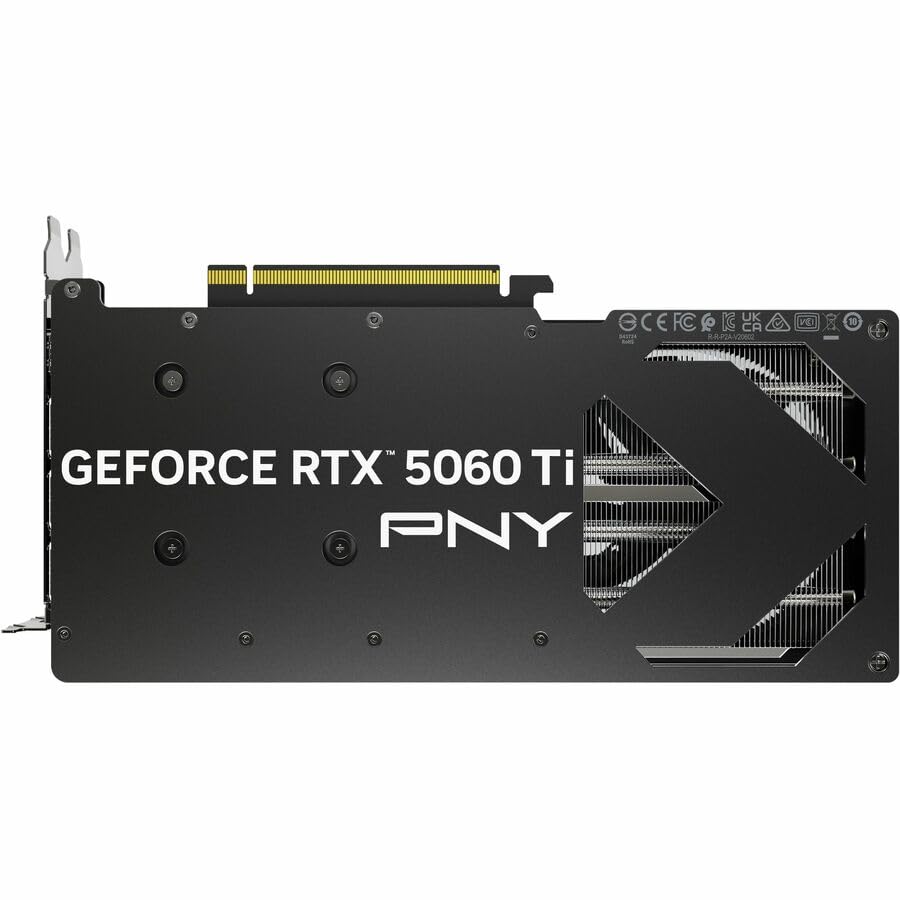
If your budget stretches a little further, stepping up to a 5060 Ti, especially the 16 GB version, delivers a large jump in performance and memory headroom that will age better than either budget card. It is the smarter buy if you can afford it and want more longevity.
Within the entry tier, it is also worth checking current pricing on both the 5050 and the 6600 before deciding, since the 6600’s value case leans heavily on a low price. In a volatile market, the live price often settles a close matchup like this one.
Because the 6600 is an older card, its pricing can swing more on stock and clearance than the newer 5050, which occasionally makes it a standout bargain. Keeping an eye on both listings gives you the best chance of catching the moment when one card’s price makes the decision for you.
Who Should Buy the RTX 5050
Choose the RTX 5050 if you want DLSS 4, stronger ray tracing, newer architecture, and future-proofing. Budget gamers who value modern features and ongoing software gains, or who play games that use DLSS and ray tracing, will be happiest here.
It is also the better pick if you plan to keep the card for several years and want the newer platform, since its feature advantage grows as more games adopt DLSS 4.
For a buyer building their first gaming PC who wants a card that will stay current as long as possible, the 5050 is the safer long-term choice on features alone.
Who Should Buy the RX 6600
Choose the RX 6600 if your priority is efficient, cost-effective rasterized 1080p gaming and you are less concerned with ray tracing or DLSS. Budget buyers focused on frames per dollar in a low-power build get dependable value here, especially when the card is discounted.
It is also a sensible pick for a very tight budget or a compact, efficiency-focused build, where its low power draw and proven design are genuine strengths.
When every dollar counts and the 6600 is available at a clear discount, its value case is hard to argue against for straightforward 1080p gaming, which is exactly the audience it was built for.
See More:
- NVIDIA GeForce Game Ready Driver
- NVIDIA CUDA Toolkit Archive
- Gigabyte GeForce RTX 5070 Windforce OC
- AMD Radeon RX 9070 XT vs NVIDIA GeForce RTX 5070
- PNY GeForce RTX 5070 Ti Triple Fan
Conclusion
The RTX 5050 vs RX 6600 verdict is a values test: the 5050 wins on features, DLSS 4, ray tracing, and future-proofing, while the RX 6600 competes on efficiency and rasterization value, especially at a lower price. With 2026 pricing stable but unlikely to drop soon and real relief years away, the buyer who needs a budget card now is best served by picking the card whose strengths match their priorities and locking it in. Compare current prices for both cards through the links below and buy the one that fits how you actually play.
Frequently Asked Questions
Is the RTX 5050 much faster than the older RX 6600?
Yes, comfortably in most modern titles. The 5050 brings Blackwell architecture with newer RT cores and roughly 130W of board power, while the RX 6600 is an RDNA 2 card from 2021 rated near 132W. The gap widens further in ray traced games and anywhere DLSS is supported.
Do they have the same VRAM?
Both carry 8GB on a 128-bit bus, so neither has a capacity advantage. The 5050 pairs its memory with a modern cache hierarchy while the RX 6600 relies on AMD Infinity Cache to offset limited bandwidth. At 1080p both are adequate, though ultra texture packs can strain either card.
Which is the better pick for a budget 1080p build?
If prices are close, take the RTX 5050 for its newer feature set, AV1 encoding, DLSS 4 support, and longer driver life. The RX 6600 is only the better call when heavily discounted, since it still delivers solid 1080p performance in rasterized games at a very low cost per frame.
What power supply do they need?
Both are undemanding. The RX 6600 runs on a single 8-pin with a 450W recommendation, and the RTX 5050 asks for one 8-pin with roughly 550W suggested. Either fits comfortably in a compact build, though a quality 550W unit gives more headroom for a modern multi-core CPU.
Can either card handle 1440p?
They can, with compromises. Expect medium to high presets and upscaling to reach 60fps in current AAA games. Esports titles run well above 100fps at 1440p on both. If you want native 1440p at maximum settings, step up to a 12GB or 16GB class card instead.

Write Your Review
No reviews yet. Be the first to share your experience!