
- Top Pick: ASUS Prime GeForce RTX 5060 Ti 16GB GDDR7 Gaming Graphics Card
- Best Value: ASUS Dual GeForce RTX 5060 Ti 16GB GDDR7 OC Edition Gaming Graphics Card
- Premium Choice: GIGABYTE GeForce RTX 5060 Ti WINDFORCE OC 16G Graphics Card, Cooling System, 16GB 128-bit GDDR7, PCIe 5.0, by NVIDIA, DisplayPort & HDMI – Video Output Interface, GV-N506TWF2OC-16GD Video Card
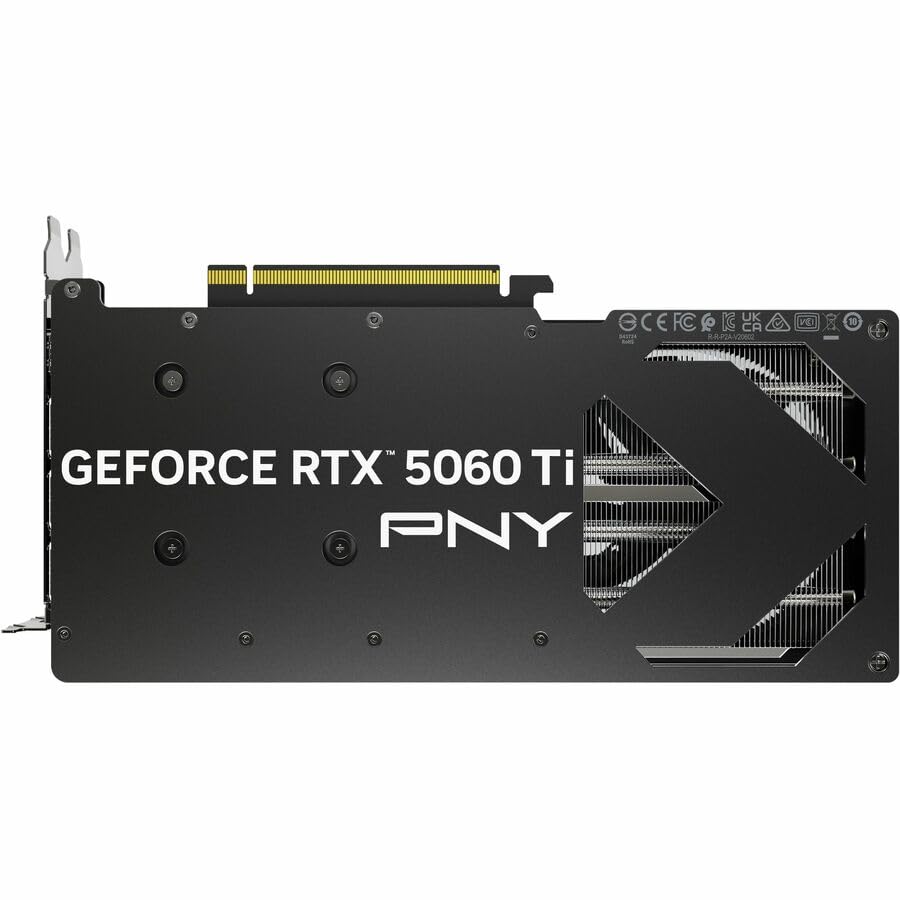


PNY GeForce RTX 5060 Ti 16GB review searches usually come from one of two places: you have spotted the PNY listed below the MSI and ASUS equivalents and want to know the catch, or you are trying to work out whether 16GB at this price is the bargain it looks like. Both are fair questions and both have clear answers. There is a third question that has become more urgent than either: board partners have reported this exact SKU as end of life while Nvidia disputes it, which makes the timing part of the review rather than a footnote.
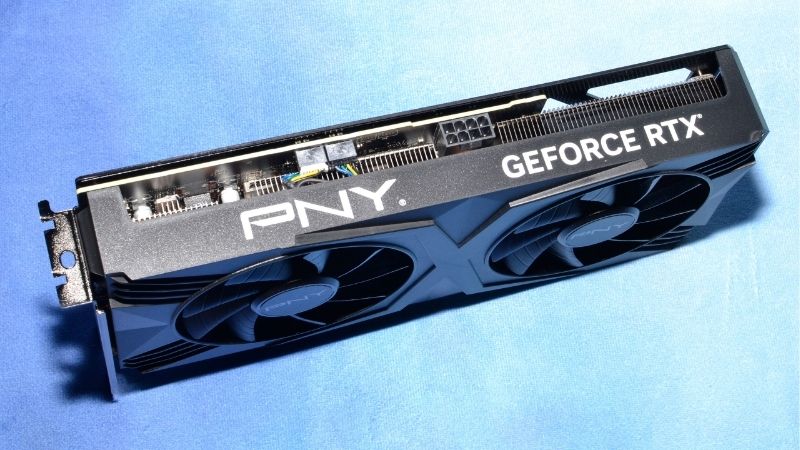
What the PNY RTX 5060 Ti 16GB Actually Is
PNY builds several cards in this family and the names are close enough to cause real mistakes. The part number is the only reliable identifier, and getting it wrong costs you either 8GB of VRAM or money you did not need to spend.
As an Amazon Associate we earn from qualifying purchases at no extra cost to you.


The Models and Their Part Numbers
The card most buyers want is the PNY RTX 5060 Ti 16GB Dual Fan OC, part number VCG5060T16DFXPB1-O. PNY also sells an EPIC-X RGB variant of the 16GB, and separately an RTX 5060 Ti 8GB Triple Fan ARGB OC under VCG5060T8TFXXPB1-O.
Listings for these run to fifteen words and differ by two characters. “RTX 5060 Ti 16GB Dual Fan OC” and “RTX 5060 Ti 8GB Triple Fan ARGB OC” sit next to each other in search results, and the 8GB triple-fan looks like the more premium product from the title alone.
Check the part number in the listing body before checking out, not the title.
The Silicon: Identical to Every Other 5060 Ti
Underneath is the GB206 die on Nvidia’s 4N process, configured with 4,608 CUDA cores, 36 fourth-generation RT cores, and 144 fifth-generation Tensor cores. Board partners do not receive different chips — they choose the cooler, the clocks, and the warranty.
Memory is 16GB of GDDR7 on a 128-bit bus delivering 448 GB/s. Total board power is 180W. The interface is PCIe 5.0 x8.
| Spec | PNY RTX 5060 Ti 16GB Dual Fan OC |
|---|---|
| Part number | VCG5060T16DFXPB1-O |
| GPU | GB206, Blackwell, 4N |
| CUDA cores | 4,608 |
| RT / Tensor cores | 36 / 144 |
| Memory | 16GB GDDR7, 128-bit, 448 GB/s |
| Memory layout | 8x 2GB modules, clamshell |
| TBP | 180W |
| Interface | PCIe 5.0 x8 |
| PSU recommended | 600W |
| MSRP | $429 |
How the 16GB Is Physically Achieved
This detail explains the card’s whole character. The 16GB model does not have a wider bus than the 8GB one. It uses eight 2GB GDDR7 modules in a clamshell arrangement — four on the front of the PCB, four on the back — against the 8GB model’s four chips on one side.
Doubling capacity this way costs nothing in bus width and gains nothing in bandwidth. Both cards move data at 448 GB/s. The 16GB simply holds twice as much.
It also explains the supply problem. Twice the modules means twice the exposure to GDDR7 contract pricing, which is precisely why this SKU rather than its 8GB sibling ended up in the end-of-life reports.
Performance: Where This Card Belongs
Because the silicon is identical across partners, an AIB review is really a review of sustained clocks and thermals. The more useful question is which resolution this tier actually serves, and the answer is narrower than the VRAM figure suggests.
1080p Is Its Home Ground
At 1080p the 128-bit bus stops being a limitation. The pixel load is low enough that 448 GB/s keeps up, and this is a genuinely strong card at high and ultra settings with ray tracing enabled.
Against the previous generation it lands roughly 20–25% ahead of the RTX 4060 Ti in titles without frame generation. With DLSS 4.5 and Multi Frame Generation the gap widens substantially in supported games.
Testing across the 8GB and 16GB configurations shows minimal separation at 1080p in most titles. VRAM capacity is simply not the constraint at that resolution — which is worth knowing before you pay for it.
1440p Is Where It Runs Out of Road
Here is the part the marketing avoids. 16GB on a $429 card looks like the value of the generation — an RTX 5070 Ti has the same 16GB and costs $320 more at MSRP.
The 5070 Ti runs a 256-bit bus at 896 GB/s. This card runs 128-bit at 448 GB/s. Exactly half. Capacity determines whether assets fit; bandwidth determines how fast they reach the shaders.
A card can hold a 1440p Ultra texture set comfortably in 16GB and still stutter, because the memory subsystem cannot move data quickly enough when the scene loads up. The symptom appears in 1% lows, not averages — which is why benchmark headlines flatter this card and extended play does not.
Where the 16GB Genuinely Earns Its $50
Two cases. First, 1080p with ray tracing and Ultra texture packs, where 8GB starts filling and the frame times show it.
Second, and more compelling: anything that is not gaming. Local AI inference, Stable Diffusion, video timelines, and multi-streaming consume VRAM in ways games do not, and 8GB is genuinely restrictive there. For $50 over the 8GB model, this is the cheapest VRAM in the lineup.
The 180W TBP helps here too. A quality 600W supply runs it, and the card fits builds that could not take a 5070 Ti. For a compact machine doing occasional AI work, that combination is hard to replace.
Pros and Cons from Owner Reports
PNY gets thin professional review coverage, which is exactly why buyers hesitate. Reading across 4–5 star and 2–3 star owner feedback produces a more favourable picture than the price gap implies.
What Positive Reviews Consistently Say
Value dominates. PNY prices below MSI Ventus, ASUS PRIME, and Gigabyte on equivalent silicon — frequently $30–$60 less for the same GB206 die and the same 16GB.
The second theme is that the card is unremarkable, which for a brand buyers are nervous about is high praise. No coil whine dominating the reviews, no PNY-specific driver quirks, no DOA cluster.
Third, the dual-fan design is compact. Where triple-fan 5060 Ti models push toward three slots, PNY’s dual-fan fits small cases and prebuilt upgrades — which is a large part of this tier’s actual market.
What the Complaints Reveal
The recurring negative is expectation rather than defect: buyers who bought 16GB expecting 1440p Ultra performance and found stutter. That is the 128-bit bus doing what a 128-bit bus does, and it is predictable from the spec sheet.
The second is the PCIe 5.0 x8 link. On a PCIe 3.0 motherboard — which describes many of the prebuilts this card upgrades — the narrower link costs measurable performance. Wider cards do not have this problem.
Third, aesthetics and software. PNY’s cooler is plain against RGB-heavy competition, and PNY ships nothing with the polish of MSI Afterburner. Neither affects frame rates.
PNY vs MSI and ASUS: Is the Discount a Trap?
No, with one qualification. Identical silicon, adequate cooling for a 180W card, and a modest factory OC. What you give up is cosmetic polish and PNY’s thinner RMA reputation — which matters more on a $429 card than a $200 one, though less than on a $1,000 one.
Register the card and keep the receipt. Then treat the $30–$60 saving as what it is: a marketing budget you declined to fund.
The Timing Question That Has Become the Review
Normally a review closes on whether the card is good. This one cannot, because whether you can buy it has become the sharper question.
What the End-of-Life Reports Actually Say
At CES 2026, ASUS told Hardware Unboxed that Nvidia had stopped supplying GPUs for the RTX 5060 Ti 16GB and the RTX 5070 Ti, and had placed both into end-of-life status. Retailers across several regions reported the same. Nvidia responded publicly that all SKUs remain in production; ASUS later called the reports incomplete.
The dispute is unresolved. The allocation shift is not: Nvidia’s supply has visibly moved toward 8GB parts, and the RTX 5060 and RTX 5060 Ti 8GB remain readily available while the 16GB has not. The RTX 5080 is now the main 16GB card clearly in normal production.
As of July 2026, this card carries a $429 MSRP and has traded roughly $470–$589 depending on retailer and week.
Why Memory Prices Made This Card the Casualty
Component pricing has continued trending upward, memory foremost. The positive signals are real but modest: the steep late-2025 climb has flattened, and Framework has reported a stretch of relative stability while still warning that volatility remains. New supply is opening — OEMs can source DDR5 from Chinese suppliers such as CXMT, and Micron is building two Idaho fabs — but those do not produce until 2027–2028.
The clamshell layout explains why this SKU specifically. Eight modules rather than four means double the GDDR7 exposure on a card with a mid-range margin. When memory contracts tighten, that is the first product a rational allocator drops.
Who Should Buy It, and When
Buy it if you game at 1080p and want ray tracing on, or if your machine also does local AI or creative work where 8GB genuinely restricts you. Buy it when you see it near $470 rather than deliberating, because the reports suggest what is on shelves is the last batch.
Skip it if you game at 1440p and expect Ultra — the RTX 5070 or a 16GB card with a wider bus is what you want, and the VRAM figure will not rescue this one. Skip it also if your budget is capped near $350; the RTX 5060 8GB near $339 is closer to list and remains in normal supply.
Verify the part number is VCG5060T16DFXPB1-O before ordering, and check your motherboard’s PCIe generation if you are upgrading a prebuilt. If both check out, it is worth looking at current listings sooner rather than later — the PNY models sit at the bottom of the price band, which is exactly why they clear first.
See More:
- Nvidia beta
- Nvidia CUDA 11.8
- Check CUDA version
- Nvidia GPU for gaming
- PNY GeForce RTX 5080 16GB OC review
Final Verdict on the PNY GeForce RTX 5060 Ti 16GB
The PNY GeForce RTX 5060 Ti 16GB review verdict is straightforward on the hardware: identical GB206 silicon, 4,608 CUDA cores, and 16GB of GDDR7 in a compact dual-fan card that costs less than the equivalents because PNY spends less on marketing. The discount is not a compromise on anything that makes frames.
The two things that will actually determine whether it is right for you are the 128-bit bus and the calendar. 448 GB/s makes this an excellent 1080p card and a compromised 1440p one regardless of the 16GB — read the bandwidth column before the VRAM column. And board partners have declared this SKU end of life while Nvidia disputes it, which means the usual advice to wait for a better price is the wrong advice this year. If it fits what you play and it appears near list, that is the moment.
Frequently Asked Questions
Why does the 16GB version matter so much on this card?
The 5060 Ti is genuinely capable at 1440p, and that is exactly the resolution where an 8GB buffer starts producing frame time spikes with ultra textures and ray tracing. The 16GB version removes that ceiling for the same GPU, so it converts a card that is limited by memory into one limited only by compute.
Does the 128-bit bus bottleneck 16GB of memory?
Not in the way people expect. The GDDR7 modules deliver roughly 448GB per second on that 128-bit bus, and Blackwell adds a large L2 cache that absorbs a substantial share of memory traffic. Capacity and bandwidth address different failure modes, and the 16GB configuration solves the one that causes visible stutter.
What power supply does it need?
Total board power is about 180W and Nvidia recommends a 600W system supply. PNY 5060 Ti cards use a standard 8-pin PCIe connector, so no ATX 3.1 unit or 12V-2×6 adapter is required. A quality 600W to 650W supply paired with a mainstream CPU is comfortable with good headroom.
Is it a sensible upgrade from an RTX 3060 Ti?
Yes, on two counts. Raw performance is meaningfully higher, and more importantly you double the memory buffer and gain DLSS 4 multi frame generation, which the 3060 Ti cannot use at all. You also drop from around 200W to about 180W, so no power supply change is required in most builds.
Will it fit a compact case?
PNY dual-fan 5060 Ti designs are relatively short, commonly under 250mm and two slots thick, which suits mATX and many small form factor cases. Measure the maximum GPU length your case supports and check for obstruction from front radiators or drive cages before committing to a specific variant.
Ready to decide? Our #1 pick for 2026 is the Part number.
Live price & availability on Amazon.


Write Your Review
No reviews yet. Be the first to share your experience!