
- Top Pick: ASUS Prime GeForce RTX 5070 12GB GDDR7 OC Edition Gaming Graphics Card
- Best Value: GIGABYTE GeForce RTX 5070 WINDFORCE OC SFF 12G Graphics Card, 12GB 192-bit GDDR7, PCIe 5.0, WINDFORCE Cooling System, GV-N5070WF3OC-12GD Video Card
- Premium Choice: ASUS Prime GeForce RTX 5070 12GB GDDR7 White OC Edition Gaming Graphics Card
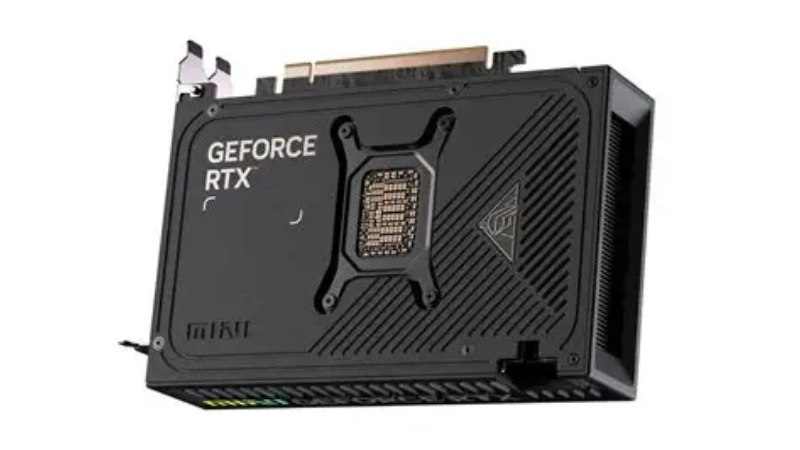
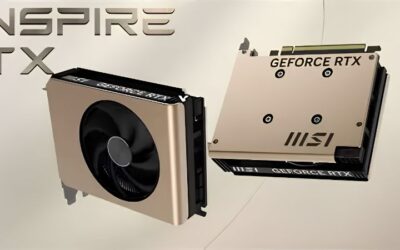
- The Exact Dimensions of the iGame GeForce RTX 5070 Mini OC 12GB-V
- Thermals, Noise and the Trade-off SFF Builders Are Actually Making
- What 2026 Pricing Means Before You Order This Card
- Final Verdict on the iGame GeForce RTX 5070 Mini OC 12GB-V
- Related Guides
- Frequently Asked Questions
- Related Articles
- Related Guides


iGame GeForce RTX 5070 Mini OC 12GB-V is the card you search for when your case has a hard GPU clearance limit and every other RTX 5070 is too long. You do not need a fifteen-minute video to tell you Blackwell is fast. You need three numbers — length, height, thickness — plus where the power connector sits and whether the cooler survives 250W in a shoebox. This page gives you those numbers first, the measured thermal data second, and an honest answer about buying one third. Two of those answers are better than you expect. One is not.
The Exact Dimensions of the iGame GeForce RTX 5070 Mini OC 12GB-V
Colorful builds this card to NVIDIA’s SFF-Ready specification and then goes well past it. The measurements below are the official figures and they are the reason this SKU exists at all. If you are cross-referencing against your case manual, these are the numbers to write down.
As an Amazon Associate we earn from qualifying purchases at no extra cost to you.




Length, Height and Slot Height: The Numbers That Decide the Fit
The card measures 180 × 123 × 39.8 mm and occupies a true two slots. Not 2.2, not “2-slot but the backplate adds a bit” — 39.8 mm is under the 40 mm that two PCIe slots give you, so a third slot stays free.
Put that against the alternatives and the gap is obvious:
| Card | Length | Height | Thickness | Slots |
|---|---|---|---|---|
| iGame RTX 5070 Mini OC 12GB-V | 180 mm | 123 mm | 39.8 mm | 2 |
| RTX 5070 Founders Edition | 245 mm | — | ~40 mm | 2 |
| Previous-gen iGame RTX 40 Mini | 188 mm | 130.55 mm | 45.8 mm | 2.5 |
| Typical triple-fan RTX 5070 | 300–330 mm | 120–140 mm | 50–65 mm | 2.5–3 |
180 mm is roughly the length of a Mini-ITX motherboard. That is the practical benchmark: if your chassis accepts an ITX board along that axis, this card clears. It is the only single-fan RTX 5070 any brand makes.
The 16-Pin Connector and Cable Clearance in a Tight Case
Power comes from a single 16-pin 12V-2×6 connector rated for 300W input. This is the detail that catches SFF builders out, and it deserves more attention than the length figure.
The card is 180 mm long, but a 12V-2×6 cable needs bend radius above the connector. A standard adapter with a rigid pigtail can add 30–40 mm of effective depth before the cable turns. In a chassis with a 190 mm GPU limit, you clear the card and then fail on the cable. Budget a 90-degree 12V-2×6 adapter or a native ATX 3.x cable from your PSU, and measure from the connector face to the side panel, not from the card’s end.
Practical checklist before ordering: confirm your PSU is ATX 3.0/3.1 with a native 12V-2×6 lead, or plan for an angled adapter; confirm at least 190 mm of clearance including cable bend; confirm your third slot is free if you want the extra airflow gap.
The Silicon Underneath: GB205 in a 180 mm Shell
Nothing is cut down. This is a full RTX 5070: GB205 silicon with 48 of 50 SMs enabled, 6,144 CUDA cores, 192 Tensor cores, 48 RT cores, 192 TMUs, 80 ROPs and 48MB of L2 cache. Memory is 12GB GDDR7 across a 192-bit bus at 28 Gbps, giving 672 GB/s — a 33% bandwidth increase over the RTX 4070 at the same capacity.
Colorful ships it with a factory overclock: 2,557 MHz boost against the 2,512 MHz reference figure. That is a 1.8% clock bump, which is a marketing number rather than a performance one. Total graphics power stays at 250W. Interface is PCIe 5.0. You are not trading silicon for size — you are trading cooling headroom for size, which is a different bargain.
Thermals, Noise and the Trade-off SFF Builders Are Actually Making
This is where the review data matters more than the spec sheet, because a 250W GPU with one fan and 180 mm of heatsink is a physics problem. Colorful’s answer is a dense aluminium fin-stack with four copper heat pipes, a single 100 mm fan, and a metal frame shroud with the fins protruding through it — the same idea NVIDIA uses on Founders Edition cards. It works better than it has any right to. It still costs you something.
81.1°C at 35 dBA: What the Noise-Normalised Data Shows
TechPowerUp’s cooler comparison holds every card at a fixed 35 dBA measured at 50 cm with a 250W heat load, which removes fan-curve differences from the equation. Under that test the iGame Mini OC settles at 81.1°C.
| RTX 5070 model (35 dBA, 250W load) | GPU temperature |
|---|---|
| iGame RTX 5070 Mini OC | 81.1°C |
| Zotac RTX 5070 Solid (warmest of the rest) | 63.2°C |
| ASUS, MSI, Palit, Galax cluster | mid-50s to low-60s |
That is roughly 18°C above the next-warmest card. It was also the loudest of the group tested. Read honestly, though: 81°C is well inside NVIDIA’s thermal envelope, and against the Founders Edition — a 245 mm dual-fan card — the Mini’s cooler is not far off in efficiency. The card is not a barbecue. It is a card that gave up 65 mm of length and paid for it in dB and degrees.
Where DLSS 4.5 and Multi Frame Generation Change the Maths
The 12GB buffer is the specification people argue about, and it is the one Blackwell’s feature stack partially answers. DLSS 4.5 uses an updated Transformer-based model that improves image quality over the version that shipped with the RTX 50 series, and NVIDIA’s CES 2026 update raised Multi Frame Generation to generating up to five AI frames per rendered frame.
For an SFF build this is not a gimmick — it is thermal strategy. Rendering at a lower internal resolution and reconstructing upward means less time at the 250W ceiling, which means less time at 81°C and less fan noise. In a compact case, upscaling is a cooling feature as much as a performance one.
Where it does not save you: VRAM. Frame generation costs memory rather than saving it, and 12GB at 1440p with ray tracing and high textures is the ceiling this card will hit first. If you plan to hold this GPU for five years, that number, not the temperature, is the one to worry about.
Pros and Cons of the iGame RTX 5070 Mini OC 12GB-V
Weighed against what an SFF builder actually needs, the ledger is unusually lopsided in both directions.
Pros: 180 × 123 × 39.8 mm in a strict two-slot envelope, the smallest RTX 5070 that exists. Full uncut GB205 with no shader or bus reduction. Solid metal backplate and a genuine FE-style fin-stack rather than plastic. Single 16-pin feed keeps cable clutter down. ARGB is configurable through iGame Center. Thermal behaviour is close to the Founders Edition despite being 65 mm shorter.
Cons: 81.1°C noise-normalised, roughly 18°C behind its peers, and the loudest 5070 in the comparison group. The 2,557 MHz factory OC is functionally meaningless. 12GB is the long-term limitation. Availability is centred on China with essentially no Western distribution. And the price is the real problem — covered below.
What 2026 Pricing Means Before You Order This Card
Here is the part that changes the recommendation, and it has nothing to do with the card’s engineering. The RTX 5070 carries a $550 MSRP. This SKU does not sell anywhere near it, and the market forces behind that are not easing on any timeline that helps your build this year.
The Gap Between MSRP and What You Would Actually Pay
The iGame Mini OC lists around 5,199 yuan on JD.com — roughly $737, with TechPowerUp citing about $760. Against a $550 MSRP that is a premium of $190 to $210, or 35% to 38%, for a cooler that measurably underperforms every competitor. Add import shipping or a proxy service to reach a Western buyer and the gap widens further.
Component and laptop pricing has continued drifting upward rather than settling, and compact SKUs are the most exposed: low volume, niche demand, no pressure on the vendor to discount.
Why the Slowdown in Prices Does Not Rescue This Purchase
There is real positive news, and it deserves a straight reading. Prices have stopped climbing as steeply as they did in late 2025, and manufacturers have reported a stretch of relative stability while still warning that volatility is not over. New memory supply is opening as well: OEMs can source DDR5 from Chinese suppliers such as CXMT, and Micron is building two fabrication plants in Idaho.
The problem is the calendar. Those plants do not come online until 2027–2028. Nothing they produce touches a price tag on the card you are choosing this quarter. What the market has delivered is a plateau, not a drop — flat, not falling. Waiting saves you nothing on a China-market SKU whose price is set by scarcity rather than by memory cost.
The SFF Cards You Can Actually Order Instead
If your case demands sub-200 mm and two slots, you have real options that ship through normal retail channels. The RTX 5060 Ti 16GB in a compact partner design gives you a larger 16GB buffer for less money at 180W, which is 70W easier to cool in a small case. Several SFF-Ready RTX 5070 partner cards land in the 200–250 mm range with markedly better cooling — worth measuring for, because 20 mm of extra length buys roughly 18°C.
Whichever way you go, the supporting parts matter more in SFF than the GPU badge: an SFX or SFX-L power supply with a native 12V-2×6 lead, a 90-degree adapter if your clearance is marginal, and a high-static-pressure exhaust fan to move the heat this class of card produces.
Before you commit, it is worth checking current listings on compact two-slot RTX cards, an ATX 3.1 SFX power supply, and an angled 12V-2×6 adapter — these are the three parts that decide whether an SFF build boots or gets rebuilt.
See More:
- NVIDIA
- NVIDIA DeepStream
- NVIDIA GPU driver update
- NVIDIA GeForce NOW download
- NVIDIA RTX A2000 12GB driver
Final Verdict on the iGame GeForce RTX 5070 Mini OC 12GB-V
The iGame GeForce RTX 5070 Mini OC 12GB-V is a genuine engineering achievement and a difficult purchase. Colorful squeezed a full, uncut 250W GB205 into 180 × 123 × 39.8 mm and two slots, with no shader cuts and no liquid cooling. If your only question was “does it fit,” the answer is yes, and no other RTX 5070 comes close.
But the honest verdict has to include the other two numbers. It runs 81.1°C where its rivals run in the high 50s and low 60s at the same noise level, and it costs $737 to $760 against a $550 MSRP in a market where prices have flattened but not fallen and real supply relief is still two years out. You are paying a 35% premium for the worst cooler in the class, and buying it outside China means import friction on top.
Buy it if your chassis has a hard limit under 190 mm and you have already ruled everything else out — in that narrow case it is the only card that works, and it works better than it should. For every other SFF build, measure your clearance honestly first: 20 mm more room opens up cards that are cooler, quieter, cheaper and actually in stock. Check your case manual, then check what is available today before the next price adjustment lands.
Frequently Asked Questions
Will this card actually fit a small form factor case?
That is the entire point of the Mini design, which trims length to roughly the 200mm class and stays within two and a half slots. It clears most SFX-based ITX cases that accept a dual-slot card, but always confirm your chassis GPU length and thickness limits plus clearance for the side panel and cabling.
Does the compact cooler cause thermal throttling?
Under sustained load a smaller heatsink runs warmer than a triple-fan board, typically landing in the low to mid seventies Celsius with higher fan speeds. That is well within the thermal limit, so you lose only a small amount of boost clock. Good case intake airflow matters far more here than on a full-size card.
What power connector and PSU does it require?
The RTX 5070 is a 250W part, and Mini variants normally use a single 12V-2×6 connector with a supplied adapter, or a dual 8-pin input depending on revision. NVIDIA recommends a 650W supply. In an ITX build, an SFX unit of 650W or higher with native cabling keeps the internal clutter manageable.
Is 12GB of memory enough for 1440p gaming?
Yes for the current generation of titles at high settings, including ray tracing with DLSS enabled. The tighter cases arise at 4K with ultra textures or when frame generation adds its own memory overhead. For a small form factor 1440p machine the 12GB buffer is adequate for the next few years.
How much does the factory overclock add?
Very little in practice, usually two to three percent, because Blackwell boost behavior is limited by power and temperature rather than the advertised clock. Treat the OC badge as a minor bonus and buy this card for its dimensions and acoustics instead. Undervolting typically gains more efficiency than the factory tune.
Ready to decide? Our #1 pick for 2026 is the Card.
Live price & availability on Amazon.

Write Your Review
No reviews yet. Be the first to share your experience!