
- Top Pick: GIGABYTE Radeon RX 9070 XT Gaming OC 16G Graphics Card, PCIe 5.0, 16GB GDDR6, GV-R9070XTGAMING OC-16GD Video Card
- Best Value: GIGABYTE Radeon™ RX 9070 XT Gaming OC ICE 16G Graphics Card (16GB GDDR6, 256-bit, PCIe 5.0, HDMI/DP 2.1, 2.7 Slot, Hawk Fan, Server-Grade Thermal Gel, Reinforced Structure)
- Premium Choice: ASUS Prime Radeon RX 9070 XT 16GB GDDR6 OC Edition Gaming Graphics Card


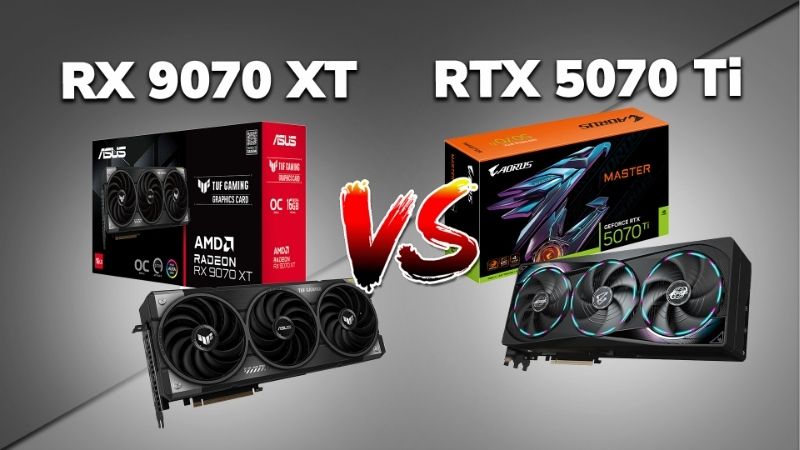
AMD Radeon RX 9070 XT vs 5070 is a mid-range showdown that captures the classic 2026 trade-off: AMD’s value-and-VRAM approach against Nvidia’s efficiency and DLSS 4. The 9070 XT brings more raw power and memory, while the RTX 5070 leans on lower power draw and mature AI features. This comparison lays out the specs, the 1440p performance, ray tracing, upscaling, VRAM, and price-per-frame, and gives a clear verdict on which mid-range GPU is the smarter buy for you.
As an Amazon Associate we earn from qualifying purchases at no extra cost to you.


The Quick Verdict: RX 9070 XT vs RTX 5070
For the impatient reader, the RX 9070 XT is the more powerful card with more VRAM, while the RTX 5070 is the more efficient option with DLSS 4 and lower power draw. The 9070 XT generally wins on raw performance and value, while the 5070 appeals to buyers who prize efficiency and Nvidia’s feature set.
If You Want More Power and VRAM
The RX 9070 XT is the stronger performer of the two. As AMD’s higher mid-range card, it offers more raw rasterized power and a larger 16 GB VRAM pool than the RTX 5070’s 12 GB.
If you want the most frames per dollar and extra memory headroom for demanding games, the 9070 XT is the more capable choice, particularly for high-refresh 1440p gaming.
The extra VRAM is worth emphasizing for longevity, since memory pressure is one of the first things to force compromises as games grow heavier. The 9070 XT’s larger pool buys real breathing room over the coming years.
If You Want Efficiency and DLSS 4
The RTX 5070 makes its case on efficiency and features. It draws noticeably less power and brings DLSS 4 with multi-frame generation, Nvidia’s most advanced upscaling.
For a cooler, quieter, lower-power build, or if ray tracing and DLSS matter to you, the 5070 is the more refined option even though it gives up some raw performance and VRAM to the 9070 XT.
That efficiency also translates into a simpler, cheaper build overall, since a lower-power card pairs with a smaller supply and less cooling. For compact systems especially, the 5070 removes friction that a hungrier card can add.
The Short Answer
Decide on power and value versus efficiency and features. If you want the most performance and VRAM for the money, the 9070 XT is your card. If you prioritize low power, ray tracing, and DLSS 4, the 5070 is the smarter pick.
The sections below explain the gap so you can choose the mid-range card that fits how you actually play.
Neither card is a wrong choice; they optimize for different buyers. The 9070 XT is the power-and-value pick, the 5070 is the efficiency-and-features pick, so your own priorities largely make the call.
RX 9070 XT vs RTX 5070 Spec Comparison
Specs frame the debate, so here are the core numbers side by side. The two differ in VRAM, memory bus, power, and upscaling approach, which is what creates their contrasting strengths. Treat these as representative planning figures, since exact clocks vary by model.
| Specification | AMD RX 9070 XT | Nvidia RTX 5070 |
|---|---|---|
| Architecture | RDNA 4 | Blackwell |
| VRAM | 16 GB GDDR6 | 12 GB GDDR7 |
| Memory bus | 256-bit | 192-bit |
| Typical board power | ~304 W | ~250 W |
| Ray tracing | Improved RDNA 4 RT | 4th-gen RT cores |
| Upscaling | FSR | DLSS 4 (multi-frame gen) |
| Recommended PSU | ~750 W | ~650 W |
| Best target | 1440p high-refresh | 1440p, efficient builds |
Reading the Spec Table
The 9070 XT leads on raw resources, with more VRAM and a wider memory bus than the RTX 5070. That extra memory and bandwidth translate into stronger performance and more headroom for demanding games.
The RTX 5070 counters with efficiency and features. It draws considerably less power, uses faster GDDR7, and brings DLSS 4, trading some raw power for a leaner, more feature-rich package.
In short, you are trading raw resources for efficiency and features. The 9070 XT gives you more memory and power, the 5070 gives you a cooler, more modern feature set, and the right answer depends on which you value more.
VRAM and Memory
The 9070 XT’s 16 GB is a meaningful advantage over the 5070’s 12 GB, especially as newer games grow more memory-hungry. That extra headroom helps with high-resolution textures and future longevity.
The 5070’s 12 GB is adequate for 1440p today but is the tighter figure of the two, paired with faster GDDR7 to help offset the smaller pool. For buyers focused on longevity, the 9070 XT’s larger memory is the safer bet.
For a 1440p gamer today, 12 GB is workable, but the trend is clear that games keep asking for more. If you plan to keep the card for several years, the extra 4 GB on the 9070 XT is a meaningful hedge against that trend.
Power and Efficiency
The RTX 5070 is the clear efficiency winner, drawing roughly 250 W against the 9070 XT’s 304 W and recommending a smaller power supply. That makes it easier to fit into a compact or lower-power build.
The 9070 XT’s higher draw comes with its extra performance, but it means more heat and a beefier PSU requirement. For a quiet, cool, efficient system, the 5070 has the edge.
This matters beyond electricity bills. A cooler, lower-power card is quieter under load and easier to cool in a small case, which are real quality-of-life benefits that a raw performance chart never captures.
For many buyers building in a mid-tower or smaller, that easier cooling is worth as much as a few extra frames, which is why efficiency deserves real weight in the decision.
Deep Dive Face-Off: Performance and Features
Beyond the spec sheet, what matters is how these cards perform in real games and where their strengths show. Comparing them by criteria rather than raw numbers reveals which one truly fits your needs.
Rasterized 1440p Performance
In rasterized 1440p gaming, the RX 9070 XT generally holds a performance advantage thanks to its extra power and memory bandwidth. It delivers high frame rates with headroom to spare in most titles.
The RTX 5070 is no slouch and handles 1440p comfortably, but the 9070 XT’s raw performance edge is real and measurable in demanding games. For pure rasterized frames, the AMD card leads.
This performance gap is a core part of the 9070 XT’s value argument, since it offers more raw capability, which appeals strongly to players focused on high-refresh rasterized gaming.
For competitive and esports players in particular, that raw frame advantage is exactly what they want, since higher, more consistent frame rates translate directly into a smoother, more responsive feel in fast-paced games.
Ray Tracing and DLSS 4
Ray tracing narrows the gap and can reverse it. The RTX 5070’s fourth-generation RT cores handle ray-traced titles well, and RDNA 4 improves AMD’s ray tracing but the 5070 remains competitive here.
Upscaling is the 5070’s trump card. DLSS 4 with multi-frame generation is a genuine experimental advantage, using AI to boost frame rates in supported games. FSR is capable and works across more hardware, but Nvidia’s approach and roadmap keep it ahead today.
So while the 9070 XT wins raw raster, the 5070 fights back with ray tracing efficiency and DLSS 4, which can level or tilt the experience in supported games. Your library decides how much this matters.
For players who mostly enjoy competitive and rasterized titles, the 9070 XT’s raw edge dominates; for those drawn to ray-traced showcase games, the 5070’s features close the gap and can even flip the result. Neither answer is universal.
Pros and Cons of Each Card
The RX 9070 XT’s strengths are stronger raw performance, more VRAM, and excellent value for high-refresh 1440p. Its trade-offs are higher power draw and an upscaling stack that trails DLSS 4.
The RTX 5070’s pros are excellent efficiency, DLSS 4, lower power and heat, and easy fit in compact builds. Its cons are less VRAM, a narrower bus, and lower raw performance than the 9070 XT. Power and value go to the 9070 XT; efficiency and features go to the 5070.
The cleanest way to choose is to weigh raw performance and VRAM against efficiency and DLSS 4. That single trade-off captures the whole comparison, since each card is essentially the strongest expression of one side of it.
Price, Alternatives, and the 2026 Decision
A mid-range purchase is a budget decision, and the 2026 market has a shape worth understanding before you commit. Pricing affects not just what you pay but whether waiting makes any sense.
Where Prices Stand
The steep climb of late 2025 has cooled into a relatively stable stretch, making a purchase now less risky than it recently felt. That stability is welcome after a long run of increases.
But stable is not cheap. Prices have plateaued rather than fallen, and memory-heavy cards remain premium. New supply is coming through additional DDR5 sourcing and Micron’s new Idaho fabs, yet those plants are not expected to run until roughly 2027 to 2028, so real relief is years out. In short, prices have paused, not dropped, and waiting for a near-term crash is a weak strategy.
In this mid-range bracket, small price differences swing the value verdict quickly, so it genuinely pays to compare the two at the moment you buy. A modest discount on either card can be enough to make it the clear winner on the day.
The Alternative: RTX 5070 Ti or RX 9070
If you want a step up from either card, the RTX 5070 Ti adds performance and VRAM with Nvidia’s features, while the standard RX 9070 offers strong value just below the XT. Both are worth a look depending on your budget.
These alternatives can better match specific priorities and price points. You can compare the RX 9070 XT, the RTX 5070, and these alternatives through the links in this guide to see which fits your budget today.
Prices on all of these shift with sales and stock, so check them together when you buy. The smartest pick is whichever delivers the performance you need at the lowest price on the day rather than a fixed favorite.
Which Should You Buy?
Buy the RX 9070 XT if you want the most rasterized performance and VRAM for the money and can accommodate its higher power draw. Buy the RTX 5070 if you prioritize efficiency, ray tracing, and DLSS 4 in a cooler, lower-power build.
With prices stable rather than falling, this is a reasonable window to buy rather than wait. Check current deals on both cards and the alternatives through the links here, and choose the one that matches how you play and what you want to spend.
Above all, buy for your monitor and your games. A card matched to your resolution and the titles you play delivers a better experience than one chosen on a single spec, whether that spec is VRAM or a feature checklist.
See More:
Final Verdict: RX 9070 XT vs RTX 5070
The AMD Radeon RX 9070 XT vs 5070 decision is a clear trade-off between power and efficiency. The 9070 XT delivers more raw rasterized performance and VRAM for the money, making it the value and longevity pick, while the RTX 5070 counters with lower power, DLSS 4, and ray tracing efficiency for a cooler, more feature-rich build.
With supply relief years out and prices merely stable, buying now is reasonable rather than a gamble. Compare the RX 9070 XT, the RTX 5070, and the RTX 5070 Ti and RX 9070 alternatives through the links in this comparison, and pick the mid-range card that best fits your priorities and budget.
Frequently Asked Questions
Which card wins on raw performance?
The RX 9070 XT is the stronger card in rasterized games, typically leading the RTX 5070 by a comfortable margin at 1440p and 4K thanks to 64 compute units and 16GB of memory. The 5070 closes the gap in ray traced titles and can exceed it with multi frame generation enabled.
How much VRAM does each one have?
The RX 9070 XT ships with 16GB of GDDR6 on a 256-bit bus, while the RTX 5070 has 12GB of faster GDDR7 on a 192-bit bus. For 4K textures, heavy mods and ray tracing at high settings, the extra 4GB on the AMD card is the more future-proof configuration.
What are the power and PSU requirements?
The 9070 XT has a 304W board power and commonly uses two or three 8-pin connectors, so plan on a solid 750W to 850W supply. The RTX 5070 sits near 250W with a single 12V-2×6 connector, and a good 650W unit is typically sufficient.
How do FSR 4 and DLSS 4 compare?
FSR 4 is a genuine leap for AMD and runs natively on RDNA 4, delivering image quality close to DLSS in many scenes. DLSS 4 still has broader game support, a longer track record and multi frame generation, so NVIDIA keeps the edge in the number of titles that benefit.
Which is the better buy for the money?
If you play raster-heavy games at 1440p or 4K and want maximum frames per dollar, the RX 9070 XT is the value pick. Choose the RTX 5070 if you rely on CUDA, do video encoding, want the widest ray tracing support, or need a lower power build.

Write Your Review
No reviews yet. Be the first to share your experience!