
- Top Pick: GIGABYTE Radeon™ RX 9070 XT Gaming OC ICE 16G Graphics Card (16GB GDDR6, 256-bit, PCIe 5.0, HDMI/DP 2.1, 2.7 Slot, Hawk Fan, Server-Grade Thermal Gel, Reinforced Structure)
- Best Value: Sapphire 11348-03-20G Pulse AMD Radeon™ RX 9070 XT Gaming Graphics Card with 16GB GDDR6, AMD RDNA 4
- Premium Choice: XFX Mercury AMD Radeon RX 9070XT OC Magnetic Air Edition with RGB 16GB GDDR6 HDMI 3xDP, AMD RDNA 4 RX-97TMARGB9


The AMD Radeon RX 9070 XT vs RTX 5080 showdown pits value against outright power at the high end, and it is one of the toughest calls enthusiasts face in 2026. AMD’s RX 9070 XT delivers flagship-tier raster performance at a friendlier price, while NVIDIA’s RTX 5080 answers with superior ray tracing, DLSS 4 multi-frame generation, and stronger creative and AI credentials. Spend wrong here and you either overpay or miss features you will wish you had. This comparison breaks down the raw specifications, 1440p and 4K gaming, ray tracing and upscaling, power and compatibility, and honest price-to-value math. We also cover a smart alternative and what rising prices mean for buying now. Read the quick verdict first if you are short on time.
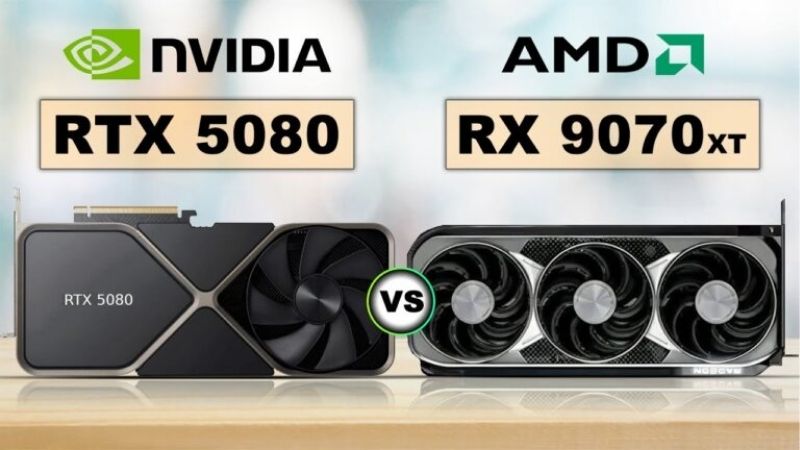
RX 9070 XT vs RTX 5080: The Quick Verdict
Both cards are genuine high-end performers, but they win in different arenas. The RTX 5080 is the faster, more feature-rich card, especially in ray tracing and AI-driven upscaling, while the RX 9070 XT delivers most of the raster experience for noticeably less money. Your resolution, your love of ray tracing, and your budget decide it. Here is the fast answer, then who each card suits.
As an Amazon Associate we earn from qualifying purchases at no extra cost to you.




The One-Line Answer for Busy Buyers
The RTX 5080 wins overall on performance, ray tracing, and features. The RX 9070 XT wins on value, delivering strong raster performance for a lower price.
So if you want the best possible 4K experience with maximum ray tracing and the newest DLSS, the 5080 is the pick. If you want near-flagship raster gaming without paying flagship money, the 9070 XT is the value star. The gap is widest in ray tracing and narrowest in traditional rasterized games.
Who Should Pick the AMD Radeon RX 9070 XT
Choose the RX 9070 XT if you play mostly rasterized games at 1440p or high-refresh 4K and want to keep more money in your pocket. Its strong raster output and generous memory make it a superb value for pure gaming.
It is also the right call if you find NVIDIA’s high-end pricing hard to justify. With RDNA 4’s improved ray tracing and FSR 4 upscaling, AMD has closed much of the gap that once made this an easy NVIDIA win.
Who Should Pick the RTX 5080
Choose the RTX 5080 if you want the best ray tracing, the smoothest DLSS 4 experience, and top-tier performance at 4K. Its Blackwell architecture and GDDR7 memory deliver a clear lead in the most demanding scenarios.
It is also the smarter buy if you do serious creative or AI work alongside gaming, where NVIDIA’s CUDA ecosystem and stronger ray tracing pull ahead. For a no-compromise flagship experience, the 5080 justifies its premium.
Specifications and Performance Face-Off
The specs frame why the 5080 leads on features while the 9070 XT stays competitive on raster. NVIDIA brings newer memory and a stronger ray tracing pipeline, while AMD counters with excellent raw shading power and aggressive pricing. The numbers explain the gaming results that follow.
Core Specs Side by Side
Here are the key specifications that shape performance:
| Spec | RX 9070 XT | RTX 5080 |
|---|---|---|
| Architecture | RDNA 4 | Blackwell |
| Memory | 16 GB GDDR6 | 16 GB GDDR7 |
| Ray tracing | Improved (RDNA 4) | Class-leading |
| Upscaling | FSR 4 | DLSS 4 + multi-frame gen |
| Typical power draw | ~300 W | ~360 W |
| Best resolution | 1440p / 4K | 4K |
Both carry 16 GB, but the 5080’s faster GDDR7 and stronger ray tracing hardware give it the edge in the heaviest workloads, while the 9070 XT keeps pace in raster at a lower price.
Gaming Performance at 1440p and 4K
In traditional rasterized games at 1440p, the two cards are surprisingly close, and the 9070 XT often delivers a flagship-feeling experience for less. Many players would struggle to tell them apart without an overlay running.
At 4K and in the most demanding titles, the RTX 5080 pulls ahead, holding higher framerates thanks to its faster memory and architecture. The gap grows further once ray tracing enters the picture, where NVIDIA’s hardware advantage is most visible. If your target is maxed-out 4K with heavy effects, the 5080 is the stronger performer; if it is high-refresh 1440p raster, the 9070 XT keeps you very happy for less.
Frame pacing and consistency also matter at this level, not just average framerates. Both cards deliver smooth, high-refresh gameplay in raster titles, but the 5080’s extra headroom means it holds its minimums better when a scene gets chaotic at 4K. For a 4K 144 Hz panel, that steadiness is exactly what the premium buys; for a 1440p high-refresh display, the 9070 XT rarely leaves you wanting.
Ray Tracing, DLSS 4, and NVIDIA’s AI Features
Ray tracing is the 5080’s showcase. NVIDIA’s dedicated hardware handles heavy path-traced and ray-traced titles with more grace, and the lead is real in the games that push these effects hardest.
Upscaling widens the divide. DLSS 4 and its multi-frame generation use AI to boost smoothness dramatically in supported games, and this is where NVIDIA’s forward-looking technology shines. AMD’s FSR 4 has taken a big step up in quality and is genuinely competitive, but DLSS still enjoys broader support and a more mature feature set. For buyers who prize AI-driven performance and future optimization, the 5080’s software stack is a strong draw.
It is worth being honest about frame generation, though. Multi-frame generation adds some input latency and works best from a solid base framerate, so it is a smoothness enhancer rather than a way to rescue an overwhelmed card. Because both companies keep improving their upscalers through software, buying either card means gaining performance over time, but NVIDIA’s larger support base gives the 5080 a longer runway in practice.
Value, Power, and Real-World Fit
High-end cards demand a look beyond benchmarks: price, power, and physical fit all shape the experience. This section makes the 9070 XT’s value and the 5080’s premium concrete, and lays out the honest pros and cons of each.
Price-to-Performance: What You Really Pay For
The RX 9070 XT’s headline is value. It typically costs meaningfully less than the RTX 5080 while delivering most of the raster performance, which makes its frames-per-dollar figure the stronger of the two for pure gamers.
The RTX 5080 asks a premium, and you pay it for ray tracing, DLSS 4, GDDR7 speed, and productivity strength. If you play mostly raster games, that premium is hard to justify. If you chase maxed 4K ray tracing or do creative and AI work, it becomes reasonable. Decide which describes you before spending, because at this tier the price gap is real money.
Consider resale and longevity as well. NVIDIA’s high-end cards historically hold value strongly, partly because of their creative and AI appeal, which can offset some of the 5080’s higher upfront cost when you eventually upgrade. The 9070 XT counters with a lower entry price today, so the smarter financial choice depends on whether you value spending less now or recouping more later.
Power Draw, PSU, and Case Compatibility
Both cards are power-hungry, but the 5080 draws more, around 360 W versus roughly 300 W for the 9070 XT. Plan a quality 750 W to 850 W power supply for the 5080 and at least 700 W for the 9070 XT, with headroom for the rest of your system.
Check physical clearance too, as high-end cards are large and some use the 12VHPWR connector, which must be seated fully to avoid trouble. A roomy case with good airflow keeps either card cool and quiet. These practical details matter more at the high end, where thermals and power delivery can make or break stability.
Transient power spikes are a genuine consideration at this tier. High-end cards can briefly draw well above their rated wattage, so a quality power supply with real headroom prevents random shutdowns under load. Do not pair a flagship GPU with a bargain, no-name unit; the money you save there is the money most likely to cause instability you will struggle to diagnose later.
Pros and Cons of Each Card
Here is the honest balance sheet for this RX 9070 XT vs RTX 5080 decision:
| RX 9070 XT | RTX 5080 | |
|---|---|---|
| Pros | Excellent value; strong raster; 16 GB; improved RT | Best ray tracing; DLSS 4; GDDR7; great for AI and creators |
| Cons | Weaker heavy ray tracing; FSR support narrower | Expensive; higher power; premium pricing at this tier |
The pattern is clear. Pay less for near-flagship raster with the 9070 XT, or pay more for the complete feature set and ray tracing crown with the 5080.
The Smart Alternative and What Today’s Prices Mean
At this price level, a third option or good timing can change the calculus. If the 5080 is too dear and the 9070 XT leaves you wanting more ray tracing, a middle path may fit, and the current market rewards buyers who think about timing.
A Third Option Worth Considering
An RTX 5070 Ti sits neatly between these two, offering much of the 5080’s feature set and strong ray tracing at a lower price, which appeals if you want NVIDIA’s software without the flagship cost. On AMD’s side, a standard RX 9070 trims price further while keeping RDNA 4’s improvements.
These alternatives are worth pricing before you decide, because one may deliver the balance of performance, features, and cost you actually want. If that interests you, compare current high-end GPU prices on Amazon alongside both cards here.
Availability is part of the decision at launch windows. High-end cards can sell out or carry inflated third-party pricing early on, so a card with steady stock at fair pricing is often the calmer purchase than chasing a marginally faster model that is hard to find. Buy from sellers with clear return policies to protect a purchase this size.
Should You Buy Now or Wait?
Timing matters in 2026 because component prices have trended upward and the memory shortage behind that rise has not fully cleared. There is cautious good news: prices have stopped climbing as steeply as they did in late 2025, and some hardware makers have reported a period of relative stability, though they still warn of volatility. Strong AI demand, underscored by the United States clearing NVIDIA to sell its powerful H200 chip to China, keeps pressure on the whole supply chain, including the memory these high-end cards rely on.
New supply is on the way from Chinese memory makers and new Micron fabs in Idaho, but those plants are not expected to run until 2027 or 2028. So prices have leveled off rather than fallen, and meaningful relief remains years out. If you are ready for a high-end card now, waiting is a risky bet in the near term.
Final Recommendation
Buy the RTX 5080 if you want the best ray tracing, DLSS 4, and 4K performance, or if you pair gaming with creative and AI work that benefits from NVIDIA’s ecosystem. Buy the RX 9070 XT if you want near-flagship raster gaming at 1440p or high-refresh 4K for a lower price and can live with a smaller ray tracing lead.
For value-driven enthusiasts, the 9070 XT is the smarter spend, while the 5080 is the definitive choice for those who want every feature and the performance crown.
See More:
- Radeon drivers
- What is NVIDIA CUDA Toolkit
- 4080 Super vs 5060 Ti
- NVIDIA PhysX
- NVIDIA Game Ready Driver
Conclusion
The AMD Radeon RX 9070 XT vs RTX 5080 decision comes down to value versus a complete feature set, and the right answer depends on how much you care about ray tracing, DLSS 4, and 4K versus keeping your budget in check. The 5080 leads on features and heavy workloads; the 9070 XT delivers most of the raster experience for less, with a 5070 Ti bridging the two. With prices only stabilizing rather than falling and AI demand keeping the market tight, there is little reason to wait if you are ready. Weigh features against budget, then check today’s prices to secure the high-end GPU that fits you best.
Frequently Asked Questions
Can the RX 9070 XT compete with the RTX 5080?
Not on raw performance. The 9070 XT is a high-end 1440p and entry 4K card, while the 5080 targets 4K flagship performance with far greater bandwidth from GDDR7. Expect the 5080 to lead by roughly 30 to 45 percent in raster, and more in path traced workloads.
Do they have the same amount of VRAM?
Both carry 16GB, so texture capacity is equivalent and neither will run short at 4K in current games. The difference is memory speed rather than size, with GDDR7 on the 5080 supplying substantially more bandwidth to feed its larger shader array at high resolutions.
How much power does each card draw?
The 9070 XT sits around 300 to 320 watts and uses conventional eight-pin connectors on most models, so a quality 750 to 850 watt supply suffices. The 5080 draws roughly 360 watts through a 12V-2×6 connector and benefits from an ATX 3.x unit of 850 watts or more.
Has AMD closed the ray tracing gap with RDNA 4?
Substantially, yes. RDNA 4 doubled down on ray tracing hardware and the 9070 XT is far more competitive than previous Radeon generations in hybrid ray traced titles. In fully path traced games NVIDIA still holds a decisive advantage, helped by DLSS ray reconstruction and multi frame generation.
Which offers better value overall?
The 9070 XT, comfortably, because it costs far less while delivering most of the experience at 1440p and playable 4K with upscaling. The 5080 is the right choice only if you want maximum 4K frame rates, heavy path tracing, or need CUDA for professional workloads.

Write Your Review
No reviews yet. Be the first to share your experience!