
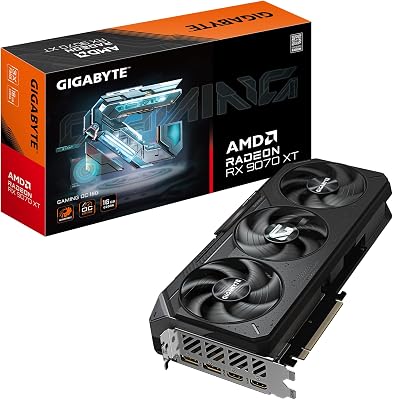
- Top Pick: GIGABYTE Radeon RX 9070 XT Gaming OC 16G Graphics Card, PCIe 5.0, 16GB GDDR6, GV-R9070XTGAMING OC-16GD Video Card
- Best Value: GIGABYTE Radeon™ RX 9070 XT Gaming OC ICE 16G Graphics Card (16GB GDDR6, 256-bit, PCIe 5.0, HDMI/DP 2.1, 2.7 Slot, Hawk Fan, Server-Grade Thermal Gel, Reinforced Structure)
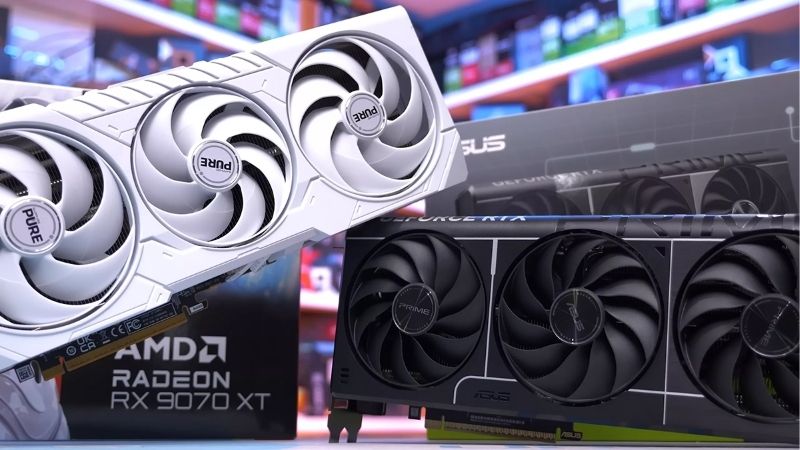
- Premium Choice: ASUS Prime Radeon RX 9070 XT 16GB GDDR6 OC Edition Gaming Graphics Card
Radeon RX 9070 XT vs RTX 5070 is a matchup where AMD’s raw power meets Nvidia’s efficiency and features, and the two cards sit closer than their different tiers suggest. The Radeon RX 9070 XT brings more rasterization muscle and a larger 16GB frame buffer, while the RTX 5070 counters with lower power draw, DLSS 4, and a keen price. Both are strong 1440p and entry-4K cards, so the choice hinges on whether you prioritise raw frames and VRAM or efficiency and Nvidia’s software. This comparison lays out the numbers and gives you a clear recommendation for 2026.


The Quick Verdict: Radeon RX 9070 XT vs RTX 5070
Because these cards balance raw power against efficiency and features, the quick verdict comes down to which of those you value more for your build. Here is the compressed answer before the detailed comparison below. In short, the RX 9070 XT is the stronger raw performer with more VRAM, while the RTX 5070 is the more efficient, feature-rich, and often cheaper option, and the right pick depends on which matters more to how you play. Read whichever verdict below fits your build and your budget most closely, and weigh your monitor and game library alongside the raw numbers.
As an Amazon Associate we earn from qualifying purchases at no extra cost to you.


Quick Verdict For Performance And VRAM
If you want the most raw performance and the reassurance of extra memory, the Radeon RX 9070 XT is the stronger choice. It generally leads the RTX 5070 in rasterization and carries 16GB of VRAM against the Nvidia card’s 12GB.
That extra VRAM matters for future-proofing at 1440p and above, where the newest games with high-resolution textures can push past 12GB. The 9070 XT’s larger buffer gives it more headroom to stay smooth as titles grow more demanding over the years.
Choose the 9070 XT if raw frames and memory headroom are your priorities and you are happy to feed a hungrier card. For performance-minded buyers planning to keep their card a while, it is the more future-proof option of the two.
This is also the card to favour if you already own or plan to buy a higher-resolution monitor. The combination of stronger raw performance and a larger memory buffer is exactly what a demanding panel wants, letting you push settings higher today and hold onto that comfort as games grow heavier over the life of the card.
Quick Verdict For Efficiency And Features
If you value low power draw, DLSS 4, and a keen price, the RTX 5070 makes a strong case. It draws considerably less power than the 9070 XT, runs cooler and quieter, and often costs less while delivering the full Nvidia feature set.
DLSS 4 Multi Frame Generation is the headline advantage, capable of lifting frame rates substantially in supported games and helping the 5070 close much of the raw-performance gap in those titles. Its efficiency also makes it easier to fit into smaller or quieter builds.
Pick the RTX 5070 if you prioritise efficiency, DLSS 4, and value, and you can live with 12GB of VRAM rather than 16GB. For many mainstream 1440p buyers, that is a perfectly sensible and cost-effective choice.
Radeon RX 9070 XT vs RTX 5070 Specs Snapshot
The clearest way to see how these two cards line up is to place their core specifications and prices side by side in one view. Skim this table, then read the analysis underneath for what these numbers really mean once you start gaming rather than simply comparing rows.
| Specification | RX 9070 XT | RTX 5070 |
|---|---|---|
| Architecture | RDNA 4 | Blackwell |
| VRAM | 16GB GDDR6 | 12GB GDDR7 |
| Upscaling | FSR 4 | DLSS 4 Multi Frame Gen |
| Ray tracing | Improved, competitive | Stronger, more mature |
| Approx. TDP | ~304W | ~250W |
| Typical MSRP | $599 | $549 |
The table highlights the core trade-off: the 9070 XT offers more raw power and 4GB more VRAM, while the RTX 5070 counters with much lower power draw, faster GDDR7, and DLSS 4. It is raw performance and memory versus efficiency and features, and which side wins depends squarely on your priorities.
The VRAM difference deserves particular attention for anyone keeping a card a long time. Twelve gigabytes is comfortable for most 1440p gaming today, but the newest, heaviest titles can begin to press against it, whereas the 9070 XT’s 16GB leaves more room to spare as games continue to grow more demanding.
Deep Dive Face-Off By Criteria
With the quick answer covered, here is the detailed head-to-head across the three areas that actually decide this purchase: raw gaming performance and VRAM, the competing upscaling and ray-tracing technologies, and the honest strengths and weaknesses each card brings for a real buyer weighing them carefully at checkout rather than in the abstract. Read the part that speaks to your priorities first, then check the others before you commit your money.
Raw Gaming Performance And VRAM
In native rasterization the RX 9070 XT generally holds an advantage over the RTX 5070, delivering higher frame rates in many demanding titles thanks to its more powerful core. It is the faster card of the two in most non-upscaled scenarios.
The VRAM difference compounds that lead over time. The RTX 5070’s 12GB is enough for most games today, but it can become a limitation at the highest settings in the newest releases, where the 9070 XT’s 16GB keeps textures loaded and performance steady.
For buyers who plan to keep their card for several years, this combination of more raw power and more memory is a strong argument in the AMD card’s favour. That said, DLSS 4 narrows the gap in supported titles, so the advantage is clearest in native play.
How much the VRAM gap matters also depends on your resolution and settings. At standard 1440p with sensible settings, 12GB serves most games well today; push to 4K, ultra textures, or heavy ray tracing and the 9070 XT’s 16GB buffer becomes the safer long-term choice. Match that to how you actually play to judge whether the extra memory is worth it for you.
DLSS 4, FSR 4, And Ray Tracing
Features are where the RTX 5070 fights back hardest against the AMD card’s raw advantage. DLSS 4 Multi Frame Generation is mature and widely supported, and it can lift frame rates substantially in supported games, narrowing or even erasing the 9070 XT’s lead in those titles.
AMD’s FSR 4 has improved a great deal and is now genuinely competitive on image quality, so the 9070 XT is far from outclassed on upscaling. The remaining gap is mostly in the breadth of supported games rather than in raw upscaled quality.
Ray tracing still favours Nvidia’s more mature hardware, giving the RTX 5070 an edge there despite its lower raw power. If ray tracing matters to the games you play, that capability is a real point in the Nvidia card’s favour worth weighing.
Pros And Cons Of Each Card
Setting the trade-offs side by side makes this performance-versus-efficiency decision much clearer for your own particular situation.
Radeon RX 9070 XT — pros: stronger raw performance, a larger 16GB VRAM buffer, competitive value, and much-improved FSR 4. Cons: higher power draw and heat, plus ray tracing and upscaling breadth that still trail Nvidia slightly.
RTX 5070 — pros: excellent efficiency, DLSS 4, faster GDDR7, stronger ray tracing, and often a lower price. Cons: only 12GB of VRAM and less raw horsepower than the AMD card, limiting its long-term headroom.
Read together, these lists describe two different buyers rather than a single winner. The 9070 XT is the pick for the buyer who wants raw performance and memory that lasts, while the 5070 is the pick for the buyer who prioritises efficiency, features, and value. The right choice depends squarely on which of those you value more.
Pricing, Alternatives, And The Final Call
The last factor is real 2026 pricing, where the memory market and a couple of alternatives can shift this decision either way. Treat this as the practical, wallet-focused counterweight to the feature comparison above, because a temporary price swing can easily settle a matchup this close on its own. The card that looks best on paper is not always the best deal on the day you buy, so a quick price check is time well spent.
How 2026 Memory Prices Affect Both Cards
Memory pricing matters here because the 16GB 9070 XT and the 12GB RTX 5070 sit on different sides of the VRAM divide. Through late 2025, AI datacenter demand pushed DDR5, SSD, and high-VRAM graphics-card prices up by roughly 20%, and higher-capacity cards felt that pressure most directly.
There is cautiously positive news: prices have stopped rising as steeply as they did at the end of 2025, and some makers report relative stability while still warning of volatility. New supply is coming from DDR5 sources such as CXMT and two new Micron plants being built in Idaho.
The catch is timing, since those plants will not ramp until 2027–2028. Because the 9070 XT carries more VRAM, it may absorb a little more of this price pressure, so weigh the current real price gap carefully — but its extra memory often still justifies the difference for buyers who keep cards a long time.
The Alternative If Neither Fits
If you can spend a little more, the RTX 5070 Ti steps up with more performance and a 16GB buffer while keeping the full DLSS 4 suite, resolving the 5070’s VRAM question for a higher price.
If you want to spend less, a well-priced RX 9060 XT 16GB or RTX 5060 Ti steps down a rung while keeping strong 1440p performance. For most buyers, though, one of these two cards remains the sweet spot, so compare live prices before deciding.
It is also worth keeping an eye on last-generation cards at a discount. A clearance or used high-end card from the previous generation can occasionally land in this performance range for less, though you give up the warranty and the newest upscaling features. For most buyers a current card is the safer bet, but a genuine bargain on strong older hardware is worth a moment’s consideration.
See More:
- RTX 4060 vs RTX 5060
- M4 GPU benchmark
- RTX 5060 Ti benchmark
- 5060 Ti 16GB vs 9070 XT
- RTX 5050 vs RTX 5060
Final Verdict And Recommendation
Buy the Radeon RX 9070 XT if you want more raw performance, value the future-proofing of 16GB of VRAM, and are happy to feed a hungrier card. It is the stronger long-term pick for performance-minded buyers.
Buy the RTX 5070 if you value efficiency, DLSS 4, and a keen price, and you can live comfortably with 12GB of VRAM. For efficiency-focused mainstream buyers, it is a compelling and cost-effective choice.
If you are still torn, let your priorities break the tie. Raw performance and long-term VRAM headroom point toward the 9070 XT, while low power draw, quiet operation, and DLSS 4 point toward the RTX 5070, and neither choice is a mistake for a 1440p gamer.
To settle the Radeon RX 9070 XT vs RTX 5070 debate: the AMD card wins on raw power and VRAM while the Nvidia card wins on efficiency, features, and often price, making your priorities the deciding factor. With high-VRAM cards under continued price pressure through 2026, buying the right card at a fair price sooner beats waiting for relief the supply calendar does not promise. Check today’s prices through the link below and grab the one that fits your needs and budget, confident that both are strong 1440p cards and that the right pick for you is simply the one whose strengths match your own priorities most closely.
Frequently Asked Questions
Which card offers more raw performance?
The RX 9070 XT is the stronger performer, running roughly 20 to 25 percent ahead of the RTX 5070 in 1440p rasterised games and holding a similar advantage at 4K. It also carries 16GB against the 5070’s 12GB, so it is the better choice if raw frames and memory headroom are your priority.
Where does the RTX 5070 still win?
Nvidia leads in full path traced games where ray reconstruction and dedicated RT hardware pull ahead, in multi frame generation for very high refresh displays, in NVENC video encoding quality for streaming and recording, and in CUDA-accelerated creative and AI applications. It also draws considerably less power for the same system.
What are the power supply requirements?
The RX 9070 XT is rated around 304W using two or three 8-pin connectors and wants a 750W supply. The RTX 5070 sits at 250W with a single 12V-2×6 connector and recommends 650W. If you are reusing an older power supply or building in a compact case, the Nvidia card is easier to accommodate.
Is 12GB enough on the RTX 5070 for the next few years?
It is adequate at 1440p today but it is the card’s weakest specification. Ray tracing, high resolution texture packs and frame generation all add memory pressure, so a 12GB card at this price is more likely to force texture compromises within a few years than the 16GB RX 9070 XT.
How much physical space does each card need?
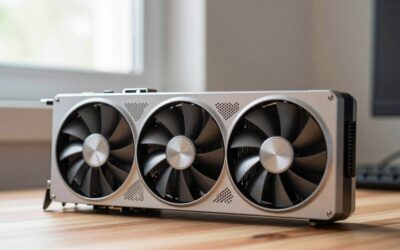
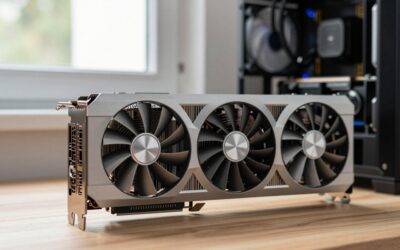
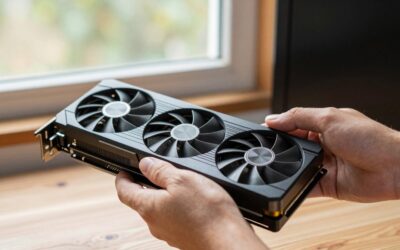
Most RX 9070 XT models are large triple-fan designs measuring 320mm or more and occupying three slots, so they demand a full-size case with good airflow. RTX 5070 partner cards are typically shorter, often 240 to 300mm, and several compact two-slot variants exist for small form factor builds.
Ready to decide? Our #1 pick for 2026 is the Architecture.
Live price & availability on Amazon.



Write Your Review
No reviews yet. Be the first to share your experience!