
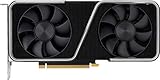
- Top Pick: NVIDIA GeForce RTX 3060 Ti Founders Edition 8GB GDDR6 PCI Express 4.0 Graphics Card (Renewed)
- Best Value: Geforce Nvidia RTX 3060ti Founders Edition 8GB
- Premium Choice: msi Gaming GeForce RTX 3060 Ventus 2X 12G OC V1 Graphics Card – 15 Gbps GDRR6 Boost Clock: 1807 MHz 192-Bit HDMI/DP PCIe 4 Torx Twin Fan Ampere

Prime
Editor's Pick
NVIDIA GeForce RTX 3060 Ti Founders Edition 8GB GDDR6 PCI Express 4.0 Graphics Card (Renewed)

Best Seller
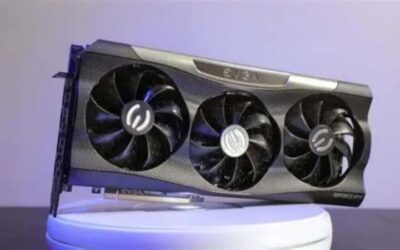
EVGA GeForce RTX 3060 Ti FTW Ultra Gaming, 08G-P5-3667-KL, 8GB GDDR6, iCX3 Cooling, ARGB LED, LHR (Renewed)
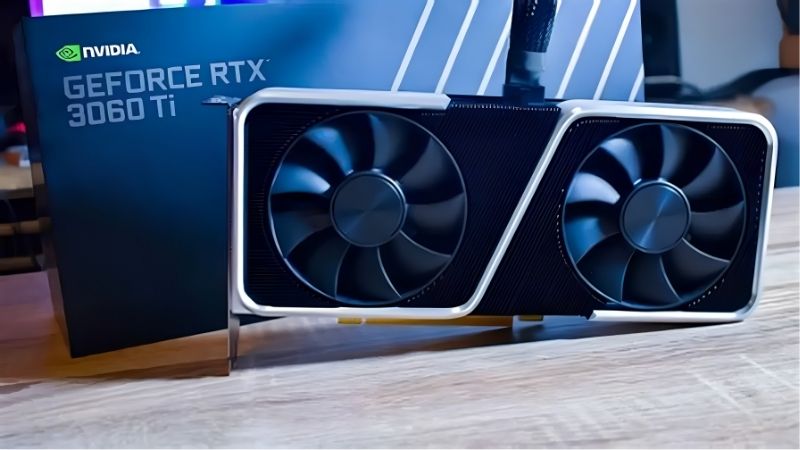
Nvidia GeForce RTX 3060 Ti occupies an interesting spot: it is noticeably faster than the plain 3060, yet it ships with less memory, and that single trade-off shapes whether it is the right buy for you in 2026. Add a market where GPU prices remain elevated, and the question becomes not just how the card performs but whether its speed-versus-memory balance and its current price make sense for your needs. This review lays out what the 3060 Ti delivers, how its 8GB buffer affects real gaming today, what owners report after living with it, and how the current pricing landscape should factor into your decision, so you can judge it clearly rather than on raw benchmark bragging rights.
As an Amazon Associate we earn from qualifying purchases at no extra cost to you.


Is the RTX 3060 Ti still a smart buy?
The 3060 Ti launched as a standout value card, praised for delivering performance close to pricier options. Years on, it remains capable, but evaluating it now means weighing its strong raw speed against its more limited memory and its price in a tight market. On balance, it is still a compelling option for the right buyer at the right price.
What the RTX 3060 Ti offers
The 3060 Ti’s headline is speed: it is meaningfully faster than the standard 3060 in raw performance, making it a strong 1080p and capable 1440p card. It also supports DLSS, Nvidia’s upscaling technology, which lifts frame rates in supported titles and helps the card punch above its class in demanding games.
The analytical point is that the 3060 Ti trades memory for muscle. Where the plain 3060 offers a larger buffer, the 3060 Ti offers more processing power with a smaller one. That makes it faster in many scenarios but more sensitive to memory-hungry games, a trade-off that defines the card’s character and your buying decision. It is an unusual pairing within the same family — normally the pricier card wins on every axis — and it is precisely why choosing between the two is genuinely about your games rather than simply spending more for more.
Performance and resolution
In practice, the 3060 Ti is an excellent 1080p card and a solid 1440p one for most games. Its extra horsepower over the 3060 shows up as higher frame rates, and with DLSS it can maintain smooth performance even in demanding titles or when ray tracing is enabled within reason.
Where it asks for care is the newest, most memory-intensive games at higher settings, where its buffer becomes the limiting factor before its processing power does. Set expectations around 1080p high-refresh and comfortable 1440p, and the card satisfies; push it into maxed settings in the heaviest modern titles and the memory ceiling appears.
The 8GB question
The most important thing to understand about the 3060 Ti in 2026 is its memory. Its 8GB buffer was ample at launch but is now the card’s main constraint, because some modern games at high settings can approach or exceed that limit, causing stutters even when the card has the raw power to keep up.
This does not make the card a poor choice — it makes it a resolution-and-settings-aware one. At 1080p and sensible 1440p settings, 8GB is generally fine. The practical guidance is to match your settings to the buffer: the 3060 Ti rewards a buyer who understands its memory limit and frustrates one who expects it to max out every demanding new release.
It is worth being concrete about how the limit shows up, because it is not the same as simply running slowly. When a game needs more memory than the card has, the symptom is usually sudden stutters or texture pop-in rather than a uniformly lower frame rate — the card has the speed but keeps stalling to shuffle data. The fixes are straightforward: drop texture quality a notch, lower the resolution slightly, or enable upscaling, any of which eases the memory pressure. Knowing this turns the 8GB constraint from a dealbreaker into a manageable setting choice, and it explains why two owners can have very different impressions of the same card depending on how they configure their games.
Living with the RTX 3060 Ti
Specs describe the card; years of owner experience reveal how it actually feels to use. The 3060 Ti has a long track record, and that feedback — the praise and the complaints alike — is some of the most useful information for anyone considering it now.
What owners report
The strongly positive feedback centers on speed and value: owners praise how fast the card is for its class, its smooth 1080p and 1440p gaming, and how DLSS has extended its usefulness. For many, it has delivered years of excellent performance and remains satisfying to game on.
The more critical feedback almost always circles back to the 8GB buffer. Some owners note that the newest games at high settings push the memory limit, forcing setting reductions despite the card’s ample processing power. This is the recurring theme, and it is fair: the 3060 Ti’s speed can outrun its memory in the most demanding scenarios, and buyers who anticipated maxed settings everywhere were the ones let down.
New versus used pricing in 2026
Current market conditions matter here. Component and memory costs have kept prices elevated into 2026, and that pressure reaches both new stock and the used market. When new-card prices stay high, used prices tend to follow, so a used 3060 Ti is not automatically the bargain it once was — the gap has to be checked.
The practical method is to compare the used 3060 Ti price against both any remaining new stock and the nearest newer cards. If the used discount is large, the card’s strong speed makes it attractive; if it is thin, a newer card with more memory or current features may be the better spend. Because the market has flattened but not fallen, and real supply relief is not expected until 2027 to 2028, waiting for a collapse is a weak strategy — a fair price now beats a hoped-for drop that is not coming.
There is an encouraging side to the current picture worth keeping in view. After the sharp price climb of late 2025, some hardware makers have reported a stretch of relative stability, which cools the frantic bidding that once inflated used prices and makes it easier to recognize a fair number. That stability is real but fragile — the same sources keep warning that volatility could return — so it is best read as a window of predictable pricing rather than the beginning of a decline. For a 3060 Ti shopper, the message is measured: prices are calmer than they were, which helps you judge a deal, but they are not falling, so a good price today is worth taking.
The market context in 2026
The broader pricing picture shapes how appealing the 3060 Ti is as a value play. With GPU prices across the board elevated by memory and component costs, a fast card at a reasonable price answers a real need for budget-conscious buyers. The 3060 Ti’s speed-per-dollar can be excellent when the price is right.
That said, the same market means shopping deliberately. Since prices have stabilized rather than dropped and relief is years out, the winning move is to buy a well-priced 3060 Ti now if its trade-offs suit you, rather than waiting on a shift the supply chain is not promising. Check the live price before committing, because today’s number is the one that should decide it.
Verdict, alternatives, and getting a fair price
With performance, the memory trade-off, ownership experience, and market context on the table, the decision comes down to whether the 3060 Ti’s speed-versus-memory balance fits your games and budget better than the alternatives. Here is the honest bottom line.
Pros and cons of the RTX 3060 Ti
Because this is a review, here is the straight balance sheet for the Nvidia GeForce RTX 3060 Ti.
| Pros | Cons |
|---|---|
| Notably faster than the standard 3060 | 8GB buffer limits the heaviest modern games |
| Excellent 1080p and solid 1440p performance | Memory can bottleneck before the GPU does |
| DLSS support extends its useful life | Used prices elevated by the tight market |
| Strong speed-per-dollar at a fair price | Newer cards may offer more memory for a small premium |
The verdict is that the RTX 3060 Ti remains a fast, capable card that is a smart buy for 1080p and sensible 1440p gaming at a fair price. Its one real caveat is memory, and whether that matters depends entirely on the games and settings you target.
Who should buy it, and the alternatives
Buy the RTX 3060 Ti if you game at 1080p or 1440p, value raw speed, and can find it at a fair price with a meaningful discount. It is a great fit for high-refresh 1080p and for players who tune settings sensibly rather than always maxing them.
If memory is a priority — for the newest games or for creative work — consider the standard 3060 with its larger buffer, or a newer mid-range card with more memory. The right choice depends on whether you value speed or memory more, and on the price gap on the day you buy, so compare the 3060 Ti against those alternatives before deciding.
Locking in a fair price
Once you have confirmed the 3060 Ti’s trade-offs suit your games and the price beats the alternatives, acting promptly beats waiting. In a stabilized-but-elevated market, a fair price is unlikely to improve dramatically soon, so hesitation mostly costs playtime rather than money.
The efficient move is to compare current listings for the RTX 3060 Ti and its nearest rivals, then buy from the seller offering the best real-world price and reliability. You can check today’s live prices on Amazon and secure a fair deal now rather than gambling on a drop the market is not offering.
See More:
- Nvidia CEO LinkedIn
- Nvidia driver rollback
- Nvidia roll back driver
- RX 9070 XT vs 5060 Ti
- Nvidia driver uninstaller
Conclusion
The Nvidia GeForce RTX 3060 Ti remains a fast, capable card whose one defining trade-off is memory: more speed than the 3060, but a smaller 8GB buffer that shapes how you should use it. At 1080p and sensible 1440p settings it delivers excellent value, especially at a fair price in a market where relief is still years away. Match it to your resolution and settings, weigh its speed against the 3060’s larger buffer, and buy when the price is right rather than waiting on a drop that is not coming. Check current listings on Amazon to see where the RTX 3060 Ti stands today and lock in your card with confidence.
Frequently Asked Questions
Is the RTX 3060 Ti still a good 1440p card?
It remains capable at 1440p with high settings in most titles, sitting roughly between an RTX 4060 and RTX 4060 Ti in raster. The limitation is not the GA104 core but the 8GB frame buffer, which forces texture compromises in newer releases. At 1080p it still delivers high refresh rates in almost everything.
What is the difference between the GDDR6 and GDDR6X versions?
Nvidia released a later revision using GDDR6X memory to work around supply constraints. Bandwidth increases slightly, real world performance differences are within a few percent, and power draw rises a little. Neither version changes the 8GB capacity, so the practical buying advice is identical: choose whichever is cheaper and better cooled.
What PSU does it need?
It is rated at 200W and uses a single 8-pin on Founders Edition cards, though partner models often use two. Nvidia recommends 600W. Ampere cards are known for sharp transient spikes, so a quality unit matters more than raw wattage; a weak 650W supply can trip its protection where a good 550W would not.
Does it support DLSS 4 and frame generation?
It supports DLSS 4 transformer model upscaling and ray reconstruction, which improves image quality over the original CNN model at the same render resolution. It does not support Frame Generation, which needs Ada, or Multi Frame Generation, which needs Blackwell. For an eight gigabyte card, the better upscaler is genuinely useful because you can render lower.
Is it worth buying used in 2026?
Only at the right price. If it costs meaningfully less than a new RTX 5060 and you play at 1080p, it is a reasonable value pick with similar raster performance. Above roughly two thirds of a new RTX 5060 price, buy new instead and get warranty, lower power draw and Multi Frame Generation.

Write Your Review
No reviews yet. Be the first to share your experience!