
- Top Pick: NVD RTX PRO 6000 Blackwell Professional Workstation Edition Graphics Card for AI, Design, Simulation, Engineering – 96GB DDR7 ECC Memory – 4th Gen RT/5th Gen Tensor Core GPU – OEM Packaging
- Best Value: PNY NVIDIA RTX PRO 6000 Blackwell MAX-Q Workstation Edition Dual Fan 96GB GDDR7
- Premium Choice: NVIDIA RTX PRO 6000 Blackwell Server Edition
Nvidia RTX Pro 6000 Blackwell gaming is a fascinating idea that blurs the line between professional workstation power and gaming excess: can a card built for AI and rendering also be the ultimate gaming GPU? If you are a prosumer, a creator who also games, or simply curious whether this monster makes sense for play, you want the real analysis of its performance, its massive VRAM, and its trade-offs — not a long video. This review examines whether the RTX Pro 6000 is gaming genius or expensive overkill.


Limited Time
PNY Technology VCNRTXPRO6000BQ-PB NVIDIA RTX PRO 6000 Blackwell Max-Q Workstation Graphics Card
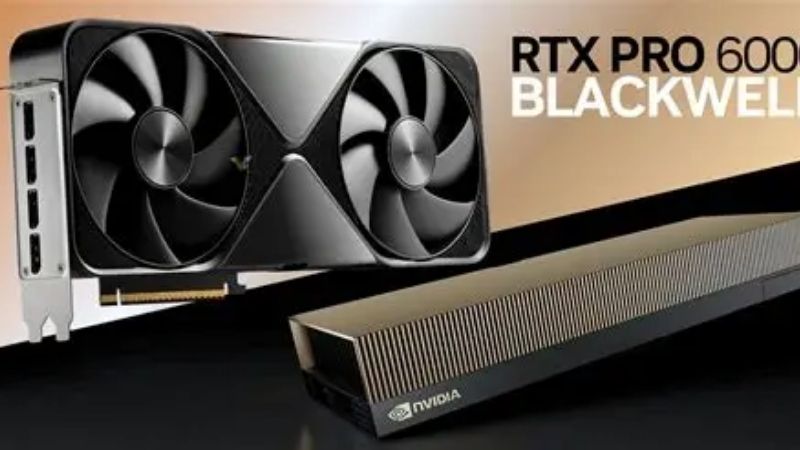
What the RTX Pro 6000 Blackwell Brings to Gaming
The RTX Pro 6000 is a professional-grade card built on Nvidia’s Blackwell architecture, and understanding its raw capabilities is the first step to judging its gaming potential. This section covers the enormous VRAM, the underlying performance, and the professional features that define what this card can do.
As an Amazon Associate we earn from qualifying purchases at no extra cost to you.




The Massive 96GB VRAM Advantage
The defining feature of the RTX Pro 6000 Blackwell is its enormous 96GB of memory, a figure that dwarfs any consumer gaming card. This capacity is built for professional workloads like massive 3D scenes, AI models, and complex simulations.
For gaming, this VRAM is wildly beyond what any current title needs, since even the most demanding games rarely use more than a fraction of it. It is a professional spec, not a gaming one.
The practical point is that the memory, while spectacular, is not a gaming advantage in any meaningful sense. No game comes close to using it, which is the first clue that gaming is not this card’s intended purpose — though it does future-proof to an absurd degree.
Where that memory genuinely earns its keep is in professional work: training or running large AI models locally, rendering enormous 3D scenes, or handling scientific datasets. Those are the workloads that turn 96GB from a novelty into a necessity, and none of them are games.
Raw Performance and Blackwell Power
Built on the Blackwell architecture, the RTX Pro 6000 packs immense compute power, a huge core count, and support for DLSS 4 and advanced ray tracing. In gaming terms, this translates to extremely high frame rates at the most demanding settings.
At 4K with maxed settings and ray tracing, the card delivers exceptional performance, easily handling anything current games throw at it. Its raw horsepower makes it one of the most capable gaming performers in existence, almost as a side effect.
The takeaway is that the RTX Pro 6000 is genuinely a phenomenal gaming performer — not because it was designed for it, but because its professional-grade power overwhelms any gaming workload. The question is whether that performance justifies its purpose and price.
It is worth stressing that raw gaming performance here is not the differentiator you might expect. A high-end consumer card also maxes out most games at 4K, so the RTX Pro 6000’s extra power delivers diminishing returns in gaming specifically, even as it transforms professional workloads.
Professional Features and Certifications
The RTX Pro 6000 includes professional features that gaming cards lack, such as certified drivers optimized for professional applications, enterprise-grade reliability, and support for professional software workflows.
These features add real value for creators and professionals but are largely irrelevant for pure gaming. A gamer pays for capabilities they will never use, which is central to the overkill argument.
The analytical point is that this card is a professional tool first. Its gaming prowess is a bonus of its raw power, but its feature set and design priorities are aimed squarely at workstation users, not gamers.
Is It Actually Worth It for Gaming?
Raw capability is one thing; value for gaming is another entirely. This section weighs whether a workstation card makes sense for play, examines the honest pros and cons for gaming use, and considers the practical realities of running one in a gaming build.
The Prosumer Who Games Use Case
The RTX Pro 6000 makes the most sense for prosumers — people who use the card professionally for AI, rendering, or creative work and also game on the same machine. For them, gaming is a bonus on top of a tool they need for work.
For this user, buying the card is justified by the professional workload, and its stellar gaming performance is a welcome extra. They are not paying a gaming premium; they are gaming on a work investment.
The practical read is that this is the only scenario where the card’s gaming use is truly sensible. If you need its professional capabilities anyway, gaming on it is pure upside rather than wasteful spending.
Think of AI researchers, 3D artists, video professionals, and engineers who run demanding software all day and want to unwind with games on the same machine. For them, one card covers both worlds, avoiding the cost and hassle of maintaining separate work and gaming systems.
Pros and Cons for Gaming Use
Using the RTX Pro 6000 for gaming has clear strengths and clear drawbacks. The pros: phenomenal raw gaming performance, absurd VRAM headroom that future-proofs indefinitely, full DLSS 4 and ray-tracing support, and professional-grade reliability. It will run any game flawlessly for years.
The cons are significant for a pure gamer: an extremely high price far above any gaming card, VRAM and features that gaming cannot use, potential driver optimization aimed at professional rather than gaming workloads, and high power and cooling demands. The value proposition for gaming alone is poor.
The pattern is clear. For pure gaming, the RTX Pro 6000 is dramatic overkill at a price no gamer should pay; for a prosumer who games, it is a genius dual-purpose choice. Your use case entirely determines which verdict applies.
Power, Cooling, and Practical Realities
Running an RTX Pro 6000 in a gaming build involves practical demands. As a professional card with immense power, it requires a robust power supply and excellent cooling, and it is a large, serious piece of hardware.
Building around it means ensuring your case, PSU, and cooling can support a workstation-class card, which adds cost and complexity beyond the card itself. This is not a simple drop-in gaming upgrade.
The practical takeaway is that even if you can afford the card, supporting it properly requires a capable system around it. For a pure gaming build, that added complexity reinforces how impractical it is compared to a purpose-built gaming GPU.
Value, Alternatives, and the Final Verdict
Understanding the card’s nature leads to the real question: should you buy it, and what are the smarter alternatives for most gamers? This section covers the pricing context, the better options for pure gaming, and the final verdict.
Pricing Context and Value
The RTX Pro 6000 commands a professional-grade price, far above even the highest-end consumer gaming cards. For gaming alone, that price is impossible to justify, since dedicated gaming GPUs deliver excellent performance for a fraction of the cost.
Broader market conditions add context: component and laptop prices have been trending upward, with memory a major driver, and while prices have recently plateaued, meaningful relief from new supply is not expected until roughly 2027–2028. In that environment, spending workstation money purely to game is especially hard to defend.
The value read is stark. For a prosumer, the card’s professional capabilities justify the cost and gaming is free upside; for a pure gamer, the price makes it one of the worst-value gaming choices despite its raw power.
The elevated component-pricing environment sharpens this point. With memory and other costs still elevated across the market, every dollar of a graphics budget matters more, and directing workstation-level spending purely at gaming is harder to justify than ever.
Better Alternatives for Pure Gaming
For anyone whose priority is gaming, dedicated gaming cards are far smarter buys. High-end consumer GPUs like the RTX 5090 deliver flagship gaming performance at a much lower price than the RTX Pro 6000, with drivers optimized for games.
For most gamers, mid-to-high-end cards such as the RTX 5070 or RTX 5080 offer outstanding performance and value without any professional-tier premium. These are the sensible choices for a gaming-focused budget.
The practical recommendation is to match the card to your actual needs. Unless you require professional capabilities, a purpose-built gaming GPU gives you better value and better game-optimized performance every time.
The savings can be dramatic. Choosing a flagship gaming card over the RTX Pro 6000 for a gaming-only build frees up a substantial amount that could go toward a high-refresh monitor, faster storage, or a better CPU — upgrades that improve your gaming far more than unused workstation power ever would.
Final Verdict on RTX Pro 6000 for Gaming
Weighing everything, the Nvidia RTX Pro 6000 Blackwell for gaming is a tale of two buyers. For a pure gamer, it is spectacular overkill at an indefensible price — a professional tool whose gaming brilliance does not justify its cost.
For a prosumer who games, it is genius: a card that handles demanding professional work and then delivers flawless, future-proof gaming as a bonus. The same hardware earns opposite verdicts depending entirely on why you buy it.
If you need professional power and game on the side, the RTX Pro 6000 is a compelling dual-purpose investment. Check current listings and specifications to see whether its professional capabilities fit your workflow and budget.
See More:
- 3060 Ti vs 9060 XT
- Nvidia Shield TV Pro
- RTX 5070 vs RX 9060 XT
- RTX 3090 24GB
- Nvidia price prediction
Conclusion
The Nvidia RTX Pro 6000 Blackwell gaming question comes down to who you are. Its 96GB of VRAM and immense Blackwell power make it a phenomenal, future-proof gaming performer, but those capabilities are built for professional workloads that gaming cannot begin to use. For a pure gamer, it is overkill at a price a dedicated gaming card beats handily; for a prosumer who games, it is a genius dual-purpose choice where gaming is pure upside. If professional power is part of your needs, the RTX Pro 6000 is worth considering — check current listings and see whether it fits your workflow and budget today.
Frequently Asked Questions
Can the RTX Pro 6000 Blackwell actually play games?
Yes. It is built on the same GB202 silicon family as the flagship consumer card, so it renders games normally and even runs DLSS features. Professional drivers are tuned for viewport stability in CAD and simulation rather than day-one game optimisation, so you occasionally trade a little performance and launch-day support for certification benefits you will never use while gaming.
Does 96GB of VRAM help in games?
Essentially not at all. Even 4K with maximum ray tracing and mods rarely exceeds twenty gigabytes, so the vast memory pool sits idle during gaming. That capacity exists for large language model inference, huge scientific datasets, film-scale rendering and multi-user virtualisation, which are the workloads that justify the card price.
What are the power and cooling requirements?
The full workstation card is rated up to 600W and typically uses a blower-style cooler that exhausts directly out of the case, which suits dense workstation chassis but is loud under sustained load. A Max-Q variant caps power near 300W for multi-card servers. Plan on a high-quality 1000W or larger supply with a native 12V-2×6 cable.
How does it compare with an RTX 5090 for a gamer?
The RTX 5090 is faster in games in practice and costs a fraction of the price, so no gaming buyer should choose the Pro card. The workstation part wins only on memory capacity, ECC protection, certified professional drivers and virtualisation support. Buying it to game would be paying many thousands of dollars for features that never activate.
Will it fit and connect in a normal desktop case?
The blower design is dual-slot and often shorter than large consumer coolers, so physical fit is usually easier than expected. The real constraints are the single 12V-2×6 input needing a genuinely capable supply, adequate front-to-back airflow to feed the blower, and a motherboard with a full sixteen-lane PCIe slot for peak throughput.


Write Your Review
No reviews yet. Be the first to share your experience!