
- Top Pick: GIGABYTE GeForce RTX 5070 Ti Gaming OC 16G Graphics Card, 16GB 256-bit GDDR7, PCIe 5.0, WINDFORCE Cooling System, GV-N507TGAMING OC-16GD Video Card
- Best Value: KOTIN Gaming PC, Ryzen 7 9800X3D, RTX 5070 Ti 16GB, 32GB DDR5, 1T SSD
- Premium Choice: ASUS Prime GeForce RTX 5070 Ti 16GB GDDR7 Gaming Graphics Card
Top Rtx 4090 5070 Flagship Worth Picks for 2026
Here are our current top rtx 4090 5070 flagship worth picks, compared on real Amazon owner reviews, price, and features. Live prices update below.
- Top Rtx 4090 5070 Flagship Worth Picks for 2026
- The Quick Verdict: RTX 4090 vs 5070 Ti in 30 Seconds
- Deep Dive Face-Off: Flagship Muscle vs Modern Efficiency
- 2026 Market Forces: Why the 4090 Stays Expensive
- Final Verdict: Pros, Cons, and the Smart Alternative
- Conclusion
- Related Guides
- Frequently Asked Questions
- Related Articles


Prime
Editor's Pick
ASUS SFF-Ready Prime NVIDIA GeForce RTX 5070 Graphics Card (PCIe 5.0, 12GB GDDR7, HDMI/DP 2.1, 2.5-Slot, Axial-tech Fans, Dual BIOS), 3 Year Warranty
Dropped $2.52


RTX 4090 vs 5070 Ti is a comparison between a legend and a disruptor. The RTX 4090 was the undisputed king of the Ada generation — 16,384 CUDA cores, 24GB of VRAM, and 4K performance nothing touched for two years. The RTX 5070 Ti is the $749 Blackwell card that delivers a surprising share of that experience for a fraction of the cost, with newer AI features the flagship never received. In 2026 the matchup has a twist: the 4090 is discontinued, and AI-driven demand has kept its market price at or even above its original $1,599 MSRP, while the 5070 Ti sells new with warranty. This comparison quantifies the real performance gap, weighs DLSS 4 against raw silicon, and answers the only question that matters: is the old flagship worth roughly double the money today?
As an Amazon Associate we earn from qualifying purchases at no extra cost to you. Product prices and availability are accurate as of the date shown and are subject to change.


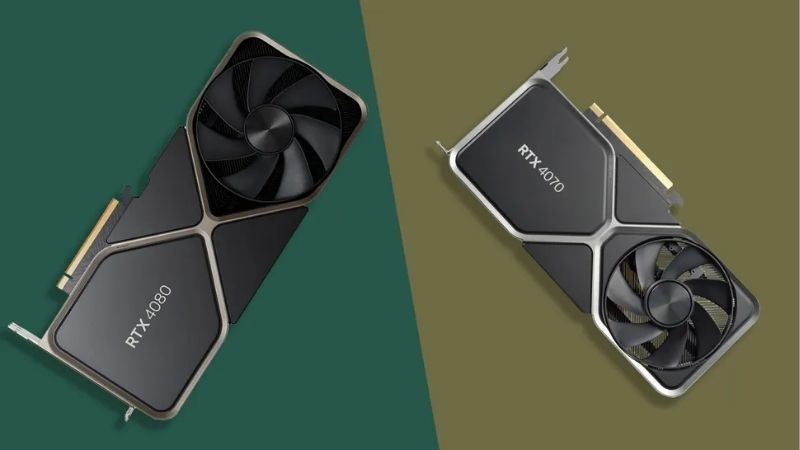
The Quick Verdict: RTX 4090 vs 5070 Ti in 30 Seconds
The fast answer: the RTX 4090 remains 30–40% faster in native rendering and untouchable in VRAM-hungry professional and AI workloads thanks to its 24GB buffer — but at 2026 market prices of $1,600–$2,200 for a discontinued, often-used card, it is a poor value for pure gaming. The RTX 5070 Ti delivers roughly 70% of the 4090’s native performance for under half the price, adds DLSS 4 Multi Frame Generation that the flagship lacks, draws 150W less power, and comes new with warranty. For gamers, the 5070 Ti is the rational buy; the 4090 only makes sense for creators and AI hobbyists whose workloads demand 24GB. Check the 5070 Ti’s live Amazon price — at or near $749, this verdict is not close.
Why the RTX 5070 Ti Wins for Gamers
The arithmetic is brutal in the newer card’s favor. At $749 MSRP versus a realistic $1,600+ for the 4090, the 5070 Ti delivers around 70% of the flagship’s native frame rate for roughly 45% of the money — a frames-per-dollar advantage of more than 50%. Its 16GB of GDDR7 at 896GB/s handles every 2026 game at 4K, and DLSS 4 Multi Frame Generation pushes on-screen output in supported titles past what the 4090’s 2x Frame Generation can present.
Then add the ownership package: 300W versus 450W, a 750W PSU instead of 1000W, normal-sized cards instead of the 4090’s case-bending bricks, and a fresh three-year warranty versus used-market roulette.
Why the RTX 4090 Still Commands Its Price
The 4090’s price did not stay high by accident. Its 24GB of VRAM and immense compute made it the default GPU for local AI work — model inference, fine-tuning, rendering — and that professional demand absorbed the supply gamers expected to buy discounted. In those workloads, the 5070 Ti’s 16GB is not a discount alternative; it is a hard wall.
For gaming, the flagship still owns native 4K: 30–40% faster without upscaling, the strongest path-tracing performance of its era, and headroom that brute-forces titles lacking DLSS support. Buyers who refuse AI frames on principle still have exactly one Ada answer, and this is it.
Specs Comparison Table
The raw numbers that frame the entire debate.
| Specification | RTX 4090 | RTX 5070 Ti |
|---|---|---|
| Architecture | Ada Lovelace (AD102) | Blackwell (GB203) |
| CUDA Cores | 16,384 | 8,960 |
| VRAM | 24GB GDDR6X | 16GB GDDR7 |
| Memory Bandwidth | 1,008 GB/s | 896 GB/s |
| TGP (Power) | 450W | 300W |
| Recommended PSU | 1000W | 750W |
| Frame Generation | DLSS 3 (2x) | DLSS 4 MFG (up to 4x) |
| Launch MSRP | $1,599 | $749 |
| 2026 Availability | Discontinued; $1,600+ market | New, in retail |
Deep Dive Face-Off: Flagship Muscle vs Modern Efficiency
A 30–40% performance gap and a 100%+ price gap make this less a horse race than a value equation — but the equation changes with resolution, workload, and feature support. This section runs the numbers across 4K gaming performance, the DLSS 4 divide, and the power, size, and risk realities of owning each card in 2026.
4K and 1440p Gaming: Measuring the Real Gap
At 4K native, the 4090’s domain, aggregated testing shows it averaging 30–40% ahead: roughly 90–120 fps in demanding AAA titles where the 5070 Ti delivers 65–85. Both are excellent experiences; the flagship’s margin buys higher refresh saturation and brute-force headroom in the heaviest path-traced showcases.
At 1440p, the gap compresses to 25–30% and becomes largely academic — the 5070 Ti already feeds 144–165Hz panels at ultra settings, and the 4090 spends much of its extra power waiting on the CPU. Nobody should buy a 4090 for QHD gaming in 2026; that resolution is precisely where the cheaper card’s value peaks.
Frame-time consistency is a wash: both cards post excellent 1% lows, the 4090 through sheer overkill, the 5070 Ti through its GDDR7 subsystem. Neither stutters in any reasonable gaming scenario.
DLSS 4 Multi Frame Generation: The Feature the Flagship Never Got
Here is the experimental wrinkle that complicates the raw hierarchy: Blackwell’s MFG generates up to three AI frames per rendered frame, and Nvidia did not extend it to Ada. In supported titles, a 5070 Ti presenting 180–220 fps on screen can exceed what the 4090 shows with its 2x Frame Generation — the cheaper card literally displaying more frames than the king.
The honest framing: MFG inherits base-frame latency, so the 4090’s higher native rate still feels more responsive, and support is broad but not universal. Both cards share the improved transformer upscaler. But for high-refresh single-player gaming on a 240Hz panel, the feature gap is real, growing with every supported release, and points in the unexpected direction.
Power, Size, and the Used-Market Risk Ledger
Owning a 4090 is a commitment: 450W of heat, a recommended 1000W PSU, 3.5–4-slot coolers that exclude many cases, and the early-batch 16-pin connector melting saga that — while addressed — makes verifying any used unit’s cable history mandatory. Annual electricity for a daily gamer runs $40–$80 above the 5070 Ti’s at typical rates.
Risk is the silent line item: nearly every 2026 4090 purchase is used or open-box at flagship prices, with warranty status varying by brand and transfer. The 5070 Ti’s sealed-box, full-warranty status is worth real money that never shows up in benchmark bars — on a $1,600+ outlay, it should.
2026 Market Forces: Why the 4090 Stays Expensive
This matchup’s strangest fact — a two-generation-old card holding above its launch MSRP — is explained by two current news stories: the United States approving Nvidia’s H200 AI chip sales to China, and the continued rise in laptop and component prices. Both reshape the value equation between these cards in measurable ways.
The H200 Export Approval and the AI Demand Chain
The H200 green light adds enormous demand for Nvidia’s advanced silicon and high-bandwidth memory. That tightens consumer GPU supply at the top first — and it keeps professional and AI buyers competing for every high-VRAM card in existence, including used 4090s, whose 24GB buffer makes them the budget tier of AI hardware.
The result shows in tracking data: 4090 market prices firmed after the export news rather than declining, because every AI-driven demand wave resets its floor. Gamers waiting for the flagship to become affordable are waiting against the largest demand force in the industry.
Component Inflation Touches Both Cards
Memory contract prices have risen for consecutive quarters and laptop retail pricing has already followed — the same supply chain feeds GPU production. For the 5070 Ti, that means its $749 MSRP increasingly behaves as a floor, with the historical 5–15% drift representing $37–$112 of real money on this card.
For the 4090, inflation compounds the AI premium: replacement-cost logic keeps even used units priced against today’s expensive market, not 2022’s launch market.
One quantitative footnote on depreciation: the 5070 Ti, as a current-generation card, will shed value on the normal curve of roughly 15–20% per year, while the 4090’s AI-anchored pricing has made it the rare GPU that resells near purchase price. Buyers who flip hardware frequently can legitimately count that liquidity in the flagship’s column — it is the one financial metric where the old king still rules.
The Timing Conclusion
Neither card rewards waiting. The 5070 Ti’s fair window is now — at or near MSRP — before supply pressure widens the premium. The 4090’s price has no visible catalyst to fall while AI demand absorbs supply; if your workload genuinely needs it, negotiate hard on a verified unit rather than waiting for a sale that the market structure prevents.
Anchor everything to live numbers: check the 5070 Ti’s current Amazon price, note what clean 4090s actually close at this week, and let today’s real spread — typically $850–$1,400 — make the decision concrete.
Final Verdict: Pros, Cons, and the Smart Alternative
The verdict splits cleanly along the gamer/creator line, and the pros-and-cons ledger makes the split obvious. There is also a third card that resolves the matchup for buyers whose budget sits between these two — covered below before the final recommendations.
Pros and Cons of Each Card
RTX 5070 Ti — Pros: over 50% better frames-per-dollar; 16GB GDDR7 handles all 2026 gaming at 4K; DLSS 4 MFG out-presents the flagship in supported titles; 300W efficiency, normal-sized cards, full warranty. Cons: 30–40% slower natively; 16GB walls out serious AI/creator workloads; street prices often exceed MSRP.
RTX 4090 — Pros: still the native-rendering and path-tracing benchmark of its era; 24GB VRAM is unmatched under $2,000 for AI and creative work; brute-forces titles without upscaler support. Cons: $1,600+ for discontinued, usually used hardware; 450W draw, 1000W PSU, enormous coolers; connector-history diligence required; no DLSS 4 MFG ever.
The Alternative: RTX 5080 Splits the Difference
For buyers tempted by flagship performance without flagship anachronisms, the RTX 5080 at $999 MSRP lands between the two: roughly 10–15% faster than the 5070 Ti, 16GB of even faster GDDR7, full DLSS 4 support, 360W, and a new-card warranty. Against a $1,600+ used 4090, it concedes native performance but wins every ownership metric.
Its limits mirror the 5070 Ti’s — 16GB still walls out 24GB workloads — so it answers the gaming question, not the creator one. For pure gamers who find the 5070 Ti’s margin insufficient, it is the rational ceiling before flagship pricing stops making sense entirely.
Who Should Buy Which
Buy the RTX 5070 Ti if you are a gamer at any resolution up to 4K: the performance is genuinely sufficient, the feature set is newer, and the $850+ you keep funds a monitor, CPU, or the next upgrade cycle — it is this comparison’s winner for the overwhelming majority. Buy the RTX 4090 only if your workload measurably needs 24GB of VRAM or maximum native compute, and verify warranty and connector history before paying flagship money for used silicon.
If you sit between profiles, the 5080 at $999 is the clean compromise — and whichever path you take, current market forces say take it sooner rather than later.
See More:
Conclusion
The rtx 4090 vs 5070 ti question ends with an upset on value: the discontinued flagship remains the raw-performance and 24GB-workload king, but at 2026’s AI-inflated prices it costs more than double the 5070 Ti while the newer card delivers roughly 70% of the performance, exclusive DLSS 4 Multi Frame Generation, 150W less heat, and a real warranty. With H200 exports propping up high-VRAM demand and component costs still climbing, neither card is getting cheaper — so gamers should lock in the 5070 Ti at a fair price and creators should buy the 4090 only with verified provenance. Tap through to check today’s RTX 5070 Ti price and availability on Amazon, and put the flagship-sized savings to work somewhere it will actually show on screen.
Frequently Asked Questions
What is the best rtx 4090 5070 ti in 2026?
The best rtx 4090 5070 ti depends on your budget and how you plan to use it. The options compared above are our top-rated picks based on real customer ratings, build quality, and overall value — start with the highest-rated model that fits your budget.
How much should I expect to spend on a rtx 4090 5070 ti?
Prices vary by brand and features. Budget options cover the essentials, while mid-range and premium models add durability, performance, and extra features. Compare the prices in the list above to find the best value for your needs.
What should I look for when buying a rtx 4090 5070 ti?
Focus on what matters most for your use case — build quality, compatibility, performance, warranty, and verified customer reviews. Every pick above is selected to balance these factors.
Are budget rtx 4090 5070 ti options worth it?
Yes. For most people a well-reviewed budget or mid-range rtx 4090 5070 ti delivers excellent value. You only need to spend more if you specifically require premium materials or top-tier performance.
How did we choose these rtx 4090 5070 ti picks?
We compare current Amazon ratings, review counts, key features, and price to surface the options with the best real-world value. The list is refreshed as ratings and availability change.










Write Your Review
No reviews yet. Be the first to share your experience!